
Home / All
Blog
 Rubber Grommet for Firewall Wire Harness: How Does the Fit Work?Sep 22,2026Firewall grommets are specified against three interfaces at once, and most field failures come from one of them being measured on its own. This article breaks down the opening fit, the groove-to-thickness fit and the harness fit, what happens when each is wrong, and the dimension list to send when a custom part is quoted.
- How Does Cable Diameter Affect a Rubber Grommet Inner Hole?Sep 22,2026Matching a grommet bore to a catalogue cable size is the most common shortcut in cable pass-through design. This article covers what too small and too large a bore each do, why cable tolerance and jacketing change the calculation, how wall thickness constrains the bore, and how dynamic cables need different geometry from static ones.
- What Causes a Rubber Grommet to Twist During Panel Installation?Sep 22,2026A grommet that rolls or rotates as it is pushed through the panel is telling you where the circumferential resistance is uneven. This article covers how to read the failure, why hole size and groove depth drive it, how friction and lip geometry amplify it, and how to seat a grommet squarely the first time.
- Rubber Grommet Size Guide for Cable and Wire Pass-ThroughsSep 21,2026A practical sizing method for rubber grommets in cable and wire pass-throughs. Covers the panel hole, sheet thickness, cable or bundle diameter, groove geometry and flange, with a selection table, a worked example and an enquiry checklist for custom dimensions.
- Why Does a Rubber Grommet Keep Popping Out of the Panel?Sep 21,2026A troubleshooting approach for rubber grommets that loosen, rotate or pop out of a panel. Works through hole diameter, panel thickness, groove geometry, cable side loading and installation damage, with a symptom table and a prevention checklist.
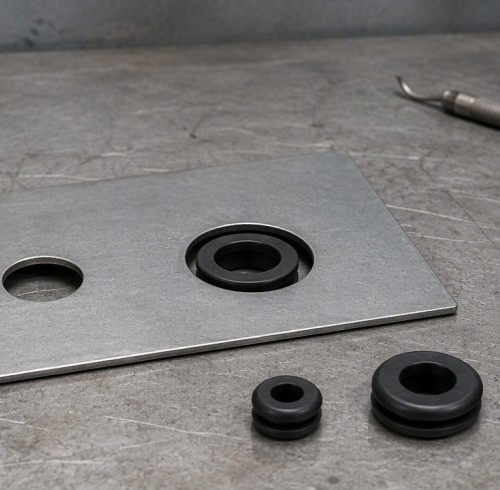
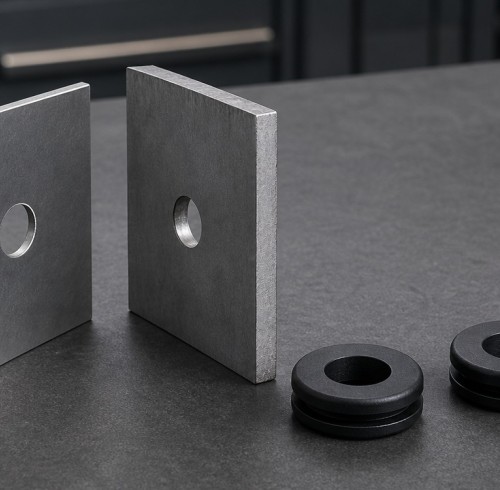
- How to Match a Rubber Grommet to Panel Thickness and Hole SizeSep 21,2026Why panel thickness and hole diameter have to be matched together when selecting a rubber grommet. Covers hole fit, groove width and depth, flange seating, a matching example, panel manufacturing tolerance and a dimension checklist.
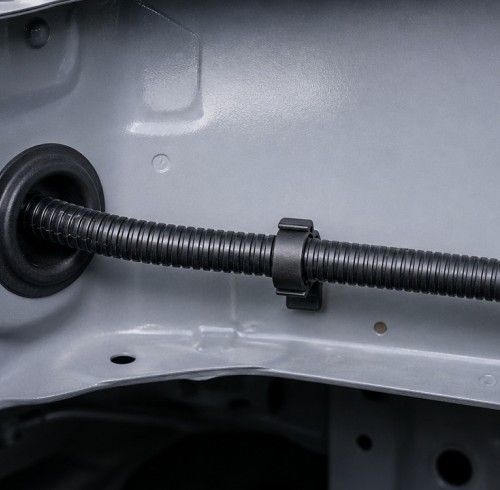
- How Does a Rubber Grommet Fit Around an Automotive Wire Harness?Sep 21,2026How a rubber grommet fits an automotive wire harness through a body panel or firewall. Covers the panel cross-section, matching the inner opening to the finished harness, harness size problems, vibration, and the difference between a grommet and a sealing component.
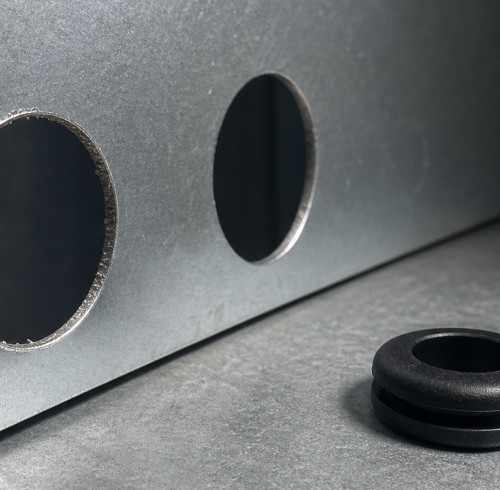
- Rubber Grommet for Thin Sheet Metal: Common Fit Problems and SolutionsSep 21,2026Fit problems with rubber grommets in thin sheet metal: limited groove engagement, hole deformation, sharp stamped edges and retention loss. Includes a troubleshooting table, groove geometry guidance, hardness trade-offs and a panel checklist.
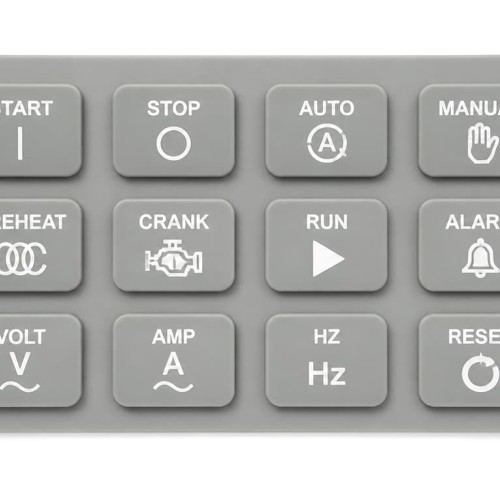
- Silicone Keypad for Heavy Equipment Control Panels: PCB Alignment Issues Before ToolingSep 18,2026Alignment problems between a keypad and a PCB are usually created on the drawing, not at moulding. This article follows how a heavy equipment silicone keypad meets the board: conductive pill against contact pad, button travel against the switching point, housing locating features, and the tolerance stack-up shared by keypad, housing and panel cut-out. It lists the data worth collecting before tooling and the faults that surface later as intermittent contact.
- Why Tractor Silicone Keypads Fail in Agricultural Equipment Control PanelsSep 18,2026A tractor keypad that stops responding is usually called a silicone problem, and usually is not. This article separates the mechanisms that are easy to confuse: compression set and slow elastic recovery, dust pumping around the bezel, condensation inside the housing, effort spread across a gloved hand, and carbon pill face wear against the pad. Each leaves a different signature and calls for a different change in design, material or sealing.
- Silicone Rubber Buttons for Heavy Equipment: Improving Glove-Friendly OperationSep 18,2026Gloved operation fails between two limits: force high enough that a padded finger feels the detent, low enough that the same finger does not fire the neighbouring button. This article treats the gloved finger as a wider, softer, less sensitive actuator and follows the consequences through button geometry, web stiffness, travel, spacing and surface identification. It also covers how glove type changes the target and the design mistakes that make panels awkward with gloves on.
- Silicone Buttons for Drone Gimbal Controllers: Tactile Feedback in Compact DesignsSep 18,2026On a compact gimbal controller the operator's eyes are on the camera feed, so the keypad has to carry identification and confirmation by itself. This article develops that blind-operation argument: why identical buttons stop being interchangeable once spacing shrinks, how shrinking a button changes force and travel behaviour, how web thickness sets the feedback, and how FPC or PCB contact layout decides whether a small button closes cleanly at the edge of its travel.





Are you looking for a rubber and plastic product customization solutions manufacturer?
We can quickly provide customers with market analysis, technical support and customized services.Sign Up Out Newletter
Contact Person
