
Home / All
Blog
 Conductive Pill Misalignment? Why Locating Holes Are Critical in Silicone Keypad DesignJul 30,2026Add ≥2 locating holes (0.05–0.1mm clearance) to align conductive pills to PCB pads. Use anti-reverse design. FromRubber ensures silicone keypad 100% contact yield.
- Deep‑Draw Silicone Keypad Cracking? Draw Ratio Assessment Is a Must‑Do Before ToolingJul 30,2026Deep‑draw silicone keypad (H/D > 0.6) risk tearing during demolding. Prevent by calculating draw ratio, increasing draft to 5–10°, enlarging R‑corners (≥R0.8), using high‑tear silicone (≥35 kN/m), and adding air‑assist ejection. FromRubber's DFM review validates demolding feasibility before tooling.
- Silicone Keypad Bottom Punctured? Avoid PCB Interference with Proper Escape Clearance DesignJul 30,2026Prevent silicone keypad punctures and PCB damage by calculating escape height ≥ stroke + pill height + 0.2mm. Map all PCB component heights, add relief pockets for tall parts, and use travel limiters. FromRubber DFM review catches interference before tooling.
- Silicone Keypad Tolerances: ±0.1mm or ±0.3mm? The Truth About Dimensional AccuracyJul 30,2026Silicone keypad tolerances typically range ±0.1–0.3mm due to cure, batch, and shrinkage variables. Assign ±0.1mm only to critical mating features; use ±0.2mm for general dimensions. Tiered strategy, written sign‑off, and DFM review prevent disputes. FromRubber guides realistic tolerance planning
- Silicone Keypad Hardness Selection: 40 Shore A vs 60 Shore A — How to ChooseJul 30,2026Silicone keypad hardness (40–60A) must match stroke, R‑angle, and usage. Start at 50–55A for most projects. Higher hardness needs PU coating; lower hardness requires longer stroke. Temperature and lifespan affect choice. FromRubber provides DFM hardness recommendations.
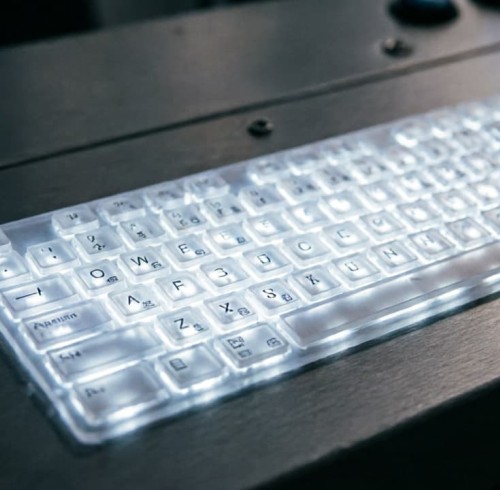
- Custom Silicone Backlight Keypad: Design, Light Guide & Manufacturing GuideJul 29,2026Engineering guide to custom silicone backlight keypads: LED structures, light guide options, laser etching, DFM checklist, manufacturing, testing and cost factors.
- Silicone Keypad Feels Too Hard? Improve Rebound Feel Through Structural DesignJul 29,2026Optimize stroke, R‑angle, and hardness balance. Use low‑CS silicone, add contact bumps, and prototype to validate crisp, durable silicone keypad feels.
- Silicone Keypad Shrinkage Rate: Why 1.028 Matters and How to Avoid Mold Failure?Jul 29,2026Silicone keypad shrinks 2.8% post‑cure. Specify rate, adjust for material/color, and use trial molds. FromRubber ensures accurate compensation for flawless molds.
- How to Prevent Sink Marks on Silicone Keypad: Rib Design Best PracticesJul 29,2026Control silicone keypad rib thickness ≤60% of wall, add relief pockets, use texture, and run DFM reviews. FromRubber helps eliminate sink marks before tooling.
- Silicone Keypad Manufacturing: 7 Critical Quality Checks Every Buyer Should KnowJul 28,2026A comprehensive guide to 7 essential quality checks every buyer must perform when sourcing custom silicone keypads — from material verification and dimensional accuracy to supplier audit frameworks and certification verification.
- How to Choose the Right Mold Steel for Your Silicone Case: An EEAT-Guided Selection FrameworkJul 28,2026Expert guide on selecting the right mold steel grade (S136H, NAK80, P20) for silicone case molds, backed by real case studies, hardness specs, and lifespan data from FromRubber precision mold engineering team.
- Silicone Mold Parting Line Design: How to Control FlashJul 28,2026Master silicone case mold parting line design. Learn precision techniques to eliminate flash, position parting surfaces correctly, and achieve flawless silicone protective cases with FromRubber engineering expertise.






Are you looking for a rubber and plastic product customization solutions manufacturer?
We can quickly provide customers with market analysis, technical support and customized services.Sign Up Out Newletter
Contact Person
