
Silicone Product Technology
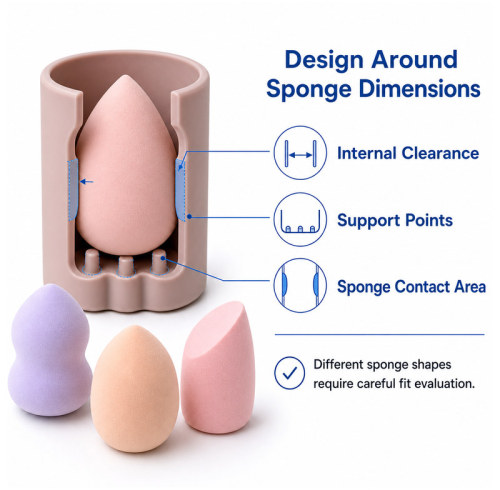
 What Structural Details Should Be Checked Before Molding a Silicone Beauty Blender Holder?Nov 9,2026Before molding a silicone beauty blender holder, check wall hardness, opening size, support points and drainage, so wet sponges stay in place without being squeezed or trapped.
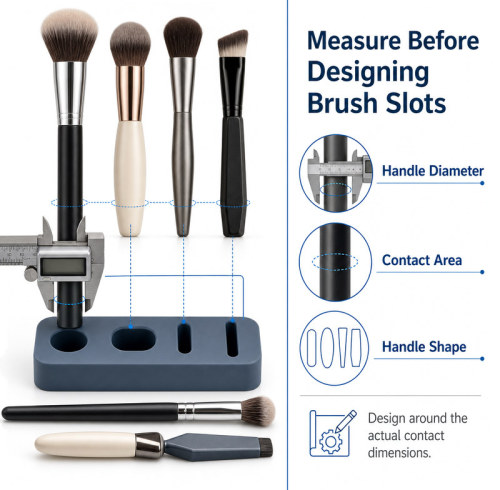
- How to Prevent Brush Slots from Being Too Tight or Loose in a Custom Silicone Makeup Brush Organizer?Nov 9,2026Slot fit in a silicone makeup brush organizer is set by opening geometry, wall thickness and compound hardness, not slot width alone. Test insertion, grip and recovery before the mold is approved.
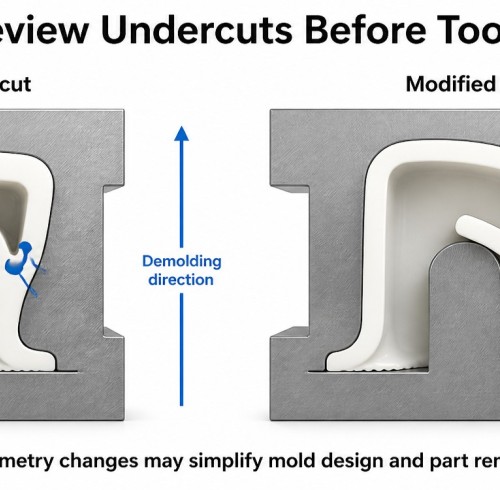
- Custom Silicone Seals for Equipment Assemblies: How to Manage Undercuts and Thin-Wall StructuresNov 5,2026A retaining lip is not difficult because it is deep. It is difficult because of the geometry around it. This article reframes undercuts and thin walls as demoulding strain, and sets out the four reviews that belong before tooling approval.
- Custom Silicone Seals for Irregular Surfaces: How to Handle Uneven Contact and GapsNov 3,2026A joint can pass a dimensional check and still leak where the mating surface steps, curves or deflects between bolts. This article explains how to measure the real gap, why extra thickness rarely fixes uneven contact, how flat, lip and stepped sections behave differently, and what to confirm before a silicone seal tool is cut.
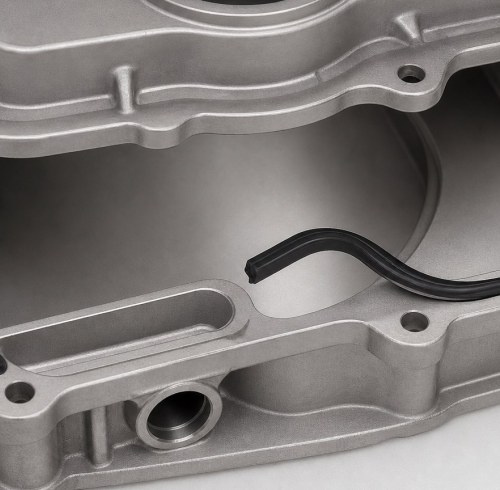
- What Causes Silicone Gaskets to Shift During Assembly? How to Improve Positioning and FitNov 3,2026A gasket that leaves its groove between placement and final torque is not a bad moulding; it is a design that allows movement in the direction the assembly pushes. This article separates slide, roll and fold failures, compares locating holes, tabs and machined grooves, and sets out how to verify positioning on the real housing.
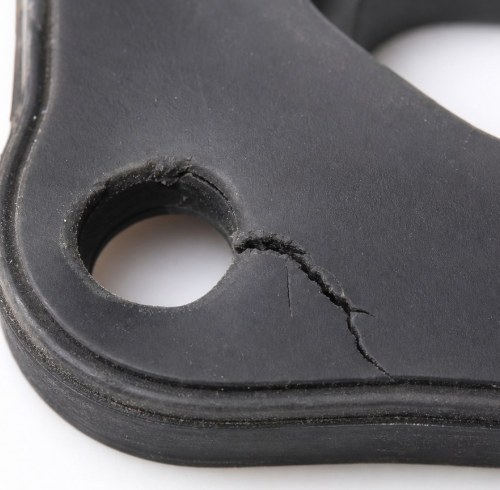
- Why Do Silicone Gaskets Tear Around the Inner Hole? Design Factors That Affect DurabilityNov 3,2026Tears at an inner hole usually start at the moulded edge, where the thinnest material meets the highest installation stress. This article explains why whitening is an early warning, how hole position and material bridges decide handling strength, why corner radius matters more than wall thickness alone, and which checks belong on the drawing rather than on the sample.
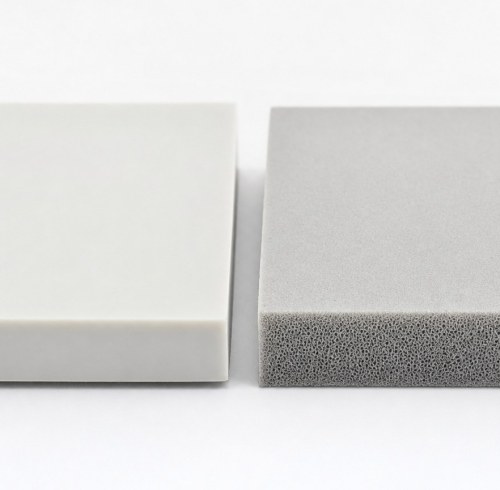
- When Should You Use Solid Silicone Gaskets Instead of Sponge Silicone Seals?Nov 3,2026The choice between solid and sponge silicone is about voids and load paths, not softness. This article compares compression force, gap absorption, pressure capability and recovery, explains where each structure fails, and sets out a short sample test that settles the argument in the real housing before tooling is committed.
- Silicone Gasket Thickness: How Does It Affect Compression, Sealing and Service Life?Nov 3,2026Thickness is how much compression travel a joint has available, not a measure of seal quality. This article explains compressed thickness, builds a four-line gap budget, shows why both thin and thick gaskets leak in opposite ways, and describes how thickness is confirmed on a sample rather than assumed from a drawing.
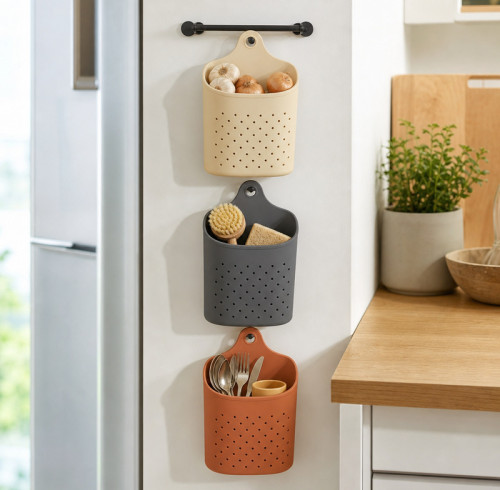
- Why Does a Silicone Hanging Drain Bag Sag? Design the Hanging Point and Bag Body TogetherNov 2,2026A silicone hanging drain bag sags because the strap acts as a short beam under an offset load. How eye position, strap depth, wall thickness and creep interact, and what to measure before tooling.
- What Happens When Silicone Colander Drain Holes Are Too Small or Too Closely Spaced?Nov 2,2026Hole diameter decides what passes and what blocks; spacing decides whether the base carries a load. Open area, ligament width, pin deflection and a sample test with real food.
- Custom Silicone Sink Drain Basket for Private Labels: Which Features Are Worth Developing?Nov 2,2026Private label drain basket projects are decided by which features get tooled. How to separate cavity features from per-part cost, and what to settle before a quotation is useful.
- How to Design the Bottom and Drainage Holes of a Silicone Hanging Drain BagNov 2,2026A hanging drain bag is moulded flat and then deflected by its load, which reverses the fall and traps water. Loaded-shape design, hole placement, recess avoidance and a retained-water test.




Are you looking for a rubber and plastic product customization solutions manufacturer?
We can quickly provide customers with market analysis, technical support and customized services.Sign Up Out Newletter
Contact Person
