Custom Silicone Sink Drain Basket for Private Labels: Which Features Are Worth Developing?
The first quotation comes back and the tooling figure is larger than the whole first order. Someone suggests dropping the hanging tab and using a plain rim to save money, someone else wants a second colour, and the launch date is eight weeks away. What nobody has done is work out which of the requested features actually changes what the customer experiences, and which ones only change the invoice.
Custom features are not priced the same way. Some live in the tool and cost nothing per unit once the tool exists, some add cost to every part, and some add risk to the whole project. Sorting a feature list into those three groups before the quotation is the difference between a product that differentiates and a product that is expensive to make and identical to use.
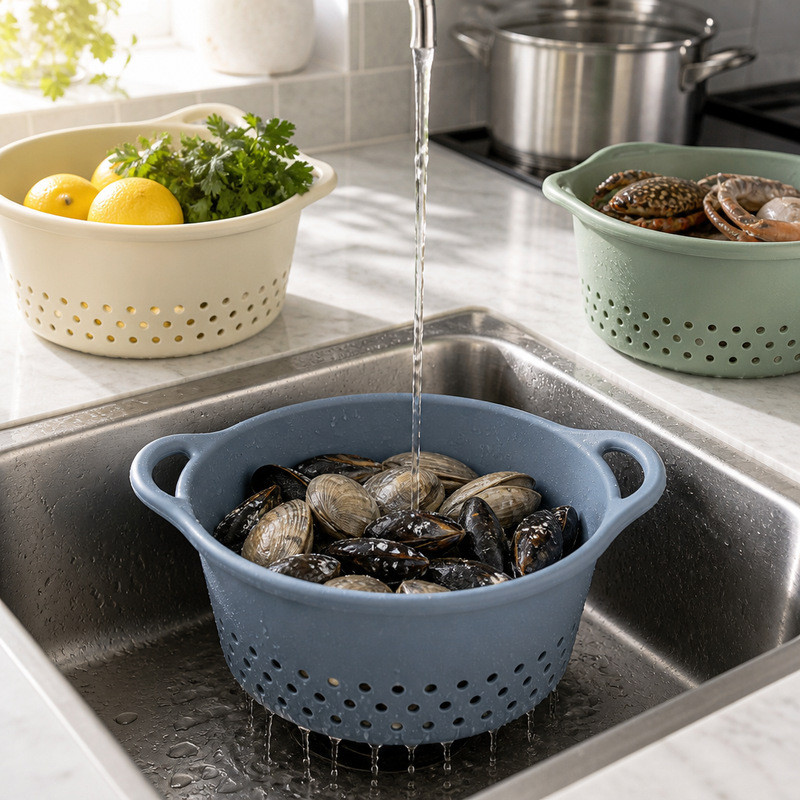
Private label work usually starts with a competitor sample and a colour card. That is a reasonable starting point and a poor brief, because the sample encodes decisions nobody has explained: why the rim is that deep, why the holes are that size, why the base has that curve.
Copying the shape without the reasoning is how a brand ends up with the same product and the same complaints, in its own colour.
Start With the Product's Intended Use Before Adding Custom Features
Decide what the basket is mainly designed to hold
The single most useful sentence in a brief is a description of what the product will hold on a normal day. Food scraps, rinsed vegetables, cutlery, sponges and bottles are five different products that happen to share a silhouette.
That sentence sets capacity, depth, aperture and — more than buyers expect — the base shape. A basket for wet scraps needs a base that releases solids; a basket for vegetables needs one that lets water move across the contents; a basket for sponges needs to dry rather than to drain.
Decide that first, then decide whether to add features. Features chosen before the core use is fixed tend to be the ones that get removed in the second sample round, after the tool has been quoted twice.
Check how the basket will be installed
Installation is where most private label projects lose time. The same body may need to hang on a rail, hook over a cabinet door, or sit on a sink divider, and each of those is a different strap, eye and rim.
Two practical questions settle most of it: what is the diameter or thickness of the thing it hangs on, and what is behind the basket when it hangs? A rail bracket that is slightly proud, a door that swings within 20 mm of the bag, or a tap that arcs over the mounting point will each invalidate a design that looked fine in isolation.
Understand the space available around the sink
A hanging basket lives in a gap. Sink rim width, the distance from the rim to the tap, and the height from the rail to the sink floor are the three dimensions that decide whether the product fits a market's kitchens at all.
These vary more than a single sample suggests. A product dimensioned from one market's sink can be too deep for another's, and the fix is usually a smaller body rather than a different strap, which is a tooling decision that should be made before the quotation rather than after.
Which Custom Features Are Worth Developing?
Before the detail, it helps to see where each feature's cost lands. This is the version we use in a first review, because it answers the question a project manager actually asks: does this change the tool, or does it change every part we make?
| Feature | Where the cost sits | Changes the tool? | Cost per unit | Buyer notices? |
|---|---|---|---|---|
| Hanging structure: eye and strap section | Cavity geometry | Yes, once | None after tooling | Yes, it holds or it sags |
| Hole pattern: aperture and pitch | Cavity plus pin set | Yes, once; pins wear | Pin replacement | Yes, it blocks or it drains |
| Rim depth and rim width | Cavity geometry | Yes | None after tooling | Yes, the mouth stays open |
| Base reinforcement along the load path | Cavity geometry | Yes, needs a defined transition | None after tooling | Yes, it keeps its shape |
| Second colour | Moulding process | Usually, extra cavity or step | Yes, every part | Yes, at the shelf |
| Surface texture | Cavity etching | Yes, cut or etched | None after tooling | Yes, in the hand |
| Logo | Cavity engraving, or a print step | Engraving once | Print only | Marginally |
| Decorative rib or groove | Cavity | Yes | None after tooling | Rarely |
A better hanging structure for more reliable installation
This is the highest-value feature in the category and the least visible on a specification sheet. A hanging structure that matches the installation method eliminates a whole class of one-star reviews: bags that lean, eyes that tear, products that fall into the sink when the rail is bumped.
It is also cheap to get right at the tooling stage. Eye diameter, strap depth and the transition radius are cavity geometry, which means they are decided once and then cost nothing per part. Changing them later means cutting steel.
The questions worth asking before tooling are unglamorous: what does it hang on, how thick is that, how much does the loaded product weigh, and does the strap need to allow the bag to swing or hold it still. The structural reasoning behind those four answers is in how the hanging point and body have to work together.
A well-planned drainage hole layout
Aperture and pitch are the second high-value feature, because they decide whether the product works at all. A basket with the wrong aperture is not a product with a minor flaw; it either loses the food or blinds over.
The cost structure here is unusual. Hole layout sits inside the cavity, so the pattern itself is a one-time tooling decision. What does have a per-part or per-tool cost is the pin set: small pins wear faster and need replacing, and a pattern with many small apertures carries a maintenance cost that a pattern with fewer larger holes does not.
A supported opening for easier loading and cleaning
Rim depth is one of the cheapest differentiators available, because it is material moved rather than material added. A deeper rim holds the mouth open, resists ovalisation and gives the product a more substantial feel without changing the compound.
Whether a brand wants to spend that difference depends on positioning. For a value line, a shallower rim and a simpler tool may be the right call. For a line sold on ease of use, the rim is where the claim is either supported or contradicted.
A reinforced bottom for better shape retention
A reinforced base — a thicker spine along the load path, or a local thickening under the strap — addresses the failure mode customers describe as "it went out of shape". It is inexpensive in material terms and it has a tooling consequence: the base cavity needs a defined thickness transition rather than a uniform offset.
What it must not do is close off drainage or create a recess that holds water. How the base and the hole pattern have to be designed as one system is set out in why the base shape decides whether it drains. Reinforcement and drainage share the same surface, and a base designed for one without checking the other is how a product becomes strong and unhygienic at the same time.
Custom colours and surface textures for brand recognition
Colour is the most requested customisation and the one with the clearest cost structure. A single-colour part in a stock compound adds almost nothing to unit cost; a specific Pantone match may require a minimum compound quantity, and a second colour adds a moulding step.
Surface texture is the opposite: it is free in unit cost and expensive in tooling time. A texture has to be cut or etched into the cavity, it affects release, and a fine texture that is too shallow for the compound will not reproduce consistently across cavities. Texture decisions belong in the tooling review, not in the packaging artwork.
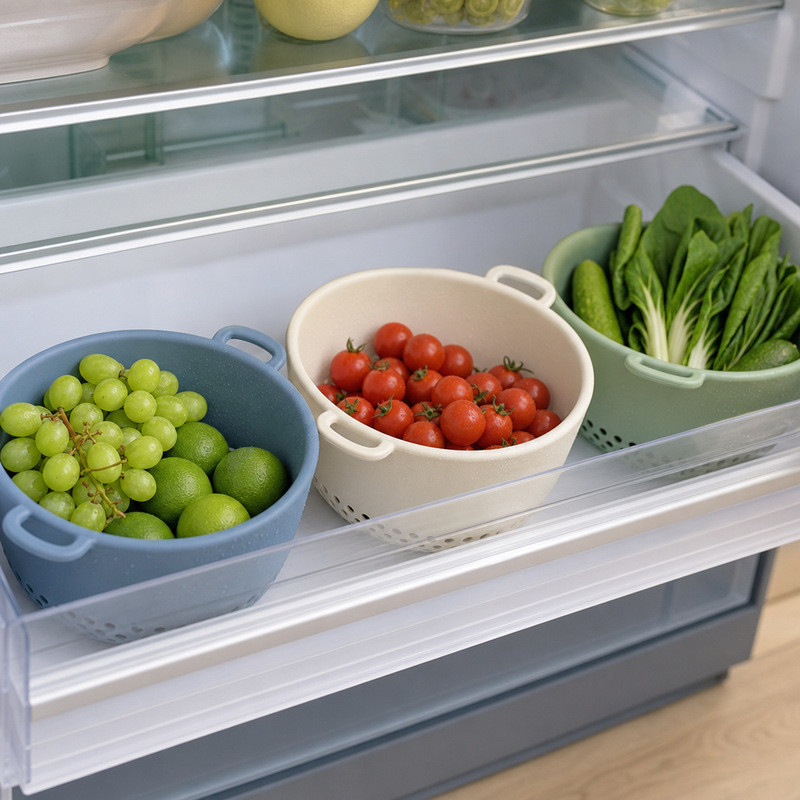
A colour range is also a stocking decision. Five colours means five SKUs, five forecasts and five chances of an imbalance, and the moulding cost does not fall because the parts share a tool.
Brands that get this right usually launch two colours and add a third once the first has sold through, rather than launching the full palette and carrying the tail.
Logo customisation that fits the product structure
There are three ways to put a mark on a moulded silicone part, and they behave differently. An engraved or embossed mark in the tool is a one-time cost and permanent; it also has a minimum legible size, and fine detail fills in or drags on release. A printed mark adds a process step and wears. A moulded-in label area, a small recessed panel, gives a clean surface for either.
The mistake is treating a logo as artwork to be scaled down. Below roughly 1 mm stroke width, moulded lettering becomes unreliable, and the fix is usually a simpler mark rather than a smaller one.
Which Custom Features May Not Be Worth the Extra Cost?
Decorative details that do not improve product function
Ribs, grooves and moulded patterns are often added to make a product look designed. Each one adds surface area, and on the inside of a basket surface area is where residue dries. Each one also adds tooling time and a potential release problem.
The test is blunt: if the feature were removed, would any customer notice in use? If the answer is no, it is decoration, and decoration belongs on the outside of the part or in the packaging.
Too many drainage holes without a clear purpose
Hole count is the most over-specified number in the category, because it is easy to count and easy to increase. Open area is what drains, and once the pattern covers the area water reaches, additional holes add pin cost, reduce ligament width and increase the chance of a moulding defect at a hole edge.
Overly complicated shapes that make cleaning difficult
Complexity in a kitchen product is usually paid for twice: once in tooling and once in daily cleaning. A shape with a narrow throat, an internal step or a deep corner will be rinsed less thoroughly than a simpler one, and the customer will notice the residue before they notice the design.
Rounded, continuous surfaces are cheaper to tool and easier to clean. In most cases they also look better, which makes complexity a hard case to argue.
Excessive wall thickness that increases material use
Thickness is the first lever everyone reaches for and the least efficient. Doubling a wall doubles the material and roughly doubles the part's resistance to simple tension, while adding depth to a section can increase bending resistance far more for the same material.
It also changes the product in ways the brief did not ask for: heavier in the hand, slower to cool, more prone to sink marks on the visible face, and harder to squeeze into a small sink.
How Do Custom Features Affect Mold Development and Manufacturing Costs?
More complex structures may require more mold considerations
Three structural features drive tooling complexity more than the rest: undercuts, deep narrow cores and tight dimensional tolerances on flexible walls.
An undercut needs a split, a lifter or a collapsible core, and each of those adds cost and maintenance. A deep narrow core pin deflects and wears. A tolerance that is tighter than the process can hold on a flexible part does not improve the product; it moves the cost into inspection and scrap.
Material hardness and wall thickness need to work together
Hardness and thickness are usually specified separately, by different people, and they interact. A harder compound in a thick wall produces a part that feels rigid and transmits impact; the same compound in a thin wall feels like a different product.
For a private label range that shares one tool across several SKUs, this matters commercially: the same cavity can produce noticeably different products at two hardnesses, which is a cheap way to create a tiered range and an expensive way to create an inconsistent one.
Colour and surface requirements should be confirmed early
Colour and texture decisions made after tooling are the most common cause of delay in this category. A texture added later means re-cutting the cavity. A colour change that requires a different compound may change shrinkage, which changes dimensions, which can put a previously approved sample out of tolerance.
Both should be locked before the tool is cut, together with the surface finish on the inside of the product, which is the face customers actually touch and clean.

Range planning is easier when the structural work is shared. One rim geometry, one strap, one hole logic, several body sizes: the tooling cost per SKU falls and the customer experience stays consistent across the range.
What should not be shared is the aperture, if the bodies are intended for different foods.
What Should Private Label Buyers Prepare Before Requesting a Quotation?
- A drawing, a reference sample or a dimensioned sketch, with the features that must be kept marked clearly.
- The intended contents and the heaviest load the product must carry.
- The installation method and the thickness of the rail, hook or door it will hang on.
- The target market, because the space around a sink and the food-contact requirements both differ by market.
- Target hardness, colour reference, surface finish and whether a logo is required.
- Expected order quantity and whether the project will launch with one SKU or several.
- Which features are negotiable and which are fixed, stated explicitly rather than discovered later.
That last item is worth more than any other. A brief that marks three features as fixed and the rest as open gives a manufacturer room to remove cost without touching the parts of the design the brand is actually selling.
Food contact is the other item that changes with the market. In the United States, rubber articles intended for repeated food contact fall under 21 CFR 177.2600, which lists permitted elastomers and adjuvant substances rather than approving "silicone" as a material class. Elsewhere the position is set market by market. Either way, the declaration a buyer needs names a formulation and a rule, not a material category, which is why the target market has to be settled before the compound is.
How Can FromRubber Support Custom Silicone Sink Drain Basket Development?
FromRubber, trading as Dongguan Bohao Electronic Technology Co., Ltd., makes custom silicone parts for kitchen and household products, with tooling and moulding under one roof rather than split across suppliers. That matters for this category because the structural decisions — rim depth, base section, hole pattern, strap geometry — are tooling decisions, and the people who review them should be the people who cut the cavity.
The review we run before quoting is deliberately plain. We read the drawing against the intended contents, check the section at the load path, calculate open area from the actual pitch, and list the places where the design cannot be moulded as drawn or cannot be held to the tolerance requested. Most of those notes are cheap to act on before tooling and expensive after.
The workshop runs its own mould making operation alongside compression moulding, multi-colour moulding and finishing, and the quality system is certified to IATF 16949 and ISO 9001; the certificates are available on our certification download page. For buyers who want the sequence in detail, the sample-to-production process sets out what happens at each stage and what is needed from the buyer.
One commercial point worth raising early: tooling ownership and tooling cost recovery should be agreed in writing before the first sample, not after the project succeeds. Buyers ask us about both regularly, and the honest answer depends on the order volume and the expected life of the tool rather than on a policy.
Conclusion: Develop Features That Solve Real Problems, Not Just Add Complexity
Hanging structure, drainage layout, rim support and base reinforcement are worth developing because each one removes a specific complaint. Colour, texture and logo are worth developing because they make the product recognisable, and they are cheap in unit cost if they are decided before the tool is cut.
Everything else should have to justify itself. A feature that no customer notices in use is a feature the brand pays for twice: once in tooling and once in the maintenance of a more complicated mould.
Which custom feature gives the best return for a private label drain basket?
The hanging structure, because it is cavity geometry that costs nothing per part once the tool exists, and because a product that does not hang correctly generates returns that no colour range will offset.
Does a second colour add much to the unit cost?
It adds a moulding step and a second material handling stream, so it does. A single-colour part in a stock compound is the cheapest option; a specific colour match may also carry a minimum compound order.
Can we add features after the first sample?
Some, yes. Geometry that sits on the outside face and stays within the existing tool's clearance can often be modified. Anything that changes the cavity, the pin set or the rim section means re-cutting steel, which is why the feature list should be settled before tooling.
What information speeds up a custom silicone basket quotation?
A dimensioned drawing or a sample, the intended contents and load, the installation method, the target market, and a clear statement of which features are fixed and which are open to change.
Sources and related reading
- Which details to finalise before a quotation — the same feature-freezing logic on a different moulded product.
- Who owns the mould after tooling is complete — the question worth settling in writing before the first sample.
- Whether mould costs are refundable — how tooling recovery is usually handled.
- How hole layout affects water flow — why open area, not hole count, is the number to specify.
- Uneven walls and the cost of extra thickness — why thicker is not the same as stronger.
Cost structures, tooling life and order minimums depend on the specific part, cavity count and order volume, and are confirmed in a quotation rather than in an article. Food-contact requirements differ by market and should be confirmed for the material and the market you are selling into.
Planning a private label range?
Send the drawing or reference sample, the intended contents, the installation method and the markets you are selling into. A first review of structure and tooling feasibility usually comes back faster when those four are clear.
- Email: nani@fromrubber.com or karl@fromrubber.com
- WeChat / WhatsApp: +86 18676210913
- FromRubber, Dongguan Bohao Electronic Technology Co., Ltd. — custom silicone parts for kitchen and household products