
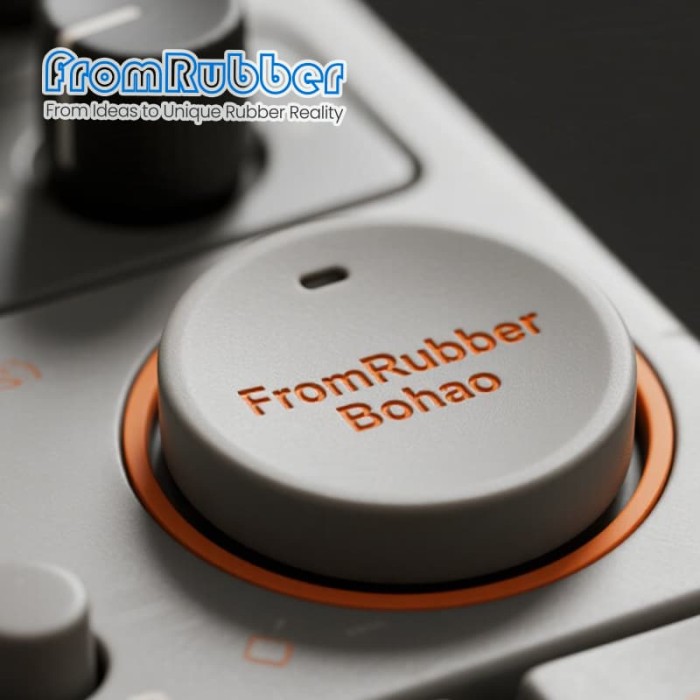
Equipment Silicone Keypad – Chemical Resistant, Laser Etched,Screen Printing


| Share | |
|---|---|
| Categories | Custom Silicone Rubber Meter Instrument Keypad |
| Brand | FromRubber Silicone & Plastic OEM Manufacturer |
| Product Specifications | BH-equipment keypad |
| Design | Follow 3D Drawing Or Physical Object |
| Process | Molding |
| Feature | Chemical Resistant |
| MOQ | 3000pcs |
| Application | industrial, medical & automotive applications |
| Download |  |
"Chemical resistant" is not one property, and the marking usually fails first
Silicone resists a wide range of chemicals, which is why it ends up on equipment that gets splashed, wiped and washed down. But a finished keypad is silicone plus a legend plus a coating, and those three do not resist the same things. An acid that leaves the rubber untouched can dull printed ink; an alkaline cleaner can lift a hard coat without touching the silicone underneath.
So the specification has two halves: the chemical class the panel will meet, and the marking process that can survive it. Written separately, they produce a keypad that passes one and fails the other.
Break the chemical question into classes
Four classes, four failure modes
Acids. Dilute acids are usually tolerated by the silicone; printed legends and some coatings are not, and the damage shows as a faded or chalky mark.
Alkalis. Strong alkaline cleaners attack the bond line and soften some coatings. On a panel that is wiped rather than soaked, the failure appears at the perimeter first.
Solvents. Alcohols are mild; ketones and aromatic solvents can swell the silicone and lift ink. This is the class most often underestimated in a "cleanroom" specification.
Oils and coolants. Machine oils and cutting fluids are usually harmless to silicone but leave a film that must be removed before any adhesion step.
Marking durability is a ranking, not a claim
Three processes, three wear surfaces
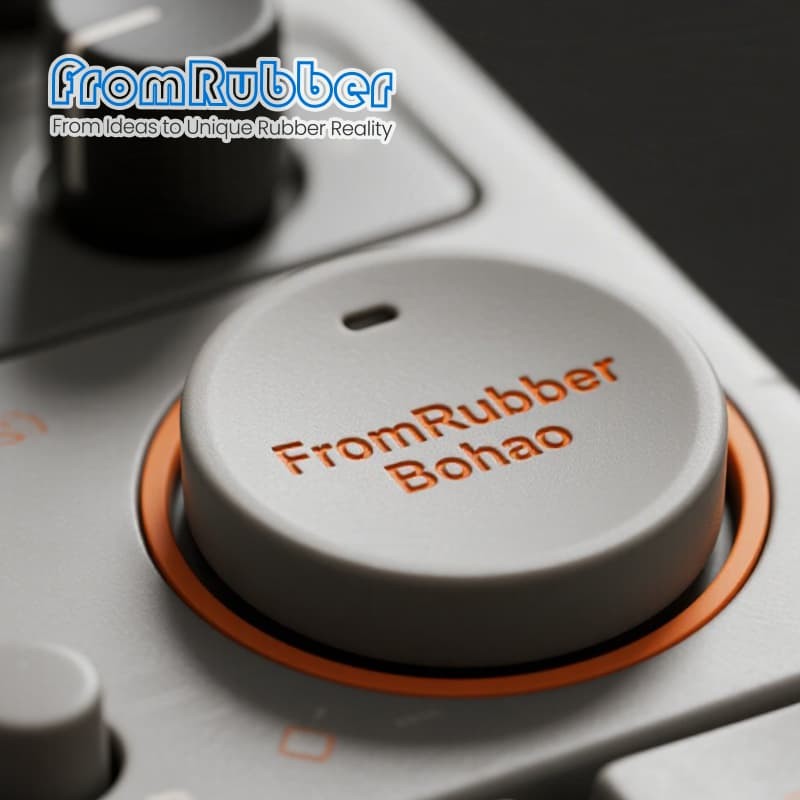
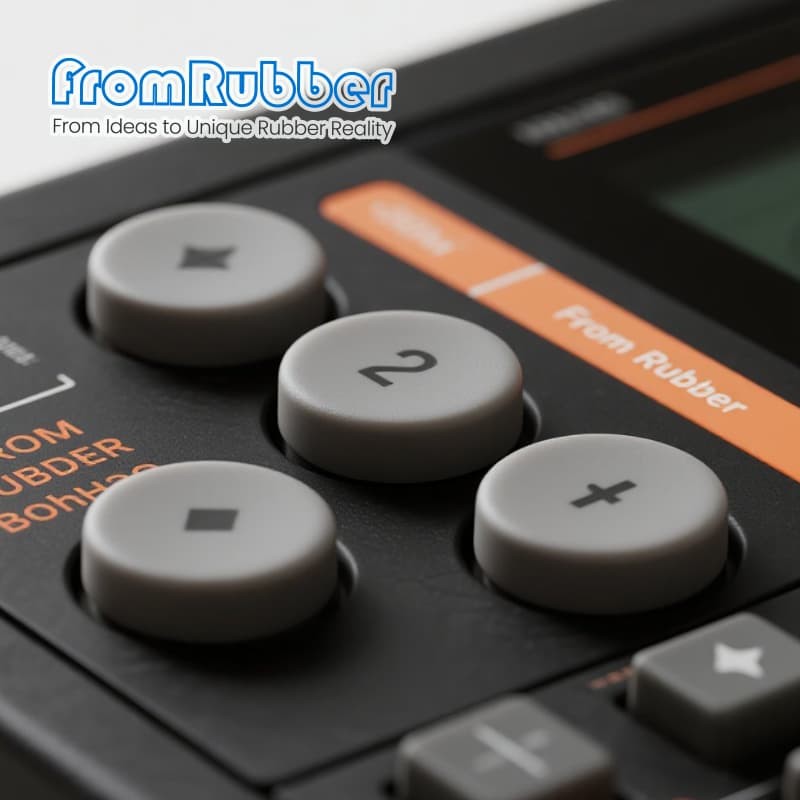
Moulded character. No added layer: the contrast is the geometry. Highest durability and the only option that reads by touch.
Laser etching. Removes material to create a matte or contrasting surface. Very durable against abrasion and most solvents, but tonal rather than coloured.
Screen printing. Best colour fidelity and the lowest tooling cost, with a protective hard coat for wear. Its durability is a function of the ink and the coat, not of the silicone, so it has to be qualified against the actual chemical.
How to test a legend, properly
Soak
Submerge a sample in the chemical for the contact time the panel will see, then check adhesion and colour. A wipe test is not a soak test.
Rub
Rub the legend with the cloth and pressure used in service, for the number of cycles a year represents. Read the legend, not the panel.
Combined
Clean, dry, abrade, clean again. Real cleaning is cyclic, and the second wetting is what finds a softened coat.
The comparison between surface treatments is covered in screen printing versus heat transfer versus laser etching, and the process differences specifically in laser, screen and dome printing. Laser capability itself is described on the laser etching service page.
What equipment panels actually meet
Beyond the datasheet
Laboratory and process equipment brings a mix that no single datasheet covers: IPA during cleaning, cutting fluid during maintenance, a disinfectant at shift change and a wash-down at the weekend. Each acts on a different part of the panel.
The practical approach is to list the top three chemicals by contact frequency, specify the marking for the worst of them, and test that combination - rather than testing each in isolation and assuming the panel will meet them separately.
Specification on this series
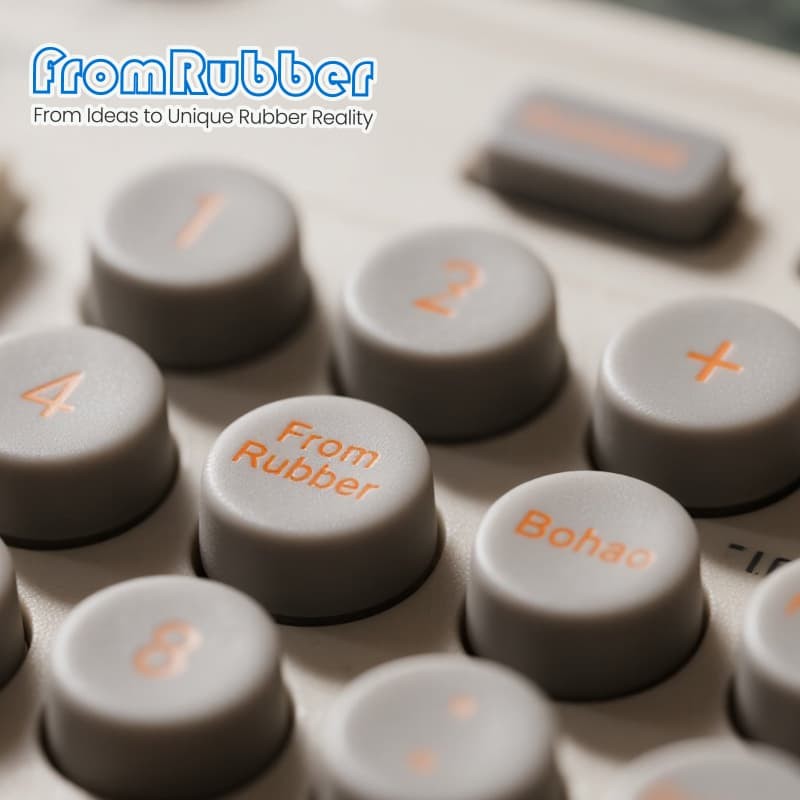
- Construction
- Moulded silicone keypad with moulded, laser-etched or screen-printed legends
- Chemical resistance
- Qualified against the named chemicals and contact times, not against a general claim
- Marking
- Moulded character, laser etching or screen printing with protective coat
- Sealing
- Perimeter bond and tail exit specified where wash-down is part of the routine
- Typical applications
- Laboratory instruments, process equipment, analysers and industrial controllers
- Minimum order
- 3,000 pieces per design
Cleaning protocols for clinical equipment are covered in chemical resistance for medical device keypads. Chemical-resistant keypads as a category are listed under chemical resistant silicone keypads.
Questions from equipment designers
Is silicone resistant to everything?
No. It is unusually broad, but strong solvents, some oils and concentrated acids still affect it, and the legend and coating are more vulnerable than the rubber. Ask which chemical, at what concentration, for how long.
Which marking survives a solvent wipe best?
A moulded character, because there is no separate layer to attack. Laser etching is next. Screen printing can be excellent, but only with an ink and coat qualified against that solvent.
Does a hard coat change the feel?
Slightly. It adds a thin, harder surface that some users prefer and others find slick. If feel is critical, specify the coat and the force together.
Can the panel be re-marked in the field?
Not reliably. A worn printed legend can sometimes be replaced with a label, but a moulded or laser legend that has worn through is a panel replacement.
Send the chemical list and the contact time
Resistance is a function of chemical, concentration, temperature and dwell. Send the three cleaners that matter most and how long they sit on the panel, and we will propose the marking and the coat that can be tested against them.
Request a keypad quote See chemical resistant keypads- 加载中···



Start Your Project Today!
- Phone
- *Title
- *Content
Sign Up Out Newletter
