
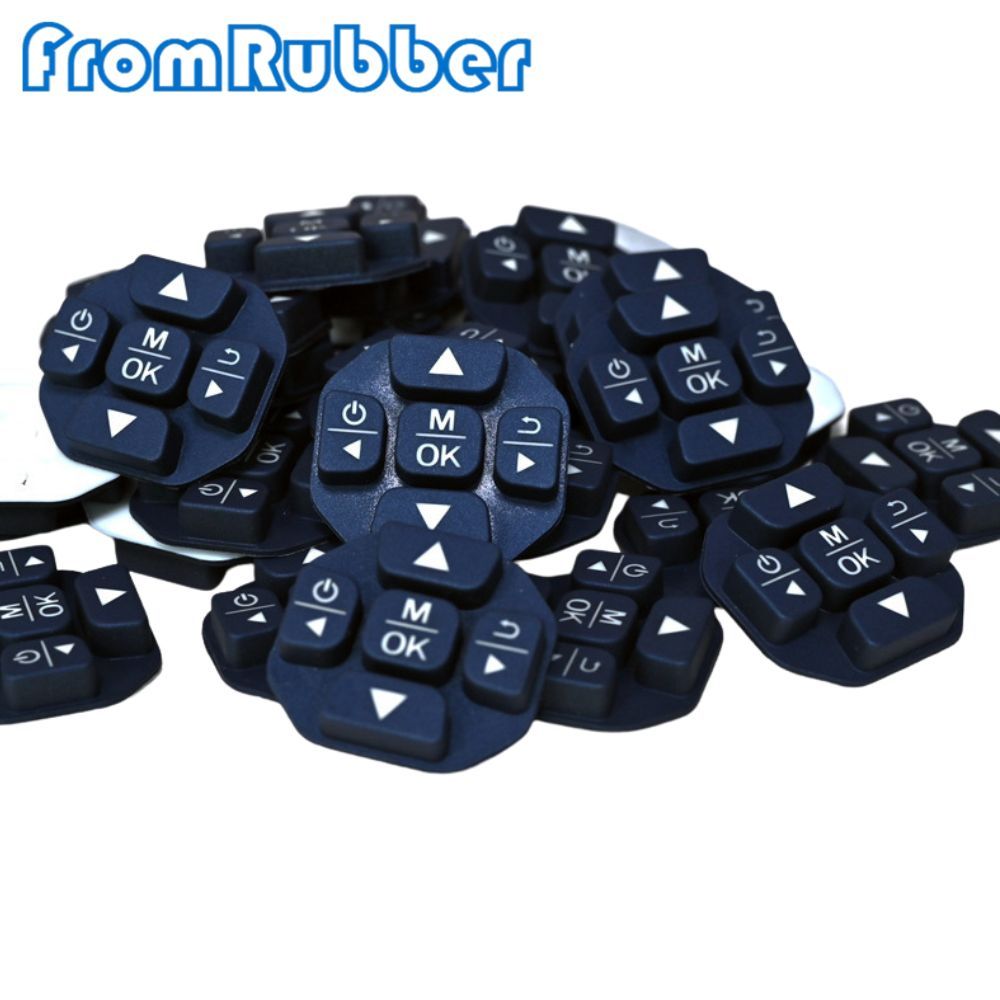
Detector Silicone Keypad Conductive Screen Printing Silicone Button


| Share | |
|---|---|
| Categories | Custom Silicone Rubber Meter Instrument Keypad |
| Brand | FromRubber Silicone & Plastic OEM Manufacturer |
| Product Specifications | Detector |
| Produuct Name | Detector |
| Material | Silicone |
| Process | Compress+conductive+Printing+packing |
| Size | 3*4cm |
| Hardness | 30A-80A |
| Function | Push button |
| Certification | ISO9001 |
| Packing | opp bag |
| FOB port | Shenzhen |
| Terms of Payment | L/C, D/A, D/P, Western Union, MoneyGram, T/T, Paypal |
| Download |  |
Silicone Keypads / Handheld Instruments
Detector Silicone Keypad with Conductive Screen Printing: Actuation, Contact and Life
A detector silicone keypad is a mechanical switch assembly disguised as a rubber mat: the web flexes, the conductive pad closes the circuit on the PCB, and the legend tells the operator which function they just triggered.
Three numbers decide whether it works in the field: actuation force, contact resistance and key life. All three are set by geometry and conductive printing, and all three can be measured before the tool is cut.
- 150-300 g actuation
- 0.5-1.5 mm travel
- Carbon pill or printed trace
- 100k+ cycles
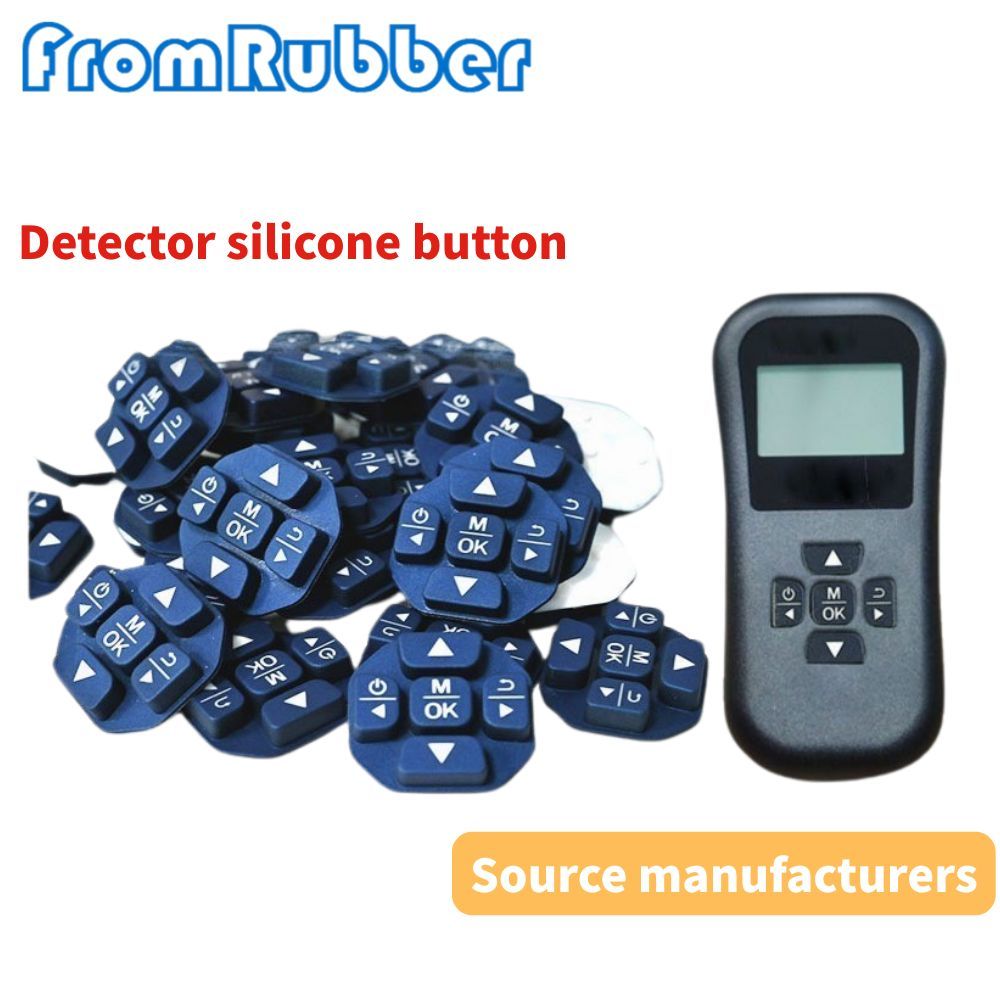
How a Detector Silicone Keypad Makes Contact
The electrical function is decided by four mechanical details.
- 01
The web is the spring
Web thickness and diameter set the actuation force and the snap. A flat web feels mushy; a properly formed cone gives the click the operator uses as confirmation.
- 02
The conductive pad closes the circuit
A carbon pill or a printed conductive trace bridges the PCB pads. Pill height and flatness decide whether the contact is made at the centre of travel or only at the bottom.
- 03
The legend is part of the switch
If the operator cannot read the key under a glove or in low light, the switch has failed regardless of its electrical life. Legend contrast and size are functional, not decorative.
- 04
The sealing lip keeps it working
Handheld detectors see dust, splash and cleaning agents. A moulded perimeter lip, or a sealed gasket, is what stops the contamination that turns a keypad into a sticky one.

Conductive Silicone Keypad: Force, Travel and Contact Window
| Parameter | Typical design window | Why it matters |
|---|---|---|
| Actuation force | 150-300 g for handheld detectors | Lighter misfires in a pocket; heavier tires the operator |
| Travel | 0.5-1.5 mm | Enough snap for feedback, short enough to seal |
| Contact resistance | Agreed target per design, commonly a few hundred ohms or less for carbon | Rising resistance reads as a dead or intermittent key |
| Key life | 100,000 to 1,000,000 cycles depending on web design | Web fatigue, not the legend, is usually the limit |
| Pill or trace height | Set so contact is made before the key bottoms out | Contact only at full travel feels dead and wears faster |
| Sealing | Moulded lip or gasket to the agreed IP level | Dust and cleaning agents are the usual field killers |
Targets are agreed with the electronics team, because contact resistance depends on the PCB finish and the pad area as much as on the keypad. Acceptance is measured on the assembled instrument.
Screen Printing Silicone Button: Conductive Ink and Carbon Pills
Two ways to make the contact, with different cost and life profiles.
- 01
Carbon pill
A moulded conductive pad with high carbon loading. Robust and repeatable, and the usual choice where the key is pressed often and the contact pad is generous.
- 02
Printed conductive trace
Screen-printed conductive silicone ink, thinner and cheaper to tool, but the trace is a coating and its resistance depends on print thickness and cure.
- 03
Legend printing and protection
Legend ink sits on the surface and needs a clear coat or a moulded-in legend to survive solvents and abrasion. Laser-etched legends are the most durable option on dark keys.
- 04
Backlighting
Light guides moulded into the silicone, or translucent keys over LEDs, let the keypad work in low light without cutting a window that weakens the seal.
Where the instrument also needs a sealed display window, the groove and compression rules in small molded rubber gaskets for instrument sealing apply.

From Key Layout to Serial Detector Silicone Keypad
Keypads are validated as assemblies. A force-deflection curve on the moulded mat, a resistance check on the assembled PCB and a life test on the actual switch stack are worth more than any single dimension on the drawing.
We mold under IATF 16949 and ISO 9001 quality systems with ISO 14001 environmental management. Batches are checked for web dimensions, hardness, legend registration and conductive pad height, and life testing follows the agreed cycle count rather than a best-case sample.
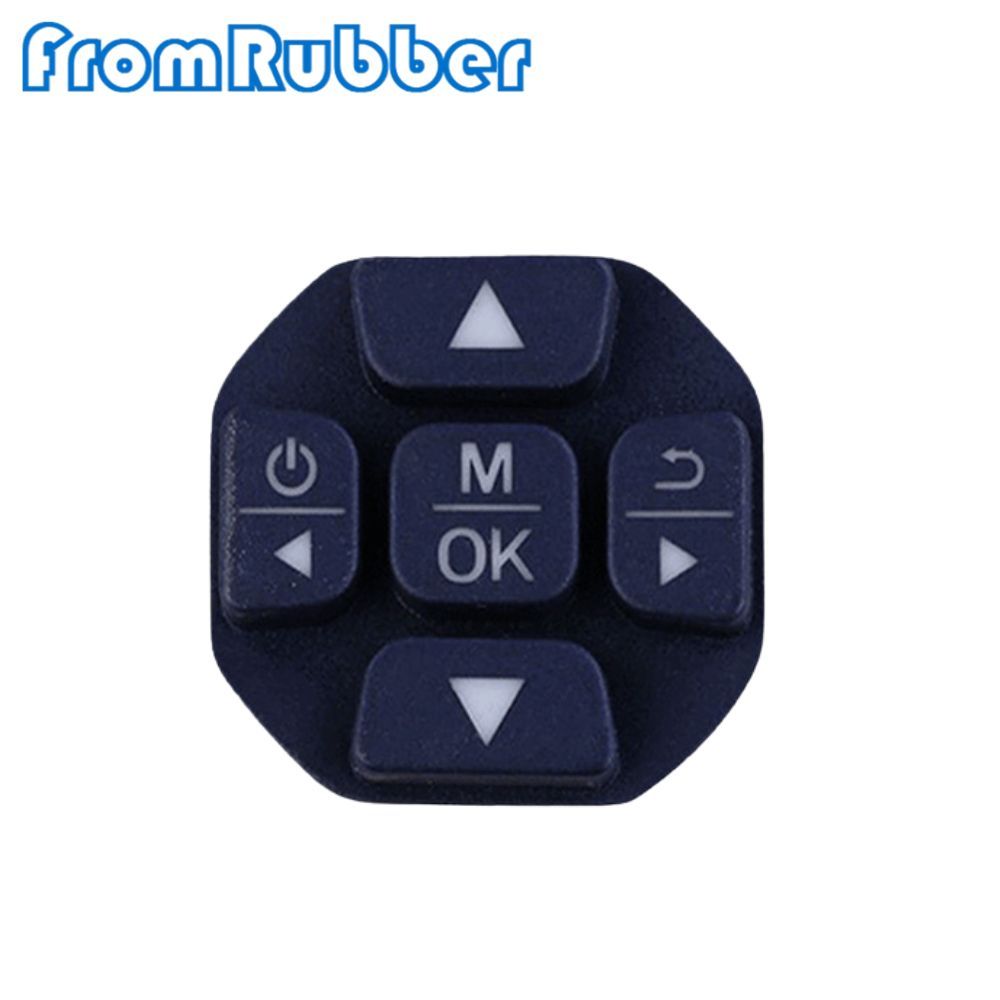
Four Steps to a Production Detector Silicone Keypad
Four steps, starting with the PCB pads rather than the artwork.
Send the PCB and the key layout
Pad positions and finish, the functions to be labelled, the enclosure sealing requirement and the operating environment.
Force and travel review
We set web geometry, pill height and legend method against the target force and the IP requirement.
Prototype and stack test
Samples on the real PCB for force-deflection, contact resistance and feel, with legend variants for the operator check.
Production with life testing
Multi-cavity tool, first article, batch checks on web and pad, life test to the agreed cycle count.
Detector Silicone Keypad FAQ
Questions from instrument designers and purchasing teams.
Carbon pill or printed conductive trace?
A pill when the key is pressed often and the pad is generous; a printed trace when thickness and cost matter more and the duty is lighter. The resistance target usually settles the argument.
What actuation force suits a handheld detector?
150-300 g covers most handheld instruments. The right number depends on whether the operator wears gloves and whether the device sits in a pocket where light keys misfire.
How long will the legends last?
Printed legends with a clear coat survive normal handling; laser-etched or moulded-in legends survive solvents and heavy abrasion. The choice is usually made by the cleaning agent the user applies.
Can the keypad be sealed to IP65?
Yes, with a moulded perimeter lip and a housing that gives it a defined compression. The rating belongs to the assembled instrument, so the test is run on the enclosure.
Send the PCB pads and the key layout
Tell us the pad finish, the functions to label and the environment the instrument works in. We will set the web, the contact method and the legends, and check the feel on a prototype stack.
- 加载中···


Start Your Project Today!
- Phone
- *Title
- *Content
Sign Up Out Newletter
