
Home / All
Blog
 Is an ABS Enclosure Right for Your Consumer Electronics Product?Nov 17,2025This comprehensive analysis examines whether ABS plastic is the right choice for consumer electronics enclosures. The guide explores ABS material properties, cost-benefit analysis against alternatives, manufacturing considerations, aesthetic capabilities, and environmental factors. Learn when ABS excels for budget-conscious projects requiring good properties and superior surface finishes.Discover how to balance performance, aesthetics, cost, and sustainability for your product's success.
- Case Study: Designing a Weatherproof ABS Housing for Outdoor Sensor & CameraNov 14,2025This case study details designing a weatherproof ABS housing for outdoor sensors and cameras. The project overcame environmental challenges using UV-stabilized ABS and innovative multi-layer sealing to achieve IP67 rating. The housing withstands -30°C to +60°C temperatures, heavy rainfall, and UV exposure while maintaining optimal performance. Optimized injection molding reduced costs by 20%. The solution extends product lifespan to 10+ years in harsh conditions.
- Common ABS Shell Design Mistakes to AvoidNov 13,2025This comprehensive guide reveals the six most critical ABS shell design mistakes that compromise product quality and manufacturability. Learn how to avoid wall thickness inconsistencies, improper rib design, inadequate draft angles, poor boss construction, material shrinkage issues, and environmental stress cracking. Discover practical design solutions and best practices to create durable, cost-effective ABS enclosures that meet quality standards and production requirements.
- 5 Signs You Need a New OEM Rubber Keypad SupplierNov 12,2025Discover the 5 signs that indicate it's time to replace your OEM rubber keypad supplier. This comprehensive guide examines consistent quality issues, unreliable delivery schedules, limited customization capabilities, unjustified cost increases, and poor technical support. Learn how to identify supplier deficiencies that could be compromising your product quality and business performance. Understand when to make the strategic decision to find a new manufacturing partner who can meet your
- Customized Silicone Seals for Automotive Industry in USANov 12,2025Discover custom silicone seals for the automotive industry in the USA offering high durability temperature resistance and precise engineering.
- How to Design a Custom Rubber Button: Checklist for Shape, Texture, and Tactile FeedbackNov 11,2025This comprehensive guide details custom rubber button design, focusing on three critical elements: shape, texture, and tactile feedback. The article covers material properties, manufacturing considerations, and solutions to common design challenges, helping engineers create high-performance rubber buttons for medical devices, industrial controls, and consumer electronics applications.
- It Is Time To Replace Your Rubber Keypad!Nov 7,2025Proactive replacement of deteriorating rubber keypads is always more cost-effective than dealing with the consequences of complete failure. When your equipment's interface shows signs of wear, it truly is time to replace your rubber keypad.
- Custom Silicone Keypads for Legacy Equipment: How to Update or Replicate Obsolete DesignsNov 6,2025We specialize in custom silicone keypad manufacturing for legacy equipment repair. Our services include updating obsolete designs with modern improvements or accurately replicating original keypads. We use high-quality materials and precise molding techniques to ensure perfect fit and long-term reliability for your repair needs.
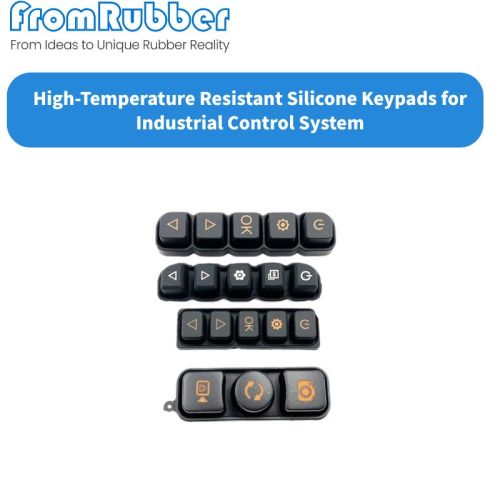
- High-Temperature Resistant Silicone Keypads for Industrial Control SystemsNov 5,2025Discover high-temperature resistant silicone keypads designed for industrial machinery controls offering durability chemical resistance and custom options
- Silicone Keypad vs. Membrane Switch : Choosing the Right Control for Your PanelNov 5,2025This guide explores the critical differences between silicone keypads and membrane switches. Silicone keypads offer superior tactile feedback, durability, and environmental sealing, making them ideal for harsh industrial, medical, and outdoor applications. Membrane switches provide a cost-effective, low-profile solution with excellent graphic capabilities for consumer electronics and instrumentation. The article details their operating principles, technical specifications to help engineers
- Silicone vs Rubber Seals: Which One Is Right for Your Project?Nov 4,2025This article provides a comprehensive comparison between silicone and rubber seals, exploring their properties, benefits, and best-use scenarios. It highlights performance under temperature extremes, chemical exposure, and mechanical stress, guiding engineers and manufacturers to choose the ideal sealing material for industrial, electronic, or medical applications.
- Understanding Silicone Keypad Manufacturing: RTV vs. LSR ExplainedNov 3,2025This article explores the critical aspects of silicone keypad manufacturing, focusing on the distinctions and applications of Room-Temperature-Vulcanizing (RTV) and Liquid Silicone Rubber (LSR). RTV silicone is primarily utilized for prototyping and low-volume production due to its ability to cure at ambient temperatures, offering a cost-effective solution for initial design validation. Its tooling is less expensive and quicker to produce, making it ideal for testing concepts before mass product



Are you looking for a rubber and plastic product customization solutions manufacturer?
We can quickly provide customers with market analysis, technical support and customized services.Sign Up Out Newletter
Contact Person
