
Colored Keypad Rubber Manufacturer Provide Free Consultation Service

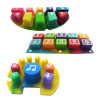
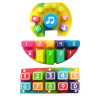
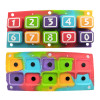

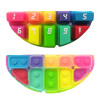

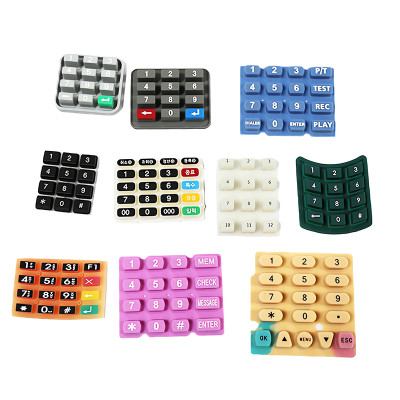
Coloured Silicone Keypads: How Colour Is Specified, Matched and Held Across Batches
Colour on a silicone keypad is usually treated as a purchasing detail and then becomes the reason a batch is rejected. The difference between a keypad that matches the brand palette and one that drifts between lots is decided by three things: whether the colour is in the compound or on the surface, how the match is approved, and how each lot is checked. This page covers all three.
Colour in a Silicone Keypad Is a Material Decision, Not a Print Decision
Pigment in the compound versus ink on the surface
Colour can enter a keypad in two places. Mixed into the silicone compound, it becomes part of the material and cannot wear off, but it is limited to one tone per moulding and changes the compound's cure behaviour slightly. Printed on the surface, it allows several colours and fine gradients on one key, but it sits on a low-surface-energy substrate where adhesion is the whole problem.
The choice usually follows the wear pattern. Keys that are pressed constantly, such as a numeric key or a start key, are better moulded in colour because the surface is abraded continuously. Brand marks and multi-colour icons that are read rather than touched can be printed, provided the ink system and cure are matched to the silicone.
- Moulded-in colour for high-wear keys and base tones
- Printing for multi-colour icons and fine detail
- Decide per key, not per keypad
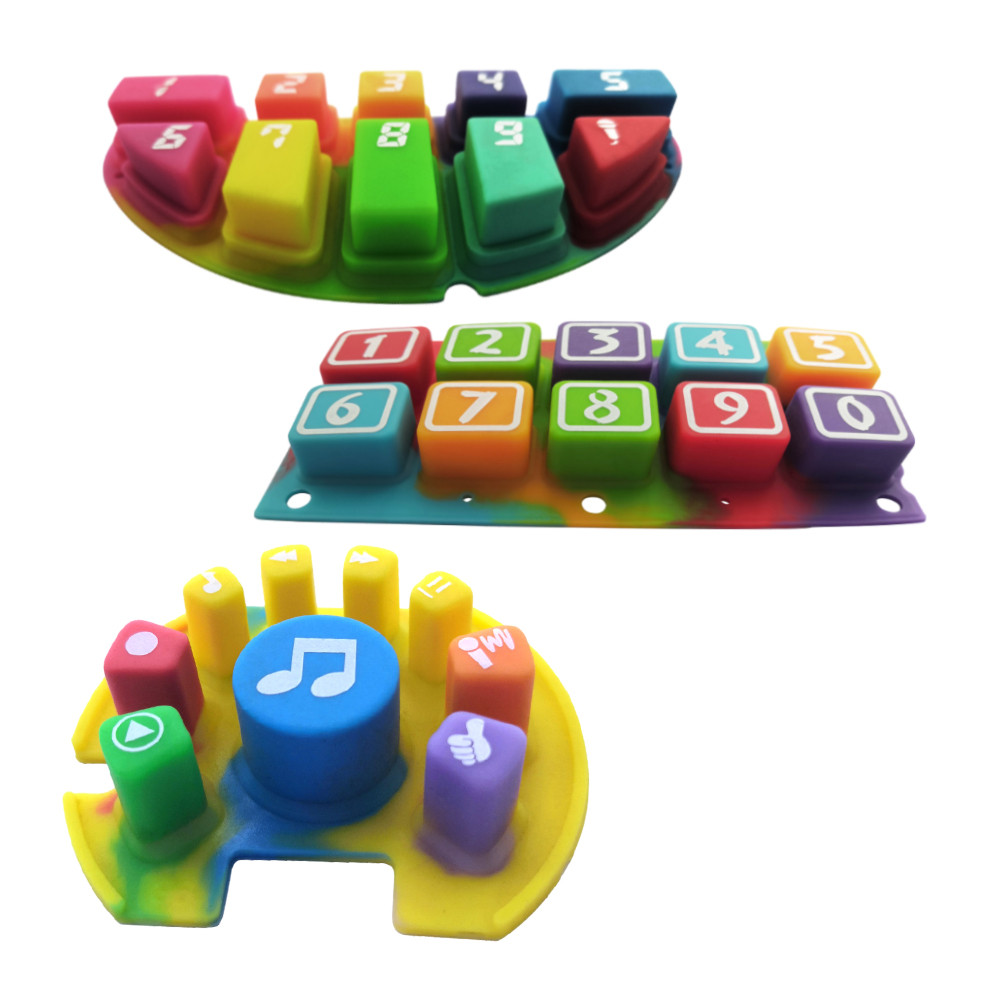

Matching a Colour Reference in Silicone
Why the same code looks different on rubber
A colour reference defined on coated paper assumes a smooth, opaque, glossy surface. Vulcanised silicone is matte, slightly translucent and has a texture that scatters light, so the same formulation reads darker and less saturated on a keypad than on a paper chip. Matching the code exactly, without matching the surface, produces a part that is technically correct and visually wrong.
The workable method is to approve a moulded plaque made from the production compound and texture, under a defined light source, and then hold that plaque as the master. Paper references are used to start the match, not to accept the part. Where a keypad has both moulded and printed colour, both are on the same plaque so the relationship between them is approved in one step.
- Approve on a moulded plaque with the production texture
- Hold the plaque as the master for every later lot
- Check printed and moulded colours together on one plaque
Multi-Colour Keypads: What Moulding Can and Cannot Do
Inserts, two-shot and pad printing
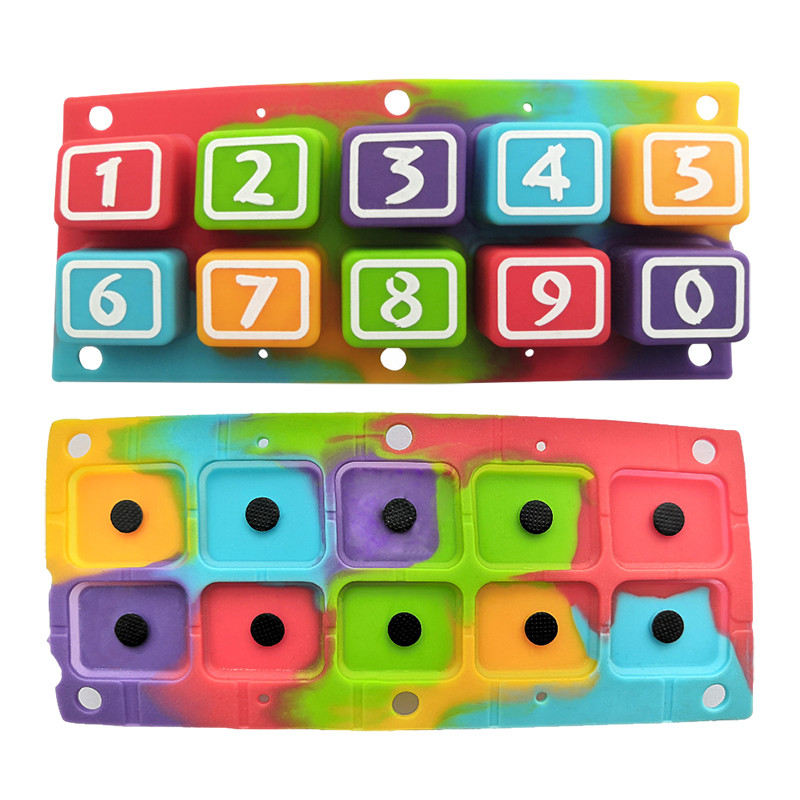
Moulding several colours into one silicone keypad is possible with insert loading or a two-shot process. Insert loading places pre-moulded coloured keys into the tool before the base is moulded, which gives a true multi-colour part with no printing to wear. The limitation is geometric: each inserted element needs a locating feature and enough wall to bond, so the design becomes coarser than a printed layout.
Where the layout is fine, printing carries the colour instead. Screen printing holds solid areas and bold symbols well, pad printing handles recessed and curved surfaces, and laser etching produces a single-colour mark by removing material. A keypad that combines a moulded base colour with a printed icon is the most common compromise, and it is usually the most durable one for its cost.
- Insert or two-shot moulding for colour that must never wear
- Printing for fine layouts and multi-colour icons
- Allow locating features when inserts are used

Colourfastness Under Light, Sweat and Cleaning
What to test before a full run
Colour performance is three separate questions. Lightfastness asks whether the colour shifts under exposure, which matters most for pale tones and for reds. Bleed asks whether a dark pigment migrates into an adjacent light area during cure, which is a risk in two-colour moulding. Chemical resistance asks whether the cleaning agent removes or dulls the surface colour.
Testing all three on the moulded part, rather than on a material data sheet, is what prevents a batch rejection later. The cost of the test is small compared with a production lot that has to be re-moulded because a white key turned cream next to a dark one.
- Test lightfastness on pale and red tones specifically
- Check for pigment bleed between colours after cure
- Wipe with the actual cleaning agent before approval
Coloured Keypad Specification Fields
Colour is approved on a moulded plaque under a defined light source; acceptance values for lightfastness and bleed are agreed per project.
- Part type
- Coloured silicone keypad
- Colour route
- Moulded-in compound, surface printing, or a combination
- Colour reference
- Brand colour or physical master, matched to a moulded plaque
- Surface
- Production texture included in the colour approval
- Multi-colour
- Insert loading, two-shot moulding or printing
- Pigment
- Declared for heavy metals and restricted substances
- Lightfastness
- Tested on the moulded part
- Bleed
- Checked between adjacent colours after cure
- Chemical resistance
- Wiped with the specified cleaning agent
- Design input
- 3D drawing (STEP/IGS) plus 2D drawing, or a physical sample
- Minimum order
- 1000 pcs for this product family
Questions About Keypad Colour
Can you match a brand colour reference?
Yes, matched to a physical master or a stated reference and approved on a moulded plaque with the production texture. The plaque is retained as the master for later lots, because a paper reference cannot represent a matte silicone surface.
How many colours can one keypad have?
That depends on the route. Moulded multi-colour is limited by the insert or two-shot design and by the wall available for locating features. Printing allows more colours and finer detail, at the cost of a surface layer that has to be tested for adhesion and wear.
Will a white keypad turn yellow?
Pale tones are the most sensitive to heat and light. The compound, the cure and the light exposure all contribute, so lightfastness is tested on the moulded part and the result is discussed before a full run rather than assumed.
Is a custom colour available at low volume?
Custom colour is normally tied to the production order for this product family, because a compound batch is mixed for the run. Prototype quantities are discussed separately so the colour can be approved before production.
Send the Colour Reference and the Key Layout
Share the brand colour, the key layout and the cleaning agents. The review returns the colour route per key, the plaque approval method and the tests to run before a full production batch.
- 加载中···
Start Your Project Today!
- Phone
- *Title
- *Content
Sign Up Out Newletter
