
Custom Dustproof Silicone Lid For psvr2 Lenses | Protective Silicone Pad


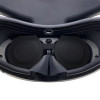


Dustproof Silicone Lid for PSVR2 Lenses: Protecting an Optical Surface Without Touching It
A lens cover on a VR headset is not a protective case. The surface it protects is a coated optical element that scratches from a single grain of dust, and the cover itself becomes the source of that grain if it rests on the lens. A workable silicone lens lid therefore locates on the bezel or the housing, holds a defined stand-off from the lens, and presents a smooth, non-shedding inner face to the optical surface.
The second requirement is that the lid must not change what it covers. Silicone compounds can bloom and migrate; a lid stored against a lens in a warm bag is exactly the condition where that shows up. Material selection, post-cure and a clean inner surface matter as much as the shape.
- Locates on the bezel or housing, never on the lens itself
- Maintains a stand-off gap so dust is trapped away from the coating
- Non-marring inner surface with no filled or abrasive compound
- Low outgassing so the optical surface stays clear in storage
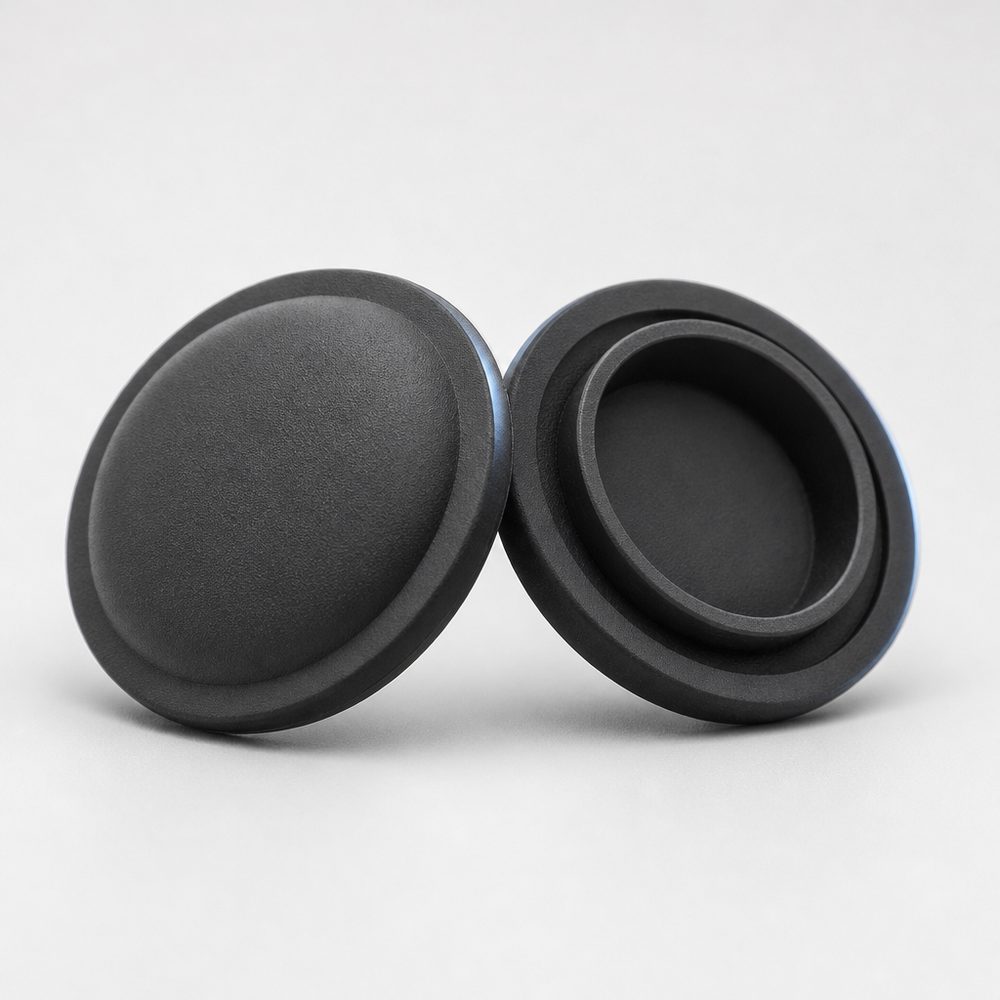
Clearance, Contact Area and Material Choice
The design question is where the lid is allowed to touch. Every contact point is a potential scratch and a potential dust trap, so the aim is one controlled locating feature and no contact on the optic.
Stand-Off Geometry
A shallow cup with an internal shoulder that rests on the lens bezel gives a repeatable stand-off. If the lid is held by friction in the housing recess instead, the interference must be enough to survive being carried in a bag but not so much that inserting it flexes the optic mount. Both approaches work; mixing them produces a lid that sits at an angle.
Non-Marring Inner Surface
The inner face should come from a polished mold cavity with no post-finishing. Filled silicones - those with silica or other hard fillers added for strength - can leave fine marks if they contact the coating. A clean, unfilled or lightly reinforced compound with a smooth surface is the safer choice, and it also traps less dust.
Outgassing and Plasticiser Migration
Silicone has no plasticiser to migrate, which is one reason it is used near optics, but residual volatiles from under-cured material can still fog a lens in a closed case. A post-cure step before packing removes most of that risk. Where the lid sits against a coated surface for long periods, ask for the compound's volatility data rather than assuming.

Specification Envelope for a VR Lens Dust Lid
The envelope below is what we start from for a flexible lens lid on a consumer headset. The measured bezel geometry sets the final stand-off.
| Parameter | Typical envelope | Why it drives the result |
|---|---|---|
| Material | VMQ silicone, 30-50 Shore A | Soft enough to seat by hand, firm enough to hold shape in a bag |
| Stand-off from lens | 0.5-1.5 mm at the closest point | Keeps grit and the lid surface away from the coating |
| Wall thickness | 1.0-2.0 mm | Thin walls spring back, thick walls take a set |
| Locating feature | Bezel shoulder or housing interference | One controlled contact point avoids angled seating |
| Inner surface | Polished cavity, no post-finishing | Reduces marking and dust retention |
| Cure | Post-cured before packing | Limits volatile fogging in a closed case |
| Colour | Pigmented, non-staining grade | Colour must not transfer to the bezel or coating |
Ranges are a starting envelope for this component class. The final stand-off, hardness and surface finish are fixed against the scanned bezel and confirmed by fit trials on production headsets.
Scratches, Haze and the Storage Case Problem
Most lens damage on a headset happens in storage, not during use. The lid is in contact with the lens for far longer than the headset is on a face.
Grit Carried Inside the Lid
A lid that cups the lens collects dust in the cup and then presses it against the optic on the next fit. That is why a lid which seals tightly around the lens can be worse than no lid at all. A stand-off shoulder with a small vent path, or a lid that covers without sealing, keeps grit away from the coating.
Surface Bloom and Haze
A soft, tacky silicone surface can transfer a film to the coating over months in a warm case. Slightly higher hardness and a matte, dry-feeling finish reduce the tendency. Where the customer reports haze, the first check is the compound and cure state, not the lens supplier.
Deformation in Storage
A thin lid stored under pressure in a case takes a set and no longer seats flat. Wall thickness and a shape that springs back - rather than a flat plate - keep the locating feature accurate over time. Thin-wall behaviour is discussed in Custom Silicone Seals for Equipment Assemblies.

From Scan to Moulded Lid
Headset geometry is consumer-grade and varies between production batches, so the first step is measurement rather than a downloaded model.
Capturing the Lens Cavity
A 3D scan of the lens recess, or a physical sample of the bezel, gives the true locating surface. Nominal CAD for a consumer headset often differs from the shipped part by enough to change the stand-off. This is the step that decides whether the lid sits flat.
Prototype Cavity, Then Production Tool
A single-cavity prototype tool in the production compound confirms fit, stand-off and removal effort before a multi-cavity tool is cut. Because the part is small and thin, prototype tooling is inexpensive relative to the risk of a wrong first steel.
Sealing Rings and Optical Interfaces
Where the lid or the surrounding assembly includes an elastomer seal against a lens or window, solvent and cleaning-agent resistance has to be checked at the same time - see How to Specify Lens Silicone Sealing Rings for Underwater and Are All Lens Silicone O-Rings Resistant to Lens Cleaning for the specification logic used on optical seals.
Questions About Silicone Lens Covers
Does the lid touch the lens?
It should not. The lid locates on the bezel or the housing recess and keeps a small stand-off from the optic. Where a customer asks for a lens-contact design, we flag the scratch risk and normally propose a shoulder instead.
Can silicone mark an optical coating?
A clean, unfilled silicone with a polished inner surface is generally safe in light contact. Risk rises with filled compounds, rough surfaces and trapped grit. Because the lid is stored against the lens for long periods, we also control cure state to limit volatile fogging.
Can the lid be branded?
Yes. Moulded-in relief or a second colour is durable; surface printing on a part that is handled and wiped will wear. For a small accessory, moulded-in marking is usually the better cost-to-durability trade.
Send a Bezel Scan, Get a Fit Review
Send a 3D scan or a sample of the lens recess with the headset model. We will confirm locating geometry, stand-off and hardness, and quote a prototype cavity before production tooling. Related: specifying lens sealing rings and cleaning-solvent resistance.
Request a lens lid fit reviewFromRubber moulds custom silicone components for OEM accessory and device programmes. We do not sell retail.
- 加载中···


Start Your Project Today!
- Phone
- *Title
- *Content
Sign Up Out Newletter
