How’s Your Smart Doorbell Button? Silicone Keypad Aging Test and Replacement Guide
Your smart doorbell button worked flawlessly for the first year. By the second summer it had yellowed, and by the third it felt mushy — sometimes it does not even click. If you have replaced two doorbells in four years, the problem is probably not the electronics. It is the silicone keypad ageing: ultraviolet light, heat trapped inside the housing, and humidity cycles slowly change the rubber until the button stops behaving like a button. This guide explains what physically happens to an outdoor silicone keypad, which tests actually predict its life, and when a replacement is genuinely due.
What outdoor exposure does to a silicone keypad
A doorbell pad sits in the harshest microclimate of any smart home device: direct sun on a south-facing wall, rain, temperature swings between a hot afternoon and a cold night, and sometimes salt air. The visible symptoms follow a predictable order.
Yellowing comes first on light-coloured pads. UV breaks down the polymer surface and interacts with colourants, and how fast it shows depends on the masterbatch quality more than anything else. White and grey pads on sunny entryways are the ones that embarrass a brand — the material physics behind it, and how anti-yellowing masterbatch slows it, are covered in our article on white silicone keypad yellowing and the wider material formulation and ageing resistance story.
Lost snap and sticking come next, and they are mechanical, not cosmetic. Every press compresses the dome; over tens of thousands of cycles the rubber gradually loses its ability to spring back. Heat accelerates the process — a dark doorbell housing can sit far above ambient temperature in summer sun — and humidity weakens the surface bond between the pad and whatever coating or legend sits on it. The mechanism is the same compression set and elastic recovery loss we described for keypads that lose rebound, and the same degradation process that quietly kills handheld instrument keypads in the field. It is simply faster outdoors.
The symptom checklist to look at before you buy
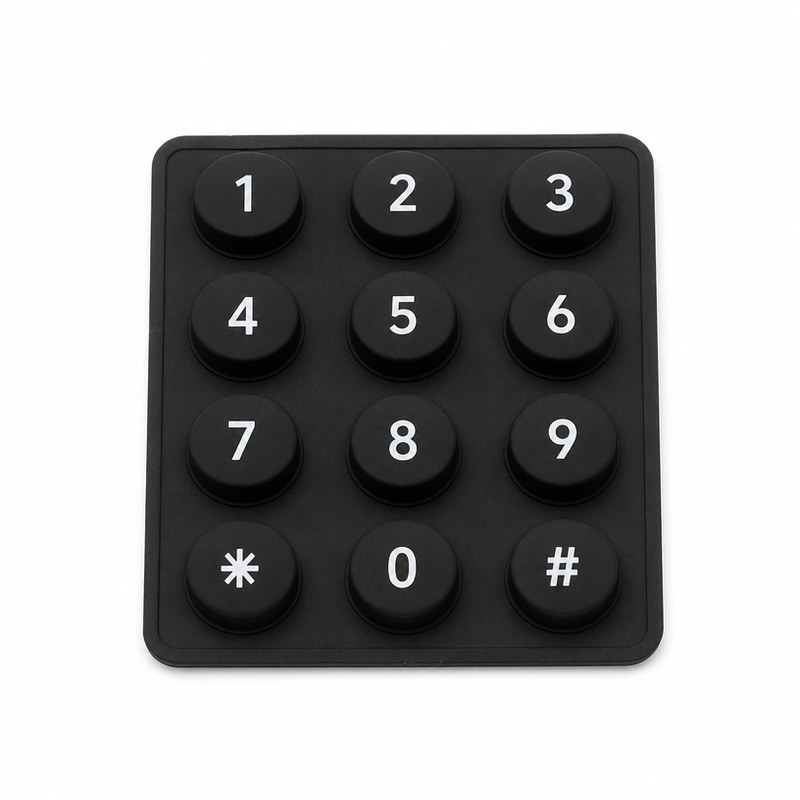
Not every change in a doorbell button means replacement — some are normal break-in. The list below separates wear from failure:
- Colour shift: slight matting of the surface is normal after a year; a clear yellow or brown cast on a white or grey pad is degradation.
- Force change: a button that needs visibly more pressure, or that actuates twice, points to dome fatigue rather than dirt.
- No snap: the tactile breakover disappearing is the first mechanical failure signal, well before the key sticks down.
- Sticking: a key that stays down or returns slowly means the dome has taken a permanent set — replacement is due.
- Legend loss: printed legends wearing off on a frequently pressed key is normal wear; cracking or flaking of the coating is a material problem.
If only the coating is damaged, refinishing can help. If the snap is gone, no coating fixes it — the rubber itself has aged out. This mirrors what we see in instrument keypads, where sticking and ghost triggers trace back to pad ageing rather than electronics.
Which tests actually predict an outdoor keypad's life
Manufacturers quote "long life" freely, so the useful question is: which accelerated tests does the data sheet refer to? Four are worth knowing when you buy a doorbell or its replacement keypad:
- Heat ageing (ASTM D573): the pad is oven-aged at elevated temperature for a set time, then tested for how much hardness, tensile strength, and elongation it retained. It predicts the thermal part of the doorbell's life — the heat soak inside a dark housing.
- Compression set testing (ASTM D395): a sample is held compressed at temperature, then released, and the permanent deformation is measured. This is the closest single test to the "will the dome still spring back" question.
- UV/weathering exposure: accelerated weatherometers cycle UV light, moisture, and temperature to simulate years of sunlight in weeks. This is the test that exposes yellowing and surface cracking before a product ships.
- Cycle life: the finished keypad is pressed mechanically for its rated life — 100,000 cycles is a common baseline, but outdoor entry devices justify checking at temperature extremes, because cold stiffens silicone and hot softens it. Our discussion of real temperature tolerance in the field explains why ambient ratings rarely tell the whole story.
Reading the results matters as much as running them. A compound can pass heat ageing and still yellow in UV, or pass UV and still take compression set at 60 °C. That is why material selection for outdoor pads is a portfolio decision, not a single test pass — the pad that survives a sunny entryway needs a UV-stabilised masterbatch, a low-compression-set compound, and a coating system that flexes with the rubber.
What a sensible test plan looks like for a doorbell pad
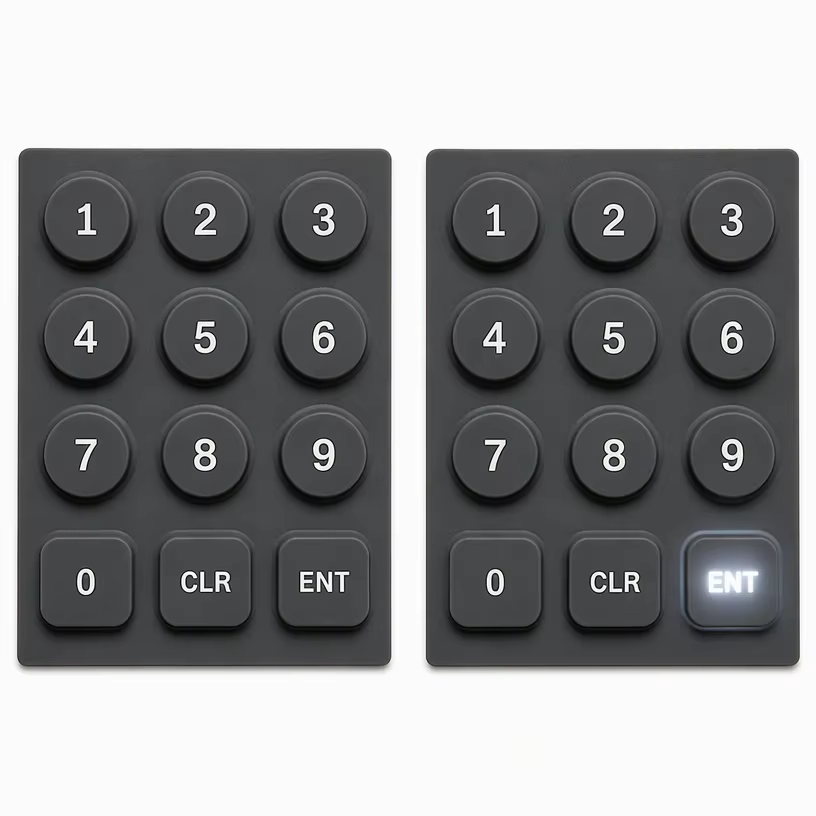
A realistic qualification for an outdoor entry keypad combines short and long signals. For a new programme we usually recommend: heat ageing at 70 °C for seven days plus 100 °C for 72 hours (per ASTM D573) to catch compound weaknesses; a UV/condensation weathering cycle of roughly 500 to 1000 hours depending on the expected installation latitude; compression set at 70 °C; and 100,000-cycle actuation at room temperature with a 10,000-cycle cold check around −20 °C if the product sells where winters bite. The report you should receive states retention percentages, not just "passed": 85 percent retained elongation after heat ageing and under 20 percent compression set are reasonable starting expectations for an outdoor grade, and your supplier should be willing to explain the numbers against your climate rather than against a brochure.
Replacement guide: when to swap, and what to ask for
Replacing a doorbell button is a five-minute job, but replacing it every two years is a design failure. Work through this order:
- Confirm the failure is the pad. If the chime still rings when you bridge the contacts with a screwdriver, the electronics are fine and the button mechanism is the suspect.
- Clean before judging. Grease and grime cause sticking that looks like ageing. Clean with a mild soap solution and a soft cloth, never solvent on printed legends.
- Judge the snap. Press the key with the pad out of the housing. A crisp breakover at light force means the rubber is still healthy; a mushy or slow return means replacement.
- Replace with the right grade. Buy a pad specified for outdoor use — UV-stabilised material, low compression set, and ideally laser-etched or two-shot legends if the button gets daily use. Surface treatments for aggressive environments apply to front doors as much as factory floors.
- Note the date. Write the installation date on the housing. If a pad fails inside two years, the compound was wrong for the location — that is worth a complaint and a replacement under warranty, not a shrug.
A case in point: reformulating after field yellowing
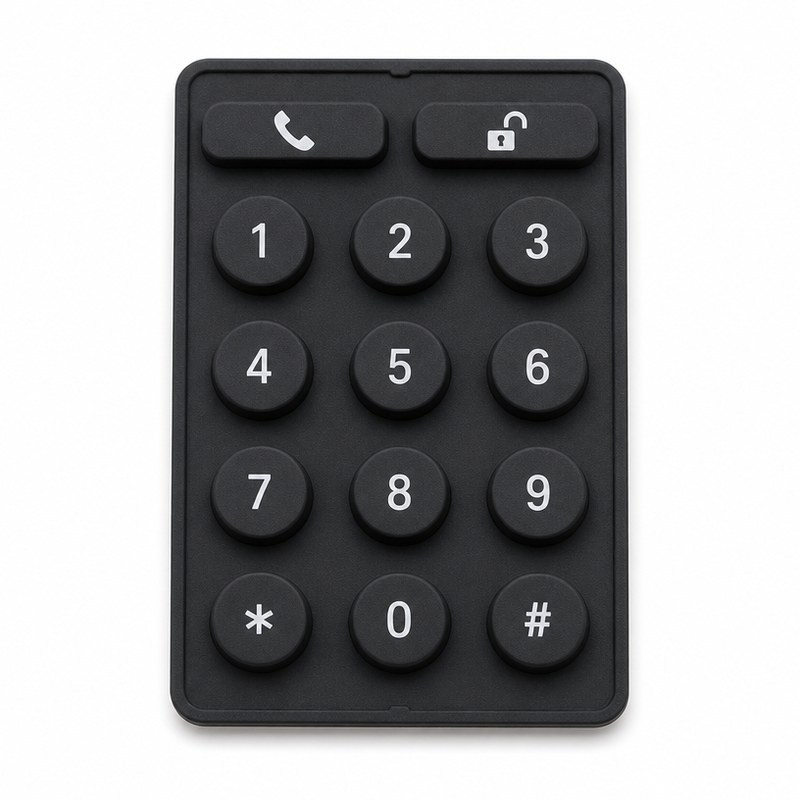
A hardware brand came to us after its white door lock keypad yellowed visibly on south-facing installations within eighteen months. The electronics and pad were fine mechanically — the complaint was purely cosmetic, and purely damaging. We re-specified the compound with a UV-stabilised masterbatch, ran a weathering series against the original material, and shipped a pad that kept its colour through the same exposure that had yellowed the first version. The mechanical design never changed; the material bill of materials did. That is the pattern worth remembering: outdoor keypad failures are usually material-selection failures, and the fix lives in the compound data sheet, not in the mould.
Sources and further reading:
- ASTM D573 — Standard test method for rubber — deterioration in an air oven (heat ageing test used to predict thermal life)
- ARDL — Heat aging testing services (ASTM D573 and ISO 188 ageing methods explained)
- Plas-Fab — Rubber aging test methods, results and part approval (heat, ozone, light and moisture ageing exposures for rubber parts)
About FromRubber. FromRubber is a full-process silicone keypad manufacturer. We formulate outdoor-grade compounds, cut the tooling, and run the heat ageing, weathering, compression set, and cycle tests in-house, so an entry device keypad ships with the retention numbers, not just a warranty sticker. If your doorbell, lock, or intercom pad yellowed or went mushy too early, send us the failed part and your installation climate — we will identify the material gap and quote the corrected pad.