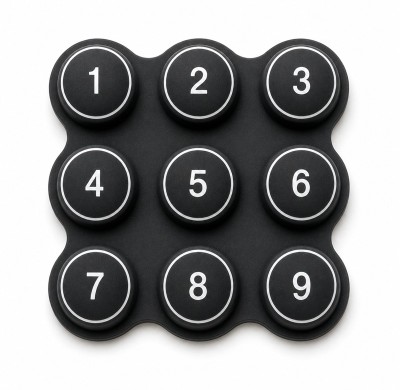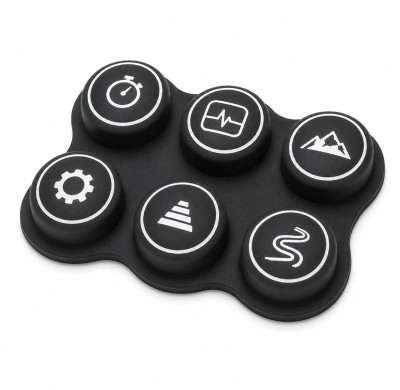
Spectrum Analyzer Silicone Keypad Sticking and Ghost Triggers – Why Silicone Pad Aging Is the Hidden Culprit
Spectrum Analyzer Silicone Keypad Sticking and Ghost Triggers – Why Silicone Pad Aging Is the Hidden Culprit
Every RF engineer knows the sinking feeling: you're mid-sweep, adjusting the span on your spectrum analyzer, and the key sticks. You press again, nothing. Then, suddenly, the instrument registers a phantom keypress, jumping to a menu you didn't select. These sticking and ghost trigger issues are not random glitches — they are the telltale signs of an aging Spectrum Analyzer Silicone Keypad, and they can compromise measurement integrity, waste valuable test time, and drive engineers to frustration.
Unlike software bugs that can be patched, silicone keypad degradation is a physical, irreversible process. Over time, heat, ozone, repeated actuation, and even cleaning chemicals conspire to alter the mechanical and electrical properties of the silicone rubber. Understanding this hidden culprit is the first step toward a permanent fix — and that's exactly what FromRubber delivers.
How Aging Physically Alters a Spectrum Analyzer Silicone Keypad
Silicone rubber may look stable, but at the molecular level, it is constantly evolving under operating conditions. The heat generated by the spectrum analyzer's internal components (often 40–50°C above ambient) accelerates oxidative cross-linking. At the same time, the repeated flexing of the keypad's dome or pillar structure causes micro-tears that accumulate into macroscopic cracks. Here are the primary aging mechanisms:
- Thermal oxidation & hardening – Cross-link density increases, turning a flexible 50 Shore A rubber into a brittle 70 Shore A material, drastically reducing tactile snap.
- Plasticizer migration & tackiness – Low-molecular-weight siloxanes migrate to the surface, creating a sticky film that attracts dust and causes keys to adhere to the bezel.
- Ozone cracking – Even trace amounts of ozone from nearby motors or discharge sources attack the polymer backbone, creating surface fissures that propagate with each press.
- Compression set – The keypad loses its ability to return to its original position, reducing travel and increasing the likelihood of constant contact (ghost triggers).
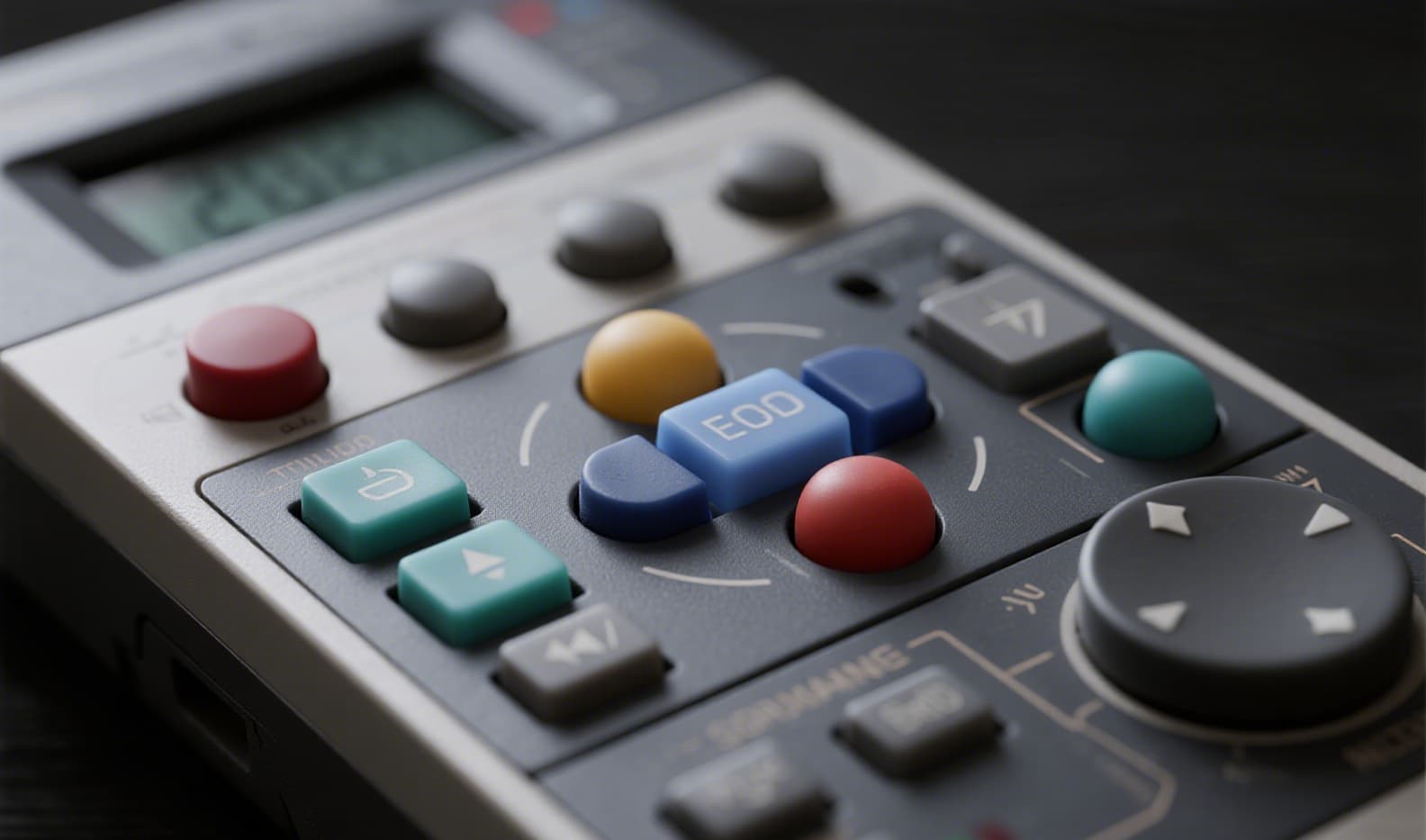
Why a Worn Spectrum Analyzer Silicone Keypad Generates Ghost Triggers
Ghost triggers occur when the keypad's conductive pill makes unintended contact with the PCB pad, or when the contact resistance becomes so erratic that the scanning circuit interprets noise as a valid keypress. This is directly linked to contact degradation: as the silicone ages, the carbon-impregnated pill oxidizes or wears down, increasing resistance from a nominal 20–30 Ω to over 200 Ω. The inconsistent signal crosses the debounce threshold unpredictably, resulting in phantom keypresses that can appear minutes after the button was last touched.
Moreover, the loss of compression set means the resting distance between the pill and the pad decreases. Even slight thermal expansion can bridge the gap, causing the key to "float" into activation. This is why ghost triggers often occur more frequently during warm-up periods or after extended use.
Real-World Failure Case – Aerospace Spectrum Analyzer Fleet
Case Study: Spectrum Analyzer Silicone Keypad Failure in Satellite Communications
An aerospace manufacturer operating a fleet of 20 high-frequency spectrum analyzers (up to 40 GHz) reported that 70% of their units developed sticking or ghost trigger issues within 3 years of deployment. The analyzers were used 10–12 hours daily, often in warm rack environments. The in-house repair team initially replaced entire front panels, costing over $2,500 per unit.
After switching to FromRubber's engineered replacement keypads, the manufacturer saw immediate improvements. Our keypads utilize a thermally stabilized silicone compound (with antioxidant additives) and feature a hard-coated surface that resists plasticizer migration. The conductive pills are formulated with a nickel-graphite blend that maintains stable contact resistance (< 30 Ω) even after 5 years of simulated aging. To date, zero sticking or ghost trigger incidents have been reported on the retrofitted units, and the expected lifetime has been extended to over 8 years.

FromRubber – Engineering the Cure for Spectrum Analyzer Silicone Keypad Aging
At FromRubber, we approach the problem of silicone aging not as a maintenance issue, but as a material science challenge. Our custom keypads for spectrum analyzers are built to outlast the instrument itself. Here's how we do it:
We use proprietary silicone formulations with thermal stabilizers, UV absorbers, and anti-oxidants that resist cross-linking and hardening, maintaining Shore A hardness within ±3 points over 5+ years.
A durable fluorosilicone topcoat prevents plasticizer migration and creates a low-friction, dust-repellent surface that eliminates sticking without affecting tactile feel.
Our conductive pills use a sintered silver-nickel matrix that resists oxidation and maintains contact resistance below 25 Ω for over 1 million actuations, eliminating ghost triggers.
We simulate stress distribution using FEA and optimize dome height and hinge thickness to reduce compression set, ensuring consistent travel and snap ratio for the full service life.
Additionally, we offer accelerated life testing (thermal cycling from -20°C to +85°C, coupled with 500k mechanical actuations) to validate every new design before it ships. Our clients in the test and measurement sector consistently report 3–5× longer keypad life compared to original equipment manufacturer (OEM) alternatives.
Don't Let a Degrading Spectrum Analyzer Silicone Keypad Compromise Your Measurements
Sticking keys and ghost triggers are not inevitable. They are the result of using silicone materials that are not engineered for the thermal, mechanical, and environmental demands of modern spectrum analyzers. By choosing a keypad that specifically addresses the root causes of aging — thermal oxidation, plasticizer migration, and contact degradation — you can eliminate these frustrations for the entire lifespan of your instrument.
FromRubber delivers precision, durability, and peace of mind. Whether you are an OEM looking to improve your product's reliability or a lab manager needing a drop-in replacement, we have the expertise to engineer a Spectrum Analyzer Silicone Keypad that performs flawlessly, year after year.