
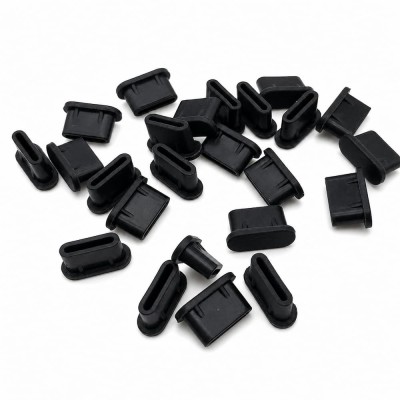
Small Molded Rubber Bushings for Auto Repair


| Share | |
|---|---|
| Categories | Custom Silicone Seals |
| Brand | FromRubber Silicone & Plastic OEM Manufacturer |
| Product Specifications | BH-auto15 |
| Product Name | Rubber Bushings |
| Material | Rubber Silicone |
| Color | Black,Custom |
| Shape | Customise |
| Stype | Small |
| Application | Auto Repair |
| Sales Method | Molded Custom |
| Consultation Email | Suey@fromrubber.com |
| FOB port | Shenzhen |
| Terms of Payment | L/C, D/A, D/P, Western Union, MoneyGram, T/T, Paypal |
| Download |  |
Custom Silicone Seals / Automotive Repair Parts
Small Molded Rubber Bushings for Auto Repair: Stiffness, Interference and Bond
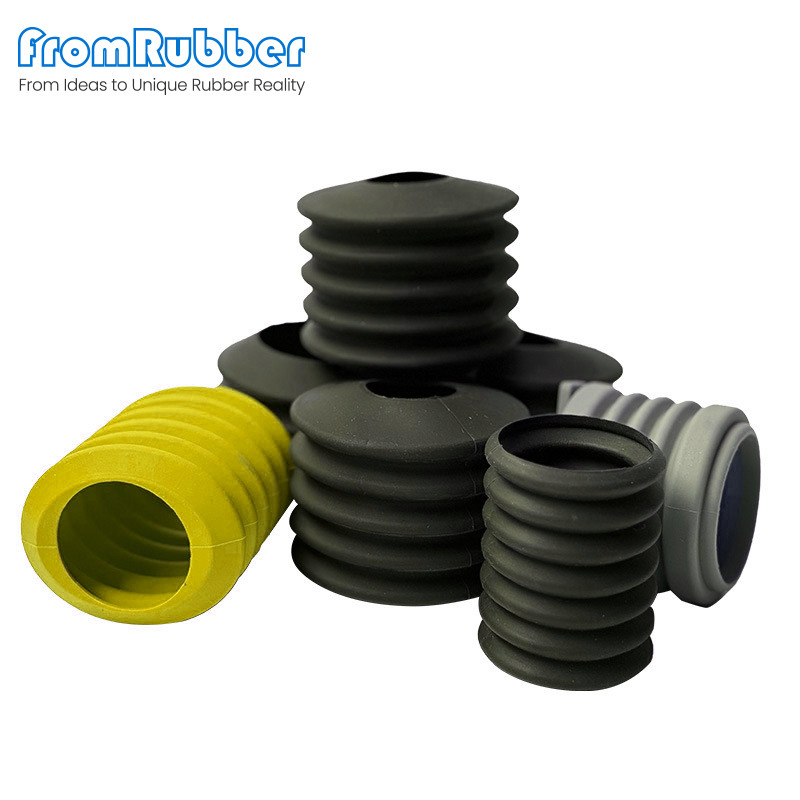
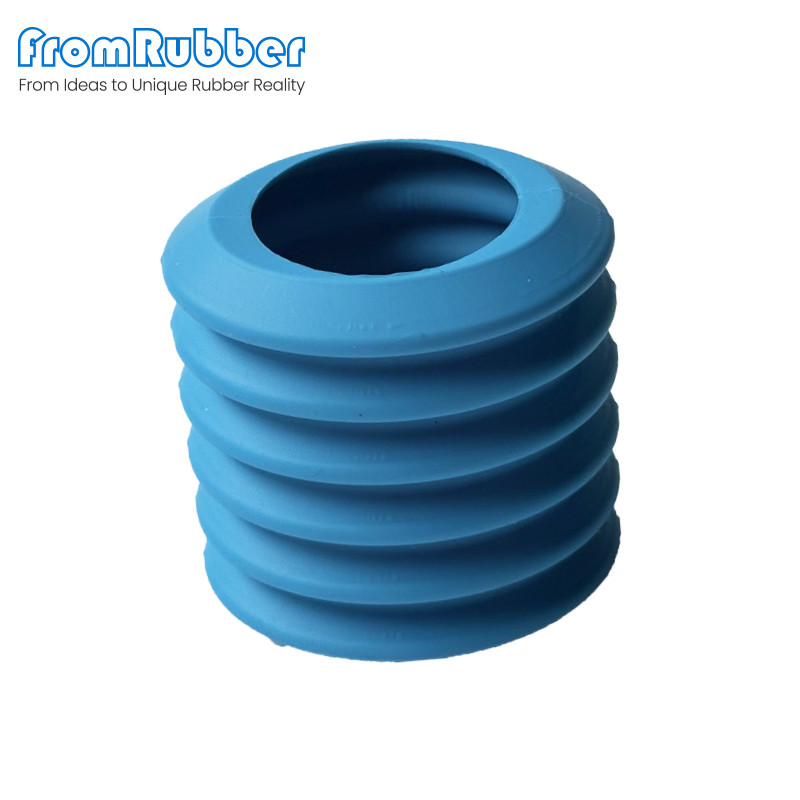
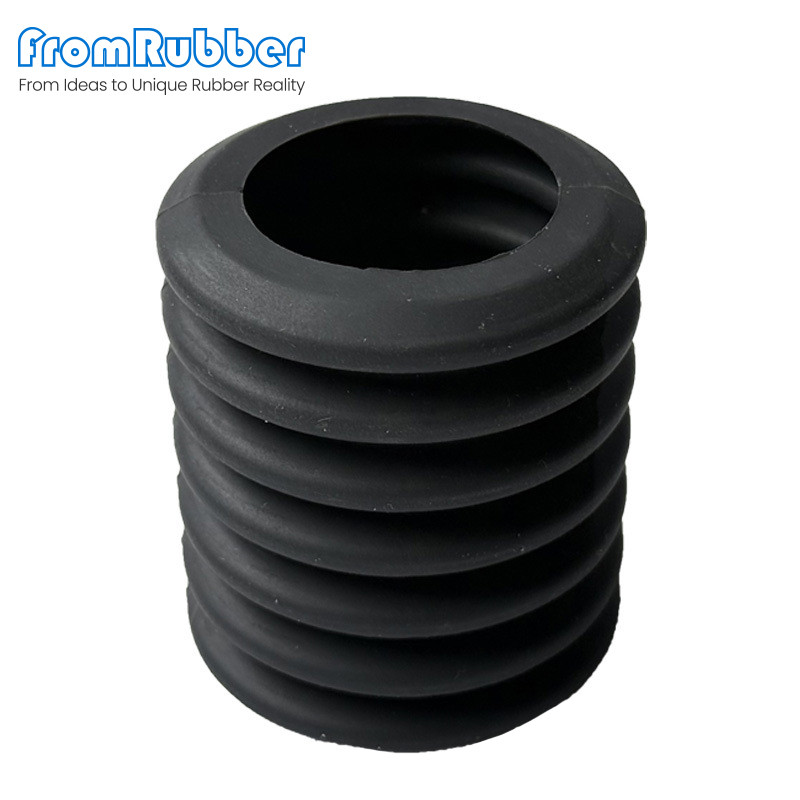
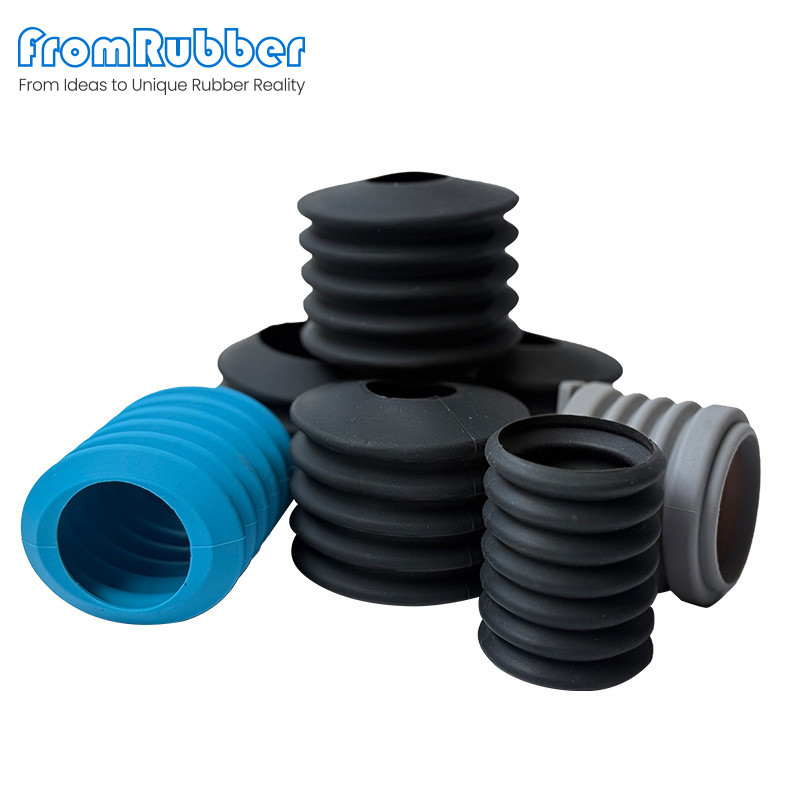
A small molded rubber bushing is a vulcanised elastomer sleeve, normally molded onto an inner and an outer metal sleeve, that holds a defined stiffness in the radial and axial directions while isolating road and driveline vibration. It is a tuned spring, not a rubber block.
That is why two bushings that look identical can behave completely differently. A 5 Shore A hardness difference, 0.2 mm of interference, or a bond line that was never primed will each change the rate and the service life. This page sets out the parameters we fix with you before a tool is cut, so a replacement bushing behaves like the part it replaces.
- 45-75 Shore A
- Bore 6-40 mm
- Rubber-to-metal bonded
- MOQ from 100 pcs
Why a new bushing fails inside a year
In repair work the failure is rarely the compound itself. It is one of three mismatches between the replacement part and the way the arm loads it.
- 01
Hardness drift changes the rate
Static stiffness tracks hardness closely: moving 5 Shore A typically shifts radial rate by roughly 10-15%. On a sway bar or control arm that is enough to move road-input frequencies, so the car either feels harsh or starts to wander.
- 02
Wrong interference, wrong load path
The outer sleeve is a press fit. Too loose and the bushing rotates in the housing, frets the bore and wears oval. Too tight and the rubber sits pre-stressed before the car moves, which tears the bond line at the sleeve edge.
- 03
Bore and rib geometry copied by eye
A plain bore and a ribbed bore of the same outside diameter do not have the same torsional rate. Rib pitch, rib depth and the flexible web between them decide how the bushing takes wind-up, which is what the driver feels as steering precision.
Parameters we fix with you before tooling
| Parameter | Typical design window | What we need from you |
|---|---|---|
| Hardness | 45-75 Shore A, tolerance ±5 | Target durometer and the band you can accept |
| Radial static rate | Set by load-deflection target, not by hardness alone | Load-deflection curve, or a target in N/mm at rated load |
| Interference fit, outer sleeve | 0.1-0.3 mm on the housing bore | Housing bore diameter and its tolerance |
| Rubber-to-metal bond | No separation at the bond line after heat ageing and salt spray | Sleeve material, surface treatment and pull-test limit |
| Rib and web geometry | Rib depth and pitch derived from the torsional wind-up angle | 3D model, 2D drawing, or the worn original part |
| Service temperature | EPDM and NR to about 120 °C; VMQ higher, with lower tear strength | Chassis, engine-bay or exhaust-adjacent position |
Windows above are starting points for a design review, not acceptance limits. Final values are fixed by the drawing, the compound TDS and first-article measurement, and any critical value is tested and reported per batch.
Which compound, and why hardness is not the whole spec
Four compounds cover most bushing work. The choice follows the environment and the load type, then hardness is tuned inside it.
- 01
NR, natural rubber
Best fatigue life and lowest hysteresis for suspension rates. Poor in oil and ozone, so it belongs behind a boot or away from exhaust heat.
- 02
EPDM
Weather and ozone resistance with good compression set; the default for chassis and body mounts that see splash and sunlight.
- 03
NBR
Oil and fuel mist resistance for engine-bay bushings and mounts near breathers or power steering lines.
- 04
VMQ silicone
The widest temperature window, but lower tear and tensile strength than NR or EPDM. Choose it where heat is the killer, not where load is.
If the same part also has to seal against oil or fuel, the mating rules are covered in leak-proof silicone gaskets for oil and fuel resistance.
How we hold the geometry that sets the rate
Bushings are molded in steel tools, so the rate you approve in a sample is the rate you get in production only if cavity dimensions and bond conditions are held the same way on every cycle.
FromRubber works to an IATF 16949 and ISO 9001 quality system with ISO 14001 environmental management. Each batch is checked for hardness, key dimensions and bond-line condition, and a first-article report is issued before mass production starts. Where a part replaces an existing OEM number, we reverse the durometer and the sleeve preparation from your sample instead of copying a worn outside diameter.

How a custom bushing run starts
Send a drawing, a 3D model or a worn part. The four steps are the same for a first prototype and for a repeat order.
Drawing or sample in
STEP or IGES, a 2D PDF, or the failed part together with the vehicle position it came from.
DFM review
We return the durometer, interference, bond and rib geometry that suit your housing, and mark the points where the drawing is ambiguous.
Prototype tool and bench samples
Single-cavity tool and samples for fit and rate check, before any production steel is committed.
Production and first article
Multi-cavity tool, dimensional report, hardness and bond check, then serial supply with batch traceability.
Bushing specification questions we answer most often
Short answers for engineers writing a bushing specification or comparing a replacement part.
What durometer should a suspension bushing be?
For road-car suspension bushings, 55-75 Shore A covers most sway bar, control arm and shock applications. The number matters less than the rate: specify the load-deflection target and let hardness follow from it.
Can you mold rubber onto my existing steel sleeve?
Yes. Send the sleeve drawing or a sample with its surface condition. Bond strength depends on substrate preparation and primer, so we check the sleeve before quoting rather than after tooling.
Why does a replacement bushing squeak or clunk?
A squeak usually means the bushing is rotating in its housing, from loose interference or a dry bore. A clunk usually means the rate is too low, or that the rubber has separated from the sleeve.
What is the minimum order for a custom bushing?
Custom molded bushings start from 100 pieces per size. Tooling is quoted separately and belongs to the part, so repeat orders do not carry a second tooling charge.
Send the drawing, get a DFM note back
Tell us the vehicle position, the housing bore and the rate you need. We reply with the durometer, interference and bond specification that fit, and flag anything in the drawing that will cost money in tooling.
- 加载中···


Start Your Project Today!
- Phone
- *Title
- *Content
Sign Up Out Newletter
