
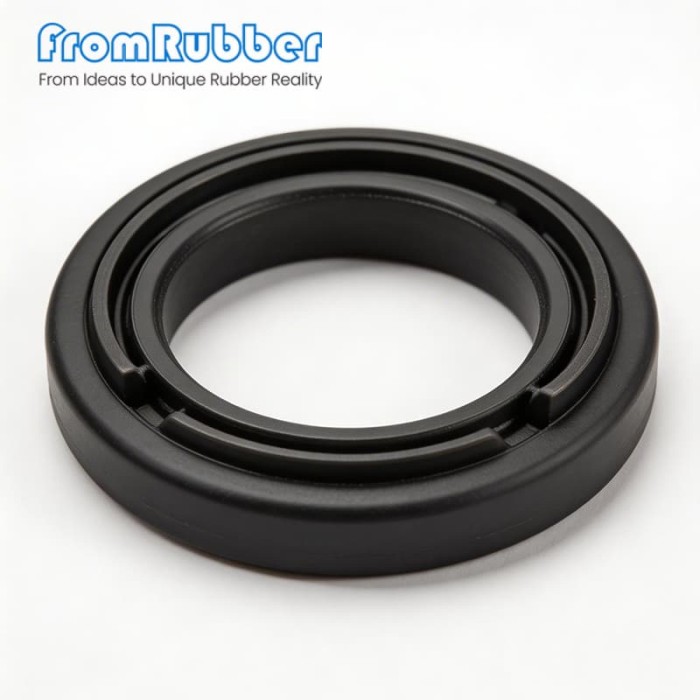
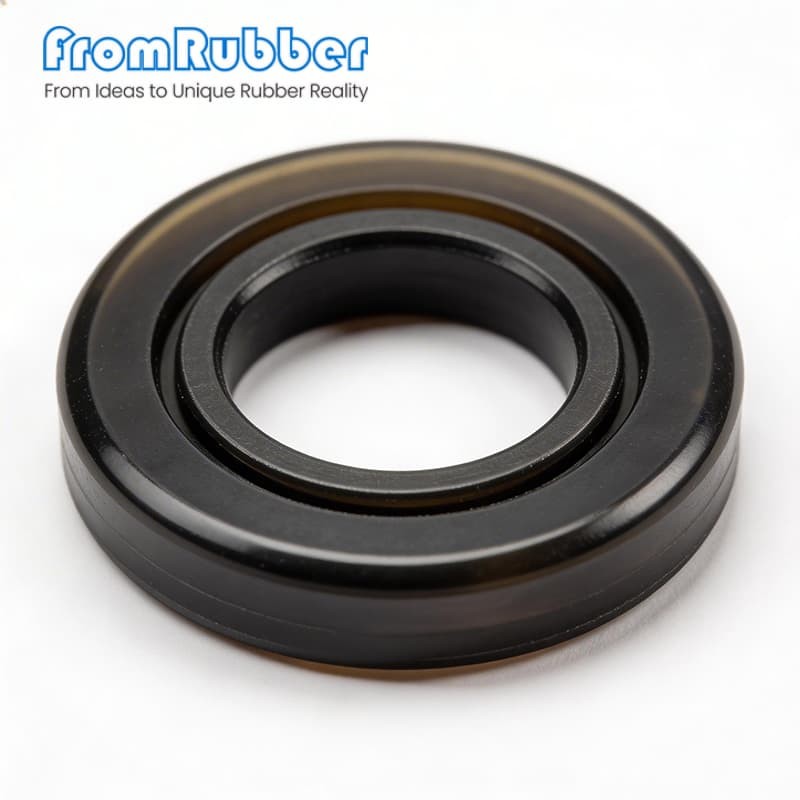
High Tear Strength Silicone Rubber Parts for Reliable Installation
| Share | |
|---|---|
| Categories | Custom Silicone Seals |
| Brand | FromRubber Silicone & Plastic OEM Manufacturer |
| Product Specifications | BH-seals |
| Design | Follow 3D Drawing Or Physical Object |
| Process | Molding |
| Feature | High Tear Strength,Durable |
| MOQ | 100000pcs |
| Application | Automotive, Marine, and Industrial |
| FOB port | FOB ShenZhen |
| Terms of Payment | L/C, D/A, D/P, Western Union, MoneyGram, T/T, Paypal |
| Download |  |
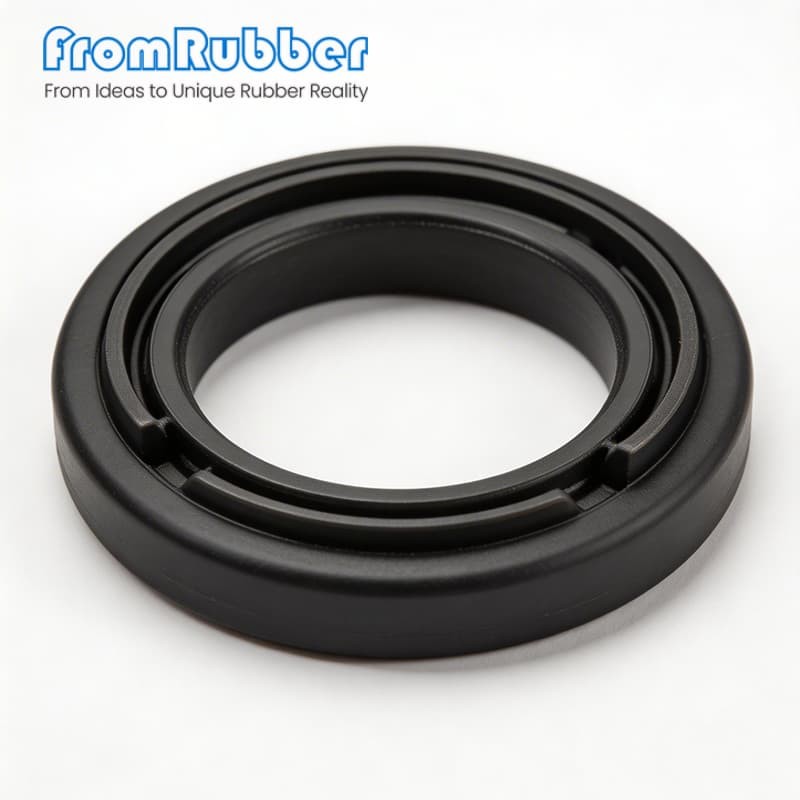
Assembly durability
High tear strength silicone parts that survive installation, not only service
Most torn silicone parts do not fail in the field. They fail on the line, when someone stretches the part over a flange, a connector or a lip. This compound is built for that moment: at least 32 kN/m tear strength to ASTM D624 Die B, 650 % elongation, 60 ±5 Shore A.
Tear strength is an assembly number
An 18 kN/m part and a 32 kN/m part look identical on a bench. On a line running a few thousand pieces per shift they do not behave the same at all. The difference shows up as nicks that open into tears at the corner where the operator pulls, and it is usually recorded as an assembly reject rather than a material fault.
The compound is a vinyl-stopped silicone with nano-dispersed silica reinforcement, and it measures about 40 % higher than a conventional peroxide-cured silicone of the same hardness. Consistency matters as much as the peak value: lots are released against the same Die B specimen, typically landing between 32 and 35 kN/m.
How the common grades compare
| Material | Tear strength (kN/m) | Note |
|---|---|---|
| High-tear silicone (this compound) | 32 | Typical of production lots, some to 35 |
| Generic peroxide-cured silicone | 18 | Reference grade for comparison |
| Fluorosilicone, standard | 22 | Where fuel resistance is also required |
| EPDM, high-tear grade | 28 | Better water and steam ageing |
| HNBR, high-tear grade | 26 | Better oil resistance |
| VMQ, typical industry range | 15–20 | Wide lot-to-lot spread |
Four design rules that protect the tear value
The compound cannot compensate for a drawing that concentrates stress. Before tooling we check four things, and we will redraw them if needed:
- Every internal corner gets a radius, 0.5 mm minimum.
- Wall transitions stay gradual — no step changes in section.
- The parting line is kept off the direction the part is stretched during assembly.
- Webs below 0.6 mm are either thickened or supported, never left to carry a pull.
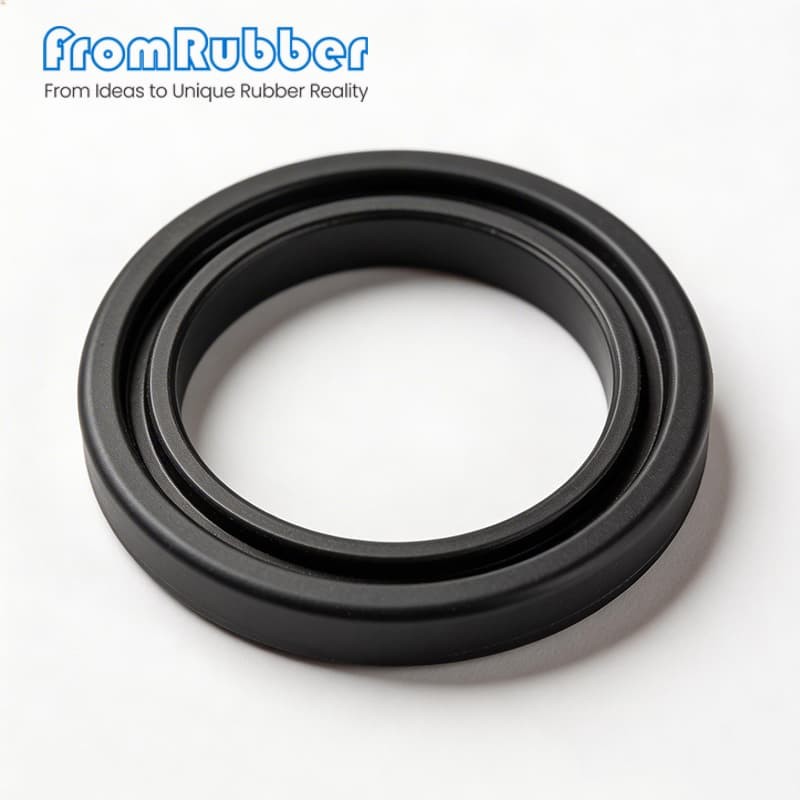
What survives ageing
Tear strength is only useful if it is still there after the part has lived in the application. The retention below is on the same compound, same specimen geometry:
| Condition | Residual tear | Retention |
|---|---|---|
| 1000 h at 150 °C, air | 30 kN/m | 94 % |
| 1000 h at 200 °C, air | 27 kN/m | 84 % |
| IRM 903 oil, 500 h at 125 °C | 28 kN/m | 87 % |
| Fuel C, 70 h at 23 °C | 29 kN/m | 91 % |
| UV weathering, 1000 h | 31 kN/m | 97 % |
Where this compound is specified
Air intake ducts and turbo couplers, valve cover gaskets, coolant seals, diaphragm pump membranes, hatch and access seals, vibration isolators and grommets — parts that are stretched, clamped or pushed over an edge during assembly and then flexed in service. Food-contact and medical grades are available from the same platform, with the same reinforcement.
If the part also has to seal against fuel or oil, the tear requirement and the fluid requirement pull in different directions: read the fluid-resistant gasket page before choosing between a reinforced VMQ and a fluorosilicone.
From drawing to first article
What we need to quote
- 3D model or measured sample
- Assembly method and expected stretch
- Service temperature and medium
- Hardness and colour, if already fixed
- Any food-contact or medical requirement
- Annual volume and pack format
What comes back
- Compound data sheet, ASTM methods listed
- Tear and ageing data on the actual lot
- DFM notes on radii and wall transitions
- T1 samples for fit and assembly trials
- First-article dimensional report
- FDA-grade option on request
Send the part and the assembly method
Tear failures are usually an assembly question before they are a material question. Send the drawing with a short note on how the part is fitted and we will tell you whether the compound or the geometry needs to change.
Talk to an engineerCustom silicone partsfromrubber.com
+86 18926836960
Dongguan Bohao Electronic Technology Co., Ltd. IATF 16949:2016 / ISO 9001:2015 certified. Values shown are typical for the listed compound or platform; the drawing and the approved sample govern production.
- 加载中···
Start Your Project Today!
- Phone
- *Title
- *Content
Sign Up Out Newletter
