
High-performance De Rubber Parts for Industrial Machinery




| Share | |
|---|---|
| Categories | Custom Silicone Seals |
| Brand | FromRubber Silicone & Plastic OEM Manufacturer |
| Product Specifications | BH-auto15 |
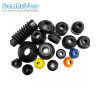
| Product Name | Rubber Parts |
| Material | Rubber Silicone |
| Color | Black,Custom |
| Shape | Customise |
| Feature | High-performance |
| Application | Industrial Machinery |
| Sales Method | Molded Custom |
| Consultation Email | Suey@fromrubber.com |
| FOB port | Shenzhen |
| Terms of Payment | L/C, D/A, D/P, Western Union, MoneyGram, T/T, Paypal |
| Download |  |
Custom Silicone Seals / Industrial Machinery
High-Performance De Rubber Parts for Industrial Machinery: What the Part Has to Survive
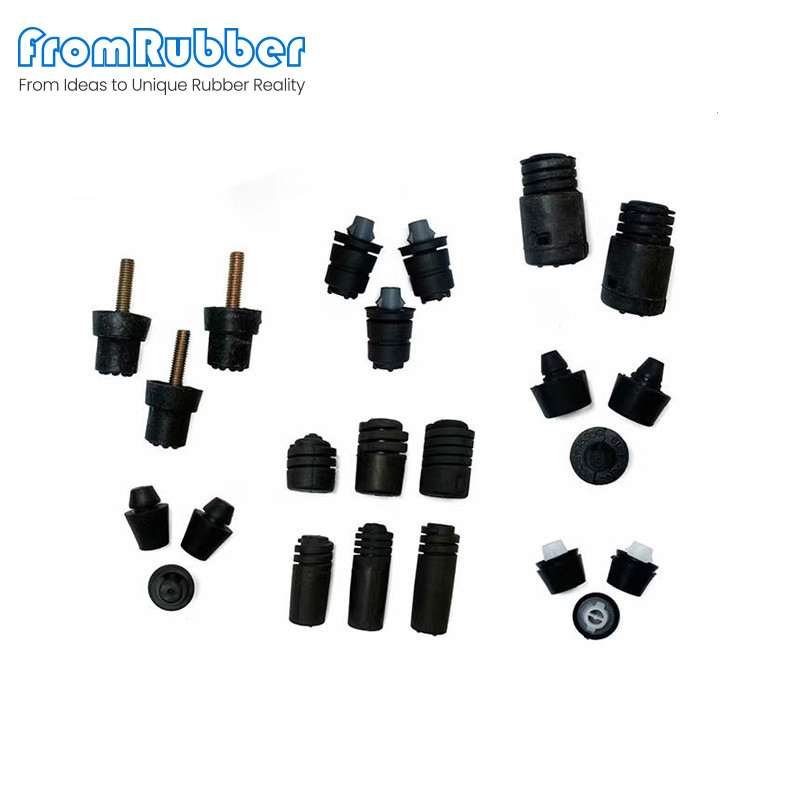
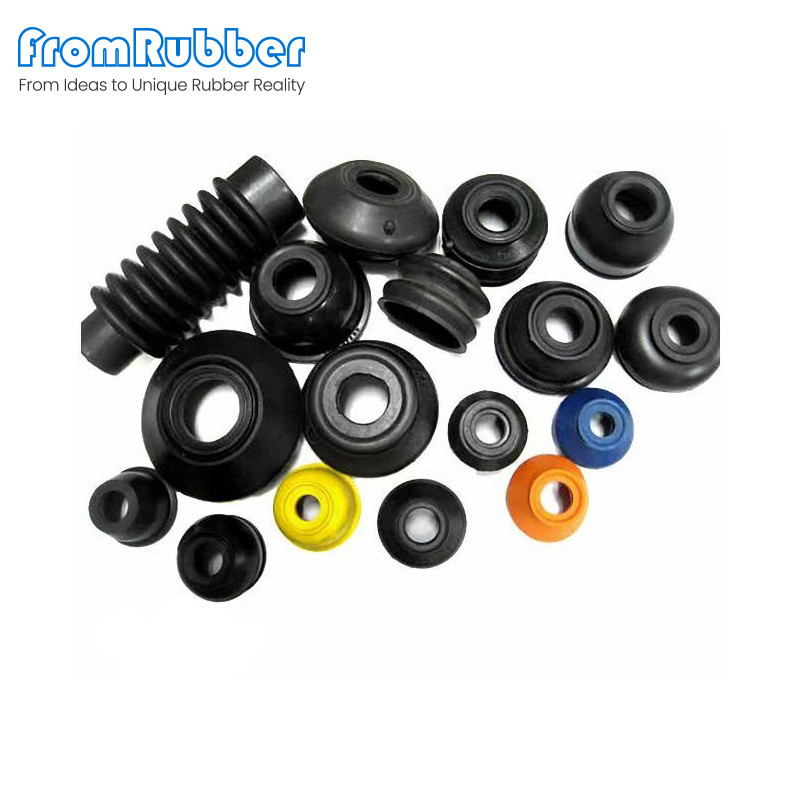
On this page, de rubber parts means the custom-molded rubber components we produce for industrial machinery OEMs: vibration isolators, bumpers and stops, bonded mounts, bellows, grommets and seals. These are the parts that decide whether a machine runs quietly for a decade or shakes itself loose in two.
The useful question is not which rubber is best. It is which degradation route your machine exposes the part to, because heat ageing, oil contact, ozone and dynamic fatigue each rule out a different set of compounds.
- EPDM, NBR, FKM, VMQ, NR, PU
- Compression and transfer molding
- Bonded to steel or plastic
- MOQ from 100 pcs
Four ways a machinery rubber part fails
Most failures are diagnosed from the symptom. The symptom usually points at one route, and the route points at one material family.
- 01
Heat ageing
The compound hardens, compression set climbs, and a mount that started at 60 Shore A behaves like 75. Vibration transfer rises and cracks appear at the fillet.
- 02
Oil and coolant contact
Swelling softens the part and changes its rate; in a seal it becomes a leak. NBR and FKM resist hydrocarbons, while EPDM and silicone generally do not.
- 03
Ozone and UV under strain
Outdoor and washdown machines crack first where the rubber is stretched. EPDM is the standard answer; natural rubber needs protection.
- 04
Dynamic fatigue
Cyclic shear starts a crack at the sharpest radius, not at the softest point of the compound. Fillet radius and strain amplitude matter more than tensile strength.
Matching part, machine zone and material
| Machine zone | Typical part | Property that decides life | Material shortlist |
|---|---|---|---|
| Pump, motor and gearbox mounting | Isolator pad, bonded mount | Static stiffness and damping at the driving frequency | NR, NR/EPDM blend |
| Moving carriage and end stops | Bumper, stop, buffer | Energy absorption and rebound without set | NR, PU, EPDM |
| Control cabinet and panel doors | Molded gasket, cable grommet | Compression set and IP sealing | VMQ, EPDM, sponge silicone |
| Pipe, cable and shaft pass-through | Bellows, sleeve, grommet | Flex life and tear resistance | EPDM, VMQ, NBR |
| Rollers and guide surfaces | Roller sleeve, wear pad | Abrasion resistance and friction coefficient | PU, NBR |
| Washdown and outdoor housings | Seal, plug, cover gasket | Ozone, UV and water resistance | EPDM, VMQ |
The shortlist is a starting point for a material review. Final selection is confirmed against the compound TDS, the fluid list and the measured duty cycle, and each batch is verified against the agreed drawing.
Design rules that decide whether the part lasts
Four decisions in the drawing usually matter more than the compound. They cost nothing at design stage and a great deal after tooling.
- 01
Give the rubber a radius
Sharp internal corners concentrate strain. A generous fillet at a bonded edge or a bumper root often adds more life than a more expensive compound.
- 02
Keep strain inside the fatigue band
A part designed at 20-30% dynamic strain can run for millions of cycles; the same geometry at 60% will crack whatever the hardness.
- 03
Specify compression, not just thickness
For a static pad or seal, installed compression (typically 15-25% for silicone) is what generates sealing force. A thickness alone tells a molder nothing about the duty.
- 04
Design the bond deliberately
Rubber-to-metal parts fail at the interface, not in the rubber. Substrate blasting, primer and bonding agent belong on the drawing, and the pull test belongs in acceptance.
Where the part must also seal a machine housing, the groove and compression rules in this guide to customising silicone machine gaskets are the relevant reference.
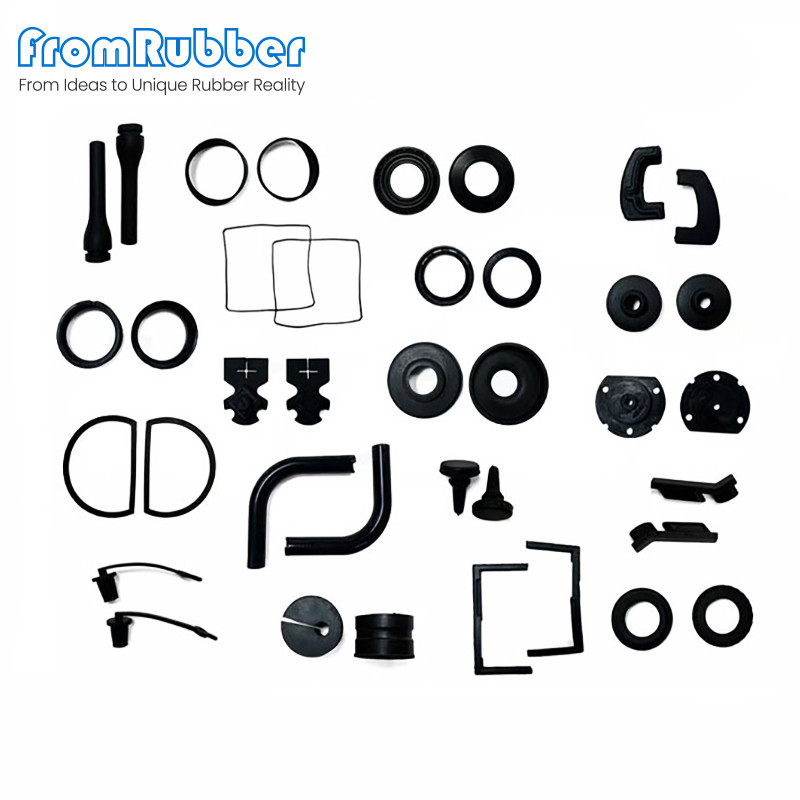
Molding, bonding and batch control
Industrial parts usually run in compression or transfer molded steel tools, with rubber-to-metal parts bonded in the same cycle. Tool, primer and cure are one process: change any of them and the part changes.
We work to IATF 16949 and ISO 9001 quality systems with ISO 14001 environmental management. Batches are checked for hardness, key dimensions, bond condition and compression set, and cavity identity is retained so a drift is caught in-process rather than at your assembly line.

How a machinery part gets from drawing to serial supply
The order below is deliberate: the failure route is identified before a compound is chosen.
Describe the duty
Machine zone, load and frequency, fluids, ambient and washdown, expected cycle count.
Failure-route review
We map the part against heat, oil, ozone and fatigue, shortlist compounds, and flag where a design change beats a material change.
Prototype and bench check
Single-cavity tool and samples for fit, rate or sealing check, molded in the compound you will actually run.
Production and traceability
Production tool, first-article report, batch records and retained samples for the life of the part.
Material and design questions for machinery rubber parts
Short answers for maintenance and design engineers comparing options.
Which rubber is best for a machine mount?
Natural rubber gives the best fatigue life and lowest heat build-up for dynamic mounts. EPDM is the better choice outdoors or where ozone and water dominate, at some cost in fatigue performance.
Can silicone replace NBR in an oil-exposed part?
Usually not. VMQ swells in many hydrocarbon oils and loses strength; NBR or FKM is the correct direction unless the temperature rules them out and the oil is compatible.
How do I specify a bumper or an end stop?
Give the energy to be absorbed, the allowable deflection and the cycle count. Hardness follows from those three numbers, not the other way round.
What causes a bonded mount to separate?
Substrate preparation or cure, not the rubber. Contaminated steel, a skipped primer step or an under-cured bond fails at the interface while the rubber itself still looks perfect.
Describe the duty, not just the shape
Send the machine zone, the loads and the fluids the part will see. We will tell you which compound survives, where the geometry should change, and what a prototype will take.
- 加载中···


Start Your Project Today!
- Phone
- *Title
- *Content
Sign Up Out Newletter
