
Car Body Rubber Parts for Tailored Vehicle Solutions


| Share | |
|---|---|
| Categories | Custom Silicone Seals |
| Brand | FromRubber Silicone & Plastic OEM Manufacturer |
| Product Specifications | BH-auto15 |
| Product Name | Car Body Rubber Parts |
| Material | Rubber Silicone |
| Color | Black,Custom |
| Shape | Customise |
| Service | Tailored Vehicle Solutions |
| Application | Tailored Vehicle |
| Sales Method | Product custom |
| Consultation Email | Suey@fromrubber.com |
| FOB port | Shenzhen |
| Terms of Payment | L/C, D/A, D/P, Western Union, MoneyGram, T/T, Paypal |
| Download |  |
Custom Silicone Seals / Automotive Body Programs
Car Body Rubber Parts for Tailored Vehicle Solutions: Grommets, Plugs, Bumpers and Mounts
Body rubber parts are the components a customer touches without seeing: harness grommets, paint-shop plugs, hood and trunk bumpers, door wedges, body mounts and seat-frame seals. Each is a vehicle-program part, so its geometry is fixed by the body-in-white and its compound is fixed by the paint bake, the ozone load and the closing-force target.
Tailored means the part is engineered against one body program, with its own drawing, tool and first-article report, rather than chosen from a catalogue by nearest size.
- IATF 16949 program flow
- Bake-stable compounds
- EPDM, NR, VMQ, TPE
- Molded and bonded

Where body rubber goes wrong on a new program
Body parts are cheap and late. The four failures below show up after the tool is cut, which is exactly when they are expensive.
- 01
Closing force set by feel
If compression load deflection is too high, doors need a slam and the latch wears. The target is a force budget agreed at clay-model stage, then translated into bead height and hardness.
- 02
Compound chosen before the paint bake
Body-mounted parts pass the e-coat and topcoat ovens. A compound that softens or takes a set in the bake will not seal afterwards, even if it passed a room-temperature fit.
- 03
Grommet sealing on a painted surface
Paint thickness varies with panel angle. A grommet that seals on flat steel can leak on a curved surface carrying a thin paint film, so the bead has to absorb the paint build variation.
- 04
Bond failure at the mount
Body mounts live at the interface between rubber and steel. Surface preparation and primer decide life more than the compound does, and neither is visible in a fitted part.
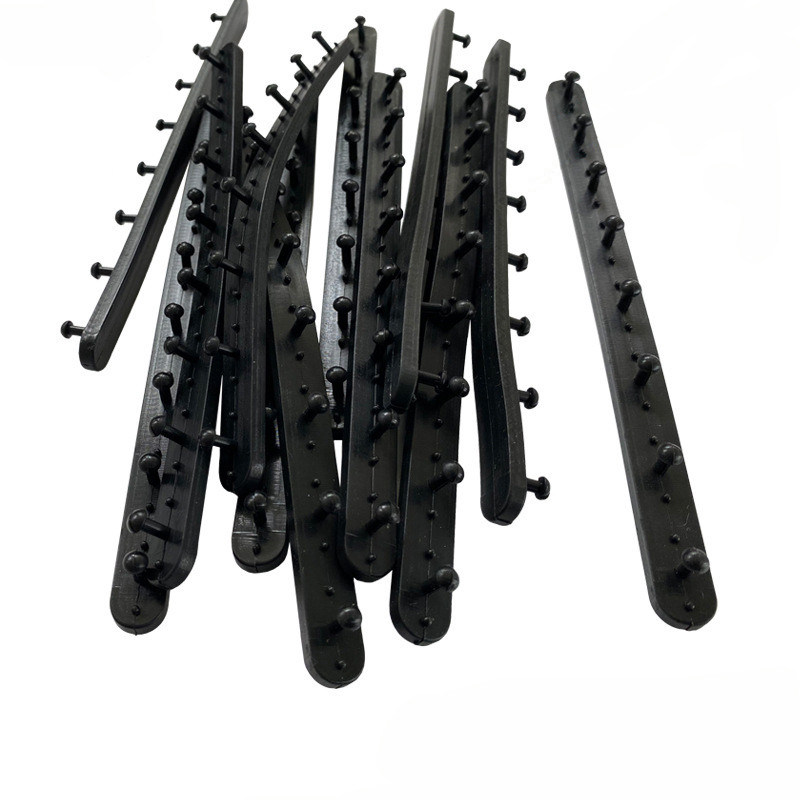
Body zones and the molded parts that serve them
| Body zone | Molded part | Job in the assembly | Material and note |
|---|---|---|---|
| Body-in-white | Paint and weld plugs | Seal and mask openings through e-coat and bake | EPDM or VMQ, bake-stable |
| Dash and floor | Harness grommets, tube seals | Water and noise sealing with strain relief | EPDM, high tear strength |
| Door and shut face | Bumpers, wedges, bump stops | Control closing force, stop rattle | EPDM 60-70 Shore A |
| Hood and trunk | Adjustable bumpers, drain plugs | Panel alignment and water management | EPDM, NR |
| Chassis to body | Body mounts, isolators | Isolate road input, hold clamp load | NR or NR/EPDM, bonded to steel |
| Interior trim | Grommets, seal rings, plugs | Squeak and rattle prevention, water sealing | VMQ 40-60 Shore A |
The table is a starting map, not a specification. Each part is confirmed against the body drawing, the bake schedule and the panels it actually touches, and the first article is measured on those parts.
What tailored means in tooling and documentation
A body part is only useful if it can be changed when the body changes. Four practices make that possible.
- 01
One program, one drawing
Every part carries a drawing number tied to a body program, so a panel change is traceable to the parts it affects instead of being found at pilot build.
- 02
Prototype before production steel
A single-cavity tool proves fit, closing force and bake behaviour; the production tool is only cut once the geometry is frozen.
- 03
Program documentation
Dimensional report, material data, process flow and control plan for the parts that carry them, agreed at the kick-off rather than at the audit.
- 04
Change control
A compound or tool change is notified before it ships, not after, because a small body-part change ripples through the assembly line.
The wider supply picture for custom automotive rubber is covered in built to fit, built to last: custom automotive rubber parts.
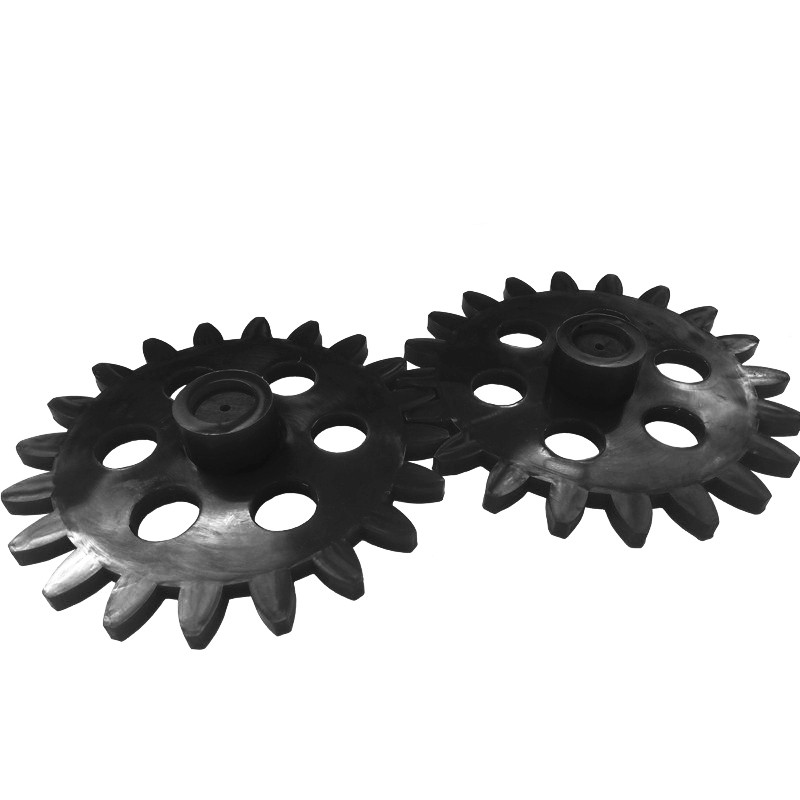
Quality system and program discipline
Automotive body parts are judged by what happens after the bake, after ageing and after ten thousand door closures. Our IATF 16949 and ISO 9001 systems put the checks on the process rather than on the final inspection bench, and ISO 14001 covers the environmental side of the plant.
Batches are checked for hardness, compression load deflection where specified, dimensional fit and bond condition. Where a program needs colour matching, parts are molded to an approved master and the master is kept with the tool.

How a body part gets from program brief to serial supply
The sequence protects the two things that are expensive to fix later: closing force and bake stability.
Program brief
Body zone, mating part, bake schedule, and the target force or sealing requirement.
DFM and CLD review
We propose bead geometry, hardness and compound, and flag where the body design forces a compromise.
Prototype and vehicle fit
Single-cavity tool, samples checked for fit and closing force on the actual panel.
Production and first article
Production tool, first-article report, control plan, then serial supply with change notification.
Body part program questions
Short answers for body engineers and for purchasing teams comparing suppliers.
Can you mold parts that survive the paint bake?
Yes. Parts that pass e-coat and topcoat ovens are molded in bake-stable EPDM or silicone, and the bake schedule is part of the drawing so the compound is validated against it.
How is door closing force specified?
As a force budget: the force the latch and seals should see when the door closes. We translate that into bead height, hardness and compression load deflection, then verify on the panel.
Do you supply body mounts bonded to steel?
Yes, including NR and NR/EPDM mounts bonded to blasted and primed steel, with pull testing built into acceptance rather than added at the end.
What documentation comes with a body part?
A dimensional report and material data sheet as standard, plus process flow and control plan where the program requires them, with change notification before any compound or tool change ships.
Send the body zone and the bake schedule
Tell us the zone, the panels the part touches and the oven profile it has to survive. We will come back with bead geometry, compound and the documentation the program needs.
- 加载中···


Start Your Project Today!
- Phone
- *Title
- *Content
Sign Up Out Newletter
