
Durable Car Rubber Parts for Long-Lasting Reliability


| Share | |
|---|---|
| Categories | Custom Silicone Seals |
| Brand | FromRubber Silicone & Plastic OEM Manufacturer |
| Product Specifications | BH-auto1 |
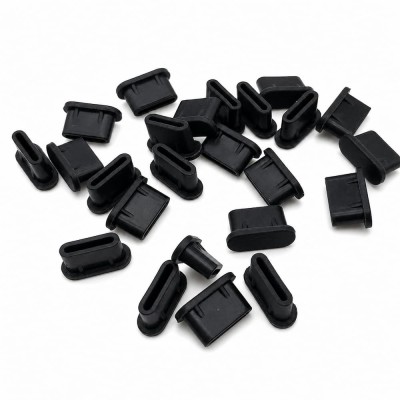
| Product Name | Car Rubber Parts |
| Material | Rubber Silicone |
| Color | Black,Custom |
| Shape | Customise |
| Appliciation | Auto |
| Features | Long-Lasting Reliability |
| Sales Method | Product custom |
| Consultation Email | Suey@fromrubber.com |
| FOB port | Shenzhen |
| Terms of Payment | L/C, D/A, D/P, Western Union, MoneyGram, T/T, Paypal |
| Download |  |
Custom Silicone Seals / Durability Engineering
Durable Car Rubber Parts for Long-Lasting Reliability: Defined by Tests, Not Adjectives
Durable car rubber parts for long-lasting reliability are defined by what the part still does after ageing, fluid contact and cycling, not by how it feels on the bench. A rubber part does not fail because it is soft or hard; it fails because a property that mattered fell below a threshold nobody wrote down.
This page sets out the four properties that predict a leak or a crack, the test matrix we agree with you, and the way a durability requirement should be written so that a good part is not rejected and a bad one is not accepted.
- Air ageing
- Fluid immersion
- Flex cycling
- Retained elongation
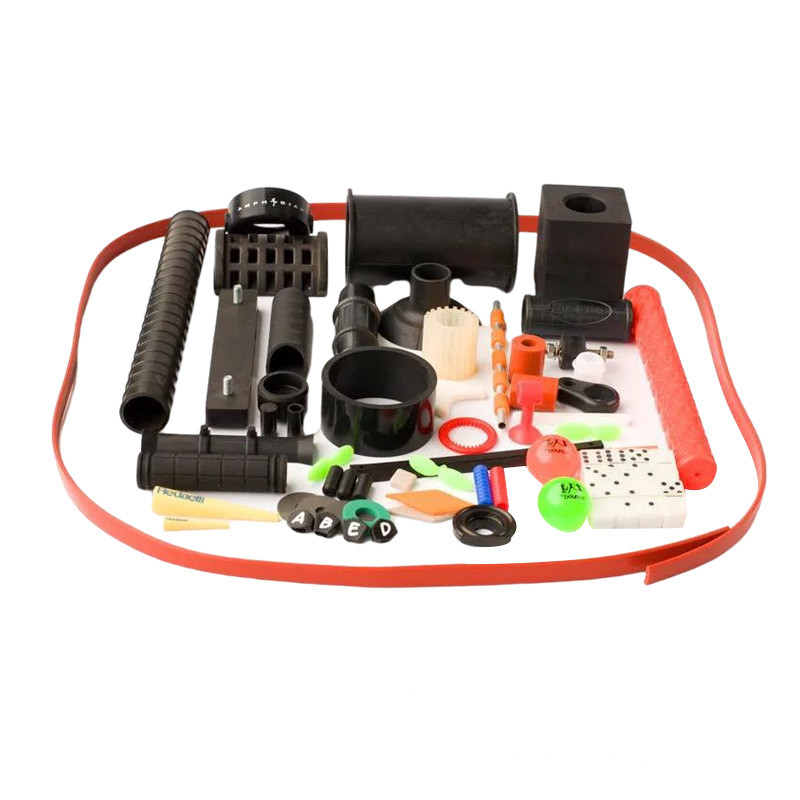
What Long-Lasting Reliability Means for Car Rubber Parts
Four reasons a part that passed its first article still fails in service.
- 01
Ageing measured on the wrong property
A compound can keep its hardness and lose a large share of its elongation. Durability needs the property that tracks the failure: elongation and compression set for seals, tear and crack growth for dynamic parts.
- 02
Test conditions chosen to pass
Twenty-four hours at a temperature the part never sees proves nothing. Soak temperature, fluid and cycle count have to come from the mounting position, not from a template.
- 03
Batch drift between first article and serial supply
The first parts pass and the sixth batch does not, because compound records were not held. Durability is a process claim before it is a material claim.
- 04
Assembly damage that looks like ageing
A cut lip or a twisted seal fails within weeks and is reported as a durability problem. Assembly trials belong in qualification, not in the complaint log.
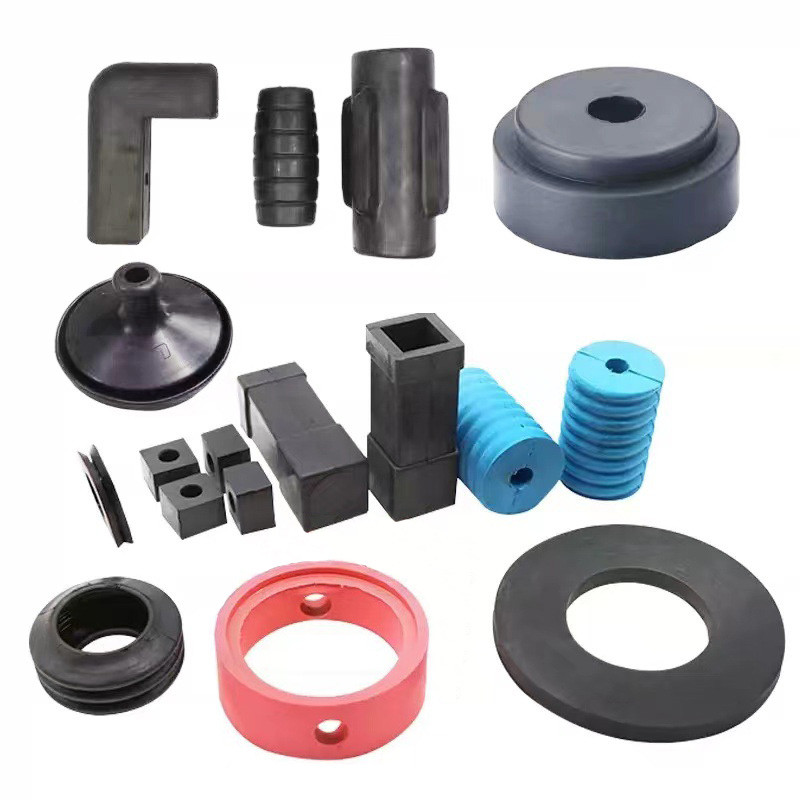
Durable Car Rubber Parts: Durability Test Matrix
| Severity factor | What it does to the part | How durability is verified |
|---|---|---|
| Continuous heat | Hardens the compound, raises compression set | Air ageing at service temperature, then hardness and elongation |
| Thermal cycling | Fatigues the bond line and the seal interface | Soak and cool-down cycling, leak check on cool-down |
| Fluid contact | Swells, softens or extracts plasticiser | Immersion at service temperature, volume and hardness change |
| Dynamic flex | Starts a crack at the tightest radius | Flex or pulsation cycling to an agreed cycle count |
| Ozone and UV | Surface cracking where the rubber is strained | Strained ozone exposure with a visual crack grade |
| Assembly | Cuts, twists and over-compression | Line trial with the real tooling, lubricant and operator |
The matrix is a starting point for review, not a specification. Acceptance values come from the drawing, the compound TDS and the vehicle program, and the test frequency is agreed before the first batch.
Writing a Durability Requirement for Car Rubber Parts
Most durability arguments are specification arguments. Four sentences remove most of them.
- 01
Name the failure mode, not a standard number
Say the seal must not leak after 500 thermal cycles, rather than citing a test that may not match the duty. A standard is a method; it is not a requirement.
- 02
Give a service life target
Years and cycles in the mounting position. A two-year part and a ten-year part should not share a test plan.
- 03
Set retention thresholds
Hardness within a stated band and elongation retained above an agreed share after ageing. Those are the numbers that predict a leak.
- 04
Separate cosmetic from functional
Surface discolouration is not a leak. Agreeing what is cosmetic keeps good parts from being rejected and keeps attention on the parts that matter.
Where the durability question is really a compression question, silicone gasket thickness and compression is the relevant reference.
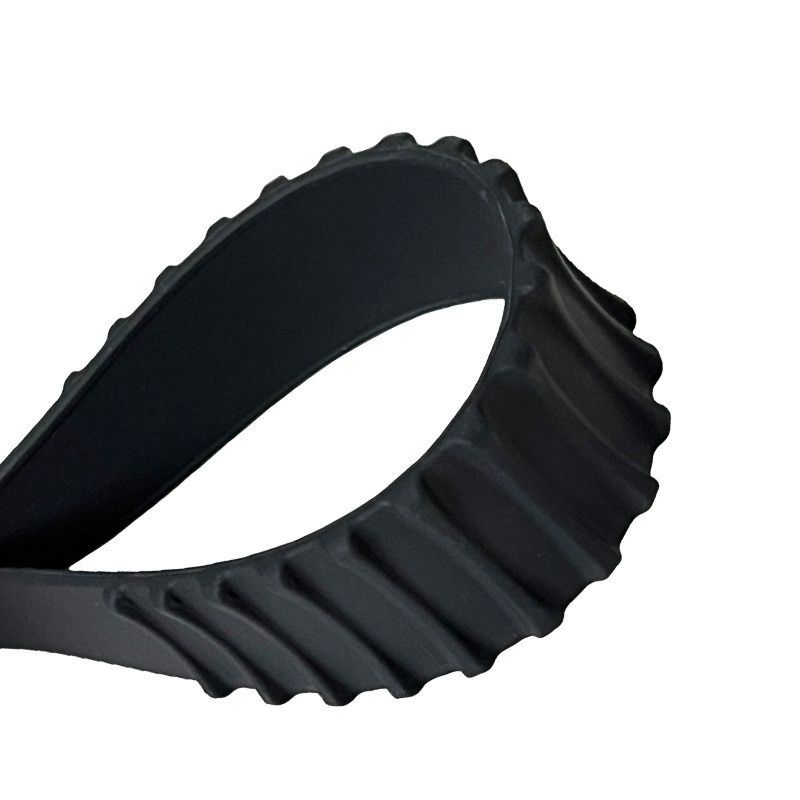
Process Control Behind Durable Car Rubber Parts
Durability that depends on one good batch is not durability. Compound records, cavity identity and retained samples are what make the sixth order behave like the first.
We mold under IATF 16949 and ISO 9001 quality systems with ISO 14001 environmental management. Batches are checked for hardness, key dimensions and compression set, ageing and fluid tests run to the agreed plan, and samples are retained so a field question can be answered with a part, not an opinion.

From Requirement to Serial Durable Car Rubber Parts
Four steps, in this order, because the test matrix should not be invented after the tool is cut.
Send the mounting position
Where the part sits, what it touches, the temperature and fluid it sees, and the service life the program expects.
Agree the test matrix
We propose compound, geometry and the ageing, fluid and flex tests that track the failure mode, with acceptance values.
Prototype and validation
Single-cavity samples validated on the agreed plan rather than on a bench check at room temperature.
Serial supply with records
Production tool, first article, batch checks and retained samples for the life of the part.
Durable Car Rubber Parts FAQ
The questions that decide whether a durability claim survives an audit.
How long should car rubber parts last?
It is a program target, not a material constant. A chassis seal is written against years and thermal cycles; a heat-shield boot against soak hours. The test plan is built from that target.
What causes early failure most often?
Assembly damage or the wrong compound for the fluid, more often than ageing. A line trial and a fluid immersion test catch both before serial supply.
Do you test every batch or only the first article?
First article plus batch checks on hardness, dimensions and compression set; ageing and fluid tests follow the agreed plan at the agreed frequency.
Can you match an existing supplier's part exactly?
Yes, to a drawing. Sample-based copies are measured rather than traced, because a used part has already changed shape and hardness.
Send the mounting position and the service life
Tell us what the part touches and how long it has to last. We reply with the compound, the test matrix and the retention thresholds we would write into the drawing.
- 加载中···


Start Your Project Today!
- Phone
- *Title
- *Content
Sign Up Out Newletter
