
Premium Auto Rubber Parts for Enhanced Vehicle Performance


| Share | |
|---|---|
| Categories | Custom Silicone Seals |
| Brand | FromRubber Silicone & Plastic OEM Manufacturer |
| Product Specifications | BH-auto1 |
| Product Name | Auto Rubber Parts |
| Material | Rubber Silicone |
| Color | According to the material to be plated |
| Shape | Customise |
| Appliciation | Auto |
| Features | Enhanced Vehicle Performance |
| Sales Method | Product custom |
| Consultation Email | Suey@fromrubber.com |
| FOB port | Shenzhen |
| Terms of Payment | L/C, D/A, D/P, Western Union, MoneyGram, T/T, Paypal |
| Download |  |
Custom Silicone Seals / Vehicle Performance
Premium Auto Rubber Parts for Enhanced Vehicle Performance: What Rubber Controls
Premium auto rubber parts for enhanced vehicle performance are judged by attributes a driver can feel: ride, steering precision, wind noise and pedal feel. Each of those attributes is set by a measurable rubber property, and each one can be tuned before the first prototype.
The word premium is only useful when it translates into a named compound, a tighter dimensional band and a measured after-heat-soak behaviour. This page does that translation, attribute by attribute.
- Stiffness and damping
- Compression load deflection
- Low compression set
- Appearance master
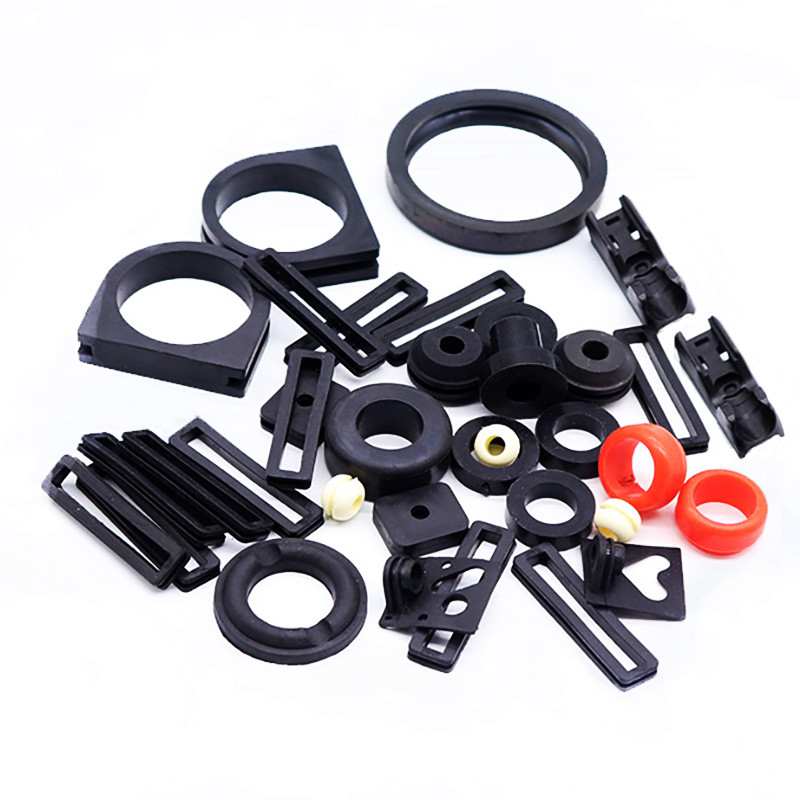
Which Vehicle Attributes Auto Rubber Parts Control
Four attributes a buyer notices in the first kilometre, and the rubber property behind each one.
- 01
Ride and road noise
Body and subframe mounts decide how much vibration reaches the cabin. Static stiffness and damping at the driving frequency decide whether the car feels solid or harsh.
- 02
Steering precision
Suspension bushing compliance lets the wheel move under load. Too soft and the car wanders; too stiff and every surface texture arrives through the column.
- 03
Wind noise and door feel
Door and glass seals add closing force and can whistle when the profile is wrong. Compression load deflection is the number to specify, not the seal thickness.
- 04
Pedal feel when hot
A master-cylinder or caliper seal that takes a compression set shows up as a long pedal after a heat soak, which is exactly when a driver judges the brakes.
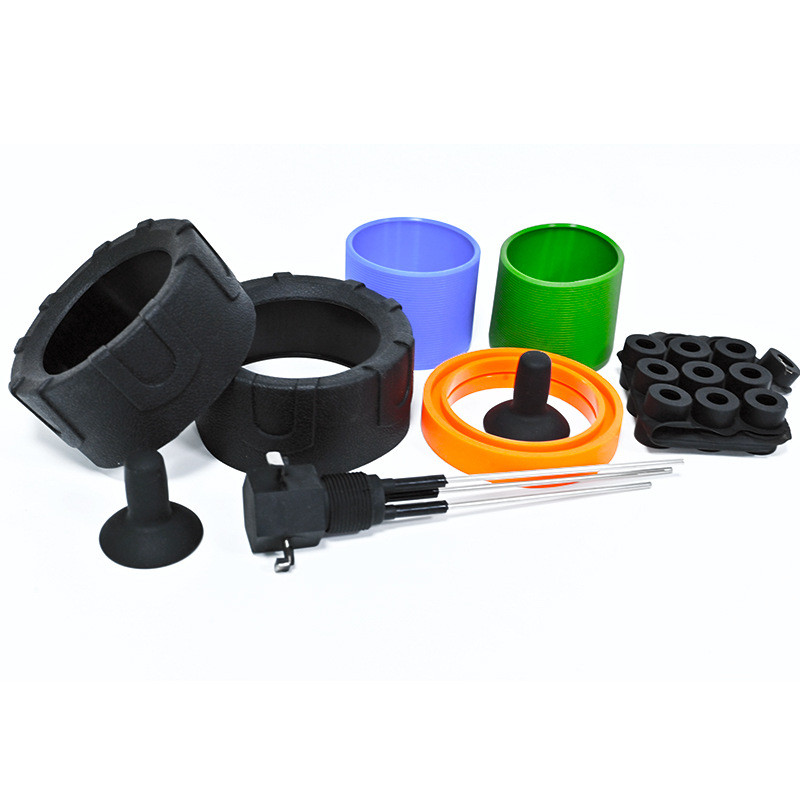
Premium Auto Rubber Parts: Performance Levers
| Vehicle attribute | Rubber part | Measurable parameter | How it is tuned |
|---|---|---|---|
| Ride comfort | Body and subframe mounts | Static stiffness and damping ratio | Compound and mount geometry |
| Steering precision | Control arm and subframe bushings | Radial and torsional rate | Durometer and rib geometry |
| Wind noise | Door and glass seals | Compression load deflection | Bead height and hardness |
| Brake feel | Master cylinder and caliper seals | Compression set after heat soak | Low-set compound and squeeze |
| Drivetrain smoothness | Engine mounts and couplings | Dynamic stiffness at idle frequency | Compound and void design |
| Interior quietness | Grommets and isolators | Structure-borne transmission | Material and contact area |
Parameters are agreed per attribute, then measured on the prototype. A target that cannot be measured on a part cannot be tuned in a compound.
Where Performance Is Lost in Auto Rubber Parts
Four losses that do not appear on a price sheet but do appear in a road test.
- 01
Compound substitution
A similar grade changes rate and set. It fits, it passes a bench check, and the car feels different from the prototype that was signed off.
- 02
Cavity-to-cavity variation
A part from cavity one and a part from cavity twelve should feel identical. Without cavity control, the tenth car off the line is not the car that was validated.
- 03
Over-compression at assembly
Squeezing a seal or mount past its design point raises force and accelerates set, so the part is blamed for a fixture that was never checked.
- 04
Cosmetic drift on visible parts
Colour and texture read as quality. A visible trim part that drifts between batches undermines the whole interior impression.
Where the part is a bushing and the attribute is steering feel, the rate detail is covered in small molded rubber bushings for auto repair.
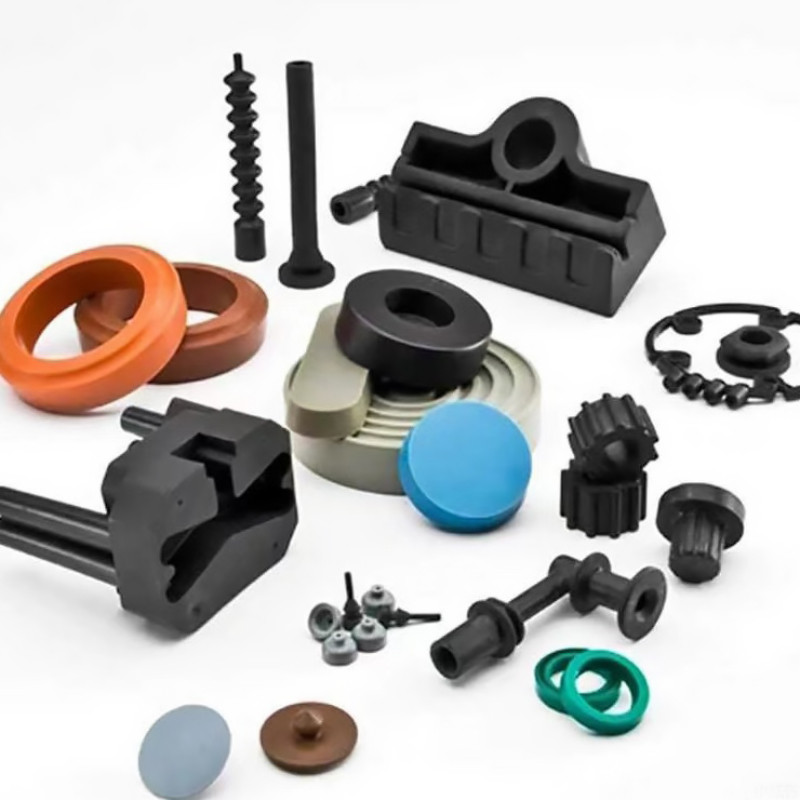
Material Choices Behind Premium Auto Rubber Parts
Premium is a set of decisions, not a price band: a named compound with a TDS, a hardness band that holds across cavities, a low-set grade where the part is judged hot, and an appearance master kept with the tool.
We mold under IATF 16949 and ISO 9001 quality systems with ISO 14001 environmental management. Every batch is checked against the same hardness and dimensional record as the first article, and visible parts are matched to the approved master rather than to the previous batch.

From Attribute Target to Premium Auto Rubber Part
Four steps. The first is a road-test attribute, not a drawing.
Name the attribute and the target
Which behaviour is being tuned, at what frequency or load, and how it will be judged in the vehicle.
Translate into rubber parameters
We convert the attribute into stiffness, damping, compression load deflection or compression set, then choose the compound.
Prototype and vehicle check
Single-cavity samples for fit and for the attribute test, in the compound intended for production.
Production with cavity control
Multi-cavity tool, first article per cavity, hardness and dimensional records, appearance master retained.
Premium Auto Rubber Parts FAQ
Questions from vehicle engineers and buyers comparing suppliers.
What makes a rubber part premium rather than standard?
A named compound, a narrower hardness band, cavity-level dimensional control and measured behaviour after heat soak. The price follows those, not the other way round.
Can you tune a mount to a target stiffness?
Yes. Stiffness is set by geometry first and compound second, so we tune shape and hardness together and confirm the result on a prototype.
Do you supply appearance parts as well as sealing parts?
Yes, with colour and texture matched to a physical master kept with the tool, so a later run can repeat the approved appearance.
How do you stop batch-to-batch drift?
Compound records, cavity identity, hardness and dimensional checks per batch, and retained samples that can be compared with a later complaint.
Send the attribute target, not just the part drawing
Tell us which behaviour is being tuned and how it is judged in the vehicle. We will translate it into rubber parameters and confirm them on a prototype.

- 加载中···


Start Your Project Today!
- Phone
- *Title
- *Content
Sign Up Out Newletter
