
Conductive Aluminum-plated Silver Silicone Rubber EMF EMI Shielding Strips


| Share | |
|---|---|
| Categories | Custom Silicone Seals |
| Brand | FromRubber Silicone & Plastic OEM Manufacturer |
| Product Specifications | EMI Shielding |
| Product Name | EMI Shielding Strips |
| Material | Aluminum-plated Silver Silicone Rubber |
| Color | According to the material to be plated |
| Shape | Customise |
| Appliciation | Critical Electronics |
| Features | EMF Shielding |
| Sales Method | Product custom |
| Consultation Email | Suey@fromrubber.com |
| FOB port | Shenzhen |
| Terms of Payment | L/C, D/A, D/P, Western Union, MoneyGram, T/T, Paypal |
| Download |  |
Conductive Silicone / EMC Gasketing
Conductive Silicone EMI Shielding Strips: Conductivity, Compression and Shielding Effectiveness
EMI shielding strips work by closing a seam, not by being made of metal. Shielding effectiveness depends on three things: how conductive the strip is, how low the contact resistance is at the mating surfaces, and how far the strip is compressed in its groove.
A strip with excellent bulk conductivity and poor contact still leaks. This page sets out the electrical and mechanical window we design to, and the joint decisions that decide whether a 60 dB gasket becomes a 20 dB one.
- Metal-filled silicone
- 15-30% compression
- Seam and groove design
- Ag/Al, Ni/C, carbon

How EMI Shielding Strips Actually Block Interference
Four effects that decide whether a conductive gasket performs as designed.
- 01
The seam length is the leak
Radiation escapes through the longest unbroken gap. A strip that contacts perfectly for 200 mm and lifts at one corner behaves like a slot antenna at exactly the frequencies that matter.
- 02
Contact resistance, not bulk resistance
The path that matters is surface to surface. Plating, oxide films and compression force decide contact resistance far more than the filler inside the compound.
- 03
Compression and closure force
A conductive strip needs enough deflection to break through surface films. Too little and the joint is resistive; too much and the strip takes a set and stops recovering after the first closure.
- 04
Galvanic compatibility
Silver or aluminium in contact with a different metal and an electrolyte becomes a corrosion cell. Plating choice follows the housing material, not the datasheet headline.
EMI Shielding Strips: Electrical and Mechanical Window
| Parameter | Typical window | Effect on shielding |
|---|---|---|
| Volume resistivity | Metal-filled silicone, commonly in the 0.01-0.1 Ω·cm range | Bulk conduction, though contact resistance usually dominates |
| Shielding effectiveness | Roughly 60-100 dB across 100 MHz-1 GHz for a well-compressed gasket | Drops sharply with a long seam gap or poor contact |
| Compression | 15-30% of strip height in a groove | Breaks oxide films; excess compression causes permanent set |
| Closure force | Matched to housing stiffness and screw spacing | Decides whether contact survives vibration and thermal cycling |
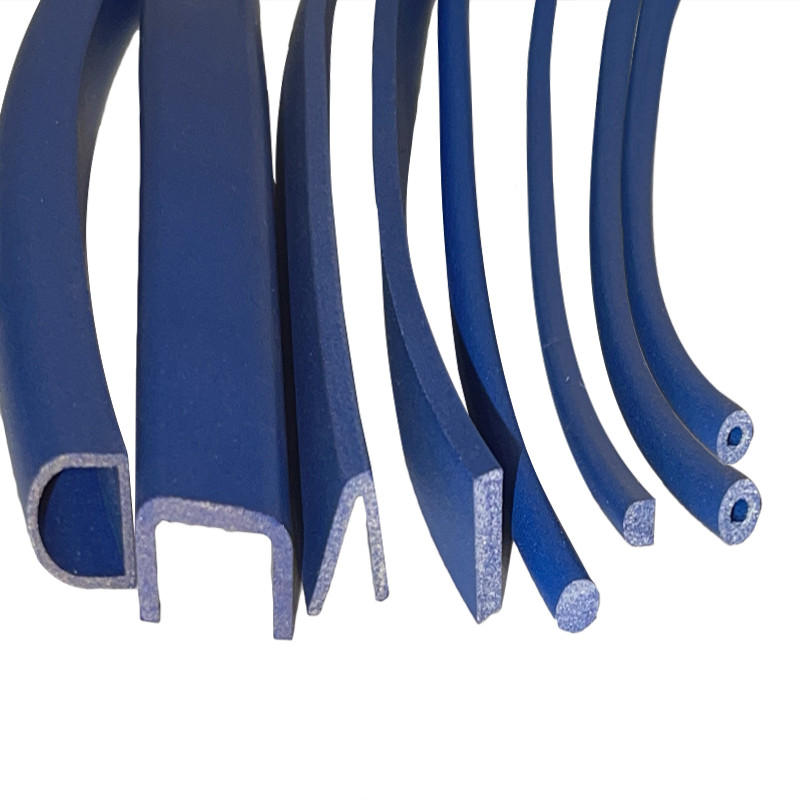
| Section | Rectangular, D, U or hollow, sized to the groove | Hollow lowers force; solid holds contact under load |
| Filler system | Silver-plated aluminium, silver-plated copper, nickel-graphite or carbon | Conductivity against corrosion resistance and cost |
Ranges are quoted for this class of gasket and are not a substitute for a joint test. Shielding effectiveness numbers also depend on the test method, so the method is agreed with your EMC lab before the number is used in a specification.
Choosing Conductive Silicone Strips for a Seam
The filler decides the electrical result; the section decides whether the joint keeps it.
- 01
Silver-plated aluminium
The usual choice in this strip range: good conductivity with a light, economical core. It suits aluminium and plated housings where the galvanic pair is acceptable.
- 02
Silver-plated copper or glass
Higher conductivity at higher cost, and more care needed against corrosion where moisture is present.
- 03
Nickel-graphite
Lower shielding than silver systems, but tolerant of aggressive environments and cheaper. Chosen where corrosion risk outweighs a few decibels.
- 04
Carbon-loaded silicone
Static dissipation rather than true shielding. Cheap, no galvanic risk, and honest only when the requirement is charge bleed rather than attenuation.
Where the same part also has to seal against water and dust, the compression rules in small molded rubber gaskets for instrument sealing apply unchanged.
From Seam Design to Serial EMI Shielding Strips
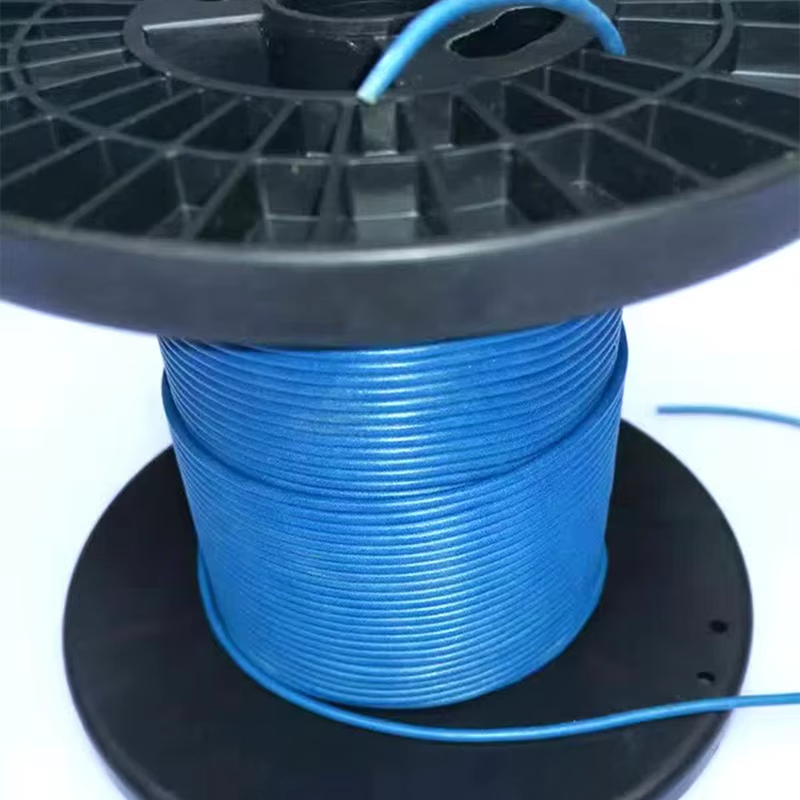
Conductive strips are molded or extruded to a section, then cut to length and often spliced into a frame. Splices and corners are where contact is lost, so the joint design is reviewed with the strip rather than after it.
We mold under IATF 16949 and ISO 9001 quality systems with ISO 14001 environmental management. Batches are checked for section dimensions and compression set, and conductivity is verified on the agreed method, because a strip that is dimensionally right and electrically wrong is still a leak.

Four Steps to a Production EMI Shielding Strip
Four steps, starting with the housing rather than with the gasket.
Send the seam and the groove
Housing material, groove depth and width, screw spacing, and the frequency band the product must meet.
Section and filler review
We match the section to the available closure force and choose the filler against the galvanic pair and the environment.
Prototype and joint test
Samples for fit, then a shielding test on the assembled housing using the method your EMC lab accepts.
Production with checks
Cut lengths, spliced frames, section and compression-set checks per batch, conductivity verified on the agreed method.
EMI Shielding Strips FAQ
The four questions that decide whether a conductive gasket meets its number.
What shielding effectiveness can a silicone EMI strip reach?
A well-compressed metal-filled gasket commonly lands in the 60-100 dB range between 100 MHz and 1 GHz. The figure is joint-dependent and not comparable across test methods, so agree the method before the number enters a specification.
EMI or EMF: is there a difference?
EMI is the interference that disrupts a circuit; EMF is the field that carries it. A conductive gasket addresses both by closing the seam the field escapes through.
Silver-plated aluminium or nickel-graphite?
Silver-plated aluminium when conductivity and weight matter and the galvanic pair is acceptable; nickel-graphite when corrosion resistance and cost dominate.
Does the strip need a groove?
Usually yes. A groove fixes the compression and stops the strip migrating under closure force; adhesive backing alone controls neither.
Send the seam and the frequency band
Tell us the housing material, groove dimensions and the band you must meet. We will propose the section, the filler and the test method, and say where the joint design limits the result.
- 加载中···


Start Your Project Today!
- Phone
- *Title
- *Content
Sign Up Out Newletter
