
Patient Mobility Chair Silicone Control Panel for Hospitals and Nursing Homes
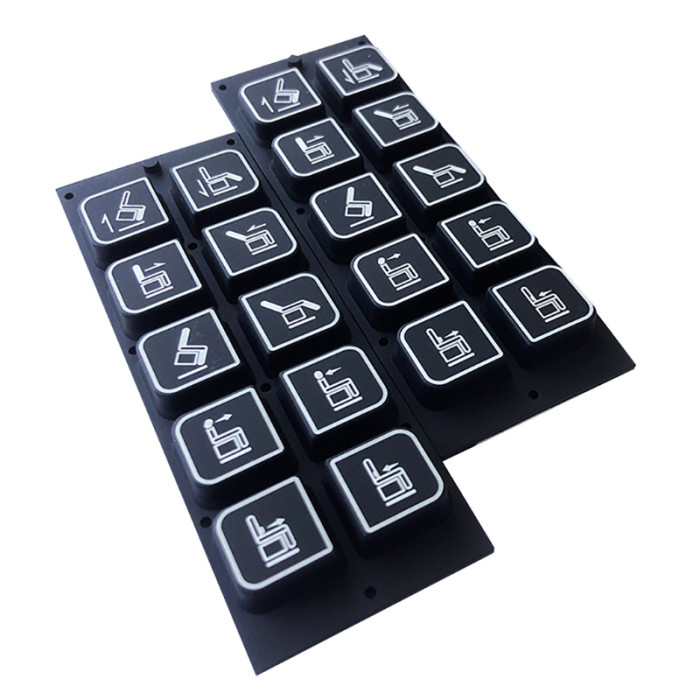


Silicone Control Panel for Patient Mobility Chairs in Hospitals and Nursing Homes
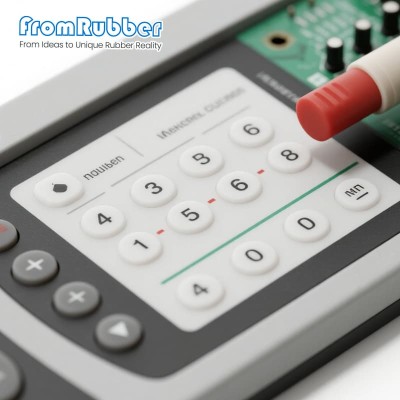
A mobility chair panel is pressed by a nurse wearing gloves, wiped with hospital disinfectant several times a day and read by a patient who may not see well. Those three users set the specification more than any electrical requirement does. This page covers how a silicone control panel is designed for hygiene protocols, for legibility, and for a service life measured in disinfection cycles rather than in keypresses.
Hygiene Is the Design Driver on a Mobility Chair Panel
Cleanability as a mechanical property
Every joint on a chair panel is a place where a wipe cannot reach. A panel bonded flush with a molded gasket has one continuous surface and can be wiped in one pass; a panel assembled from a bezel, a membrane and a separate label has three edges that each collect residue. The hygienic design is therefore the simpler design, not a special product.
Repeated disinfection is a material test. Alcohols and quaternary ammonium compounds are generally well tolerated by silicone; chlorine-releasing agents are harder on thin edges and on printed surfaces, and peracetic acid-based products are harder still. The specification should name the agents the facility actually uses, because a panel validated against one wipe and deployed against another is a common mismatch.
- Reduce the number of edges where a wipe cannot reach
- Name the actual disinfectants and the daily frequency
- Check print adhesion after repeated wiping, not only at first article
Legibility and Touch for Older Users
Contrast, key size and force
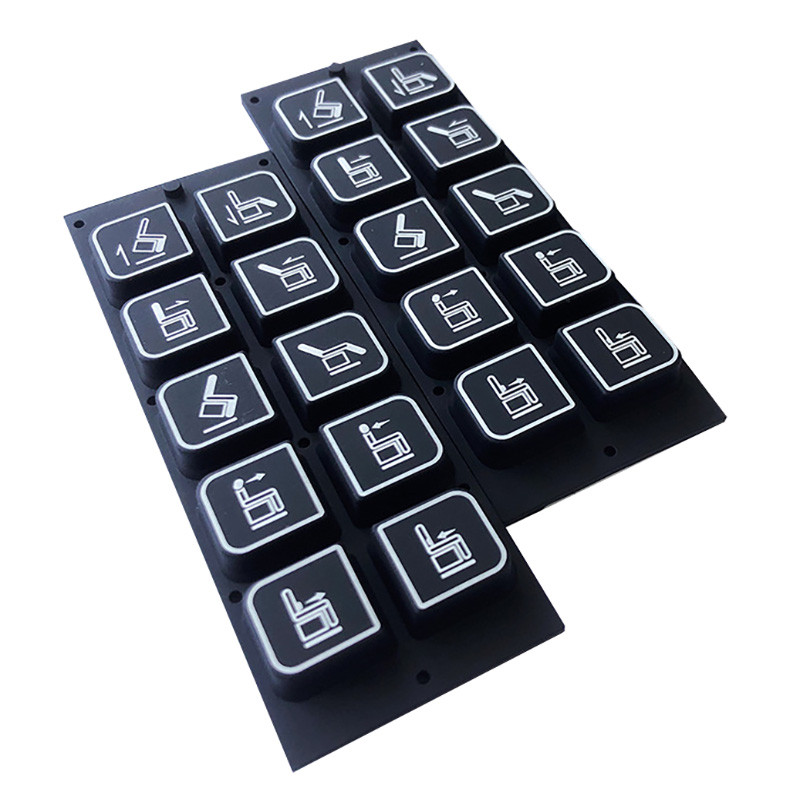
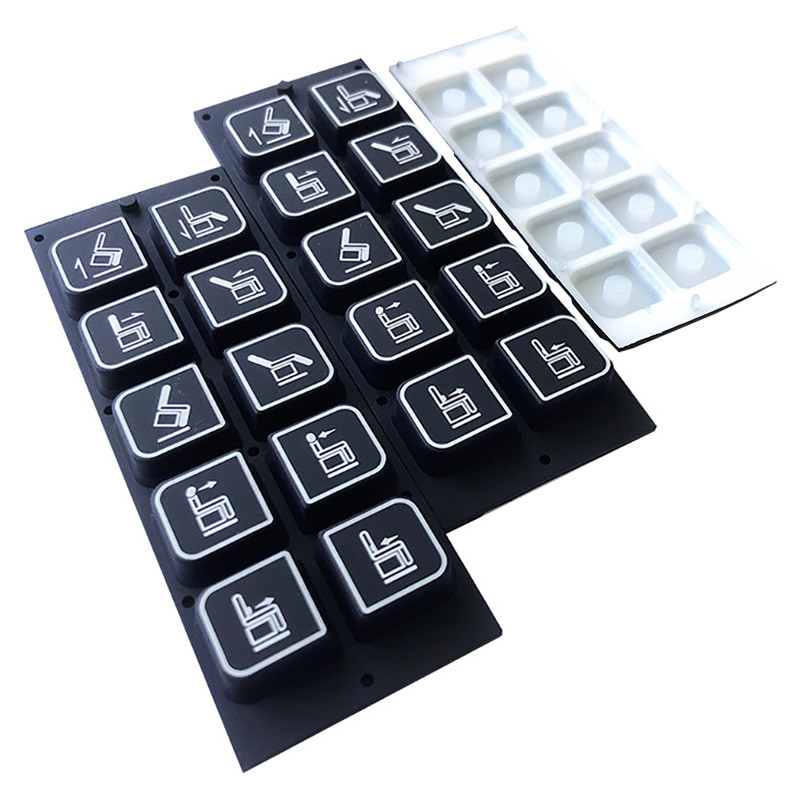
A chair panel is often read at arm's length by someone with reduced contrast sensitivity. Icons that look adequate on a designer's monitor at 100 percent become ambiguous on a moulded panel at 40 centimetres. The practical answer is fewer functions per panel, larger symbols, and a clear figure-ground contrast rather than a wide colour palette.
Touch follows the same logic. A key that requires a precise press is difficult for a user with tremor, and a key that is too soft gives no confirmation. A moderate force with a distinct break, combined with a raised ring around each key, lets a finger locate the key without looking. The raised ring is moulded, so it costs nothing except tooling detail.
- Use fewer, larger symbols with strong contrast
- Provide a distinct tactile break rather than a light touch
- Mould a locating ring around each key for blind operation
Sealing Against Repeated Disinfection
Where liquid actually gets in
Disinfectant is applied with a soaked cloth, which is a different challenge from a splash. Liquid sits on the panel face, wicks under the edge and stays there. A molded sealing lip that is compressed against the housing keeps the liquid at the edge; a flat gasket relies on the compression remaining constant, and on a panel that is pressed hundreds of times a day it does not.
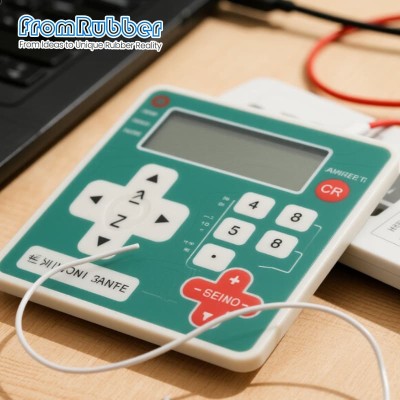
Cable entry is the second path. A panel with a flying lead needs a strain-relieved gland, and the gland has to be part of the sealed volume rather than an accessory added at assembly. Where the chair manufacturer supplies the harness, the panel drawing should still define the gland interface, otherwise the seal stops at the panel and restarts at the cable.
- Use a compressed molded lip rather than a flat gasket
- Define the cable gland as part of the sealed volume
- Specify strain relief for a lead that is pulled during cleaning

Integrating a Silicone Panel Into a Chair Console
Cables, service access and repair
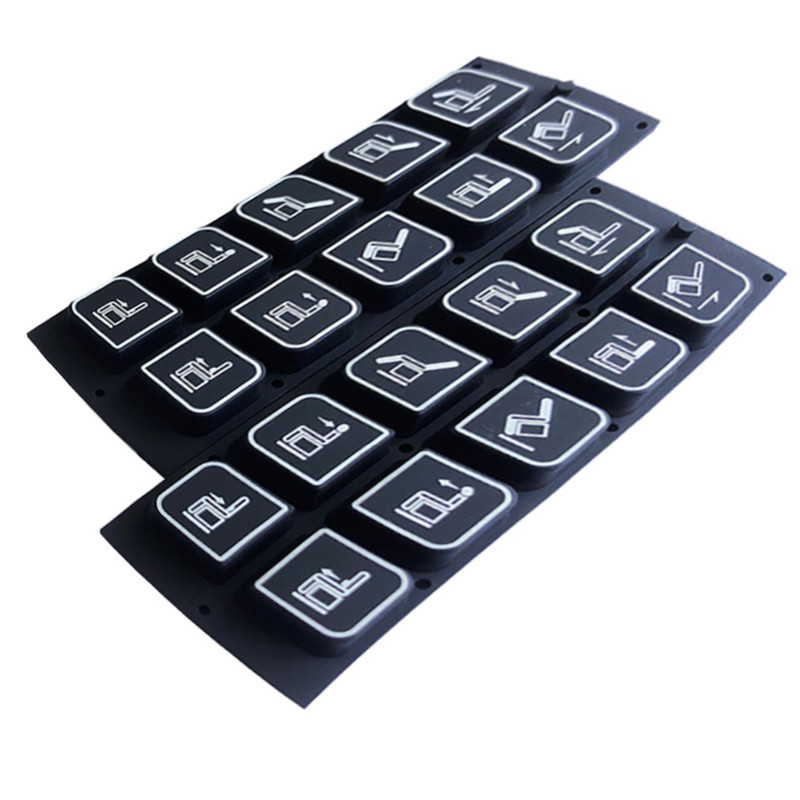
A chair is serviced on site, so the panel has to be replaceable without dismantling the console. A frame that compresses the panel against a gasket, held by captive screws, gives a serviceable joint with a predictable seal. A bonded panel is faster to build and turns a field repair into a workshop job.
The panel also has to coexist with the display and the emergency stop. Where the stop is a separate mechanical button, the panel is designed around it rather than over it; where the stop is on the panel, the key geometry and the legend take priority over the layout of the other functions. That hierarchy should be resolved before the tooling drawing, because moving a moulded key afterwards means a new tool.
- Design the panel for on-site replacement
- Keep the emergency stop outside the moulded key field where possible
- Freeze the key layout before tooling, since keys cannot be moved later
Mobility Chair Panel Specification Fields
Materials and sealing are fixed on the approved drawing; cleaning agents and their frequency are agreed with the facility or the chair manufacturer at RFQ.
- Part type
- Molded silicone control panel with legends
- Material
- Silicone, hardness selected for key feel and sealing
- Surface
- Continuous face with a minimum of edges
- Sealing
- Compressed molded lip against the console
- Cable entry
- Strain-relieved gland inside the sealed volume
- Legends
- High-contrast print or molded symbols, wipe resistant
- Key design
- Locating ring, moderate force, distinct break
- Cleaning
- Agents and frequency named in the requirement
- Service
- Frame with captive screws for on-site replacement
- Design input
- 3D drawing (STEP/IGS) plus 2D drawing, or a physical sample
- Minimum order
- 1000 pcs for this product family
Questions From Chair Manufacturers and Facility Teams
Is the panel suitable for hospital disinfection protocols?
The panel is designed for wipe-down protocols, and the silicone grade and legend method are selected against the agents and frequency the facility states. Chlorine-releasing and peracetic acid products are reviewed specifically because they are harder on thin edges and printed legends.
Can the legends be read without glasses?
Legibility is a layout decision: fewer functions, larger symbols, strong contrast and a locating ring around each key. The panel is designed at the reading distance the user actually has rather than at a designer's screen size.
How is the panel replaced in the field?
A frame held by captive screws compresses the panel against a gasket, so a technician can replace it without dismantling the console. This is the reason the mechanical frame is preferred over an adhesive bond for this application.
Can the emergency stop be part of the panel?
It can, where the chair design requires it, but the stop then drives the key layout and the legend hierarchy. A separate mechanical stop outside the moulded field is usually the safer arrangement because it does not depend on a membrane.
Send the Console Drawing and the Cleaning Protocol
Share the console layout, the harness arrangement and the disinfectants used by the facility. The review returns the sealing and cable-entry design, key geometry for elderly users, legend method and the service arrangement for on-site replacement.
- 加载中···
Start Your Project Today!
- Phone
- *Title
- *Content
Sign Up Out Newletter
