
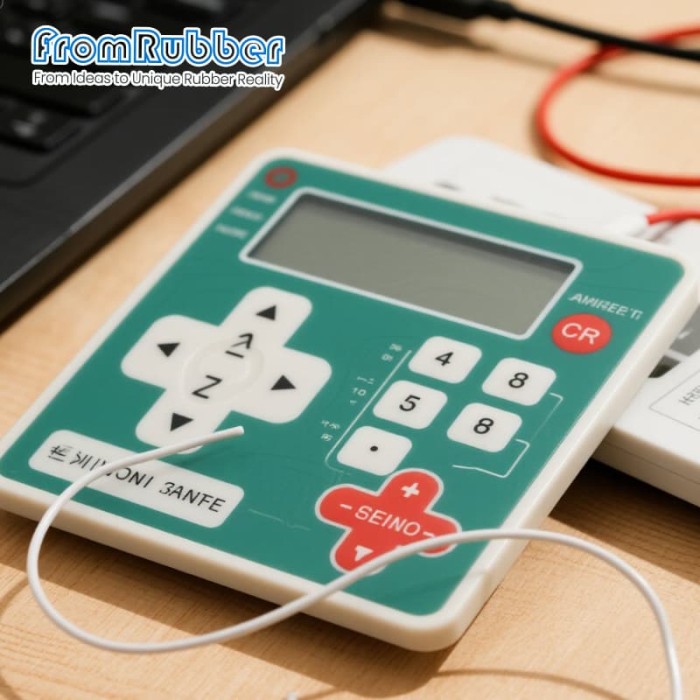
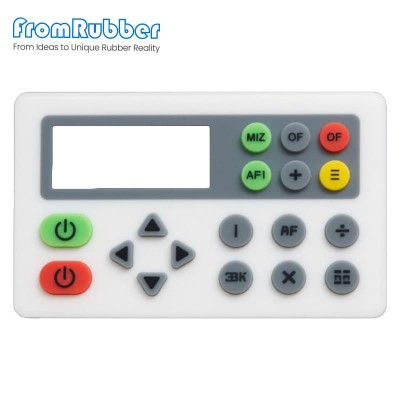
Waterproof Small Home Appliance Electronic PC Silicone Membrane Switch


| Share | |
|---|---|
| Categories | Custom Silicone Rubber Control Panel |
| Brand | FromRubber Silicone & Plastic OEM Manufacturer |
| Product Specifications | BH-appliance panel |
| Design | Follow 3D Drawing Or Physical Object |
| Process | Molding |
| Feature | Conductive,IP68 Rated |
| MOQ | 2000pcs |
| Application | industrial, medical & automotive applications |
| Download |  |
A small-appliance panel is cleaned more often than it is used
On an air fryer, a coffee machine or a water dispenser, the silicone membrane switch panel is wiped after every use - with a damp cloth, a degreaser, sometimes a descaling agent. It is also pressed with wet or floury fingers, and it sits above a heat source that cycles all day. Waterproofing is the entry requirement; surviving the cleaning routine is the actual specification.
That changes two things. First, the failure to design against is not immersion but chemistry and vapour: a degreaser attacks the bond line and the printed legend long before it reaches the electronics. Second, the panel is a cosmetic part of a consumer product, so any solution that leaves a visible ledge or a yellowing window will be rejected in review even if it seals perfectly.
Chemistry, not water, is what ages the panel
Four things a kitchen throws at a panel
Alkaline degreasers soften pressure-sensitive adhesives at the edge, which is why lifting starts at the perimeter and not in the middle. Descaling acids dull a printed legend and can etch a gloss finish. Alcohol wipes are the mildest of the three, but they are used most often. Steam and cooking oil combine into a film that hides a failing bond until it has already lifted.
The material choice follows from that: a silicone overlay with a moulded or laser legend, and an adhesive selected for the cleaning chemistry the appliance is sold with - not a general-purpose tape.
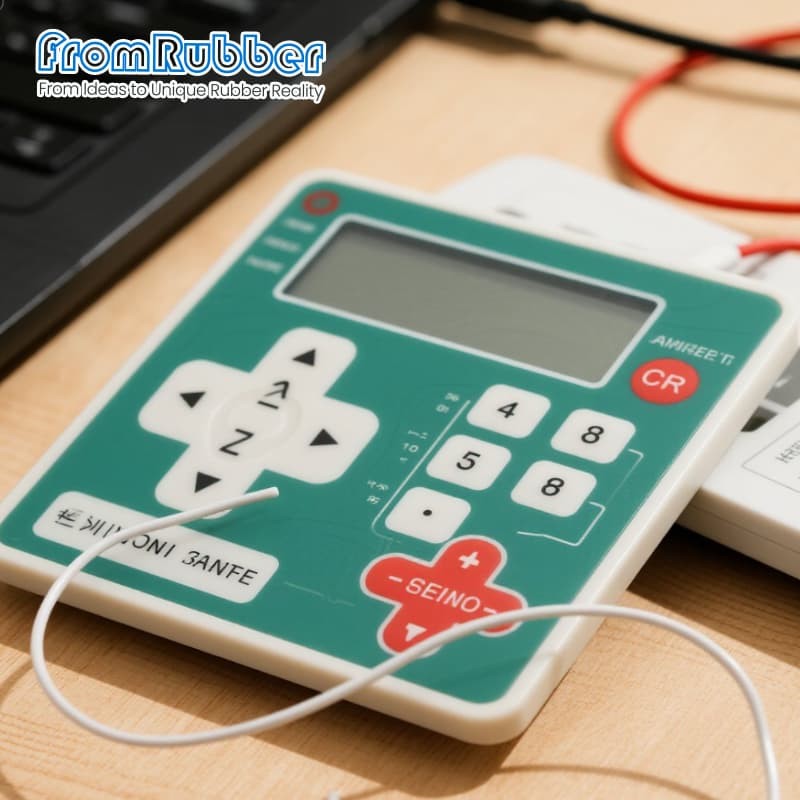
Steam enters where the panel meets the housing
Vapour pressure finds the weakest joint
A sealed panel traps air. Heat the appliance and the internal pressure rises; let it cool and the pressure falls, pulling vapour through the least-tight path. On a kitchen appliance that path is usually the gap between overlay and housing - a joint that was never specified as a seal, only as a location.
The fix is either a genuine perimeter bond onto a flat, moulded land, or a deliberate vent that lets the cavity breathe through a path that cannot pass liquid. What does not work is a tight-looking assembly with no defined seal and no defined vent, because it will do one or the other unpredictably.
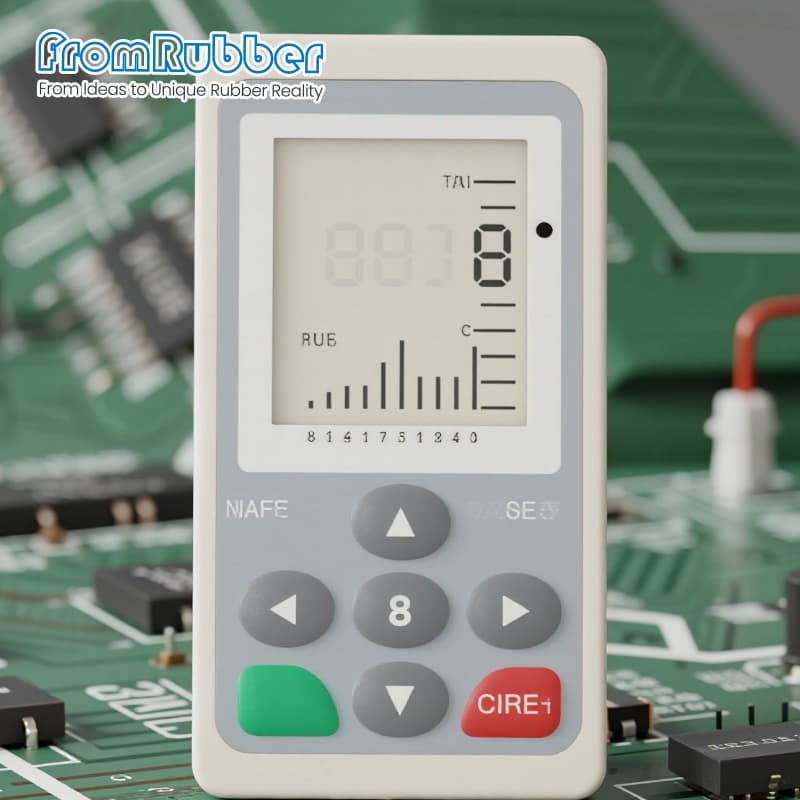
Do the five-year arithmetic before the tool
An appliance panel is a high-cycle part. A family pressing a coffee machine six times a day reaches about eleven thousand presses in five years; a shared office machine, or a child repeatedly pressing a favourite button, multiplies that. The number belongs in the specification, because it decides the dome, the legend and the adhesive.
Press count
Presses per day times service life, with a margin. Write it down; "long life" is not a test condition.
Chemistry list
The cleaning products the appliance manual allows. Test the panel against those, not against water alone.
Heat cycle
The temperature the panel sees above the heater, and how often. A panel that survives cold is not proven.
Wipe abrasion
A cloth with crumbs is an abrasive. Wipe the legend a few thousand times and check readability, not just adhesion.
Design rules for a panel someone wipes with a wet cloth
Five details that decide the outcome
Keep the bond land flat and continuous - a joint that crosses a step or a texture cannot seal. Radius every outer edge so a cloth does not catch and peel. Keep the legend below the surface or moulded, so a wipe does not abrade it. Slope or drain the area around the panel so liquid runs away rather than pooling against the joint. And leave a defined gap tolerance between overlay and housing, because a panel that is squeezed into a recess buckles and lifts.
These rules cost nothing at the drawing stage and are expensive to add after tooling, which is why the panel and the housing should be reviewed together.
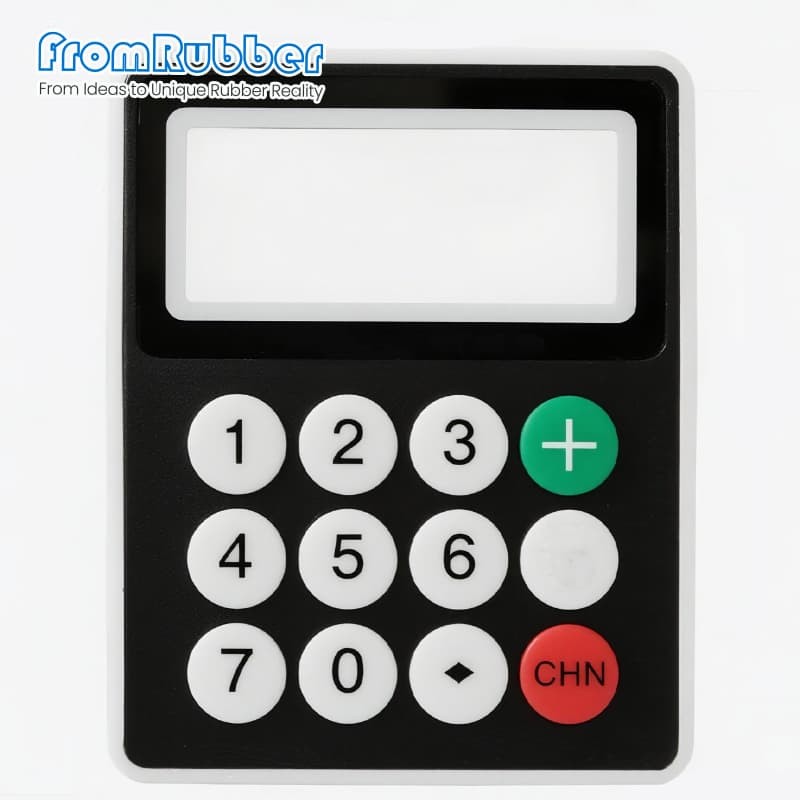
Specification on this series
- Construction
- Moulded silicone overlay over a membrane circuit, with a defined perimeter bond
- Process
- Compression moulding from a 3D drawing or a physical sample
- Contact
- Conductive pill or metal dome, selected by press count and feel
- Legend
- Moulded, laser-etched or printed with a protective coat, depending on the cleaning chemistry
- Typical applications
- Small kitchen appliances, beverage and water dispensers, laundry and cleaning equipment
- Minimum order
- 2,000 pieces per design
Material compliance for kitchen appliances is covered in food-grade silicone keypad certification. For panels that must survive full immersion rather than wiping, see IP67 membrane keypads.
Questions from appliance makers
Is IP68 necessary for a kitchen appliance?
Usually not. A kitchen panel needs resistance to wiping, splashes and vapour, which is a chemistry and bond question more than a rating question. Specify the cleaning products and the press count first.
Why does the legend wear before the panel peels?
Because the wipe is abrasive and the ink sits on the surface. A moulded or laser legend moves the contrast into the material, so wiping removes nothing.
Can the panel be one part with the housing?
It can, but then the whole housing is a silicone part. Most appliances keep a rigid housing and bond a flexible overlay onto it, which is cheaper and easier to service.
What drives the unit cost at appliance volumes?
Colour count, contact type, whether the circuit is printed or FPC, and the test regime. At appliance volumes the tooling is amortised quickly, so legend complexity and assembly steps dominate.
Send the cleaning list and the press count
Chemistry and cycles decide the legend, the adhesive and the contact type. Send the appliance outline with the cleaning products the manual allows, and we will propose a panel that can be tested against both.
Request a panel quote See control panel capability- 加载中···
Start Your Project Today!
- Phone
- *Title
- *Content
Sign Up Out Newletter
