
FromRubber Custom Silicone Pet Tin Lids Food Can Cover for Dog and Cat Food


Custom Silicone Pet Tin Lids: It Is a Rim Tolerance Problem, Not a Lid Problem
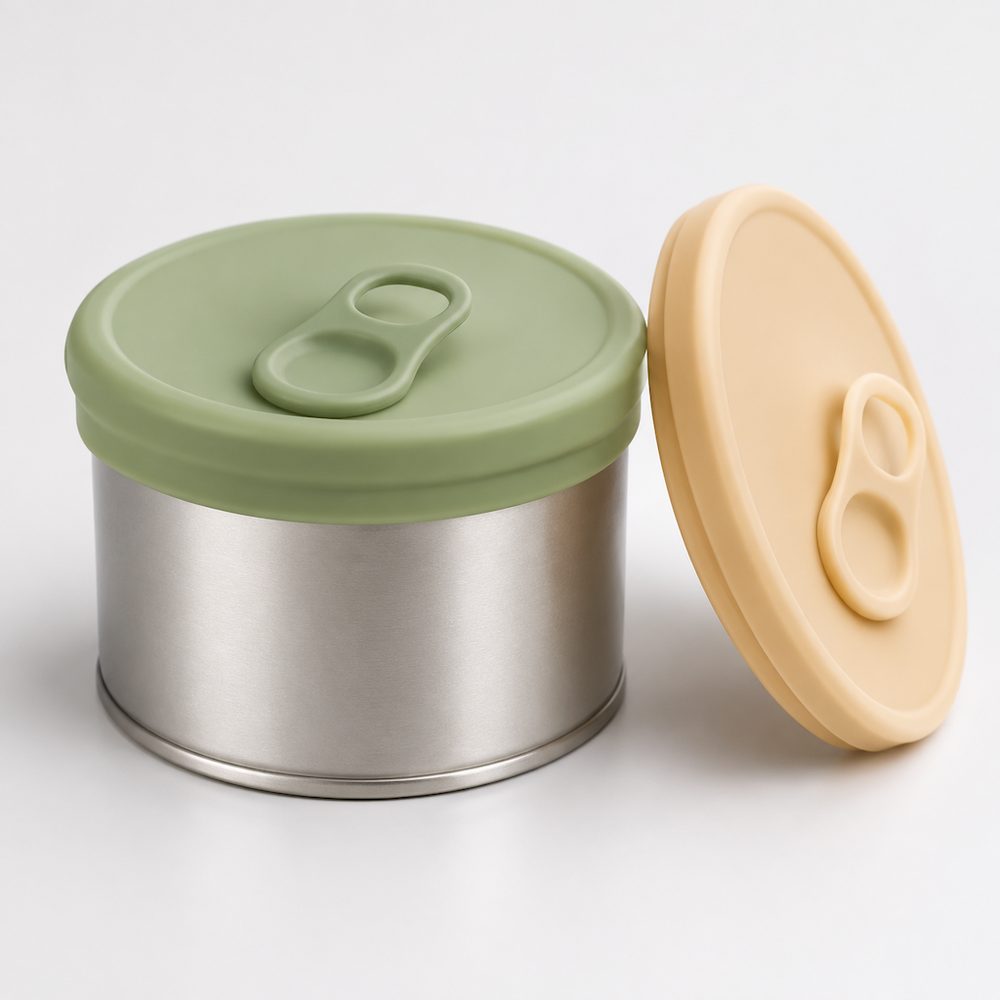
A reusable silicone can lid seals by interference against the outside of the can rim, because there is no vacuum and no thread to help it. That means the lid is only as good as its fit to the worst rim in the batch. Three-piece cans vary in rim diameter, seam thickness and roundness, so a lid designed to the nominal rim will grip some cans and lift off others. The design work is to choose a lip section that absorbs that spread without becoming either loose or impossible to remove.
This is the part of the job most buyers underestimate. The lid itself is simple; the tolerance band it has to cover is not. Our first step on any custom silicone pet tin lid project is to measure a real sample of the cans the brand actually fills, not the drawing of a can.
- Seals on the rim outside diameter, with a lip deep enough to resist tilting
- Absorbs rim diameter and seam variation across a production batch
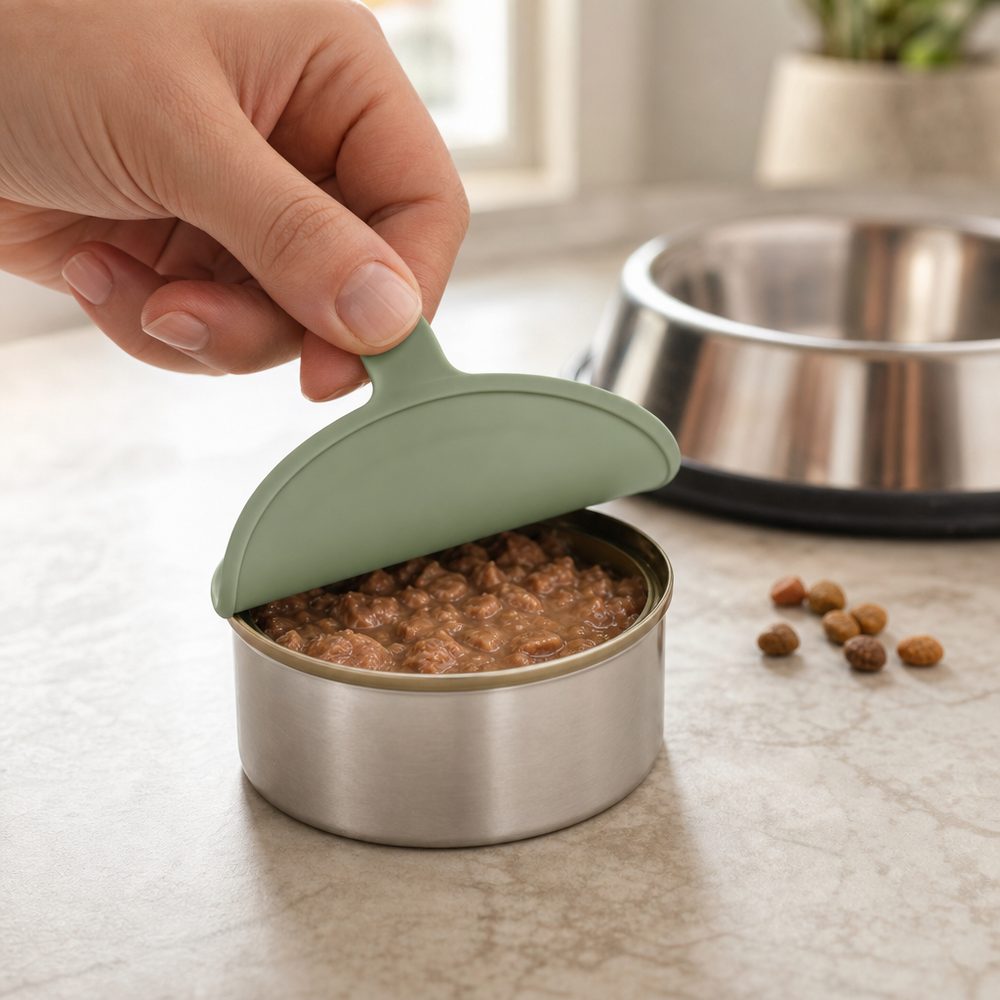
- Stays on when the can is knocked over, and still lifts with a normal pull
- Keeps odour in and air out without relying on a vacuum
Rim Fit, Retention Force and Reusability
Three measurements decide whether a lid feels right in the hand: how far it drops before it grips, how much force it takes to lift, and how much of that force remains after a hundred wash cycles.
The Rim Tolerance Stack
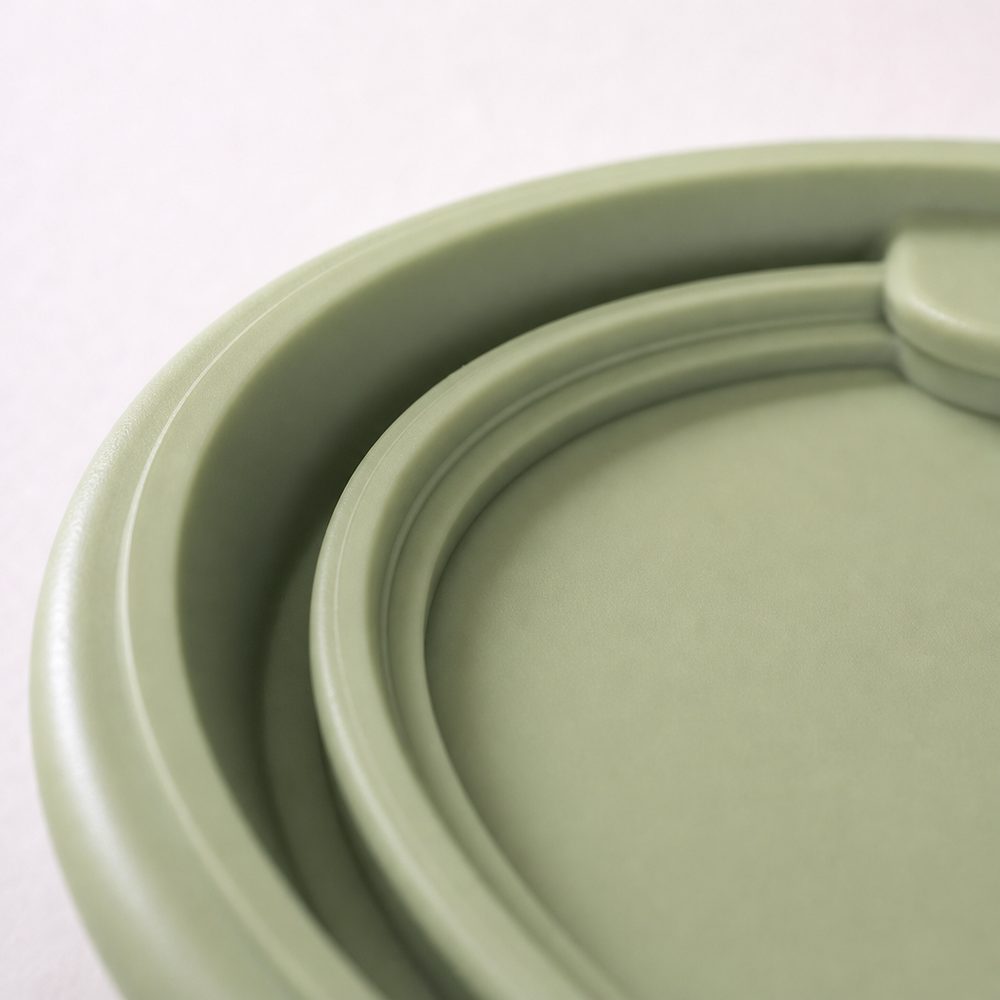
Nominal rim diameter is not the number to design to. Measure the smallest and largest rim in a real batch, add the seam thickness variation, and design the lip so that the smallest rim still has interference and the largest still seats without a fight. A single-wall lip accommodates this better than a rigid double wall, because it deflects rather than fighting the can.
Retention Versus Lift Force
A lid that is hard to remove gets left off, and then it protects nothing. The useful target is a lid that holds when the can is tipped but releases with a deliberate lift at the tab. Adding a generous tab with a defined hinge and a slightly thinner section at the hinge gives a predictable lift point without weakening the seal.
Wall Thickness and Lip Stiffness
Thickness controls both grip and feel. A 1.5-2.0 mm wall with a thinner lip root gives compliance at the rim and a firm body that does not fold when lifted. Going thinner to save material usually trades away retention, and the failure shows up as lids that pop off in a fridge door. Thickness and compression behaviour are covered in Silicone Gasket Thickness: How Does It Affect Compression.
Specification Envelope for a Silicone Can Lid
The table is the starting envelope for a reusable lid on a standard three-piece pet food can. The real can batch decides the final numbers.
| Parameter | Typical envelope | Why it drives the result |
|---|---|---|
| Material | Food-contact VMQ, 50-65 Shore A | Firm enough to grip the rim, soft enough to lift without effort |
| Wall thickness | 1.5-2.0 mm body, thinner lip root | Sets grip, feel and how the lid behaves when lifted |
| Rim interference | Designed across the measured batch spread | A nominal-only fit fails on the largest or smallest cans |
| Depth of skirt | 8-14 mm for a standard can | Deep enough to resist tilting, shallow enough to remove |
| Tab | Radius at the root, defined hinge | Prevents the tear that ends a lid's life |
| Surface | Matte or gloss, moulded-in decoration | Printing at the rim wears first |
| Post-cure | Applied before packing | Reduces volatile fraction, staining and odour pick-up |
Ranges describe the usual design envelope for this component class. Final dimensions follow the customer's can sample and the approved drawing; food-contact documentation is issued per order.
What Goes Wrong After the First Wash
The first hour of use tells you almost nothing. The complaints arrive after a few weeks in a dishwasher and a few months of contact with wet pet food.
Detergent, Heat and Dishwasher Cycles
Repeated hot wash with alkaline detergent extracts low-molecular-weight material and leaves the surface slightly chalky. The lid then grips less and stains more. Post-curing the moulded part removes most of the volatile fraction before it ever reaches a customer, and it is the lowest-cost durability improvement available.
Odour Pick-Up and Staining
Pet food contains fats and pigments that migrate into silicone. A tighter, less porous surface and a pigment system chosen for stain resistance reduce the effect; a light colour shows staining sooner but is easier to inspect. Be explicit with the customer about which trade-off they want, because it cannot be solved by material alone.
Tears at the Tab
Nearly every tear starts at the tab root, where a thin section meets a thick one. A radius at the transition, rather than a sharp corner, is the difference between a lid that lasts and one that splits. This is a tooling detail, so it has to be decided before the cavity is cut.
Food-Contact Material, Pigments and Tooling
A pet food lid is a food-contact article in most markets, even though the consumer is an animal. The material and every pigment in it have to be selected on that basis, and the documentation has to travel with the shipment.
Material and Declaration
Compounds are specified against food-contact requirements such as FDA 21 CFR 177.2600 for the United States and EU 10/2011 for Europe, with supporting declarations supplied per order. Silicone is inherently suitable; the risk sits in additives, catalysts and pigments, not in the polymer backbone. Related practice for food-contact sealing parts is described in Silicone Gaskets for Food Containers.
Pigment, Printing and Surface
Pigments must be selected for food contact and for dishwasher exposure. Where a brand wants a logo, in-mould or moulded-in relief is more durable than surface printing, which wears at the rim where the hand contacts it. A matte finish hides scuffs; a gloss finish wipes cleaner.
Tooling Economics
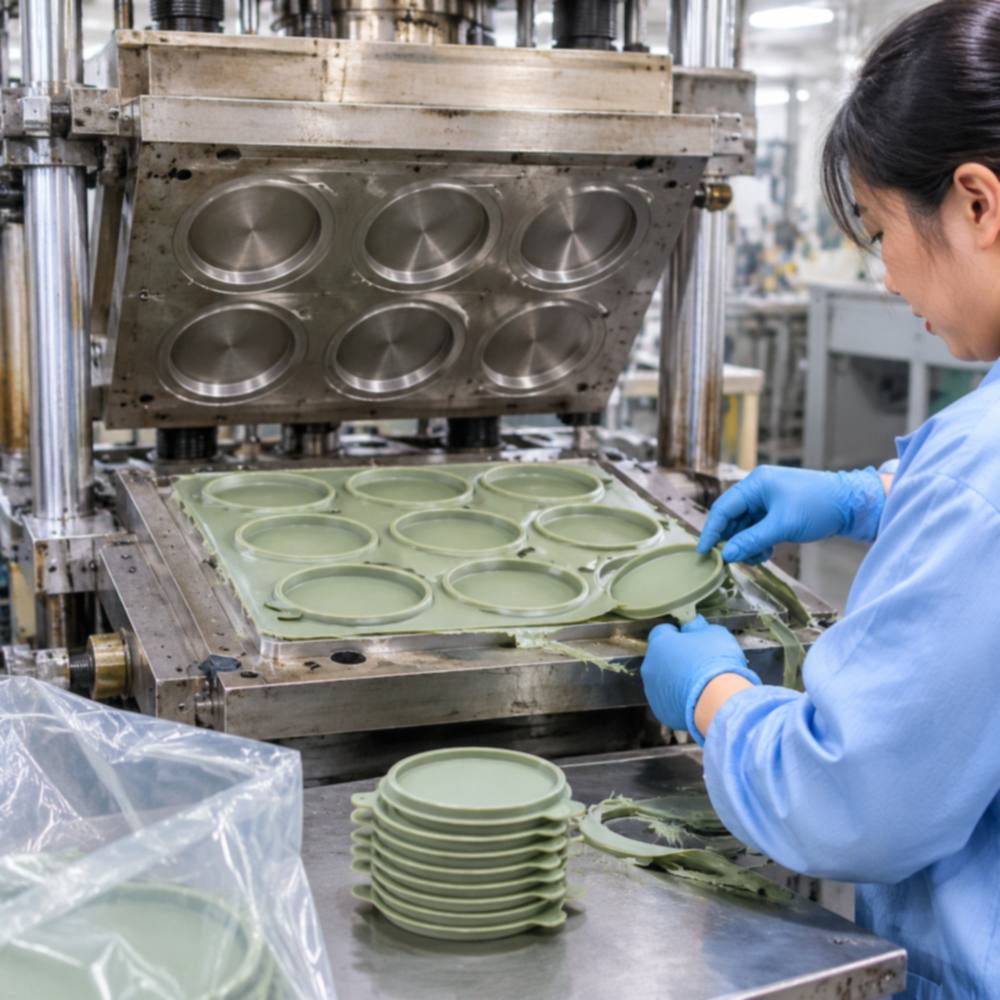
Lid geometry is simple enough that cavity count drives unit cost more than cycle time. Multi-cavity tooling is worthwhile at volumes where the tool amortises, and a single-cavity prototype tool is normally the right first step to confirm rim fit before committing. A reusable food-grade silicone design comparison is available in food-grade silicone storage bags.
Questions About Custom Silicone Can Lids
Will one lid size fit every pet food can?
No. Cans from different suppliers differ in rim diameter, seam thickness and roundness. We size the lip against a measured sample of the cans the brand actually fills, and where a range must be covered we design to the extremes rather than the average.
Is silicone safe for direct food contact?
Silicone is widely used for food-contact articles. Compliance depends on the full formulation and on the pigments used, and it is documented per market - typically FDA 21 CFR 177.2600 for the US and EU 10/2011 for Europe. We supply declarations with the production batch.
Can the lid carry a brand logo?
Yes. Moulded-in relief or in-mould colour is the durable option because it cannot wear off. Surface printing costs less at low volume but sits exactly where hands and dishwasher racks contact the part.
Measure the Can Before Designing the Lid
Send a sample of the can your product is filled into, the target market for food-contact documentation, and the branding requirement. We will confirm lip section, skirt depth and tooling approach. Related reading: lid sealing for food containers and how thickness affects compression.
Send a can sample for reviewFromRubber produces custom moulded silicone parts for brands and OEM programmes. We do not sell retail.
- 加载中···

Start Your Project Today!
- Phone
- *Title
- *Content
Sign Up Out Newletter
