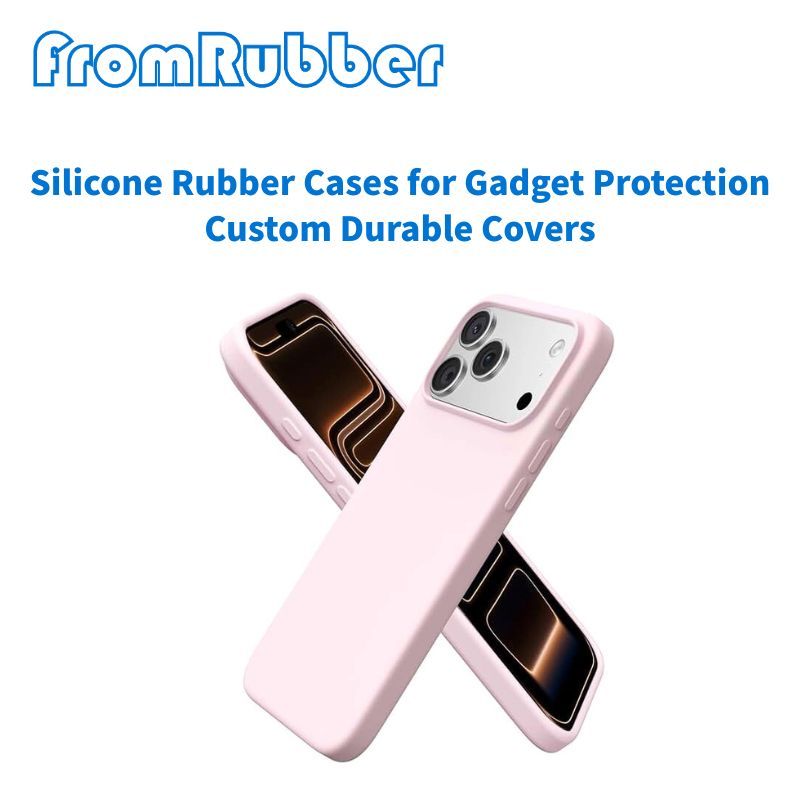
Silicone Rubber Cases for Gadget Protection Custom Durable Covers
A case range is a matrix, not a product
Every case programme starts the same way: one hero sample is approved, the buyer is happy, and the range is then described as “the same case in eight models”. Those eight models are eight different tools. The artwork is the only asset that travels; the port openings, the split line, the button reliefs and the drop corners all have to be re-cut for each device.
The failure is rarely in the moulding. It happens when the model list arrives after tooling has started, when a port opening is copied from a similar phone, or when a 3 mm relief that reads well on one device swallows the whole wall on a smaller one. Planning the matrix before the first cavity is cut is what keeps a range shippable.
- One cavity set per device model, top and bottom shell
- Moulded colour up to two per part; printed colour up to six
- Artwork re-drawn per model, never scaled from the largest device
- Quoted at 1,000 pcs per design on our current case lines
Four dimensions that reset with every model
These are the four features buyers most often assume will carry over. None of them do.
Port openings and charging clearance
A connector cut-out is not a hole in the artwork; it is a clearance around a plug shell, and plug shells differ by brand and by cable. A cut-out copied from the previous model either grips the plug or leaves a gap that collects lint against the port.
What we set per model: opening position from the device 3D, a chamfer on the inside face so the plug seats fully, and no material within the plug's insertion envelope.
Split line and hinge
The line where the shell opens has to land on an edge the user already reads as an edge of the device. Move it 2 mm and the case looks misaligned even when the fit is correct.
What we set per model: split line on a natural device edge, a controlled land at the mating face, and enough overlap that the two halves do not separate when the case is peeled off.
Button relief depth
Side buttons are usually moulded as a raised pad over a thinned web, not as a hole with a cap in it. The relief depth decides whether the click still reads through the silicone; too shallow and the button feels dead, too deep and the pad wobbles.
What we set per model: web thickness under the pad, pad height against the base wall, and a hard stop so the pad cannot bottom out on the switch.
Corner wall at drop zones
Thickening the whole shell is the reflex answer to a drop specification. It also doubles the weight, stiffens the grip and changes how the case sits in a pocket. Energy is absorbed at corners and edges, not uniformly.
What we set per model: local build-up at the four corners, a radius that carries load into the side wall, and a base wall that stays thin enough to flex on impact.
The tooling math behind a range
A range is not “models times colours” tools, but it is “models” tools plus a colour plan. Getting that distinction right is most of the programme cost.
| Driver | What it actually multiplies | Control lever |
|---|---|---|
| Device models | One cavity set each, plus one fit validation each | Fix the model list before the first tool; group models that share a shell family |
| Colourways | Minimum run per colour, not a new tool, when colour is in the compound | Choose two core colours for launch; add seasonal colours after the range sells through |
| Moulded two-colour art | A second shot or a separate moulded piece, per model | Reserve two-colour moulding for the hero model only |
| Printed graphics | Print setup per model, up to six colours | Use print for multi-colour art and keep the shell single-colour |
| Packaging | One SKU per model-colour-packaging combination | Standardise the retail pack and vary only the label |
When eight models actually makes sense
Range size is a promise about inventory, not about ambition.
At a 1,000-piece minimum per design, eight models in two colourways is sixteen minimum runs — and the market only has to under-perform once for half of them to become dead stock. A two-model, three-colour launch that sells through, followed by a second wave, usually beats sixteen thin SKUs, because the art direction has already been validated on a real shelf.
The practical rule is to launch the models that share a shell family first. They use the same fit logic and the same art treatment, so the second and third tools are faster and cheaper to prove than the first. Models that need a genuinely different architecture — a camera body, a wearable band, a foldable — earn their own programme, not a line in the first one.
Artwork that survives eight models
Scaling a hero file is the fastest way to break a range. A relief that stands 3 mm proud reads as a strong character detail on one device and as a lump on another, because the same 3 mm is a different share of the part's width. Relief depth has to be reviewed against the base wall of each model, not against the previous model's drawing.
The second decision is how the art carries colour. Moulded colour is the durable answer — it cannot peel, and it survives a bag — but it is limited to two colours in the part, which forces the designer to reduce the character to shapes. Printed graphics allow up to six colours and fine detail, at the cost of an extra process and a print line that has to clear the split line.
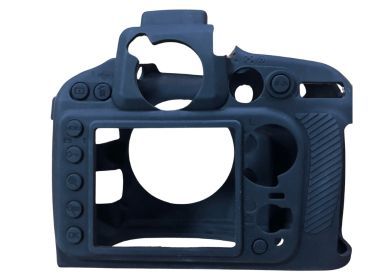
The camera armour here shows the principle at its most demanding: the cut-outs are not decorative, and every button has to remain operable through the skin. That is a fit problem first and an art problem second, which is the order we quote in.
What we need to quote a case range properly
- The model listExact device models and generations, not a device family name.
- Geometry2D/3D of each device, or a physical unit we can scan.
- PerformanceDrop height, drop surface, and whether a standard has to be met.
- Commercial frameTarget retail, launch colourways, and packaging format.
Plan the matrix before the first cavity
Send the device list and the art direction, and we will come back with the shell count, the colour plan and the model-by-model fit notes — before anyone commits to a tool.
Reference builds: bold multi-colour phone case, earphone charging case cover, and the wider custom multi-colour silicone case range.