
Why Every Traveler Needs a Silicone Lipstick Holder
The case is not the product. It is the thing that protects the product
Lipstick cases fail in ways that never reach a product photo. The bullet leans after a week in a bag. The cap stops clicking. The surface takes a print from the pouch lining, or the cap smells of something when it is opened after a hot week. None of these are moulding defects. They are contact, heat and fit decisions that were settled — or not settled — at quotation.
We mould silicone cases and holders for cosmetic brands, and before a tool is cut we now ask the same three questions every time: what the formula contains, what temperature the case will see in transit and in a car, and what bullet tolerance the filling line actually works to.
- Tooled from your bullet and cap drawing, or from a physical sample
- Post-cured parts available where the formula demands lower migration
- Colour matched to a Pantone number, moulded or printed
- Quoted at 1,000 pcs per design on our current lipstick-case lines
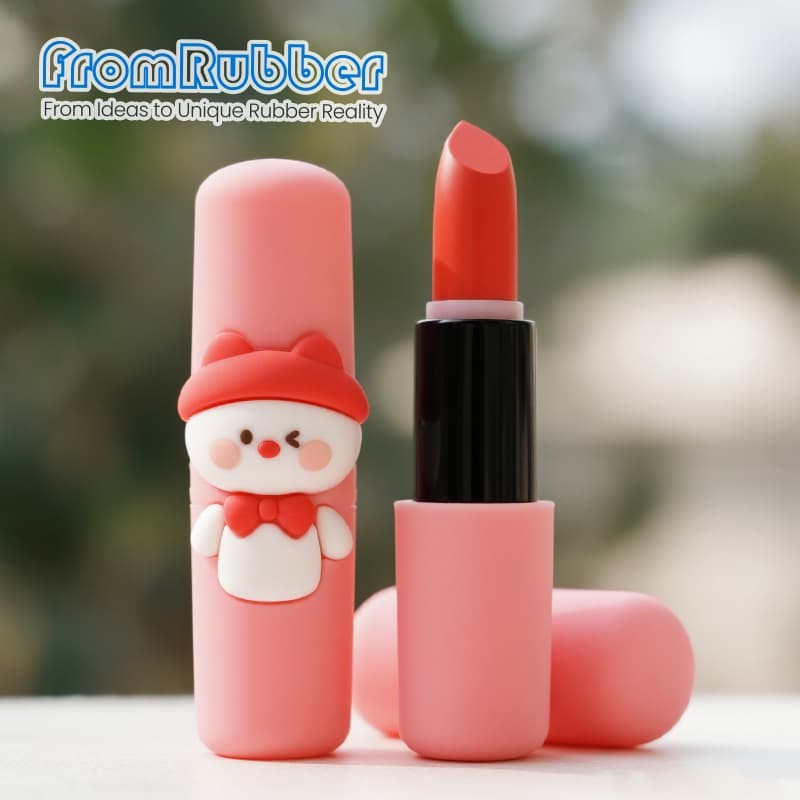
Contact comes first, not last
Silicone is chosen because it feels good and survives a handbag. It is not inert, and a lipstick is not water.
Emollients migrate
Ester oils, waxes and fragrance components move into the silicone network. The part gains weight, softens and changes gloss, and the change continues after filling rather than stopping at the factory gate.
Symptom: a tacky cap interior, a gloss drop on the case, or a smell that was not there in the approval sample. The fix is compound selection and cure, not more colour.
Cure is part of the specification
Post-curing drives off volatiles that would otherwise migrate into a closed cap. Two parts moulded from the same compound, one post-cured and one not, are not the same packaging component.
Symptom: fogging on the inside of a clear cap, or a “new rubber” smell at unboxing. Ask whether post-cure is in the process route before comparing two quotes.
What your compliance file will ask for
The brand is the responsible party for the finished cosmetic, so the packaging evidence is your call, not ours. What we can supply is the material data behind that decision: safety data sheet, heavy-metal and restricted-substance declarations, and the grade the part was actually moulded from.
Symptom: a launch held at the border because the supplier can only send a generic certificate. Ask for a declaration tied to the production batch, not to the compound family.
Surface is a contact decision too
A soft-touch surface that reads beautifully in a studio can behave like a lint collector in a bag. Texture, gloss level and the print system all change how the case ages in contact with fabric, coins and keys.
Symptom: a case that looks worn in a week without a scratch on it. Fix is a matte, slightly textured surface and a print that sits under the skin of the part rather than on top of it.
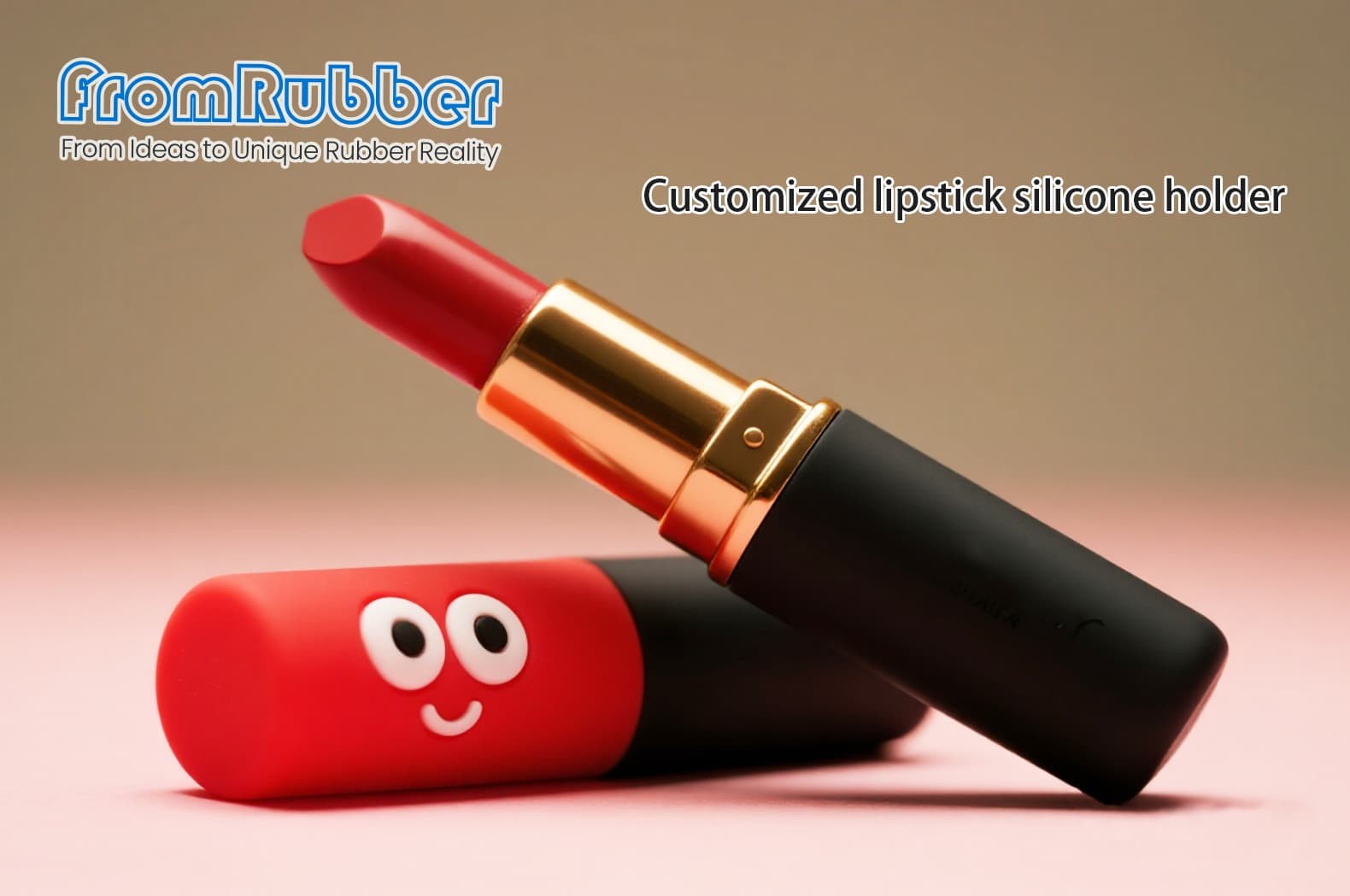
What 60 °C actually tests
Silicone itself has no problem with the inside of a car. The bullet does. At the temperatures a case reaches on a dashboard or in a delivery van, the waxes soften and the bullet becomes a soft column that the case now has to hold straight rather than merely contain.
That changes what we test. Instead of a colour check after heat ageing, the sample goes into a closed container for 48 hours at 60 °C and then two things are measured on the hot part: the force needed to pull the cap off, and the force needed to draw the bullet out of the holder. A cap that clicked cleanly at room temperature and lifts at 60 °C is a formulation of interference, not a moulding error.
Venting belongs in the same conversation. A cap with a close fit and no air path behaves like a piston; the user pulls harder, the cap stretches, and the retention that was designed in is consumed in the first twenty openings. A small internal groove or vent equalises the pressure without loosening the fit.
Design decisions and what each one changes
The table below is the conversation we have before quoting, because every line moves something else.
| Decision | What it changes | Where it goes wrong |
|---|---|---|
| Bore: smooth or ribbed | Grip on the bullet and how cleanly it releases | A smooth bore at high interference drags and marks a soft bullet |
| Cap interference | Retention force, both cold and at 60 °C | Designed at room temperature only, so it lifts in summer |
| Wall thickness | Feel, weight and how much the cap can ovalise | Thin walls look elegant and stop sealing after a few hundred cycles |
| Venting | Opening effort and long-term retention | No air path, so every opening stretches the cap a little further |
| Colour method | Durability and how many colours the design can carry | Print on a high-wear edge, where it abrades first |
| Post-cure | Odour, fogging and migration into a closed cap | Left out to hit a price, then discovered at filling |
Fit is a tolerance stack, not a diameter
Bullet formats are not standardised. Slim and standard bullets differ by several millimetres, filling lines hold their own tolerance, and the silicone bore holds another. The case works when those three stack in your favour.
- Measure the bulletNominal diameter plus the tolerance the filler actually holds, not the catalogue value.
- Set the boreGrip length and interference, referenced to a moulded-rubber tolerance class such as ISO 3302-1 M.
- Cycle itOpen and close the cap on a filled unit, cold and at temperature, before approving artwork.
- Freeze the drawingBullet, bore, cap interference and vent recorded together, so a re-order is the same part.
Bring the formula into the tooling conversation
If you are developing a lipstick or lip gloss case, send the bullet drawing and tell us what the formula contains. We will come back with the compound, the bore, the vent and the heat test that fits your market — before a cavity is cut.
Reference builds: silicone lip stick case and lip gloss holder, custom logo lipstick case, and the moulded cartoon lipstick holder.