01
Relief against base wall
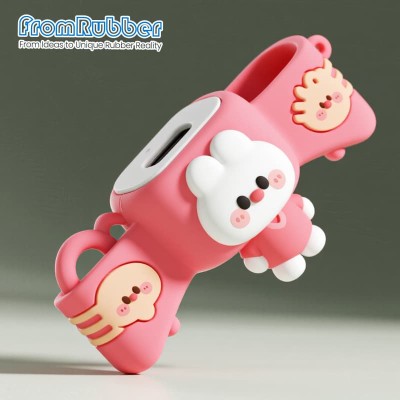
A tall figure needs a thick section behind it. If the base wall is thin, the material has to flow a long way into the relief and the cavity fills unevenly at the perimeter.
What you see: short shots or rounded edges on the highest part of the figure, and a case that feels stiff at the back but floppy at the sides.
02
Sink marks on the inside face
Thick masses cool slower than thin walls. The shrink pulls the inner face inward, so the case can sit unevenly against the phone and trap grit.
What you see: a dimple on the inside of the shell behind the figure, and a shadow line on the outer face. Fixed by coring the back of the boss, not by slowing the cycle.
03
Draft and demoulding
Every raised wall needs draft. Vertical sides grip the cavity and tear at ejection; undercuts need a split or a lifter, and each one adds tooling cost.
What you see: whitened stress marks at the base of the figure, or a torn edge that reads as a moulding defect in inspection.
04
Hardness against definition
Softer compound gives better grip and drop absorption but holds less crisp detail. Firmer compound keeps the relief sharp but transmits impact to the phone.
What you see: a design that looks soft and rounded instead of bold, or a case that is stiff enough to crack at the corners on impact.