
Innovative Rubber Parts for Modern Automotive Design


| Share | |
|---|---|
| Categories | Custom Silicone Pad |
| Brand | FromRubber Silicone & Plastic OEM Manufacturer |
| Product Specifications | BH-auto11 |
| Product Name | Rubber Parts for Car |
| Material | Rubber Silicone |
| Color | Black,Custom |
| Shape | Customise |
| Appliciation | Modern Automotive,State-of-the-art |
| Features | Innovative |
| Sales Method | Product custom |
| Consultation Email | Suey@fromrubber.com |
| FOB port | Shenzhen |
| Terms of Payment | L/C, D/A, D/P, Western Union, MoneyGram, T/T, Paypal |
| Download |  |
Automotive Design / Process Capability
Innovative Rubber Parts for Modern Automotive Design: Where the Constraints Really Are
Innovative rubber parts for modern automotive design are not innovative because the compound is new. They are innovative because the part does three jobs at once: seals, isolates and fits into a package that keeps shrinking.
Four constraints drive almost every recent change in automotive rubber parts: thinner walls, fewer assembly steps, electrified powertrains with no engine to mask noise, and appearance surfaces that customers now see and touch.
- 0.5-1.5 mm walls
- LSR and 2K overmolding
- Seal integrated in the part
- Colour matched to master
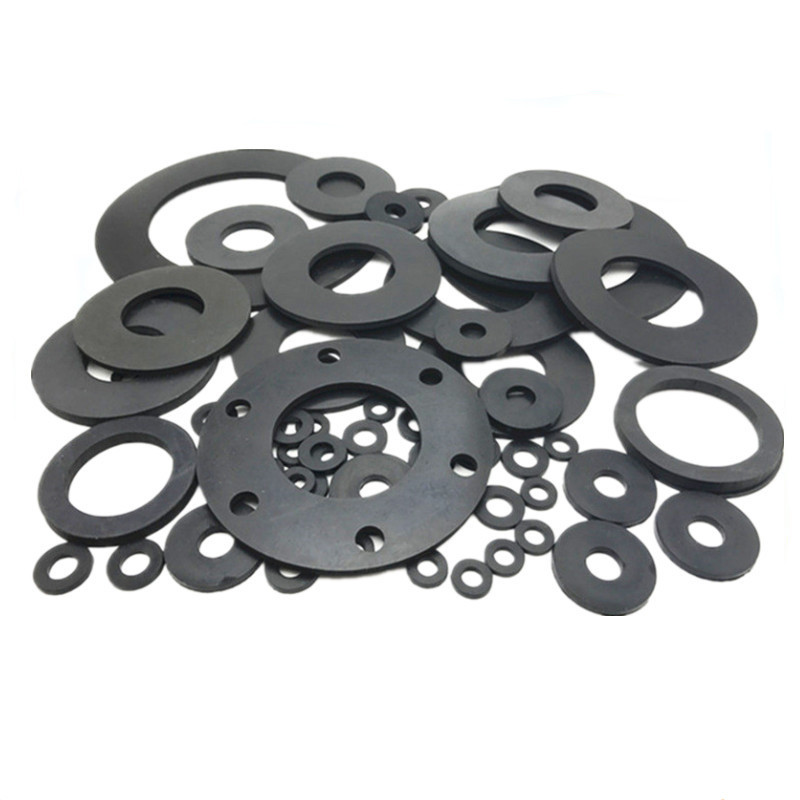
Four Design Pressures Reshaping Rubber Parts for Modern Automotive
Each pressure changes a different decision. Together they explain why a part that was three components in 2015 is one molding today.
- 01
Packaging height is falling
EV floor modules and door cassettes leave 1-2 mm where a gasket used to sit in 4 mm. Thin walls shift the problem to tolerance and demoulding, so radii and draft are designed before hardness.
- 02
Assembly steps are being removed
An overmolded seal on a plastic carrier replaces a loose gasket, a manual placement and the risk of a missed part on the line. The saving is in assembly, not in the moulding.
- 03
The engine no longer masks noise
Without combustion noise, motor whine and road input become audible. Isolators are specified by frequency and damping, not by hardness alone, which changes both geometry and compound.
- 04
Rubber has become a visible surface
Soft-touch trims, mats and grips are judged by colour, texture and mould marks. Appearance parts need a physical master and a texture decided at tooling, not at first article.
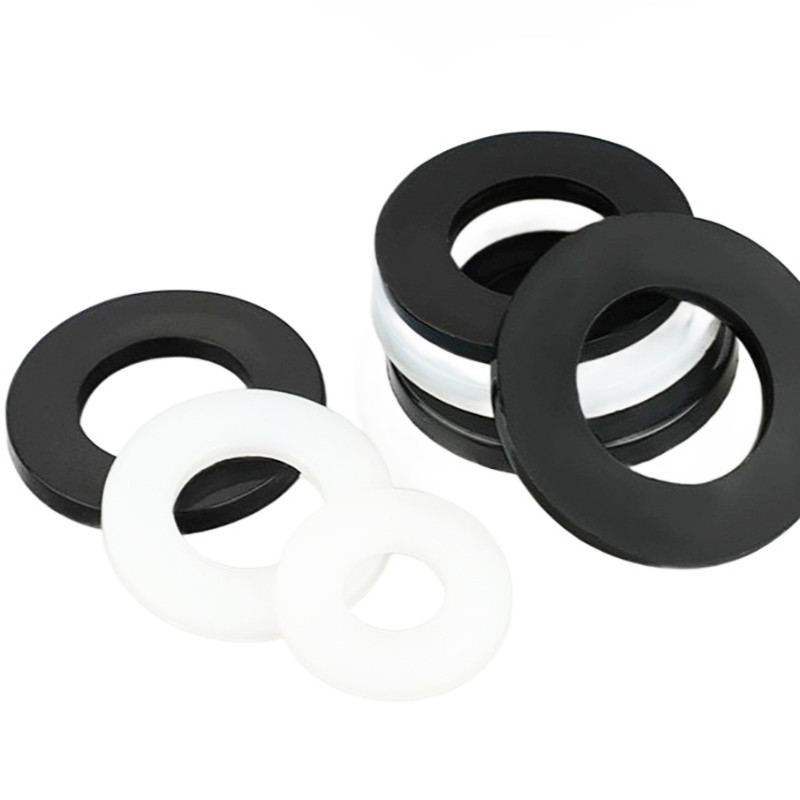
Innovative Rubber Parts for Modern Automotive: Design Levers
| Design lever | What it changes | Design window |
|---|---|---|
| Thin-wall molding | Fits the part into a shrinking package | 0.5-1.5 mm in LSR; radii scaled to wall |
| LSR and 2K overmolding | Seal and carrier in one part, fewer line operations | Substrate and bond line declared on the drawing |
| Integrated sealing | Removes a loose gasket and its assembly error | Compression designed into the molding |
| Soft-touch appearance | Turns rubber into an interior surface | Texture and colour matched to a physical master |
| Isolation tuning | Controls structure-borne noise where no engine masks it | Static stiffness and damping agreed per mount |
| Flame-retardant grades | Adds a safety characteristic to a sealing part | Grade selected against the standard the program cites |
Levers are selected against the package and the assembly process, not against a compound catalogue. Where two levers conflict, the drawing review resolves which one the program can give up.
Processes That Make Modern Automotive Rubber Parts Possible
Four processes carry most of the design freedom. Each has a limit worth knowing before the concept is frozen.
- 01
LSR injection
Thin walls, tight tolerances and high cavity counts, with low flash on sealing faces. Tooling costs more, so it pays from the volumes where scrap and assembly time dominate.
- 02
2K overmolding on plastic or metal
A bonded seal on a carrier: fewer parts, fewer line errors. The bond depends on substrate preparation, which is why the substrate is named on the drawing.
- 03
Compression molding
The economical route for thicker sections, fabric-reinforced diaphragms and short runs; geometry freedom is higher than the price suggests.
- 04
Post-operations that matter
Deflashing, texture matching, colour matching and assembly checks decide whether an innovative design arrives at the line as designed.
Where a seal and its carrier are molded as one part, the bonding side of the process is explained in what over-molding means in silicone production.
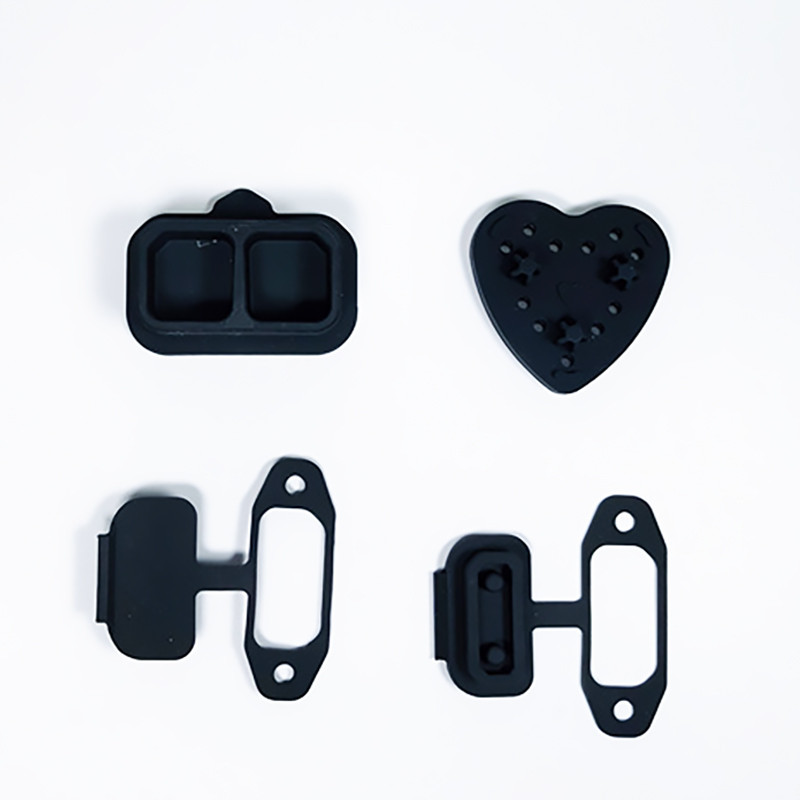
From Concept Model to a Molded Automotive Rubber Part
Most modern automotive rubber parts fail at the transition from concept to tool, not in service. A package that works as a CAD solid often cannot be demoulded, or needs a wall the material will not fill.
We mold under IATF 16949 and ISO 9001 quality systems with ISO 14001 environmental management. Concept review, prototype and production tooling are the same team, so the constraint that appears at tooling is raised while the design can still absorb it.

Four Steps From Design Intent to a Molded Rubber Part
The first step is not a drawing. It is the constraint the part has to live inside.
Package and constraint brief
Available space, assembly method, appearance requirement, temperature and the volume the program expects.
Concept and process selection
We match the concept to LSR, 2K or compression molding, and show where the package forces a compromise.
Prototype and line trial
Single-cavity samples for fit and assembly trial, in the compound and texture intended for production.
Production tool and first article
Multi-cavity tool, first-article report, texture and colour master retained with the tool.
Innovative Rubber Parts FAQ
Questions design teams ask at concept stage, before the package is frozen.
What is the thinnest wall you can mold in silicone?
About 0.5 mm in LSR for a part with adequate radii and a realistic flow path. Below that, tear strength and demoulding define the limit rather than the mould.
When is overmolding worth the tooling cost?
When it removes an assembly step or a placement error at volume. Below those volumes, a separate gasket plus a carrier is usually cheaper overall even though it is two parts.
Can you match an interior texture and colour?
Yes, against a physical master under agreed lighting. Texture is decided at tooling; colour is matched per batch, and both are held with the tool so a later run can repeat them.
How do you handle NVH targets without an engine masking noise?
By specifying static stiffness and damping at the frequencies that matter, then verifying on a prototype mount. Hardness alone does not describe an isolator.
Send the package constraint, not just the part number
Tell us the available space, how the part is assembled and what it has to look like. We will propose the process, the compound and the geometry that fit inside those limits.
- 加载中···


Start Your Project Today!
- Phone
- *Title
- *Content
Sign Up Out Newletter
