

3M Gasket Adhesive Chosen by Substrate
A tape that bonds to painted metal will not necessarily hold on a low-surface-energy plastic. The grade follows the surface.


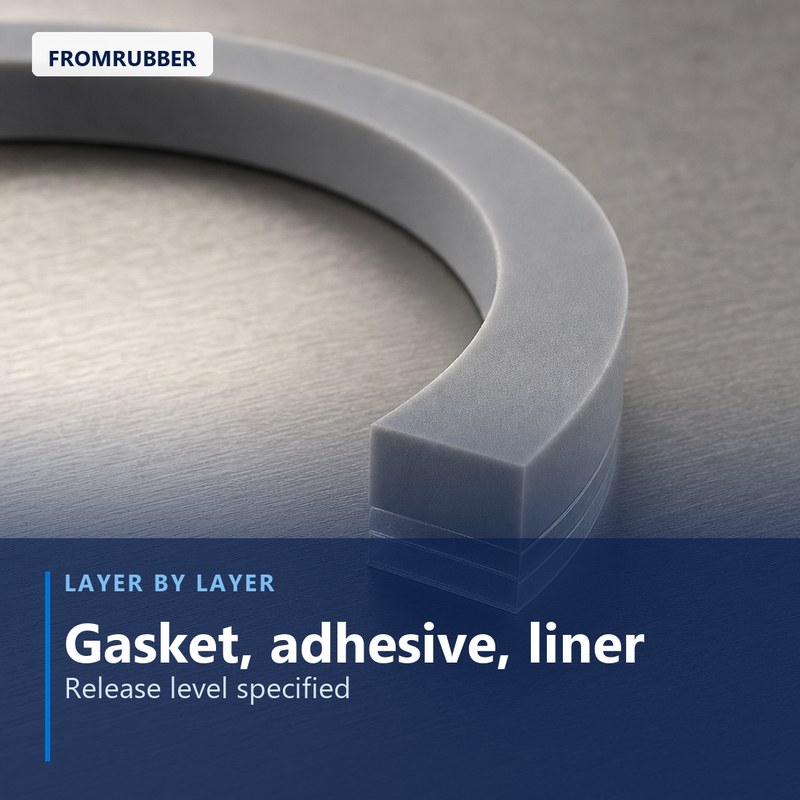
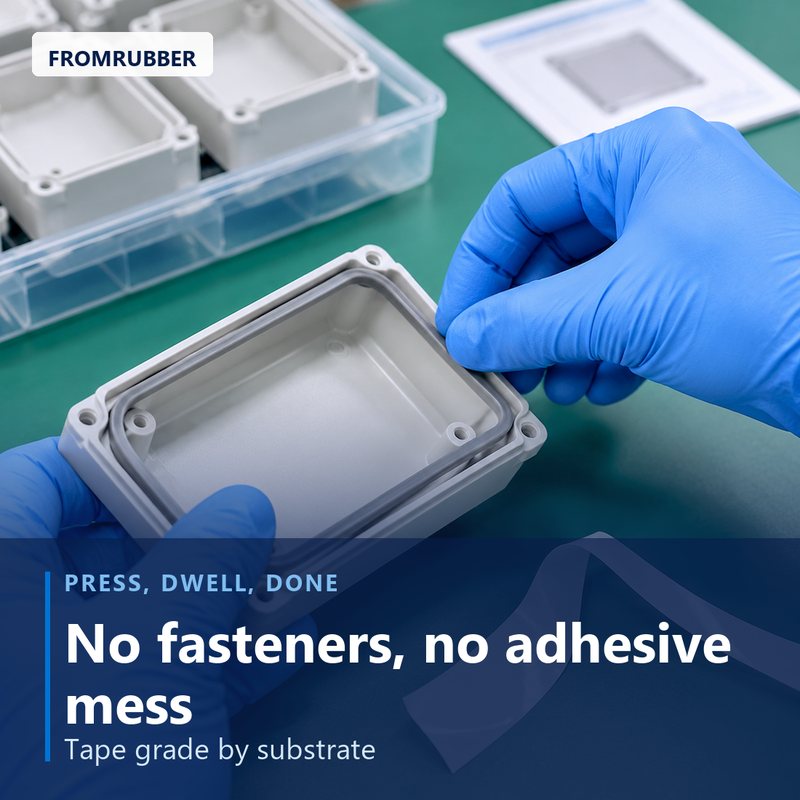
A 3M-backed silicone gasket is a molded or die-cut silicone part with a pressure-sensitive adhesive on one face. It replaces mechanical fastening, so the adhesive bond becomes the only thing holding the seal in place.
A tape that bonds to painted metal will not necessarily hold on a low-surface-energy plastic. The grade follows the surface.
Silicone is elastic, so cutting and liner handling decide whether the gasket stays in tolerance before it is ever applied.
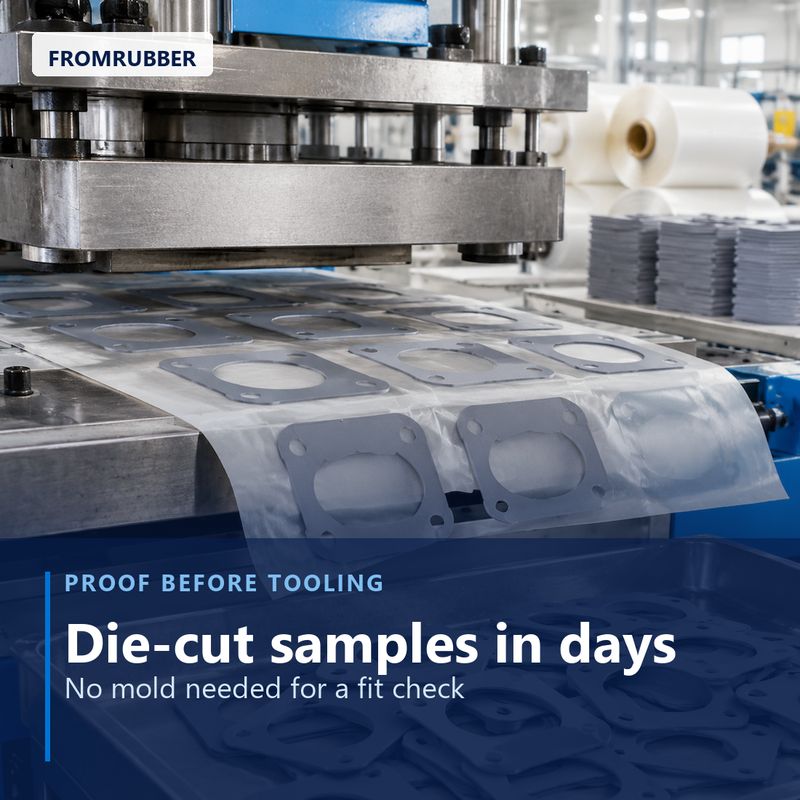
A laser or die-cut prototype lets a design team test the seal in the real housing before committing to a mold.
A gasket with adhesive has two jobs: seal compression and stay located. Silicone handles the first. The second is entirely the tape interface, and it fails for reasons that have nothing to do with the rubber: surface contamination, low surface energy, insufficient dwell, or a liner that was peeled and re-seated during assembly.
Adhesive families behave differently. Acrylic systems are the general-purpose choice with good temperature and ageing behavior; rubber-based systems bond faster at low temperature but age faster. Where the housing is a filled or painted plastic, the surface energy is the limiting factor and a primer may be needed.
Bond strength is limited by the substrate. Cleaning and, where required, priming are part of the specification.
Pressure-sensitive adhesives gain strength over hours. The assembly instruction has to include the press force and the dwell window.
A liner that releases too easily peels during handling; one that grips too hard slows the line. Release level is part of the part specification.
Typical options for gaskets, pads and sealing frames supplied with a pressure-sensitive backing.
| Base part | Molded or die-cut silicone gasket |
|---|---|
| Thickness | Set by the seal groove and the compression target |
| Adhesive | 3M acrylic or rubber-based tape, grade selected per substrate |
| Liner | Film or paper liner, die-cut to the part outline |
| Format | Sheet, roll or kiss-cut on a carrier |
| Tolerance | Outline and thickness tolerance agreed per assembly |
| Application | Press force and dwell specified with the part |
| Proofing | Laser-cut or die-cut prototypes before production tooling |
Adhesive performance is verified on the actual housing material. A bond that passes on a test plaque can fail on a production moulding with release agent on the surface.
A die-cut sample answers fit questions without a mold.
Most gasket projects fail on geometry, not on material: a corner is too tight, a screw boss interferes, the groove is over-filled. A die-cut or laser-cut prototype in the production thickness answers those questions in days, without a mold, which is why we run proofing before tooling rather than after.
The proofing route also tests the adhesive on the real housing before the tape is committed. If the bond fails on a production moulding, the answer may be a different tape, a primer or a cleaning step, and it is far cheaper to discover that on ten prototypes than on ten thousand parts. Our quick proofing service exists for exactly this stage.
A prototype cut from the correct sheet or molded blank shows interference that a drawing review will miss.
The tape is tested on parts from the actual tool, including any surface contamination from molding.
Once fit and bond are confirmed, the mold is cut to a geometry that is already proven rather than assumed.
Proofing sits deliberately before tooling, so the mold is cut to a proven shape.
Groove depth, width and compression target define the gasket thickness and outline.
A prototype is cut and fitted to the real housing to check interference and closure force.
Adhesive grade is trialled on the production substrate, including cleaning and dwell.
Production tooling or die-cutting runs to the approved shape, with the liner cut for the assembly method.
Usually not well. Textured and low-surface-energy plastics reduce contact area and bond strength, so we test the actual housing and may recommend a primer or a mechanical retention feature instead.
Yes, with a liner on each side. It is used where a gasket has to be located on a door or a cover as well as on the housing.
Die-cut and laser-cut prototypes are the fast route because they need no mold. Timing depends on sheet availability in the required thickness rather than on tooling.
Send the housing drawing, groove dimensions and substrate material. We will cut a proofing sample, test the tape on your surface and quote tooling once the fit is confirmed.
Related capabilities: Backing adhesive · Quick proofing service · Silicone pad range


