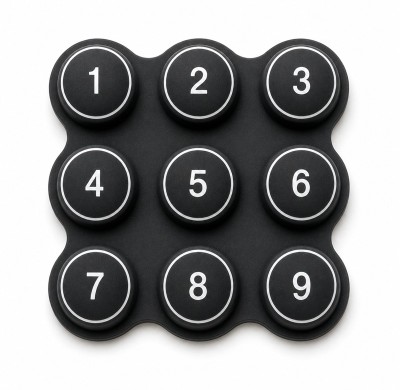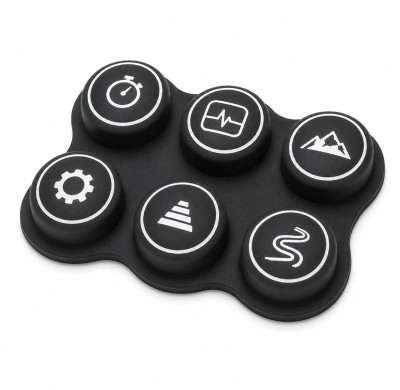
Why do silicone keypads require prototype molds? And what is the cost of the prototype mold?
Prototype Molds for Silicone Keypads
Essential pre-production tooling that validates design, functionality, and user experience. Discover why prototype molds are critical investments and understand their cost structure for informed project planning.
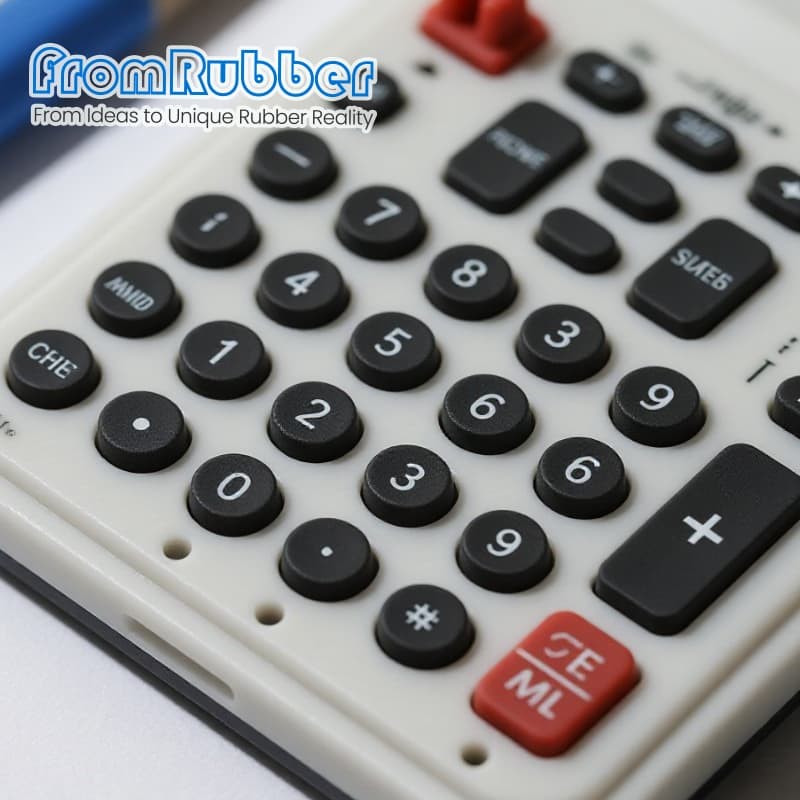
Why Silicone Keypads Require Prototype Molds
Prototype molds are a critical step in silicone keypad development, bridging the gap between design concepts and mass production. Unlike 3D-printed prototypes, mold-produced samples accurately represent final product characteristics.
Design Validation
Test the keypad's tactile response, actuation force, and travel distance with actual silicone material before committing to production tooling.
Material Testing
Evaluate how different silicone compounds (varying hardness, colors, additives) perform in the actual button design and application environment.
Fit & Function Check
Verify the button assembly with housings, PCBs, and other components to identify interference issues or dimensional adjustments needed.
User Experience Testing
Gather feedback on the keypad's feel, appearance, and ergonomics from potential users to refine the design before high-volume production.
The Prototype Mold Advantage
Prototype molds allow for rapid iteration—design changes can be tested within days rather than weeks. They provide production-representative parts that 3D printing cannot match in terms of material properties, surface finish, and dimensional accuracy for silicone components.
Prototype Mold Cost Breakdown
The cost of a silicone keypad prototype mold varies significantly based on complexity, materials, and required features. Below is a detailed breakdown of typical cost ranges.
| Mold Type | Typical Cost Range | Lead Time | Best For | Parts Produced |
|---|---|---|---|---|
| Simple Single Cavity (Basic shapes, no undercuts) |
$800 - $2,500 | 2-3 weeks | Initial concept validation | 50-200 parts |
| Standard Multi-Cavity (2-4 cavities, common features) |
$2,500 - $6,000 | 3-4 weeks | Design refinement & testing | 200-1,000 parts |
| Complex Multi-Cavity (Undercuts, sliders, inserts) |
$6,000 - $15,000 | 4-6 weeks | Pre-production validation | 1,000-5,000 parts |
| Production-Style Prototype (Full automation features) |
$15,000 - $40,000+ | 6-8 weeks | Final validation before production | 5,000-20,000 parts |
Key Factors Influencing Mold Cost
Design Complexity
Undercuts, thin walls, intricate details, and tight tolerances significantly increase machining time and cost. Simple designs reduce prototype mold expenses by 30-50%.
Material Selection
Aluminum molds cost 40-60% less than steel but have shorter lifespans. Steel inserts for high-wear areas add cost but extend mold life for longer prototype runs.
Cavity Quantity
Single-cavity molds are most economical for initial prototypes. Multi-cavity molds cost more initially but reduce per-part cost for larger prototype batches.
Prototype Mold vs. Production Mold
Understanding the differences between prototype and production molds helps justify the investment in prototype tooling.
Prototype Molds
- Lower initial investment (60-80% less than production)
- Faster lead time (weeks instead of months)
- Easier to modify for design changes
- Made from softer materials (often aluminum)
- Shorter lifespan (hundreds to thousands of parts)
Production Molds
- Higher initial investment (full hardened steel construction)
- Longer lead time (8-16 weeks typically)
- Difficult and expensive to modify
- Made from hardened steel for durability
- Long lifespan (millions of cycles)
Cost-Benefit Analysis
Investing $3,000-$8,000 in a prototype mold can identify design flaws that would cost $20,000-$50,000+ to fix in production tooling. Prototype molds typically pay for themselves by preventing costly production delays and tooling modifications.
Prototype Mold Development Process
A structured approach to prototype mold development ensures optimal results within budget and timeline constraints.
Design Review
DFM analysis to identify potential molding issues and cost-saving opportunities before tooling begins (1-3 days).
Mold Design
Creation of detailed mold drawings including gating, ejection, and cooling systems (5-10 days).
Machining & Fabrication
CNC machining of mold components from aluminum or steel blocks (2-4 weeks depending on complexity).
Sampling & Testing
Initial molding trials, dimensional verification, and functional testing (3-7 days).
Get a detailed cost estimate and timeline tailored to your specific silicone button design. Our engineering team provides free DFM analysis to optimize your prototype investment.