The Silent Failure of Silicone Button Pad in Handheld Field Data Meter
Field Reliability Engineering
A handheld field data meter can pass every factory test and still develop "tired" keys in the field - keys that need a harder press, respond intermittently, or stop entirely. The cause is almost never a sudden failure. It is a slow, silent degradation of the silicone button pad's contact system that begins on day one. This article explains the three silent failure mechanisms, how to diagnose them, and what to specify so the meter still works after five years of field use.
1. How a Handheld Field Data Meter Silicone Button Pad Fails Silently
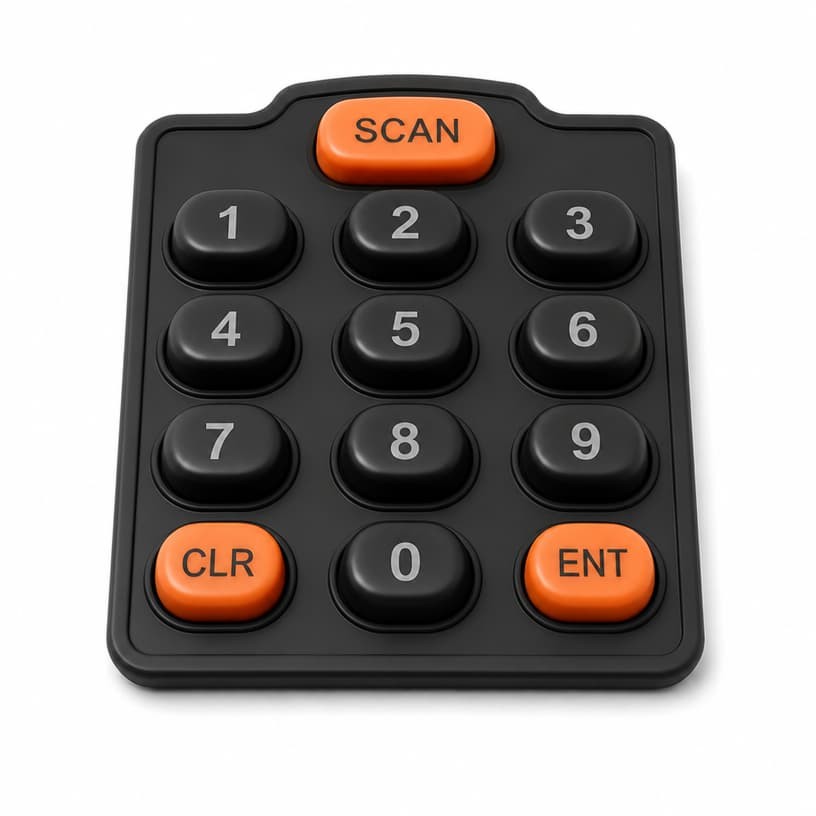
The silicone button pad in a handheld field data meter is a simple part - a molded silicone mat with conductive contacts and legends. Its failure modes are anything but simple, because they accumulate invisibly: contact resistance drifts upward by a few ohms a month, the tactile dome loses a fraction of its snap, and the legend fades a shade at a time. No single event triggers a service call; the user simply starts pressing harder and trusting the reading less. By the time the meter reaches the repair bench, the button pad is the most abused and least tested component in the device.
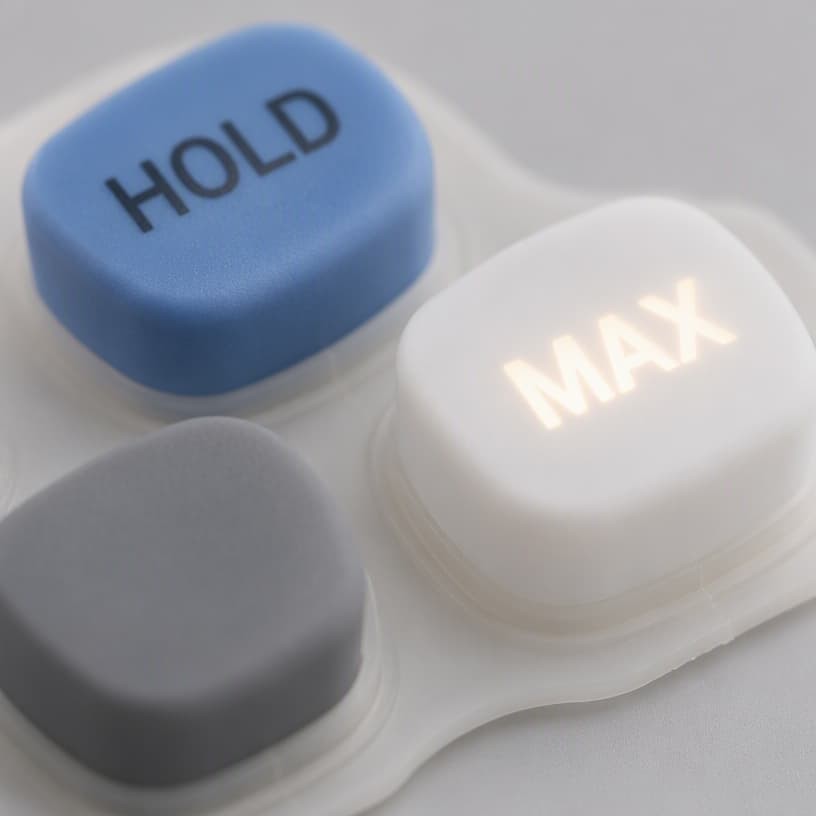
Three mechanisms dominate silent keypad aging in field instruments:
- Contact surface degradation - oxidation, contamination and wear at the pill-to-PCB interface raise contact resistance until switching becomes intermittent.
- Mechanical fatigue - compression set and webbing fatigue soften the return force, so the key no longer separates cleanly from the PCB.
- Environmental ingress - dust, humidity and chemical vapor change the surface chemistry of both the pill and the pad finish.
All three are gradual, and all three are detectable before they become complaints - if the right measurements are in the factory test plan.
2. Contact Resistance Drift: The Hidden Killer of Handheld Meter Keypad Reliability
Contact resistance is the single most informative health metric for a silicone button pad, and the least monitored. A healthy carbon pill system holds contact resistance in the 10–200Ω band against gold-plated pads. What happens in the field is a slow drift: copper oxidation can push resistance up by an order of magnitude within months, and even on ENIG pads, surface film from silicone oil migration or dust accumulation raises resistance gradually. When resistance crosses the threshold the microcontroller's debounce and threshold logic can no longer bridge, the key starts failing intermittently - the classic "works when you press hard" complaint.
Our analysis of contact resistance fluctuation in instrument keypads documents how a 0.1Ω measurement circuit turns a drifting keypad into a calibration nightmare: the meter's own button becomes a variable resistor in the measurement path. For field data meters the acceptance criterion should be explicit - for example, contact resistance ≤ 200Ω at shipment and ≤ 300Ω after the rated cycle life, measured on a defined gold-plated test pad.
The root cause is usually in the specification, not the molding. If the PCB pads are bare copper, the keypad is fighting a losing battle from the first day. Carbon pill vs conductive ink selection and the PCB assembly troubleshooting guide cover the mechanical alignment side of the same problem.
3. Conductive Ink and Carbon Pill Wear in Field Data Meter Button Pads
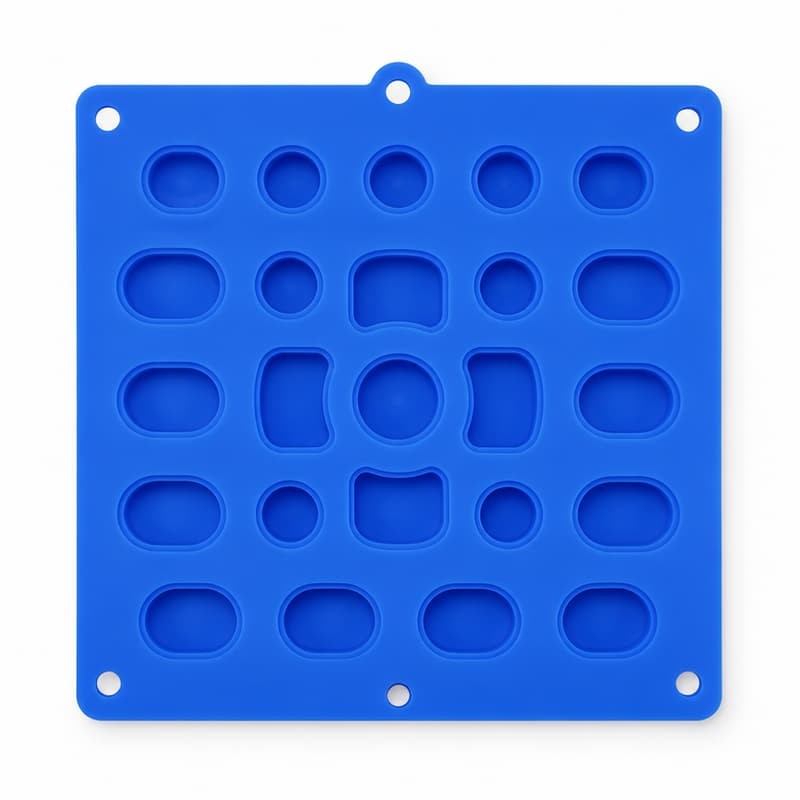
Not every field data meter uses carbon pills. Conductive ink - screen-printed onto the underside of the keypad - is common on large-area or low-cost designs. Ink systems wear differently: carbon inks are mechanically robust but resistive (50–500 Ω/sq), while silver inks conduct beautifully at first (1–5Ω) and then degrade through silver migration under DC bias in humidity - growing dendrites between traces that eventually short adjacent keys. A field data meter left in a damp truck cab is a perfect migration environment.
Wear is measurable under the microscope: the contact layer thins with every press as the conductive particles abrade. Industry guidance from LuphiTouch on contact mechanisms puts typical ink life at 100,000–500,000 cycles versus 1–5 million for carbon pills - a difference that matters enormously for a meter rated for a decade of use. If ink is the right cost call for your product, specify the ink family, the print thickness, and a wear test that measures resistance after 100,000 cycles, not just at zero.
Related reading: conductive ink thickness vs contact impedance on handheld tester keypads.
4. Diagnosing a Silent Keypad Failure: A Field-Tested Process
When a field data meter returns with "intermittent keys", the diagnosis should follow a fixed sequence rather than guesswork. FromRubber's service engineers use a five-step process that isolates the failure layer:
- Electrical mapping: measure contact resistance of every key at a defined force; a spread wider than 3:1 between keys points to contact surface issues, uniform elevation points to pad finish or contamination.
- Visual inspection: check the pill or ink surface under 10–50× magnification for pitting, migration dendrites or embedded debris.
- Force-travel re-measurement: compare actuation force and return travel against the original spec to quantify mechanical fatigue (compression set).
- Environmental correlation: match the failure pattern to storage and use history - moisture, heat and chemical exposure each leave a signature.
- Root-cause fix: change the material, contact type, pad finish or geometry - never "clean and return" the same design.
Our published case study on a 22% conductive keypad failure rate from edge thinning shows how a molding geometry defect produced exactly this silent pattern across a whole batch..
5. Case Study: A Field Logger's Intermittent Keys Traced to One Root Cause
A handheld field data logger used by utility inspectors returned from the field with intermittent keys on 6% of units within one season. Initial suspicion fell on the PCB. Measurement showed something more interesting: contact resistance was stable at the center keys and elevated only on the outer row - the keys closest to the meter's IP67 gasket. The gasket was slowly weeping a silicone-based lubricant along the housing seam, and the film migrating onto the pads was raising resistance past the switching threshold.
The fix combined two changes: a gasket compound compatible with the keypad's surface chemistry, and a contact pad geometry with more generous finger redundancy so a partial film could not open the circuit. Field returns dropped to near zero in the following season. The lesson: on a sealed handheld meter, the keypad specification and the sealing specification are one system and must be reviewed together.
6. Prevention Checklist for Handheld Meter Silicone Button Pads
Measure and record contact resistance on every production batch, not just prototypes
Require gold-plated (ENIG) pads for carbon pill contacts
Specify ink thickness and a 100k-cycle wear test when using conductive ink
Review gasket materials and assembly lubes against the keypad contact surface
Add a post-environmental-conditioning electrical test to the factory plan
Track field return complaints by key position to catch silent patterns early
Sources and Further Reading
Technical figures draw on published material from LuphiTouch - Electrical Contact Mechanisms in Silicone Rubber Keypads, Shin-Etsu Polymer - contact element products for keypads, and Google Patents - silicone keypad contact technology. Field data in the case studies reflects FromRubber project records for instrument keypad programs.
Stop Silent Keypad Failures Before They Reach the Field
Send your handheld meter keypad drawing or a returned-failure sample to FromRubber. We will run the five-step diagnosis and return a root-cause report with a fix recommendation.
About FromRubber - FromRubber manufactures custom silicone keypads and rubber button pads for handheld instruments, medical devices and industrial electronics, with in-house molding, printing, backlighting and reliability testing.