
What are the benefits of silicone control panels with metal domes?
What Are the Benefits of Silicone Control Panels With Metal Domes?
Detailed Explanation: Why Metal Domes Matter in Silicone Control Panels
A silicone rubber keypad on its own is just a tactile elastic overlay — it provides mechanical key travel, sealing, and click feel, but it cannot make an electrical connection. That requires a switching element. In silicone keypads you have two mainstream options: an integrated carbon pill (carbon-loaded conductive elastomer molded into the key body) or a metal dome (a precision-engineered stainless steel disc placed under the key). The dome is mounted on a carrier film, sits directly above the PCB pads, and snaps through a tactile threshold when pressed.
Benefit 1 — Crisp, consistent tactile feedback. A metal dome is engineered to a specific snap ratio — typically 40–60% — meaning the actuation force increases gradually during the first portion of travel then collapses sharply through the second portion. FromRubber specifies domes to within ±5 gf of target across an entire production batch, which is how a medical OEM's three product generations all "feel the same." Carbon pills, by contrast, derive their force solely from the silicone webbing geometry — fine, but harder to hold tight tolerances.
Benefit 2 — Ultra-low contact resistance. Stainless steel domes on gold-plated ENIG pads deliver 5–50 Ω contact resistance across the full cycle life, versus 10–200 Ω for carbon pills. This margin matters for low-current (≤1 mA), low-voltage (≤3.3 V) circuits, where carbon pills can become unreliable due to film formation on the contact surface.
Benefit 3 — Extended cycle life. Metal dome cycle life is 5–10+ million actuations under normal operating conditions; with gold plating it can exceed 10 million. Carbon pills typically rate 1–5 million cycles. Where product lifetime matters — automotive dashboards, industrial machinery, medical devices specified for 10-year service — the dome is the only defensible choice.
Benefit 4 — Thin profile for compact designs. A dome itself is only 0.05–0.20 mm thick. Carrier-mounted, the total switch stack is 0.4–0.8 mm, allowing low-profile enclosures impossible with carbon pills that need a taller webbing footprint for stability.
Benefit 5 — Brand-defining user experience. End users associate the crisp metallic snap with quality. Across FromRubber's industrial-control customer base, "feel" is consistently cited as the #1 post-purchase satisfaction driver — above even visual aesthetics.
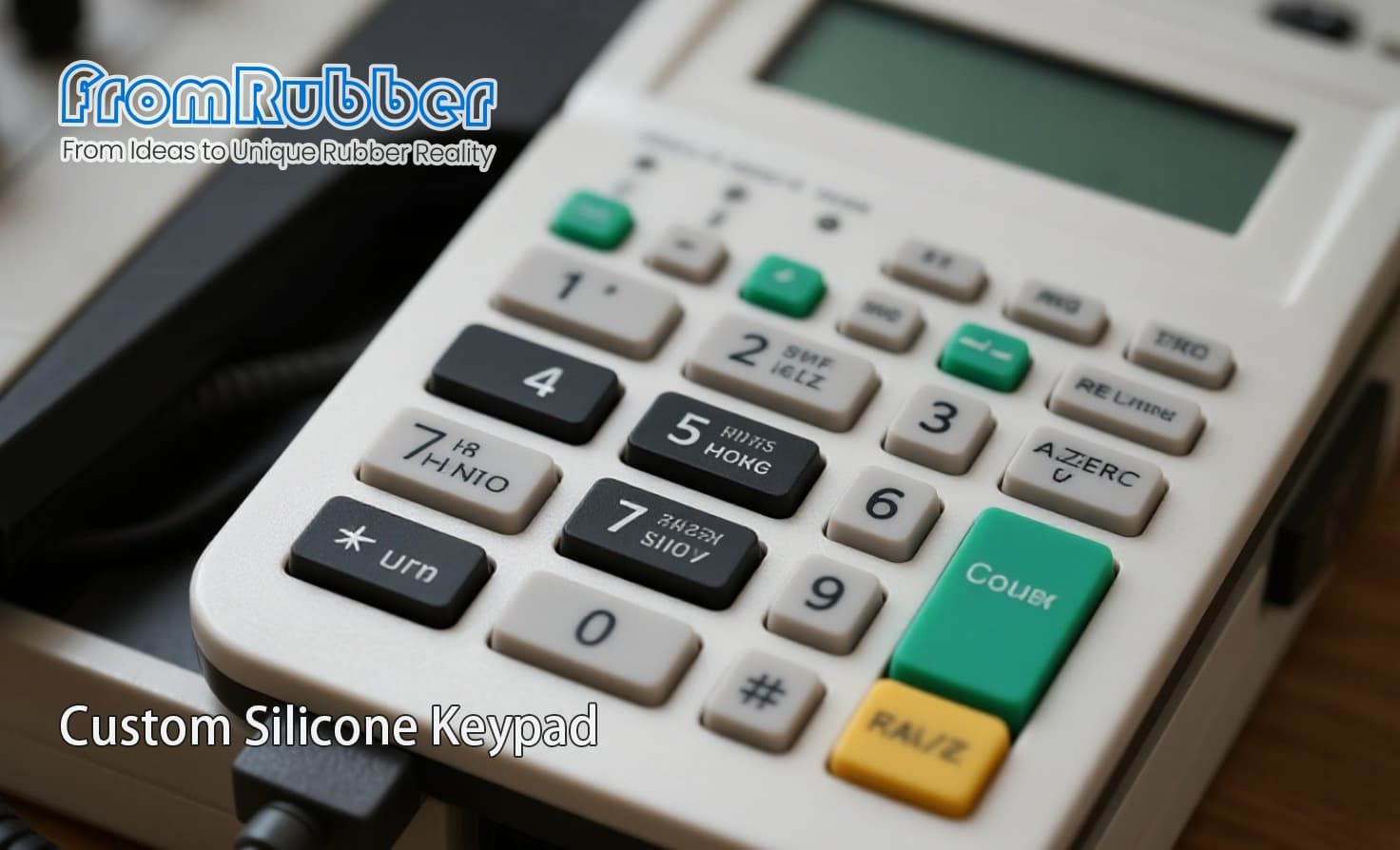
 A range of silicone rubber keypads engineered with metal dome switches — the visible crisp key geometry and consistent tactile feel across the row are signature dome characteristics.
The main design considerations when using metal domes with silicone keypads:
- Dome geometry: Four-leg, round, triangle, and oblong versions each produce a different snap profile and acoustic signature.
- Actuation force: Standard range 100–350 gf, with 160 gf and 220 gf as the most common production defaults.
- Carrier material: Polyester (PET) tape is standard; for higher temperature applications Kapton or 3M laminates are used.
- PCB pad finish: ENIG (gold over nickel) is strongly preferred; OSP or silver also work but offer shorter shelf life before re-plating.
- Vent hole: A 0.5–1.0 mm vent through the silicone webbing above each dome center equalizes pressure and prevents the dome from being held in the collapsed state by trapped air.
Case Study: Industrial Welding Machine Control Panel
A European manufacturer of professional welding equipment was experiencing premature field failures of their silicone control panel keypad. The carbon-pill design was rated for 1 million cycles but was failing in welders at 200,000–400,000 actuations due to a combination of operator use with dirty gloves, exposure to welding spatter, and higher-than-expected operating temperatures around the control panel.
- Redesign: FromRubber retooled the keypad with a non-conductive silicone overlay + four-leg 220 gf stainless steel domes on a Kapton carrier with ENIG pads. The webbing geometry was tightened, and a 0.6 mm vent was added above each dome.
- Tactile result: Snap ratio 48%, actuation force 220 ± 5 gf, audible click at 62 dB at 10 cm — verified across the entire 8,000-unit production run.
- Durability result: 5 million actuations with no contact resistance drift, no dome collapse, no legend wear. The OEM's field failure rate dropped from 6.2% to 0.4% within two production cycles.
- Cost impact: Unit cost rose 18% due to dome + carrier, but total cost of ownership fell 31% once warranty and service costs were included.
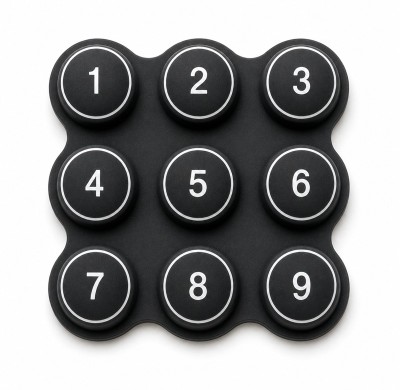
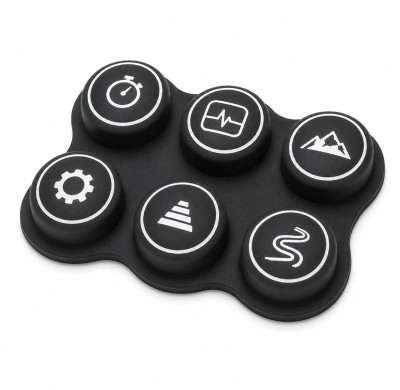
 Reverse view of a silicone rubber keypad showing the four-leg metal dome array positioned above each PCB footprint — the carrier tape aligns all domes in a single pick-and-place step.
Data: Metal Dome vs. Carbon Pill Performance Comparison
| Specification | Carbon Pill | Metal Dome | Stability Winner |
|---|---|---|---|
| Contact Resistance | 10–200 Ω | 5–50 Ω | Metal Dome |
| Cycle Life | 1–5 million | 5–10+ million | Metal Dome |
| Tactile Consistency (batch) | ±20–30 gf | ±5 gf | Metal Dome |
| Snap Ratio | Soft / non-snap | 40–60% | Metal Dome |
| Sealing (IP68) | Excellent (one-piece) | Good (with gasket) | Carbon Pill |
| Cost (per key) | $0.002–$0.01 | $0.02–$0.08 | Carbon Pill |
| Assembly Steps | Single (molded in) | Dome placement + carrier | Carbon Pill |
| Vibration Transmission | None | Modest (snap) | Carbon Pill |
| Recommended Applications | Medical handheld, sealed remotes | Industrial control, automotive panels | — |
The two technologies are not competing — they are complementary. The choice depends on what your product values most. FromRubber's engineering team has characterized both technologies across more than 1,200 production programs and can recommend the optimum solution within 48 hours of receiving your requirements.
Related Questions
Carbon Pill vs. Metal Dome in Instrument Silicone Keypad
A side-by-side comparison of contact resistance, lifecycle, and tactile feel for precision instruments.
What are metal dome silicone keypads and how do they differ?
A foundational guide to the construction, materials, and integration of metal dome silicone keypads.
Non-Conductive vs. Conductive Silicone Keypads
Which base material to choose when designing silicone keypads that integrate metal domes.
Are you looking for a rubber and plastic product customization solutions manufacturer?
We can quickly provide customers with market analysis, technical support and customized services.Sign Up Out Newletter
