Why Silicone Is the Superior Choice for High-Temperature Exhaust Hole Plugs?
When extreme heat meets critical sealing requirements, standard rubber fails — but silicone endures. At FromRubber, we engineer high-performance silicone exhaust hole plugs that outlast, outseal, and outperform in the toughest environments.
Why Silicone Dominates High-Temperature Exhaust Hole Plug Applications
Exhaust systems, turbochargers, EGR ports, and test benches demand components that resist thermal degradation, chemical attack, and mechanical stress. While conventional elastomers like natural rubber, neoprene, or even standard EPDM show limitations under prolonged heat exposure, silicone rubber delivers unmatched reliability. For OEM assembly lines, automotive aftermarket workshops, and industrial masking processes, silicone exhaust hole rubber hose plugs have become the industry standard. Below we break down the science, performance metrics, and custom manufacturing advantages that make silicone the superior choice.
Material Comparison: Silicone vs. Standard Rubber vs. Plastic Plugs
| Property / Material | Silicone (FromRubber Grade) | Standard Rubber (Nitrile/Neoprene) | Plastic (Nylon/PP) |
|---|---|---|---|
| Max Continuous Temperature | Up to 260°C (500°F) | ~100°C – 120°C (212°F – 248°F) | ~80°C – 150°C (melting/deformation risk) |
| Flexibility at Extreme Heat | Remains elastic, no cracking | Hardens, becomes brittle | Softens or melts |
| Ozone & UV Resistance | Excellent – no surface cracking | Poor – prone to weathering | Moderate – UV degradation over time |
| Chemical Resistance (Oil/Coolant/Fuel) | Superior, non-swelling | Moderate swelling in some fluids | Good for specific fluids, but not universal |
| Reusability & Lifespan | 500+ cycles without seal loss | Limited reusability, takes compression set | Single-use in many masking applications |
| Compression Set Resistance | Low set, retains shape after long-term sealing | High set, permanent deformation | Not applicable (rigid) |
| Powder Coating / E-coat Masking | Perfect non-stick release, heat cured | Sticks, leaves residues | May crack during bake cycles |
| Customization (Color, Hardness, Size) | Unlimited (shore A 30–80, any color) | Limited options, longer tooling | Limited, higher mold cost |
As highlighted above, silicone dominates in every critical category. For manufacturers and end-users, the choice translates directly into lower downtime, reduced inventory waste, and superior sealing integrity even after thousands of thermal cycles.
Thermal Endurance: Why Silicone Withstands Exhaust-Level Heat
The backbone of silicone’s superiority lies in its siloxane backbone (Si-O-Si), which requires significantly higher energy to break compared to carbon-carbon bonds found in organic rubbers. This molecular structure provides exceptional thermal stability. When exhaust hole plugs are inserted into hot EGR tubes, downpipe ports, or diesel aftertreatment systems, the temperature can spike beyond 220°C. Standard rubber plugs begin to soften, lose clamping force, and eventually fuse to metal surfaces—a nightmare for removal. Silicone plugs, especially those formulated by FromRubber with heat-stabilizing additives, maintain elasticity and sealing pressure, allowing quick removal without residue.
Additionally, silicone's low thermal conductivity means it acts as a thermal barrier, protecting surrounding components and hands during installation. For industries like automotive assembly, motorcycle exhaust masking, and marine engine testing, this thermal resilience translates into safer, faster workflows.
Precision Customization: From Standard Sizes to Bespoke Geometry
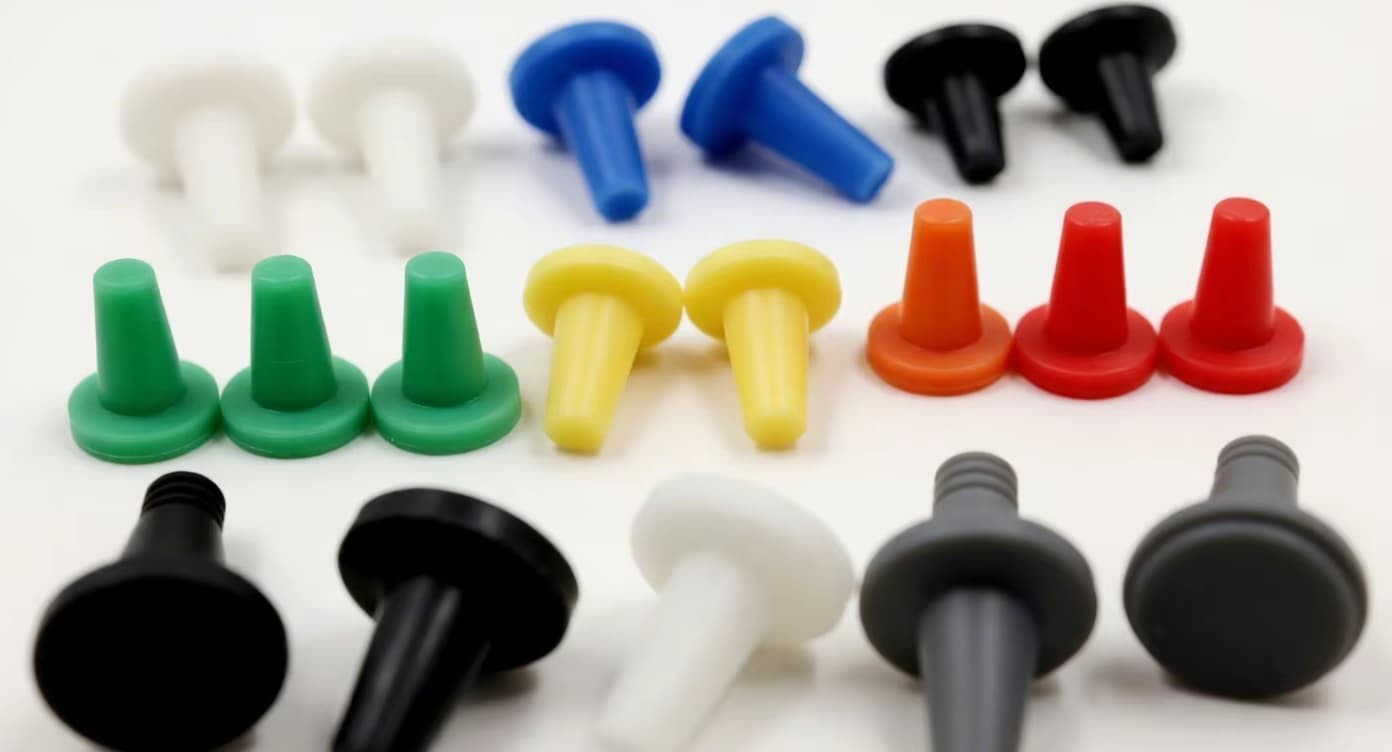
At FromRubber, we understand that exhaust ports and hose openings come in countless shapes—round, oval, threaded, tapered, or with internal ribs. Off-the-shelf plugs often lead to leaks or difficult insertion. That’s why we offer full-service custom silicone molding:
- Tailored durometer (Shore A 30–80): Softer plugs for irregular cast surfaces, firmer compounds for high-pressure retention.
- Color coding: Use specific colors for different diameter ranges or departments (OEM branding available).
- Complex geometries: Stepped designs, pull tabs, T-handles, or flange-style plugs for secure locking.
- High-volume & low-volume tooling: Compression molding, transfer molding, and injection molding options for cost-efficient runs.
Whether you need 500 prototype plugs for a new engine line or 500,000 pieces for global distribution, FromRubber’s in-house engineering team delivers consistent quality with ISO 9001:2015 certified processes.
Key Applications Where Silicone Exhaust Hole Plugs Excel
Our silicone plugs are trusted across industries that demand uncompromised sealing under thermal stress:
- Automotive & Motorsport: Exhaust manifold ports, O2 sensor bungs, wastegate hose connections, and EGR valve ports during engine assembly or dyno testing.
- Powder Coating & Electrocoating: Masking threaded exhaust holes and flanges before high-temperature baking — silicone caps and plugs provide clean, residue-free edges.
- Marine Exhaust Systems: Saltwater and high-heat environments demand silicone’s corrosion resistance and flexibility.
- Industrial Equipment: Sealing compressed air lines, hydraulic test ports, and furnace exhaust sampling holes.
- Aftermarket Repair: Mechanics use reusable silicone plugs to temporarily seal exhaust during component replacement or smoke testing.
Chemical & Fluid Resistance: Protecting Against Automotive Aggressors
Exhaust systems are exposed to more than just heat—they encounter engine oil residues, coolant leaks, unburnt fuel, road salt, and aggressive cleaning solvents. Silicone exhibits excellent resistance to a wide pH range and remains unaffected by most automotive fluids. Unlike nitrile rubber, which can swell after prolonged contact with certain synthetic oils, silicone maintains dimensional stability, ensuring that the plug does not become stuck or lose its sealing interference fit. Moreover, silicone does not degrade from exposure to ozone or UV light, which is essential for plugs used in outdoor storage or open-bay workshops.
FromRubber’s platinum-cured silicone (optional) further enhances purity and chemical inertness, making it the material of choice for cleanroom applications or fuel cell testing environments. This level of reliability reduces the risk of fluid bypass during pressure testing and ensures accurate diagnostic results.
Cost-Benefit Analysis: Reusability Drives ROI
| Factor | Silicone Plugs (FromRubber) | Disposable Rubber/Plastic Plugs |
|---|---|---|
| Average Lifespan (cycles) | 500+ uses with full elasticity | 1–5 uses (often single-use) |
| Risk of Cross-Contamination | Non-porous, easy to clean | Degrades and leaves debris |
| Inventory Cost per 1000 plugs | Higher unit cost but total cost of ownership lower due to longevity | Low initial cost but frequent repurchasing + labor replacement |
| Labor Efficiency | Quick insertion/removal, no residue cleanup | Stuck plugs require drilling or scraping |
Switching to high-quality silicone exhaust hole plugs drastically reduces consumable waste and labor hours. Leading automotive tier-1 suppliers have reported up to 72% reduction in masking-related downtime after migrating to FromRubber custom silicone solutions.
FromRubber Silicone Technical Specifications
Our standard high-temperature silicone plugs meet or exceed industry benchmarks. Custom formulations are available for extreme conditions (up to 300°C intermittent).
- Temperature Range: -60°C to +260°C continuous service (-76°F to 500°F)
- Tensile Strength: 6 – 10 MPa (depending on grade)
- Elongation at Break: 300% – 700%
- Tear Strength: Excellent, die B tear > 20 kN/m
- Hardness Options: 40 Shore A (soft seal) to 80 Shore A (rigid plug)
- Standards: RoHS, REACH, and FDA-compliant grades available
Every batch undergoes rigorous testing for compression set, heat aging (168h at 225°C), and fluid immersion to guarantee consistent performance in the field.
Why Partner With FromRubber? Your Silicone Sealing Specialist
As a dedicated manufacturer of silicone rubber components, FromRubber combines deep material science expertise with agile production capabilities. Unlike trading companies or generic rubber suppliers, we control every step from compounding to final packaging. This vertical integration ensures:
- Faster prototyping: Receive 3D-printed mold samples within 7–10 days.
- Uncompromised quality: In-house tensile testing, hardness verification, and thermal analysis.
- Scalability: From pilot runs to millions of pieces with consistent tolerances (±0.1mm).
- Sustainable solutions: Silicone is inert, recyclable in energy recovery, and our flashless molding reduces material waste.
We also offer value-added services like injection molding design assistance, packaging (bulk bagging, individual poly bag, or custom labeling), and inventory systems for just-in-time delivery.
Frequently Asked Questions About Silicone Exhaust Hole Plugs
Can silicone exhaust plugs handle diesel particulate filter (DPF) regeneration temperatures?
Yes, our high-temp silicone compounds withstand brief peaks up to 300°C (572°F), making them suitable for DPF service ports and regeneration test points. Always verify exact temperature profile with our engineers.
Are these plugs compatible with powder coating ovens?
Absolutely. Silicone’s non-stick surface and high heat resistance make it the #1 choice for masking during powder coating, e-coat, and anodizing. They peel off cleanly after curing cycles without leaving silicone oil residue.
Do you provide custom sizes for vintage or heavy-duty exhaust ports?
Yes. We specialize in non-standard diameters, stepped plugs, and tapered designs. Just share your port dimension drawing or sample, and we will recommend the optimal custom tooling approach.
What’s the lead time for custom silicone exhaust plugs?
Typical custom mold fabrication takes 15–20 business days. Production lead time depends on quantity, but we prioritize urgent orders with expedited tooling services.
Ready to Upgrade Your Sealing Strategy?
FromRubber delivers precision-molded silicone exhaust hole rubber hose plugs that survive the harshest heat, oil, and pressure. Whether you need standard sizes or fully custom-engineered parts, our team ensures fast turnaround, superior material quality, and competitive pricing for manufacturers worldwide.
Contact our engineering team today to discuss your application, request samples, or begin a custom mold project. Let silicone performance define your next success.
© 2026 FromRubber – High-Performance Silicone Sealing Solutions. All specifications are based on standard material data; custom formulations available upon request.