The Role of DFM in Reducing Costs of Custom Plastic Mouse Enclosures
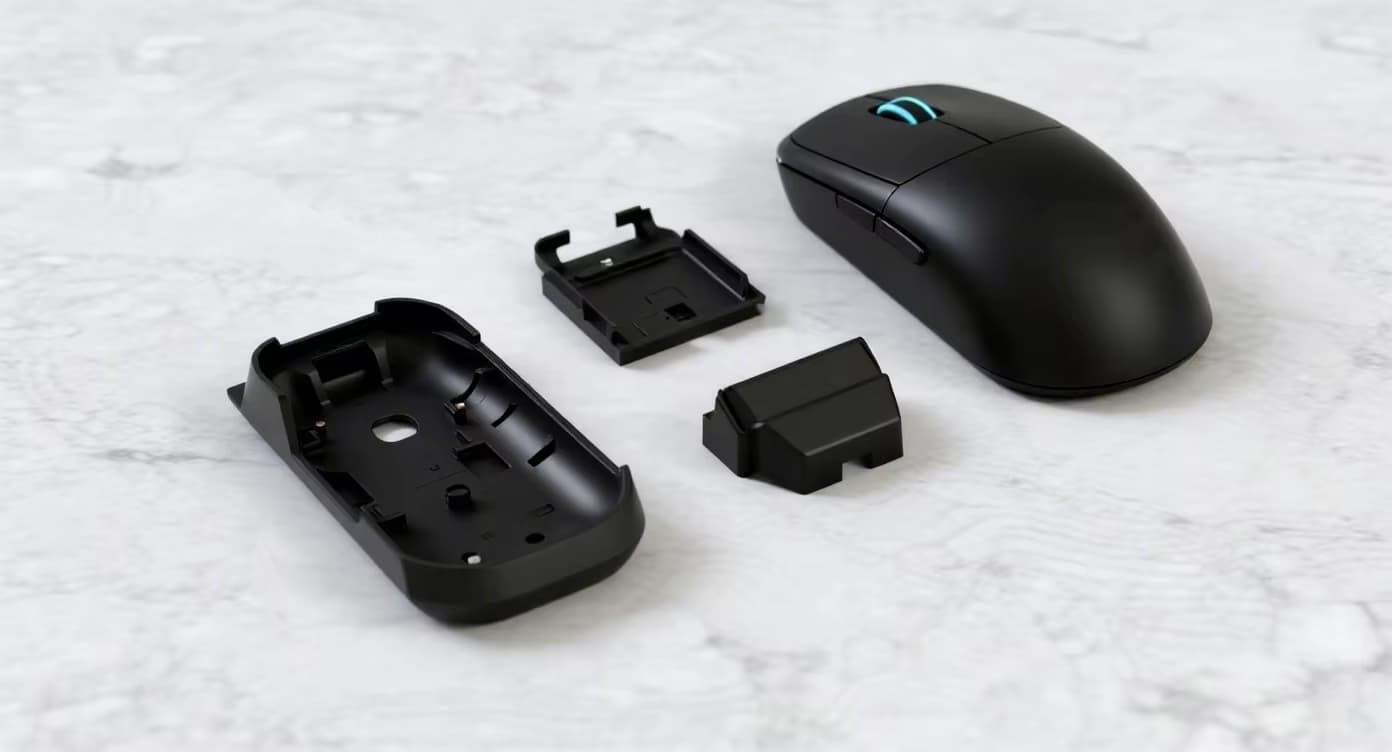
Many product designers assume that high-quality injection molds for custom mouse enclosures are inherently expensive — but the truth is, 80% of unnecessary costs are locked in before any steel is cut. At FromRubber, we use Design for Manufacturability (DFM) as a strategic tool to slash tooling expenses, reduce per-unit pricing, and eliminate scrap. This guide reveals how DFM transforms a costly mouse shell design into a lean, cost-effective, production-ready part.
What is DFM and why does it cut costs?
Design for Manufacturability (DFM) is a proactive engineering analysis that evaluates a 3D mouse enclosure design before mold fabrication. It identifies potential issues like non-uniform wall thickness, sharp corners, impossible draft angles, or poorly placed ribs that would otherwise lead to rejected samples, rework, and expensive mold modifications.
Direct cost reductions from DFM include: shorter cycle times, lower scrap rates, fewer mold trials, and extended tool life.
DFM Impact Numbers
- ↓ 25-40% tooling rework costs
- ↓ 15-30% cycle time per part
- ↑ 50% mold lifespan
- ↓ 70% sampling iterations
5 Key DFM areas that reduce mouse enclosure costs
1️⃣ Uniform wall thickness
Thick sections cause sink marks and longer cooling — increasing cycle time by 20-40%. DFM recommends ideal 1.2-1.5mm for mouse shells, slashing cooling time from 25s to 14s.
2️⃣ Draft angle optimization
Without ≥1.5° draft, parts stick to cavities — forcing costly ejection systems. DFM ensures smooth demolding, reducing tool maintenance by 35%.
3️⃣ Gate & runner rationalization
DFM consolidates multi-gate designs into optimized cold/hot runners — reducing regrind waste and saving $0.12-$0.28 per part just in material.
4️⃣ Tolerances & fit simplification
Over-specifying ±0.02mm on non-critical surfaces doubles machining costs. DFM applies GD&T only to functional snap fits & button guides.
5️⃣ Cavity layout & family molds
DFM groups top and bottom shells into one family mold, reducing tooling investment by up to 40% compared to separate molds.
📉 Real DFM case: From $38k to $24k mold cost
A startup’s ergonomic gaming mouse had 2.8mm thick scroll wheel housing (sink risk), zero draft on sidewalls, and 4 separate gate locations. Our DFM analysis suggested: (1) reducing boss thickness to 1.7mm, (2) adding 1.8° draft, (3) using a 2-cavity hot runner instead of 4 individual cold drops. Result: Mold cost reduced 37% ($38,000 → $24,000), cycle time dropped from 38s to 22s, and annual savings reached $52,000 on 500k units.
How FromRubber integrates DFM into your project workflow
Unlike generic mold shops that start cutting steel immediately, FromRubber follows a structured 4-step DFM protocol for every custom mouse enclosure project:
- Step 1 – 3D model evaluation: Our engineers run Moldflow Adviser and check wall thickness, draft, radii, and undercuts.
- Step 2 – Cost/benefit report: You receive a 15-20 page DFM document with red-yellow-green risk rating and actionable changes.
- Step 3 – Revised design collaboration: We help modify your CAD file (SolidWorks/STEP) while keeping original industrial aesthetics.
- Step 4 – Quotation based on DFM-optimized geometry: Final tooling price reflects the simplified design — typically 25-45% lower than initial estimates.
| Cost factor | Without DFM (typical) | With DFM (FromRubber) | Savings |
|---|---|---|---|
| Mold steel modifications | $3,200 – $6,500 | $0 – $800 | ~82% |
| Sampling iterations | 6-9 rounds | 2-3 rounds | ~60% |
| Cycle time (per part) | 28-35 seconds | 16-22 seconds | -35% |
| Scrap rate (first 50k parts) | 4.2% – 7.5% | 0.8% – 1.5% | ↓ 75% |
Addressing common misconceptions: DFM does NOT ruin design
Some industrial designers worry DFM will force them into "boring, boxy shapes". That's false. Our approach preserves ergonomic curves, undercuts for side buttons, and premium aesthetics — we adjust only the hidden structural features. In fact, DFM at FromRubber often improves part strength by eliminating stress-concentrating sharp corners and adding uniform radii. You retain complete creative freedom over exterior surfaces while making internal geometry manufacturing-friendly.
When should you request a DFM review?
Start saving with a free DFM consultation
Upload your mouse enclosure STEP/IGS file to FromRubber — our team returns a detailed DFM report within 48 hours, including revised cost estimation and optimized tooling proposal. No obligation, only actionable data to reduce your per-part cost by 15-30%.
FromRubber — Precision injection molds for custom mouse enclosures. DFM-driven cost reduction since 2012. ISO 9001:2025 certified.