
The Hidden Cost of a Perfect Silicone Case Why Every Bubble, Short Edge, and Burn Spot Is a Lawsuit Waiting to Happen
The Hidden Cost of a Perfect Silicone Case
— A Purchaser’s and Customizer’s Perspective
When you source or customize silicone protective cases — whether for a flagship smartphone, a medical wearable, or a rugged industrial tablet — you are not buying rubber; you are buying confidence. Confidence that your end‑user will see a flawless surface, feel a secure grip, and trust that the case will survive drops, sweat, and daily abuse. Yet that confidence shatters the moment a batch arrives with micro‑bubbles, ragged edges, or scorched corners. For procurement managers and customizer project leads, these defects are not merely technical annoyances; they are financial landmines, brand eroders, and relationship breakers. This article dissects the five most painful defects in silicone case molding from the buyer’s and customizer’s point of view, and explains why venting — that obscure engineering detail — ultimately determines your bottom line, your delivery schedule, and your customer’s loyalty.

1. Silicone Case Bubbles: The Invisible Thief of Consumer Trust
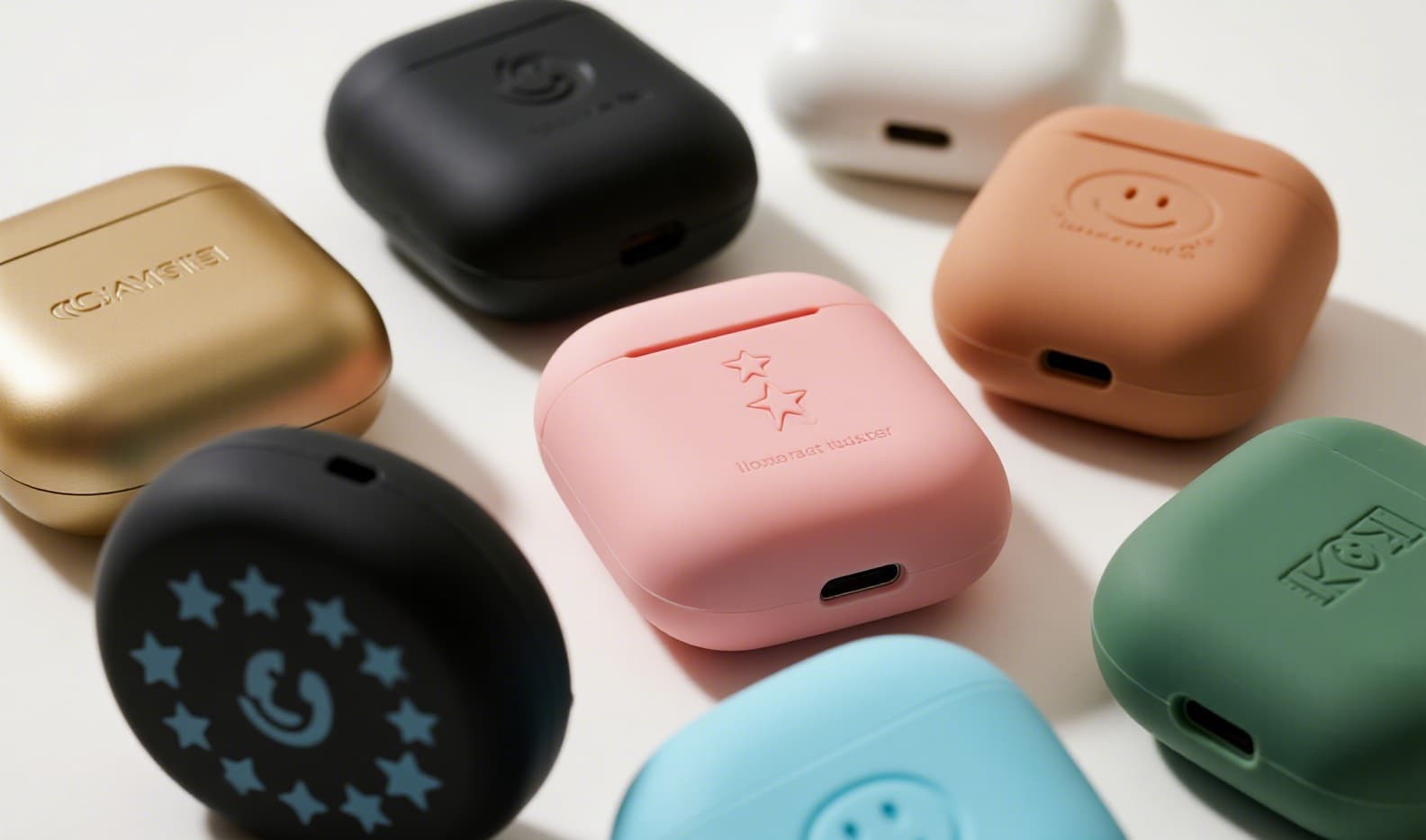
Imagine unboxing a newly designed silicone case for a premium earbud charging case. The surface looks pristine under factory lighting. But when the end‑user holds it under sunlight, a constellation of tiny bubbles — some sub‑surface, some exposed as pinholes — ruins the tactile and visual experience. For a purchasing manager, every bubble is a potential return. Return rates of just 3% can wipe out the entire profit margin on a low‑cost accessory. Worse, bubbles are often not detected until the cases are packed and shipped, because they hide beneath the surface and only appear after curing or after a few temperature cycles in transit.
From the customizer’s standpoint, bubbles force a painful choice: accept the batch and risk chargebacks, or reject it and face production delays that anger your own end‑customers. Many brand owners have learned the hard way that a bubble‑prone case fails the “drop test” not because it cracks, but because the internal void weakens the structure — the case splits at the bubble site after a 1‑meter fall. When a major sports brand recalled 50,000 units of a fitness tracker case due to bubble‑induced cracking, the direct cost exceeded $200,000, but the reputational damage — viral social media posts and negative reviews — cost ten times that. As a purchaser, you must demand that your supplier’s venting design includes perimeter grooves every 15 mm, ejector‑pin clearance, and vacuum assist; otherwise, you are buying a lottery ticket, not a product.
2. Silicone Case Short Shots (Edge Filling Issues): When “Almost Fits” Means “Never Sells”
A case that does not fully wrap around the device’s edge is a case that cannot protect. Short shots manifest as incomplete, scalloped edges — especially around thin bezels, camera bumps, and button cutouts. For a customizer who has spent weeks on an exclusive design, a short‑shot edge is a humiliation. It screams “cheap” and “incompetent” to the end‑user. More critically, an incomplete edge leaves the device’s metal frame exposed, defeating the entire purpose of a protective case. In the medical device sector, where silicone sleeves must cover sharp edges to prevent patient injury, a short shot is a safety violation that can trigger regulatory action.
The procurement pain here is twofold. First, short‑shot parts are 100% scrap — they cannot be repaired, polished, or hidden. That means you pay for material and molding time twice: once for the defective parts, and again for the re‑run. Second, short shots are often intermittent, making them a nightmare for incoming quality inspection. A supplier may ship a batch that passes spot checks, but the next pallet contains 15% short edges because the mold temperature drifted or the vent depth changed due to carbon deposits. For custom orders with tight launch deadlines, a short‑shot epidemic can delay the entire product release. The purchasing manager must therefore audit not just the final parts, but the supplier’s vent maintenance logs — specifically, whether they clean vent grooves ultrasonically every 500 cycles. If they don’t, you are signing up for a rollercoaster of rejection.
3. Silicone Case Scorch Marks: The Visual Scars That Destroy Premium Branding
Scorch marks are brownish or yellowish burn patches that appear at the last‑fill locations — typically the corners of the case, where gas compresses most severely. For a brand that positions itself as “premium” or “luxury,” a scorch mark is an unforgivable aesthetic sin. It cannot be painted over; it cannot be masked. The only fix is to scrap the part. Imagine a custom‑designed marble‑patterned silicone case for a foldable phone — a single scorch mark ruins the entire artistic effect. The customizer then has to explain to the end‑client why the sample photos do not match the production goods, risking contract penalties and loss of future orders.
From a purchaser’s perspective, scorch marks are a red flag that the supplier does not understand the thermodynamics of silicone vulcanization. Scorching indicates that gas trapped in the corner reached temperatures above 230 °C while the rest of the cavity was at 170 °C. This differential not only burns the surface but also creates a brittle, over‑cured spot that cracks easily. In extreme cases, these spots can pierce through thin‑wall cases (0.8 mm or less) during demolding, turning a cosmetic defect into a structural hole. The purchasing manager should include a “scorch‑free” clause in the quality agreement, backed by a penalty matrix — and should verify that the supplier uses vacuum evacuation to ‑0.08 MPa before injection. Without that, scorch marks will appear randomly, especially in humid weather when absorbed moisture increases gas volume.
4. Silicone Case Overflow / Flash: Not Just Ugly, but a Functional Failure
Overflow (flash) occurs when silicone seeps into vent grooves or parting lines and cures as a thin, ragged fin. Some buyers mistakenly think flash is merely a cosmetic nuisance that can be trimmed manually. That is a costly illusion. For thin‑wall cases, excessive flash often tears off during trimming, leaving a rough, sharp edge that can scratch the device or irritate skin. Worse, flash can block the vent grooves after a few cycles, causing the very gas problems (bubbles and short shots) that the vents were meant to prevent. So flash is both a defect in itself and a cause of other defects.
For customizers who order complex geometries with living hinges or snap‑fits, flash can interfere with assembly — the case may not click into place, or it may feel loose. In one real instance, a customizer of a gaming controller grip rejected an entire 10,000‑piece order because flash around the grip texture made the surface uncomfortably prickly. The supplier had to absorb the cost of re‑molding and expedited shipping, losing $30,000 in profit. From a procurement standpoint, flash is a sign of poor vent depth control — LSR requires 0.01‑0.02 mm; HCR allows 0.02‑0.05 mm. If the supplier cannot maintain that tolerance, they are either using worn molds or skipping regular maintenance. As a buyer, you should request a vent depth measurement report with every mold validation sample.
5. Silicone Case Delivery Delays and Rework Cycles: The Hidden Time Bomb for Custom Orders
All the above defects share one ultimate consequence: rework and delay. When a custom order is due in 30 days and the supplier pulls the mold for cleaning twice a week, your timeline evaporates. Each cleaning takes 1‑2 hours; each re‑run adds a full shift. A supplier with inadequate venting may experience a 15‑20% scrap rate, which means they have to run 20‑25% extra shots just to ship the contracted quantity — consuming machine time that could have been used for your next project. The purchasing manager ends up in endless email exchanges, expediting fees, and last‑minute airfreight charges that blow the budget.
Moreover, rework cycles introduce variation. The supplier may decide to increase injection pressure to overcome gas resistance, but that leads to flash. They may lower temperature, but that prolongs cure time. These band‑aid adjustments create an unstable process, and the next batch may have entirely different defect patterns — some bubbles, some short shots, some burns. For a customizer who promised consistent color and texture across multiple production runs, this inconsistency is a nightmare. Your brand reputation hinges on uniformity; any batch that deviates becomes a “B‑grade” that you cannot sell at full price, or worse, cannot sell at all.
Real-World Case Study: From 18% to 0.5% Bubble Rate
📱 Ultra‑thin 0.8mm silicone case for a popular fitness tracker
Original design: Only 4 vent grooves (0.015mm × 10mm) on the parting surface → 18% bubble defect rate. At 10,000 parts/day, that was 1,800 daily rejects — costing over $1.35 million annually in scrap alone.
Optimized solution (implemented by FromRubber): Redesigned the venting system with (1) perimeter vents spaced every 15 mm, (2) ejector‑pin clearance venting (0.01 mm per side), and (3) vacuum‑assisted evacuation to ‑0.08 MPa before injection.
Payback period for mold modification + vacuum pump: less than 2 weeks. Total quality cost dropped from over $2 million to virtually negligible.
The Procurement Manager’s Checklist: What to Demand from Your Silicone Case Supplier
Now that we have laid bare the pains, here is a practical checklist for purchasers and customizers to protect themselves:
- Vent density: Require that the mold has at least one vent groove every 15‑20 mm around the entire cavity perimeter. Do not accept a design with only four vents.
- Vent depth verification: Ask for a laser‑measured depth report. For LSR, it must be 0.01‑0.02 mm; for HCR, 0.02‑0.05 mm. Any deviation beyond ±0.003 mm is a red flag.
- Ejector‑pin venting: Insist on 0.01‑0.015 mm single‑side clearance on at least four ejector pins positioned at the farthest flow ends.
- Vacuum system: Demand that the supplier uses a vacuum pump capable of ‑0.08 to ‑0.095 MPa, with a cycle‑by‑cycle monitoring record.
- Maintenance protocol: Specify that vent grooves be ultrasonically cleaned every 500‑1,000 shots, and that cleaning records be shared with you monthly.
- Overflow groove design: Ensure the mold includes a shallow annular overflow ring adjacent to the vents — this self‑sealing feature reduces both flash and gas re‑entry.
Conclusion: Defects Are Not “Inevitable” — They Are Preventable
As a purchaser or customizer, you have more leverage than you think. The technology to eliminate bubbles, short shots, scorch marks, and flash is well established. It is not expensive — adding 20 extra vent grooves costs less than $500 in machining, and a vacuum pump adds about $2,000 to the mold investment. Compared to the millions lost in scrap, returns, and brand damage, that is pocket change. Yet many suppliers cut corners because they believe “gas is just part of the process.” That belief is outdated and dangerous. Your job is to demand evidence‑based venting design, regular maintenance, and real‑time vacuum monitoring. When you source your next silicone case, remember: every bubble you see is a dollar lost; every short edge is a customer lost; every scorch mark is a lawsuit waiting to happen. Insist on perfection — because your brand deserves nothing less.
If your current supplier struggles with bubbles, short edges, burns, or flash — or if you are launching a new custom design and want to avoid these pitfalls from day one — consider reaching out to FromRubber, a specialist in silicone case custom molding. Their engineering team routinely turns defect‑prone molds into stable, high‑yield production lines. A no‑obligation process audit could save you months of headaches and thousands of dollars in scrap. After all, the best defect is the one that never happens.
Ready to secure your brand’s reputation?
Contact FromRubber – Free Process Audt