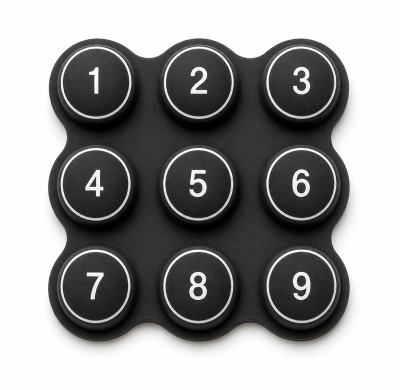
Small Batch Custom Silicone Keypad: Why Many Factories Say No and How to Get Your Low-Volume Order Done
A 2,000-unit minimum is not a policy, it is arithmetic. A single-cavity compression mould for a medium-complexity keypad costs around $2,800, so the tooling alone is $5.60 per unit at 500 pieces, $1.40 at 2,000 and $0.28 at 10,000. A factory quoting you 2,000 is telling you where their tooling amortises, not that they dislike small orders.
There is a way through it. Standardised mould frames with interchangeable inserts, soft tooling in aluminium for validation volumes, and family moulds that share a base across variants all cut the upfront number rather than the unit price. On that basis a custom silicone keypad order of 500 units is a normal commercial transaction, and the engineering review still has to happen before steel is cut.
Why MOQ exists on a custom silicone keypad order
Three costs drive the number, and only one of them is the mould block itself.
Tooling amortisation
A single-cavity compression mould for a medium-complexity keypad averages about $2,800. Spread across 500 units that is $5.60 each; across 2,000 it is $1.40; across 10,000 it is $0.28. The unit price barely moves — the tooling per unit does.
Setup and process time
Every run carries press setup, first-article measurement, and parameter records regardless of quantity. A 500-piece run and a 10,000-piece run consume nearly the same engineering hours.
Yield risk on a new tool
The first shots from a new cavity are also the ones that find the venting and flow problems. Factories price small first runs defensively because the scrap rate is highest exactly there.
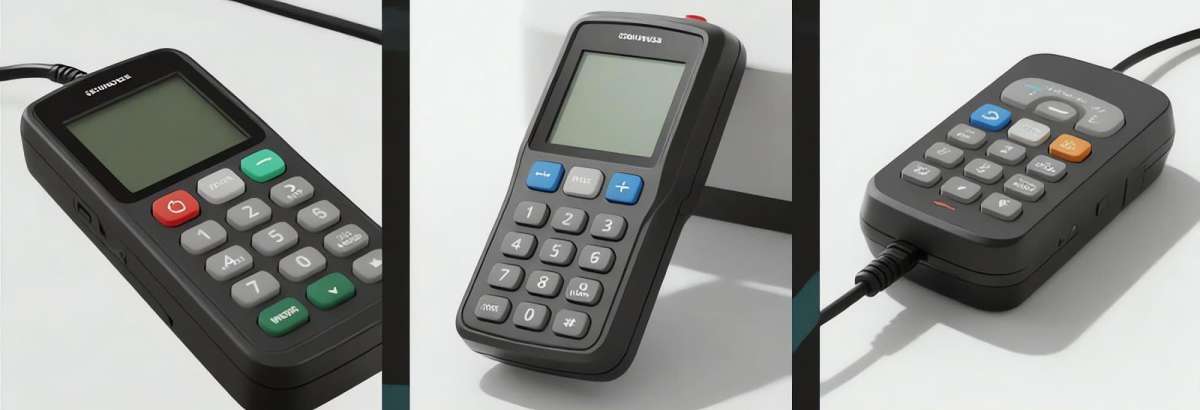
The tool, not the rubber, is what makes a small order expensive. Changing the tool architecture is what changes the MOQ.
Four ways to get under the threshold
| Approach | Upfront cost | Where it fits | Limit to accept |
|---|---|---|---|
| Standardised mould frame with custom insert | Around $1,200–2,500 per design | Recurring variants on a stable footprint; the most economical route at 500+ | Insert size is bounded by the frame; very large panels need a dedicated tool |
| Soft tooling in aluminium | About $1,100–2,200 | Validation builds and design iterations before market commitment | Shorter cavity life; not intended for high-volume production |
| Hard tool in S136H steel | About $2,500–5,000 | Production volumes where cavity life and repeatability matter | Poor fit for a 500-unit trial |
| Family mould across variants | Shared base, one insert set | Several keypad versions launched together | Part geometry must be compatible in one shot |
The engineering fee is a separate line worth checking. Some factories charge $300–800 for design review and DFM analysis; small-batch-friendly suppliers typically include it. That fee is small compared with the cost of discovering a wall or venting problem after the tool exists.
Case: a pilot run priced four times
A wearable startup needed 500 custom silicone keypads for a pilot production run. Four quotations came back between $3,800 and $6,200 including tooling, all with minimums between 2,000 and 3,000 units — which converted a 500-unit pilot into a 2,000-unit commitment before the product had a market.
The workable version used a standardised frame with a custom insert and an aluminium soft tool for the pilot, with the steel cavity deferred until the design was frozen by field feedback. Tooling cost fell by about 30% against the lowest conventional quote, and the 500-unit order became a normal order rather than an exception.
The pattern repeats across validation-stage projects: the money is not saved by negotiating the unit price, it is saved by not buying production tooling before production exists.
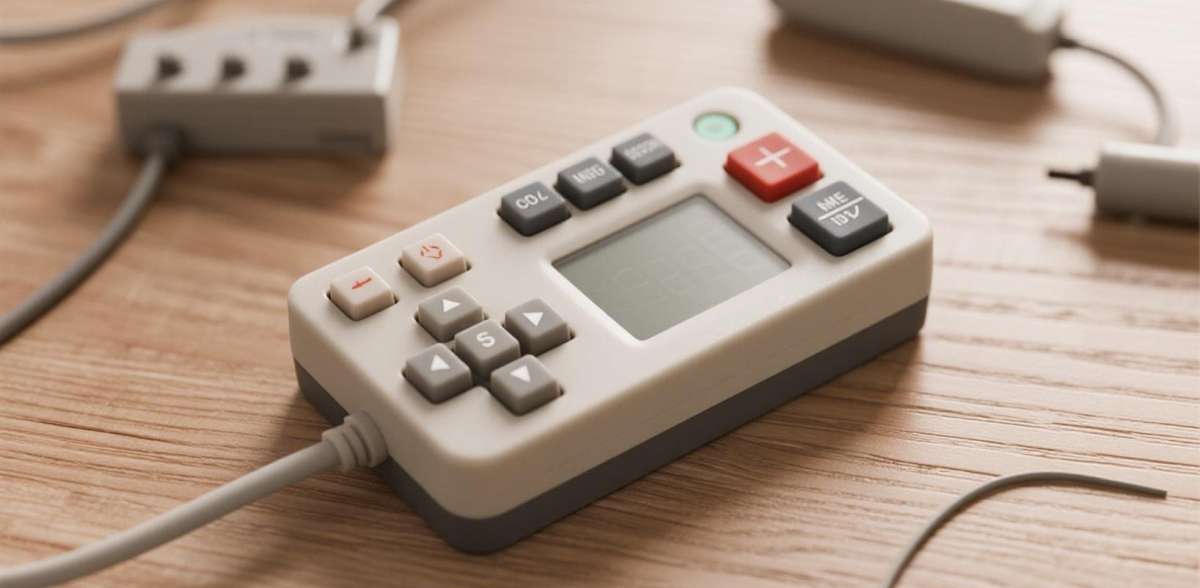
An insert that fits an existing frame converts a bespoke tooling project into a scheduled production slot.
What still has to be specified at low volume
Small batches are where skipped specification becomes expensive, because there is no volume buffer to absorb rework. Four items are non-negotiable:
- Formal DFM review before the mould is cut. It is the cheapest defect prevention available and catches short shots, flash and ejection marks.
- Material callout on the drawing, verified against the supplier's certificate — a generic "food-grade silicone" line is not a specification.
- Secondary operations listed explicitly: spray coating, laser etching, backlighting, adhesive backing. Each one changes the lead time and the sample approval.
- Acceptance criteria for the first article, including actuation force and legend position, measured rather than judged.
None of this costs more at 500 units than at 50,000. It only costs more if it happens after the fact.
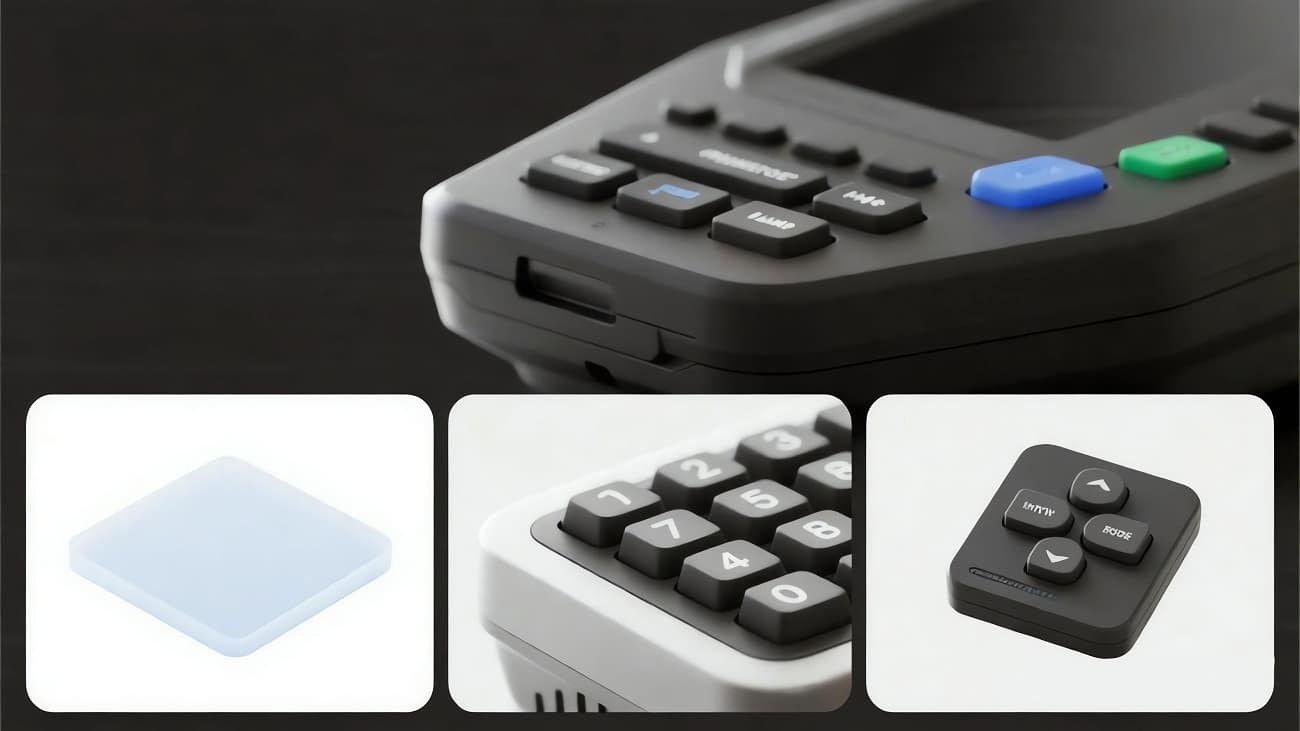
At pilot volume the first article carries the whole project. Measuring it properly is the cheapest insurance in the schedule.
Questions buyers ask about low-volume orders
Is 500 units genuinely available, or is it a marketing number?
It is available when the tool is an insert in a standard frame. It is not available for a large multi-colour panel with a bespoke tool, where the setup cost cannot be recovered at that quantity.
Can a soft tool be used for production later?
It can run beyond the pilot, but cavity life and dimensional consistency are lower than steel. The usual sequence is aluminium for validation, steel once the design stops changing.
Why do some quotes include engineering and others do not?
Because DFM is either a service or a line item. A quote without it usually means the review has not been done, which shifts the risk to the buyer at first article.
Does a low MOQ change the unit price much?
Less than buyers expect. Press time and material scale with quantity; the difference is dominated by tooling amortisation and setup, which is why the tooling route matters more than the piece price at this stage.
Send the drawing and the pilot quantity
Tell us the volume you need for validation and the volume you expect at production. We will quote both routes — insert in a standard frame for the pilot, steel cavity for production — so the decision is visible before you commit.
See quick proofing and the custom silicone rubber keypad range.