Silicone Keypad Hardness Selection: 40 Shore A vs 60 Shore A — How to Choose
“I want it soft, like baby skin, but with fast rebound.” — This is the vague brief many product managers give during sampling. The samples come back, and the boss presses one and says: “Too soft — no feel, like pushing cotton.” Or: “Too hard — like a tire, my finger hurts.”
This “too soft / too hard” loop happens daily at FromRubber. Hardness is a tactile parameter that only reveals itself through touch, and everyone's perception of “soft” and “hard” is deeply subjective. The same 50 Shore A can feel just right to one person, too soft to another, and too firm to a third. Without a scientific selection framework, relying on “feeling” alone leads to costly trial‑and‑error.
Silicone Keypad Technical Analysis
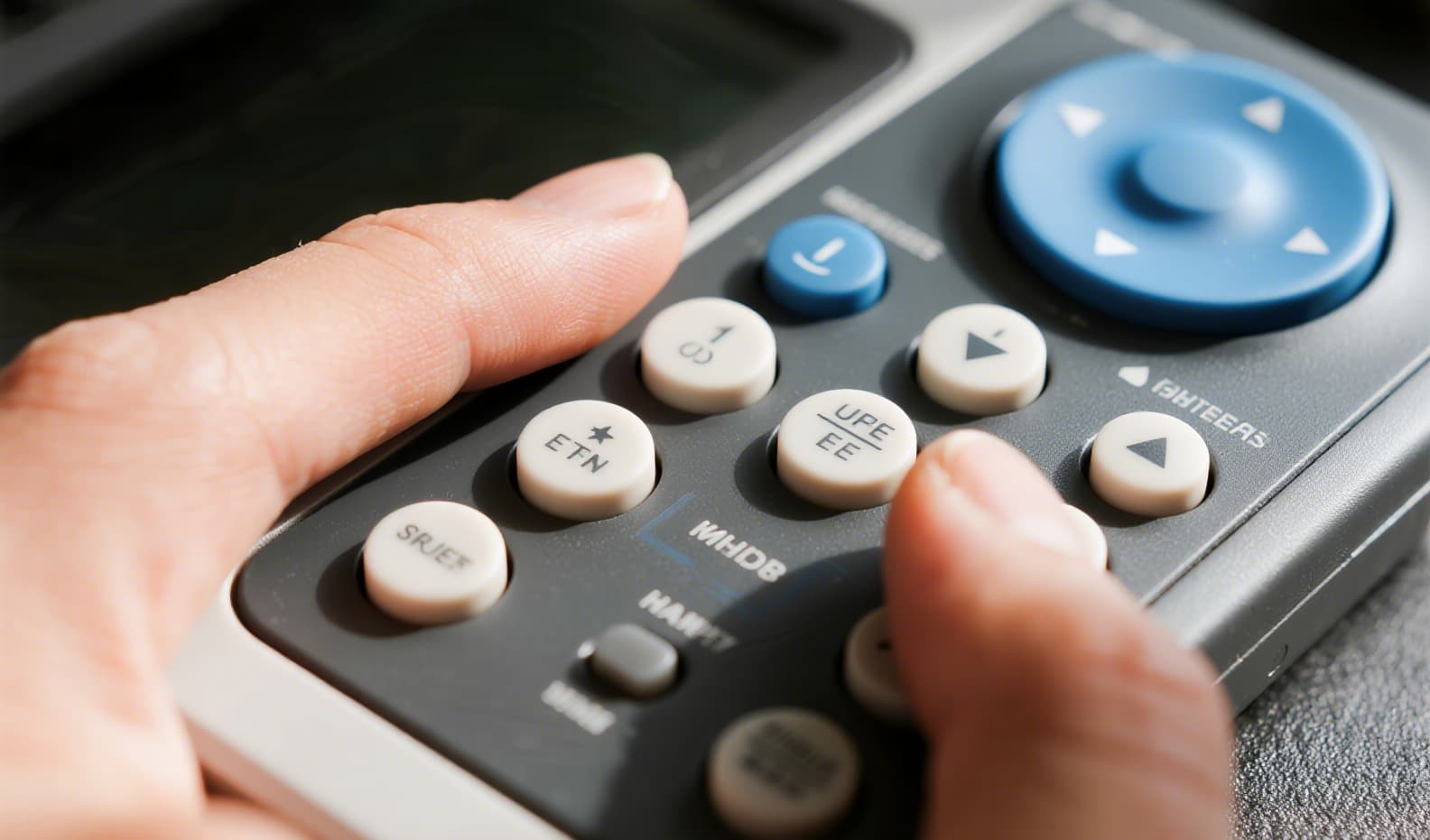
The “softness” or “firmness” of a silicone keypad is precisely measured by the industry standard — Shore A durometer. This directly determines the fingertip feel experienced by the user.
According to FromRubber’s Silicone Keypad Custom Molding Best Practices, the typical hardness range for keypads is 40–60 Shore A. This span covers the entire tactile spectrum from “extremely soft” to “crisp and responsive.”
Hardness Is Not Isolated — It Must Match Structural Design
FromRubber’s engineering team repeatedly emphasizes a critical, often overlooked fact: the same hardness can feel completely different with different structural designs.
- 50 Shore A silicone with a 1.0 mm stroke feels comfortably soft; with only a 0.3 mm stroke, it feels hard — because the material doesn't have room to deform before bottoming out.
- 50 Shore A with a large bottom R‑angle feels “mushy”; with a sharp R‑angle, it feels “crisp.”
Therefore, hardness selection must be coordinated with stroke, R‑angle, wall thickness, and other structural parameters. FromRubber’s DFM reviews assess hardness and structure as a single integrated system, never in isolation.
| Hardness Range | Tactile Characteristics | Typical Applications | Key Considerations |
|---|---|---|---|
| 40–50 (Soft) | Very soft, low actuation force, warm touch | Senior‑friendly remotes, medical devices, children's products | Weak rebound — needs stroke ≥0.8 mm and sharp R‑angle to prevent “collapse” |
| 50–55 (Medium‑soft) | Balanced softness, crisp rebound, versatile | Consumer electronics, smart home, standard remotes | The “sweet spot” — 90% of projects can start here |
| 55–60 (Medium‑firm) | Firmer feel, crisp return, strong tactile detent | Game controllers, automotive HMI, industrial keypads, POS | Needs PU coating to reduce rubbery feel; fast rebound ideal for rapid pressing |
| 60–70 (Firm) | Hard, high actuation force, solid feel | Mechanical‑style keys, large‑format buttons | Use cautiously on small buttons — may cause finger fatigue |
| >70 | Very hard, tire‑like, minimal elasticity | Seals, gaskets, anti‑vibration pads — not for keypads | Not recommended for any keypad application |
Three‑Dimensional Hardness Selection Framework
FromRubber summarizes hardness selection using a “3‑D Decision Model”:
Real‑World Silicone Keypad Case Studies
High‑end coffee machine control panel – The client specified 40 Shore A ultra‑soft silicone to convey “premium feel.”
FromRubber diagnosed a “hardness‑structure mismatch” — 40A needs ≥1.2 mm stroke and a sharp R‑angle, but the product had only 0.6 mm stroke and a large R‑angle.
Fix: Hardness increased to 55A with PU coating. Rebound stabilized, contact resistance normalized, and users perceived the firmer feel as “more premium.”
Gaming controller keypad – The client required “crisp, fast‑rebound feel for rapid combos.” They sent 3D CAD and feel requirements to FromRubber’s DFM team.
The client made three hardness prototypes for blind testing — and chose exactly the FromRubber‑recommended mix. The product launched with rave reviews, called “best feel in its price segment.”
Actionable Solutions – The FromRubber Hardness Selection Protocol
Follow these FromRubber‑recommended guidelines to select the right hardness for your silicone keypad:
- Start with 50–55 Shore A as your baseline — If you have no special tactile requirement, 50–55 is the safest “sweet spot,” balancing softness and rebound. 90% of keypad projects can start here and fine‑tune based on sample feedback.
- Pair PU coating with higher hardness — For hardness ≥60A, always apply PU or UV coating; otherwise the surface will feel noticeably rubbery and drag, reducing perceived quality. Coating also lowers friction for smoother travel.
- “Soft” or “Hard” is never the sole criterion — always couple hardness with structural parameters:
- Low hardness (40–45A) needs longer stroke (≥0.8 mm) and sharper R‑angles to ensure sufficient rebound.
- High hardness (55–60A) can pair with shorter stroke (0.5–0.7 mm) for crisp, definitive feel.
- Use physical samples — let your fingers decide — Don't rely on numbers alone. Ask your supplier for actual sample swatches or simple parts at 40A, 50A, 55A, and 60A. Have product managers, engineers, and even typical users press them blindly and compare. Real tactile memory is the best guide.
- Account for operating temperature — Silicone hardness drops by about 2–3 Shore A for every 10°C temperature increase. For products used in hot environments (Middle East, automotive summer exposure), specify a hardness 2–3 points higher than your room‑temperature target to maintain feel.
- Consider long‑term hardness drift — Over repeated use, silicone softens due to fatigue and compression set. For high‑cycle products (≥100,000 presses), start with hardness 2–3 points higher to allow for long‑term softening.
- DFM hardness review before tooling — Send your 3D CAD and tactile requirements to FromRubber’s engineering team for DFM review. We evaluate stroke, R‑angle, wall thickness, usage scenario, and target user group to recommend the precise hardness, complete with estimated force‑displacement curves. A detailed report is delivered within 24 hours — getting the hardness right the first time.
The Bottom Line
40 Shore A or 60 Shore A? The answer is neither “softer is better” nor “harder is better” — it's “what fits best.” Silicone keypad hardness selection is a systematic engineering decision that must consider stroke, R‑angle, return speed, actuation force, operating environment, product lifespan, and user demographics.
The golden rule for hardness selection: Start at 50–55, validate with physical samples, and calibrate for environment and longevity.
- No special requirement → start at 50–55 Shore A
- Pursuing soft, gentle feel → 40–50 Shore A, but pair with longer stroke
- Pursuing crisp, definitive feel → 55–60 Shore A, but pair with PU coating
- High temperature or long‑life applications → start 2–3 points harder
FromRubber brings deep expertise in silicone keypad hardness selection and tactile tuning. We understand the “real feel” of every hardness under different structures, and we know how to translate vague client briefs like “I want it softer” into precise Shore A values. On your next silicone keypad project, let our engineering team engage at the design stage — so we can select the right hardness, match it with the right structure, and dial in the perfect feel.