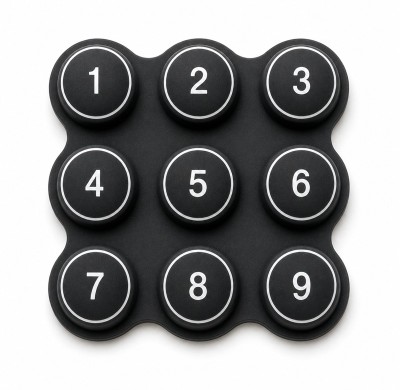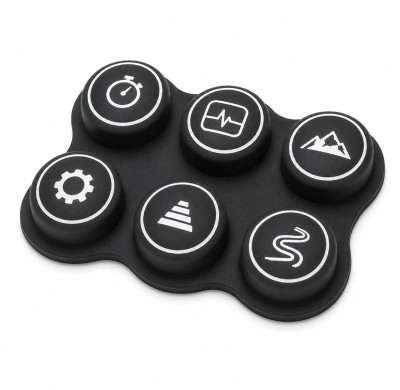
Silicone Keypad Feels Too Hard? Improve Rebound Feel Through Structural Design
“The feel is wrong – too hard, like pressing a stone. There's no crisp ‘click’ and no resilient bounce.”
This is the feedback many product managers dread after receiving the first silicone keypad samples. Misled by the assumption that tactile feel depends solely on material hardness, they push suppliers for softer compounds – only to find that the keypad collapses and never springs back.
The tactile feel of a silicone keypad is a system engineering challenge. It depends not only on Shore A hardness but also – and more critically – on structural design. FromRubber, with years of custom keypad manufacturing experience, summarises the formula as: Feel = Stroke × Return Force × Tactile Feedback – all three are indispensable.
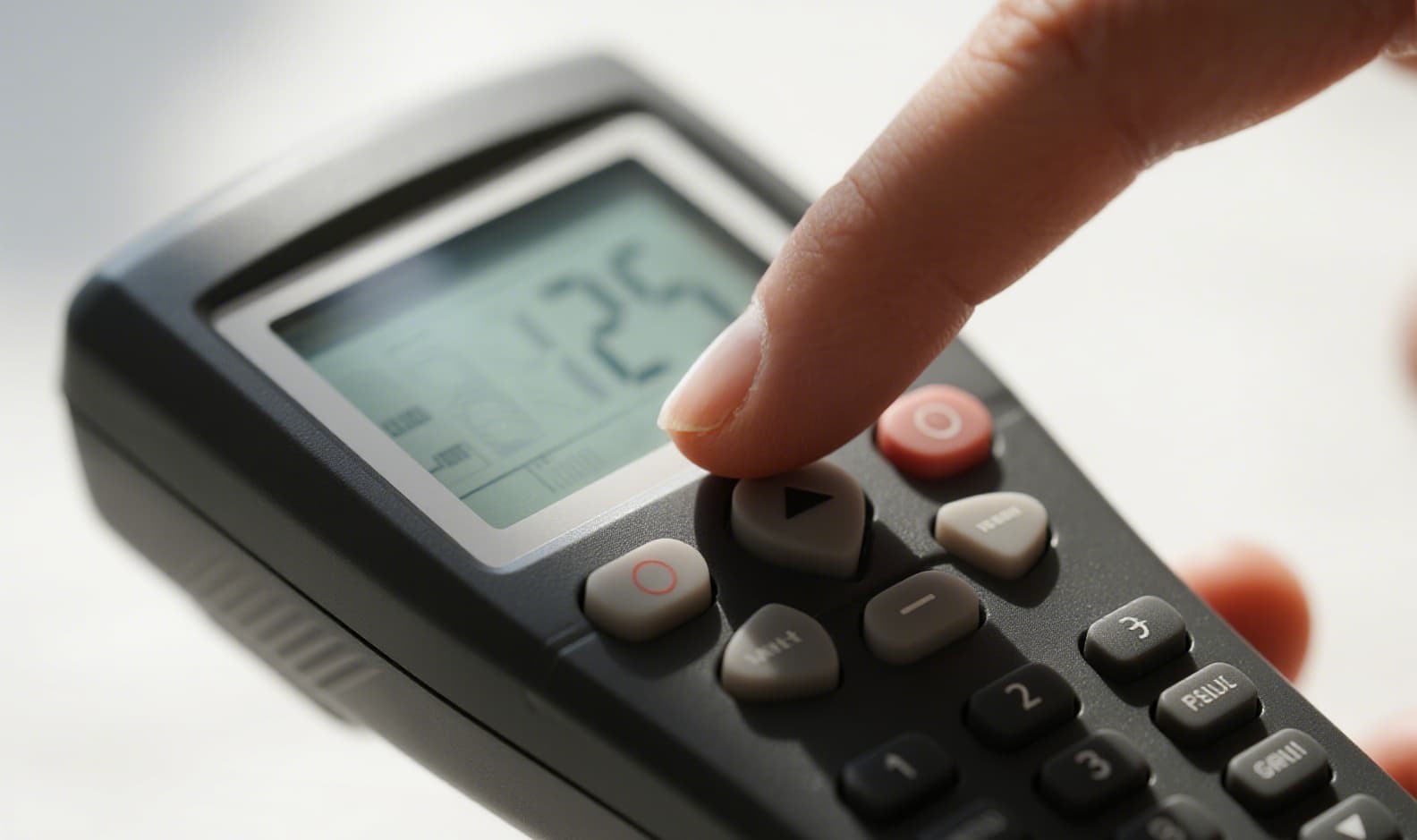
Silicone Keypad Technical Deep Dive
According to FromRubber’s Silicone Keypad Custom Molding Best Practices, the keypad stroke typically ranges from 0.2 mm to 1.5 mm. Yet stroke alone is not enough – the R‑angle, draft angle, and contact geometry form the “feel triangle” that determines the final pressing experience.
- Stroke – the travel distance from the free state to the point of electrical contact. A longer stroke (e.g., >0.8 mm) provides a softer, more gradual press; a short stroke (<0.3 mm) feels hard and unresponsive.
- R‑angle (fillet) – the radius at the bottom contact point directly affects stress concentration and force distribution. A sharp R (e.g., R0.1) produces a crisp, distinct click but risks cracking; a flat R (e.g., R0.5) spreads the return force, resulting in a mushy, indistinct feel. FromRubber’s engineering team recommends a ratio of R‑angle to wall thickness between 1:1 and 1.5:1, verified through physical samples.
- Contact structure – adding a hemispherical bump or a cross‑ribbed design significantly enhances the tactile snap, giving clear feedback even with a limited stroke.
Moreover, FromRubber reminds designers that compression set (CS) of the silicone material also influences long‑term feel. If the return elasticity degrades after a few months, the issue is often not hardness but poor material formulation or improper vulcanisation.
Real‑World Silicone Keypad Case Study
An industrial remote‑control project required a crisp, positive click. To save Z‑height, the structural engineer designed a very low keycap profile, resulting in a stroke of only 0.2 mm. Additionally, a large R‑angle was chosen to reinforce the rib strength.
Initial samples felt dead and lacked any tactile detent. After FromRubber’s technical team intervened, the keycap height was increased by 1 mm (stroke now 0.6 mm), the bottom R‑angle was reduced from 0.5 mm to 0.25 mm, and a cross‑shaped contact bump was added. Without altering the material hardness, the keypad instantly became crisp and responsive – and customer complaints dropped to zero.
Actionable Silicone Keypad Design Guidelines
To achieve the “golden feel” for your product, follow these proven recommendations from FromRubber:
- Control the stroke – Aim for a stroke between 0.5 mm and 1.0 mm. This range offers the best balance of confirmation and comfort. If Z‑space is tight, consider a cantilever‑type sloped structure that amplifies return force within a limited travel.
- Fine‑tune the R‑angle – Keep the R‑angle to wall‑thickness ratio around 1:1 to 2:1. Use 3D‑printed prototypes or mould‑flow analysis to test different R‑values and plot force‑displacement curves. FromRubber offers free DFM feel‑simulation reports to help you predict the pressing curve before tooling.
- Match hardness with formulation – For longer strokes (>0.8 mm), you can soften the material (e.g., 50 Shore A) to enhance softness; for shorter strokes (<0.5 mm), choose a harder compound (60–70 Shore A) to ensure sufficient return force. Also, select silicone grades with high tear resistance and low compression set to maintain long‑term consistency.
- Add travel limiters – Incorporate soft limiting posts at the base to prevent over‑travel, extending keypad lifespan.
Closing Thought
Great tactile feel is not a matter of luck – it’s a matter of calculation. FromRubber is committed to helping you dial in every keypad to deliver that “first‑love crispness” that end‑users adore. With our structural expertise and rigorous testing, we turn good designs into unforgettable experiences.
— FromRubber Engineering Team