One Injection Molding Factory for Both Mouse Top Cover and Bottom Base – Is It Possible?
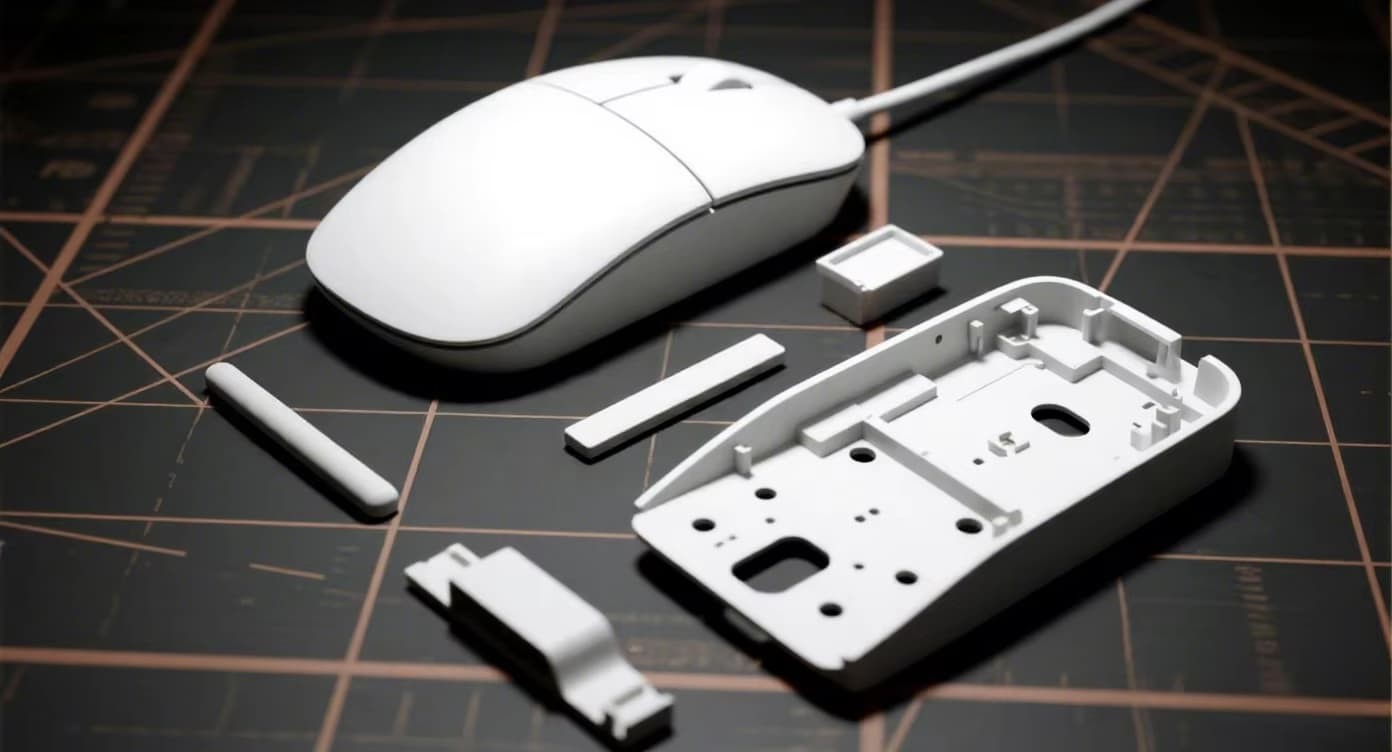
Product designers and procurement managers often ask whether a single injection molding factory can produce both the top cover and bottom base of a mouse enclosure. The short answer is yes — and at FromRubber, this integrated approach is our standard practice. This guide explains the technical feasibility, cost benefits, quality considerations, and best practices for consolidating both mouse shell components with one manufacturing partner.
One factory can produce both top cover and bottom base with proper tooling strategy
Key requirements for success:
- Two separate mold sets or a family mold design
- Same material grade or compatible resin families
- Quality control protocols for both components
- Production scheduling to avoid bottlenecks
Technical feasibility: why a single factory works
A mouse top cover and bottom base are fundamentally similar injection-molded parts. Both require:
- Precision mold steel with polished or textured cavities
- Injection molding machines in the 60-ton to 150-ton range
- Similar material flow characteristics (ABS, PC/ABS, or PC)
- Post-molding operations such as gate trimming, inspection, and packaging
Since the two components share the same processing platform, a well-equipped factory like FromRubber can seamlessly produce both. The only distinction lies in the mold tooling — separate cavity geometries for each part. Many factories already manufacture multi-component assemblies, and a mouse is a relatively simple two-part enclosure system.
Mold tooling strategies for mouse top cover and bottom base dual-component production
Two separate molds
Dedicated mold for top cover and another for bottom base. Each mold operates independently on different machines or in separate production runs. Advantages include flexibility in production scheduling and easier maintenance. Disadvantages: higher initial tooling investment (two mold bases, two sets of components).
Best for: High-volume production where each component runs continuously.
Family mold (one mold, two cavities)
A single mold base contains both top cover and bottom base cavities. Each injection cycle produces one top and one bottom simultaneously. Advantages: lower tooling cost (40-60 percent of two separate molds), balanced production ratio, reduced changeover time. Disadvantages: if one cavity wears out, the entire mold needs repair; cycle time dictated by the slower-filling cavity.
Best for: Lower to medium volumes, balanced assembly needs, budget-conscious projects.
Multi-cavity master unit die
Interchangeable cavity inserts within a standardized MUD frame. Allows swapping top and bottom cavity sets without rebuilding the entire mold base. Provides flexibility for design iterations and reducing spare part inventory.
Best for: Projects expecting design revisions or multiple mouse variants from one platform.
Single factory versus dual factory: comparative analysis
| Factor | Single factory (FromRubber) | Two separate factories |
|---|---|---|
| Tooling investment | Lower – combined engineering, same supplier | Higher – duplicate project management fees |
| Logistics complexity | Low – one shipping origin, one invoice | High – coordinating two suppliers, two shipments |
| Color consistency | Excellent – same machine, same material batch | Risk of color mismatch between suppliers |
| Quality accountability | Single point of contact – no blame shifting | Potential finger-pointing for fit issues |
| Production lead time | Synchronized – both parts ready together | Asynchronous – one part may delay assembly |
| Assembly fit validation | Immediate – trial shot both parts in same session | Requires shipping samples between locations |
| Cost savings potential | 15 to 25 percent lower overall | Baseline – no consolidation discount |
Critical quality control for mouse top cover and bottom base from one factory
To ensure both components fit perfectly at final assembly, FromRubber implements these quality protocols:
Dimensional consistency
Both parts measured against same CMM reference. Critical dimensions include clip engagement depths, screw boss heights, and outer perimeter matching.
Material traceability
Same batch of resin used for both components ensures identical shrinkage rates and mechanical properties.
Mating fit test
Random samples of top and bottom assembled on-site every shift. Gap and flushness measured with feeler gauges.
Cost benefits of single-factory production
Consolidating both mouse components with one injection molding factory like FromRubber delivers measurable savings:
- Tooling cost reduction: Family mold approach reduces initial investment by 40-60 percent compared to two separate molds from different suppliers.
- Logistics savings: Single shipment eliminates double freight costs and customs brokerage fees.
- Project management efficiency: One engineering contact, one quality approval process, one purchase order.
- Reduced sampling expenses: T0 samples of both parts produced in the same molding trial, cutting sampling fees by half.
- Lower per-unit price: Higher total volume (top + bottom) qualifies for bulk material discounts and machine efficiency improvements.
Potential challenges and how FromRubber addresses them
Challenge: Different cosmetic requirements
Top cover often requires high-gloss or fine texture; bottom base may be left as-molded. Solution: FromRubber applies different cavity finishes in the same mold or uses separate molds with tailored surface treatments.
Challenge: Cycle time imbalance
One part may cool slower than the other in a family mold. Solution: Optimize cooling channel design for each cavity individually. FromRubber uses conformal cooling where needed.
Challenge: Different material requirements
Bottom base might need flame-retardant grade while top cover uses standard ABS. Solution: Use two separate molds running on different machines within the same factory – still consolidated management.
Real-world example: 400,000 units per year
A gaming peripheral brand approached FromRubber to produce both top and bottom shells for their new wired mouse. We recommended:
- Family mold with 1+1 cavity configuration (one top, one bottom per shot)
- PC/ABS material for both components for color consistency
- Matte VDI 21 finish on top cover, standard matte on bottom base
Results: Tooling cost was 45 percent lower than two separate molds. Cycle time of 28 seconds produced 250 part sets per hour. Zero fit issues reported across first 200,000 assembled units. The client saved approximately 20 percent on per-unit cost compared to their previous dual-supplier model.
FromRubber: Your single-source mouse enclosure manufacturer
With over 350 mouse component projects completed, FromRubber specializes in producing matched sets of top covers and bottom bases. Our capabilities include:
- In-house mold design and fabrication for family molds and separate tooling
- 15 injection molding machines from 60 to 300 tons for flexible production scheduling
- Automated assembly fit gauging for 100 percent mating verification
- Color matching laboratory ensuring identical appearance across both components
- ISO 9001:2025 certified quality management system
Whether you need a family mold for cost efficiency or separate high-cavitation tools for extreme volumes, FromRubber delivers both mouse shell components with guaranteed fit and finish consistency.
FromRubber — Integrated injection molding solutions for complete mouse enclosure assemblies. Top cover and bottom base, one reliable source.