One Holder, Multiple Cards – Cartoon Silicone Card Case That Fit Your Bank, ID, and Credit Cards Together
A cartoon silicone card case is judged on one mechanical question: does one card come out alone, without the rest following it? Capacity claims are easy to print; the number that decides whether the product is used is the friction between card and wall, and whether it survives a thousand openings.
For an OEM buyer the order of decisions is fixed. Set capacity, then slot depth, then the thumb notch. Those three choices define the tool, which defines what the brand can sell for three years.
Capacity: what a cartoon silicone card case holds without stretching
Silicone is the reason a single case can replace a wallet. The material expands to take three to six standard cards and returns to its moulded shape when one is removed; rigid plastic creeps and leather stretches permanently.
- 2–3 cards — school ID, transit pass, one bank card.
- 4 cards — the everyday stack of badge, ID and two payment cards.
- 6 cards — a wallet replacement for trade shows and travel.
- 8 cards — a custom size for documents and family cards.
Above six cards the rear wall has to grow with the capacity or the case bulges in a pocket. That is a tooling decision, not a finishing one.
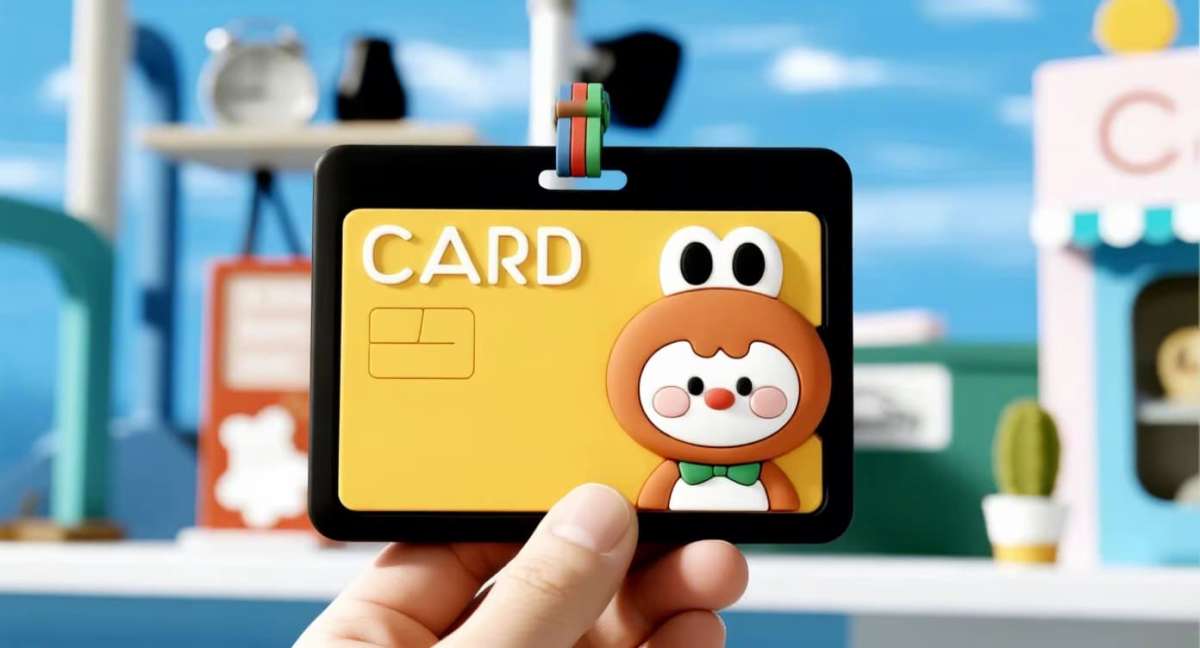
Multi-card capacity comes from wall geometry and friction, not from making the case bigger.
The three features that decide whether one card comes out alone
The common complaint about multi-card holders is that pulling one card spills the rest. Three features prevent it, all cut into the mould.
Slot friction
Silicone's natural grip holds each card with gentle, even pressure distributed across the whole face rather than at two points. The interior is non-abrasive, which matters for magnetic stripes: a case that scuffs the stripe shortens card life.
Thumb notch
A cut-out at the base gives leverage to slide one card out without straining the walls. Depth and position are worth prototyping: too shallow and the user pinches the stack, too deep and the bottom card is exposed to pocket grit.
Back wall and card spacing
Cards need a defined gap so they do not bind on each other. Get it wrong and the case works when new and jams after a month of warm-pocket use, when the silicone has taken a set.
Silicone is RF-friendly, so tap-to-pay cards work without removal when blocking is not required. If a brand needs RFID blocking, an added layer changes the construction and the tool — decide before the mould is cut.
Tooling a cartoon silicone card case around the artwork
Cartoon artwork is a moulding problem before it is an illustration problem. A raised character face needs draw depth, draft and a wall thick enough to fill; a fine line-art motif works better printed. Choosing the wrong method is the usual reason a sample looks nothing like the render.
Full-colour 3D moulded characters, printed faces and Pantone-matched bodies can all be produced on the same part. Because silicone holds pigment through the material rather than on top of it, colour survives washing and daily handling in a way that printed plastic does not. Samples are achievable in about ten days once the artwork is frozen.
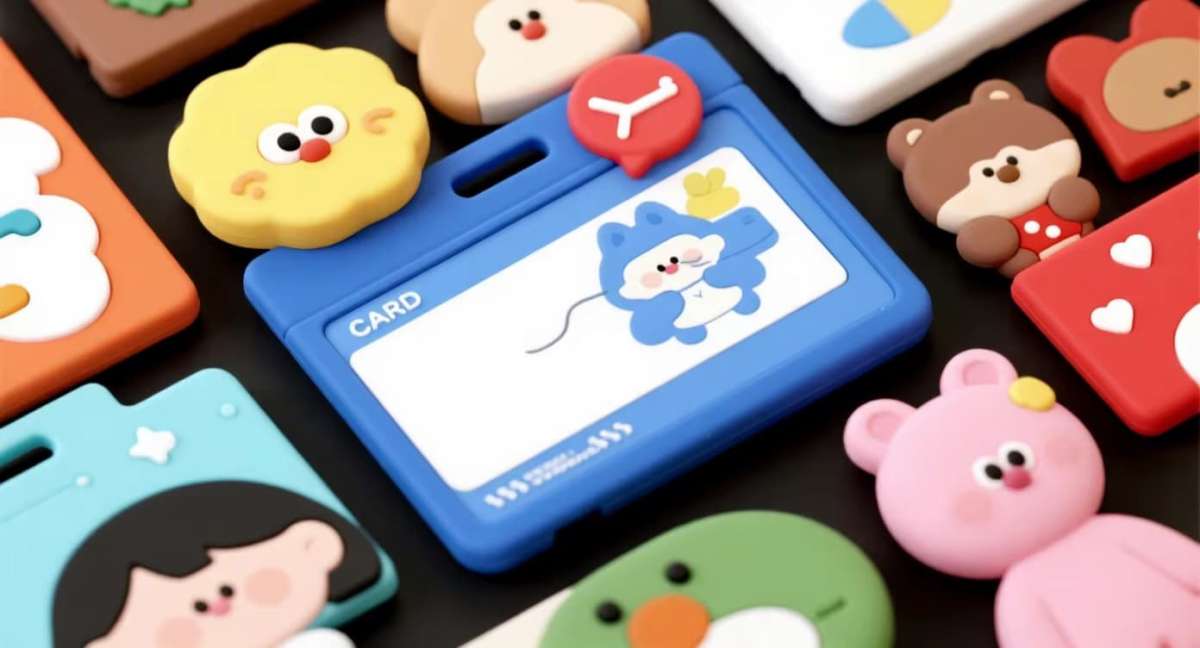
Moulded characters and printed artwork need different draft angles. The render does not show that difference; a first article does.
Matching capacity to the user before the tool is cut
Capacity is a market decision that becomes a technical constraint. The table maps the usual briefs to what each one does to the mould.
| Capacity | Typical carrier | What it changes in the tool |
|---|---|---|
| 2 cards | Gym membership, locker key card | Single slot, tightest wall |
| 3 cards | School or office badge plus transit pass | Slot depth set for badge thickness |
| 4 cards | Daily badge, ID and two bank cards | Deeper body, thumb notch position moves up |
| 6 cards | Wallet replacement, trade show use | Reinforced rear wall, wider gusset, longer cycle |
| 8 cards | Travel documents and family cards | Custom size, separate tool |
Every step up in capacity adds material and cycle time, and the price follows. Quoting a six-card case against a three-card drawing is how projects lose margin in the sampling stage.
Options that change the tool: RFID, lanyard and keychain
Accessories are usually treated as add-ons. In a moulded silicone case they are tool features, so they belong in the first drawing.
- Keychain hole — adds a reinforced eyelet and a local wall increase.
- Lanyard clip or wrist strap — changes the top edge and the balance of the part.
- RFID-blocking layer — adds a lamination step and a second material.
- Custom packaging — printed boxes or sleeves, quoted per size.
Volumes run from about 2,000 units for a school or bank promotion to 50,000 for a retail line, with 3D modelling, mould making, moulding and drop shipping in sequence. Fix the option list at quotation: adding a lanyard hole to a finished tool means cutting another one.
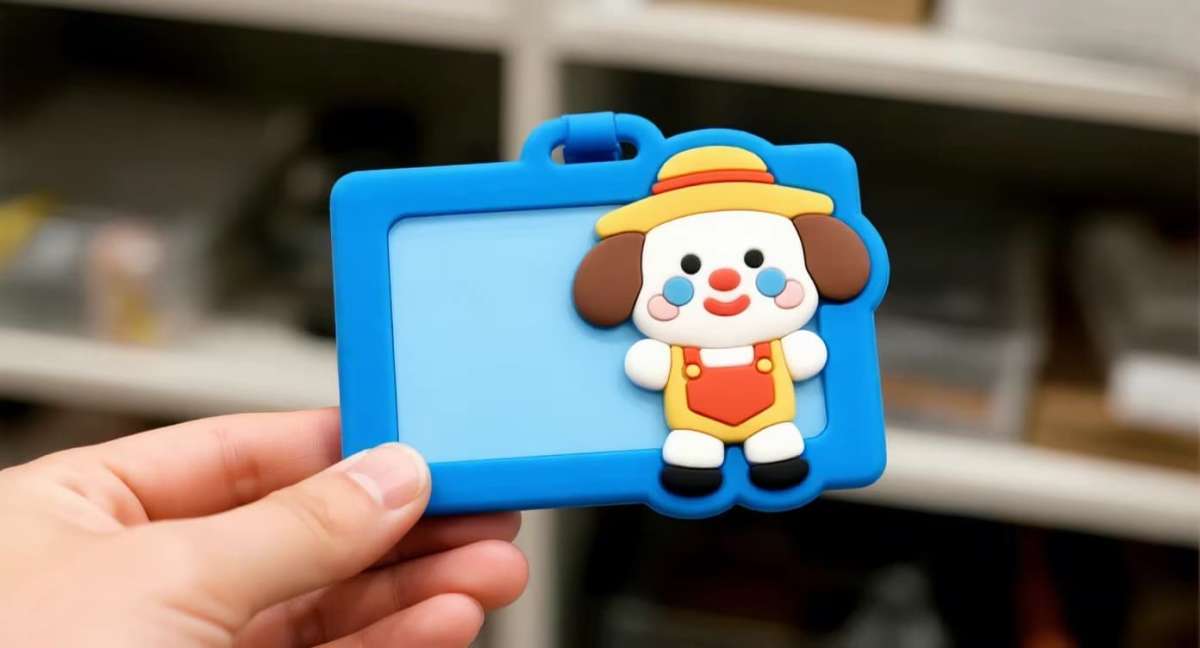
An eyelet, a notch and a blocking layer all alter the tool. Freeze the option list before quotation, not after sampling.
Questions brands ask about custom card cases
How many cards can one silicone case hold?
Three to six standard cards is the comfortable range, because the material expands and recovers. Two-card and eight-card versions are custom sizes, each with its own wall design.
Will a silicone case demagnetise a bank card?
No. Silicone is RF-friendly and non-abrasive, so tap-to-pay works without removing the card and magnetic stripes are not scuffed. Blocking is only added when a brand specifies it.
Can we change capacity after the first sample?
Only downwards, within the draft already cut. Adding capacity means a new cavity and a new tool. Approve capacity on the drawing, not on the sample.
How long does a custom programme take?
Sampling runs about ten days from frozen artwork. Add mould making and packaging development before that, and production and shipping after it.
Develop a cartoon silicone card case with the tool in mind
Send the artwork, the card count and the accessory list. We return a DFM note on wall thickness, slot depth and character draw before quoting, so the render and the sample match on the first pass.
Review the silicone ID and credit card holders range for reference formats, or see how mould making handles cartoon geometry.