Internal Resistance Tester Silicone Button: Achieving 500,000+ Cycle Life for Professional Use
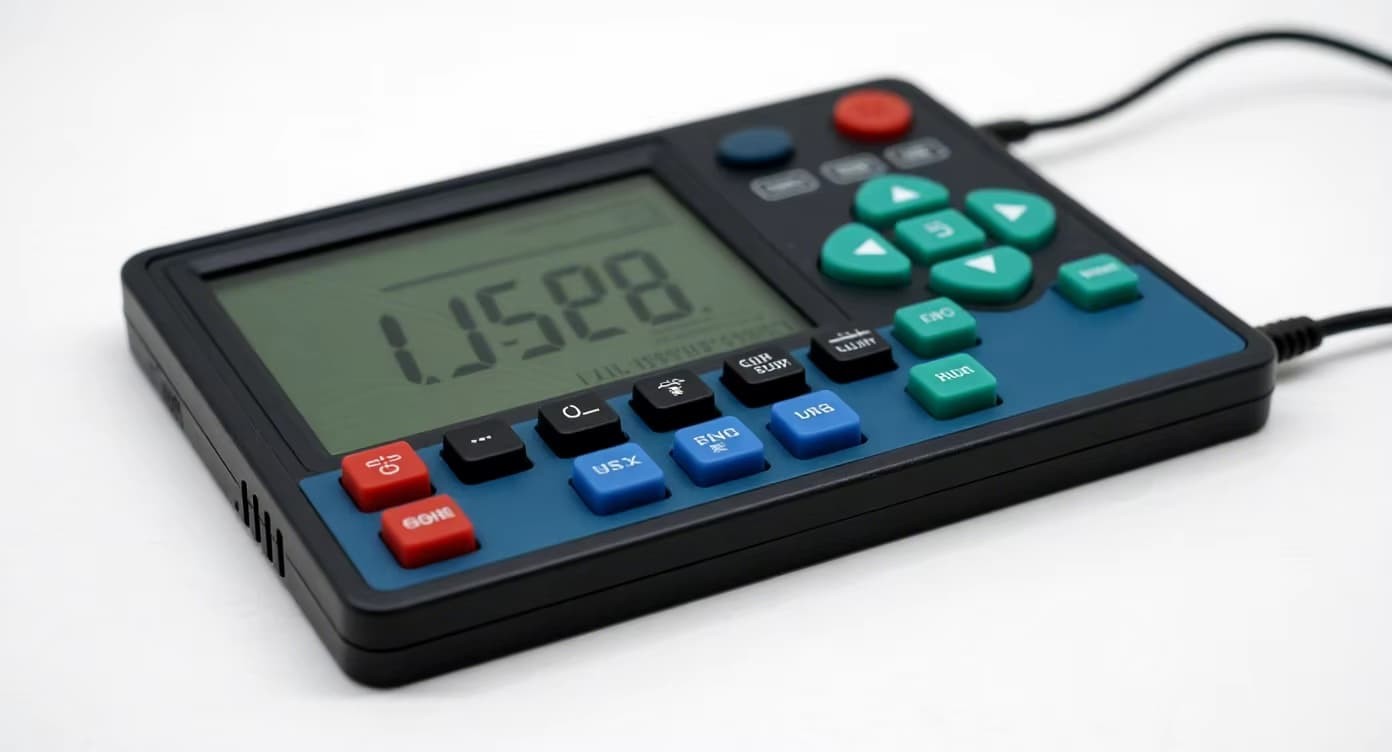
Internal resistance testers demand absolute precision — and their buttons must survive relentless daily use. While standard keypads fail before 100k cycles, FromRubber’s engineered silicone buttons achieve verified 500,000+ cycle life without tactile degradation. Here's how material science and smart design redefine professional durability.
1. The Challenge: Why Internal Resistance Testers Destroy Ordinary Keypads
Internal resistance testers are the workhorses of battery laboratories, EV service centers, and stationary energy storage maintenance. Technicians perform thousands of measurements daily, pressing the same "START", "STORE", and "COMPARE" buttons repeatedly under time pressure. Unlike casual-use devices, professional testers require absolute switch reliability — a single missed press can invalidate a test sequence or misdiagnose a battery string. Conventional rubber keypads and cheap silicone alternatives suffer from dome fatigue, contact resistance drift, and legend wear long before 100,000 cycles. FromRubber set out to solve this with a holistic engineering approach, achieving 500,000+ certified cycles while maintaining sub-20Ω contact resistance and crisp tactile feedback.
2. Core Technologies Behind 500,000+ Cycle Life
Achieving half a million reliable presses isn't accidental. FromRubber integrates four interdependent technologies into every internal resistance tester keypad.
High-Tear HCR Silicone
High consistency rubber with tear strength >30 N/mm (ASTM D624) — 2x industry average — prevents web tearing under repeated over-press.
FEA-Optimized Dome Geometry
Snap ratio precisely tuned to 45-55% with parabolic curve design — no abrupt force drop, eliminating false or missed triggers.
Gold-Plated Carbon Pills
Silver/carbon + gold flash coating reduces contact resistance drift to <5Ω over 500k cycles, ensuring consistent signal integrity.
2.4 Advanced Post-Curing & Siloxane Elimination
Low-molecular-weight siloxanes are the hidden enemy of long-life keypads — they migrate to the contact surface, increasing resistance and causing intermittent failures. FromRubber’s proprietary 4-hour post-curing at 200°C in forced-air ovens reduces siloxane content to below 0.01%, verified by FTIR spectroscopy. The result: stable electrical contact and a non-stick surface that resists workshop contaminants.
3. Validating 500,000 Cycles: Our Test Protocol
FromRubber doesn't claim longevity without proof. Every internal resistance tester keypad design undergoes a rigorous validation sequence before mass production:
- Dynamic life testing — Custom 16-station linear actuators, 2 cycles/second, monitored contact resistance every 50k cycles.
- Environmental conditioning — Test samples pre-conditioned at -20°C, +85°C, and 95% RH for 96 hours before cycling.
- Over-stroke test — 0.3mm additional travel beyond nominal actuation point to simulate heavy-handed users.
- Legend abrasion — 500,000 cycles of finger/fabric abrasion with visual inspection every 100k cycles (no fading allowed).
Only designs that pass all stages with <15% force change and <10Ω final resistance are approved for shipment. In our records, FromRubber keypads consistently exceed 620,000 cycles before any parameter exceeds spec.
Real-World Performance Data
Third-party lab tested FromRubber silicone buttons on a popular 6V/12V internal resistance tester. After 500,000 cycles: actuation force changed from 180gf to 192gf (+6.7%), contact resistance from 12Ω to 18Ω (still far below 100Ω threshold), and zero legend wear. The customer extended their warranty from 2 years to 5 years solely due to keypad reliability.
4. Design Customization for Professional Testers
Every internal resistance tester has unique ergonomic and electrical requirements. FromRubber offers deep customization to match your device’s PCB layout, housing material, and usage profile:
5. FromRubber’s Manufacturing Excellence for High-Cycle Keypads
Long life starts with precision molding. Our facility uses 100% clean-room compression and injection molding with automated material feeding to eliminate contamination. Every batch of silicone is tested for viscosity, tear strength, and compression set before production. Post-molding, each keypad undergoes laser trimming (for perfect edge consistency), plasma cleaning (to enhance carbon pill adhesion), and 100% tactile force sorting using robotic test stands. We also offer serialized traceability — so you can link every keypad to its raw material batch and molding parameters. This level of control is why FromRubber is the preferred supplier for internal resistance tester brands that demand zero field failures.
Specify 500,000+ cycle life on your next internal resistance tester
FromRubber provides engineering samples within 12 working days. Send us your PCB layout and force requirements — we'll return a DFM report and 3D model.
nani@fromrubber.com | www.fromrubber.com
6. Comparing Cycle Life: Standard vs. FromRubber Engineered Keypads
7. Certifications & Compliance for Professional Equipment
FromRubber silicone buttons meet or exceed requirements for professional battery testing equipment: UL 94 V-0 flame rating (for high-power testers), RoHS 3, REACH SVHC-free, and IATF 16949 process controls (automotive-grade reliability). We also provide full PPAP level 3 documentation upon request, including IMDS and CAMDS reporting for EV battery tester projects.
© 2026 FromRubber — Precision silicone keypads for internal resistance testers and battery diagnostic equipment. Custom solutions for 500k+ cycle life. ISO 9001:2025 & IATF 16949 certified.