How to choose the hardness of silicone keys/seals/plugs and other products
Silicone hardness is the first number most buyers specify and the one most often blamed for a problem it did not cause. Solid silicone for moulded parts usually runs from 30 to 80 Shore A, in steps of ten, and each step changes force, compression and tear behaviour in different proportions.
This guide maps hardness to part function, explains what it does not control, and sets out when the answer is geometry rather than a softer compound.
What Silicone Hardness Actually Controls
Shore A measures resistance to a small indentation under a defined spring load. In a moulded part it correlates with stiffness, return force and compression load, which is why it is used as shorthand for feel. It does not describe tear strength, compression set, temperature resistance or surface friction, and those four properties often decide whether a part works.
Two compounds at the same hardness can differ substantially in tear resistance and in compression set. A high-tear grade holds a thin web together during demoulding; a low-compression-set grade keeps a seal sealing after a year under load. Specifying only the hardness leaves those two open.
Choosing Silicone Hardness by Part Function
| Part | Typical silicone hardness | Reason |
|---|---|---|
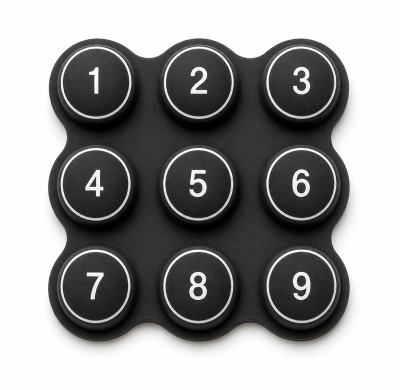
| Keypad and keyboard keys | 50 – 70 Shore A | Return force balanced against press effort |
| Seals and gaskets | 30 – 50 Shore A | Conforms to surface irregularities under low load |
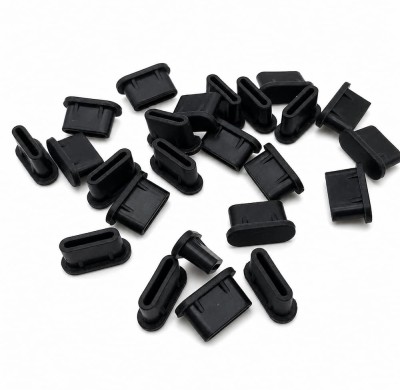
| Protective covers | 30 – 50 Shore A | Fits over a device without marking it |
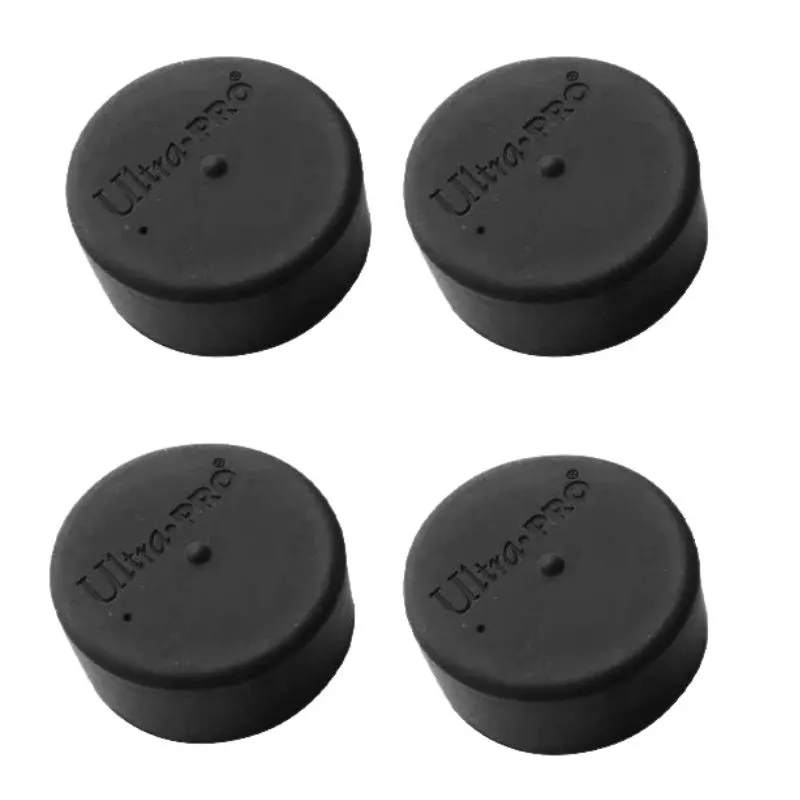
| Feet, pads and bumpers | 50 – 70 Shore A | Carries load without collapsing |
| Plugs and stoppers | 40 – 60 Shore A | Holds in a bore without tearing on removal |
| Rollers and wheels | 60 – 80 Shore A | Resists deformation under continuous load |
Why silicone hardness alone will not fix a seal
A leaking gasket is usually a compression problem. If the groove is too deep, even a 30 Shore A seal will not see enough squeeze; if the flange is too thin, a soft seal will still creep. The useful specification is the compression range the joint can apply, then a hardness and cross-section that sit inside it. Changing compound to solve a groove problem tends to move the leak rather than stop it.
Tolerances and Measurement of Silicone Hardness
Moulded silicone is typically supplied within plus or minus 5 Shore A of the nominal, and that tolerance is real: a 60 Shore A part may measure 55 to 65 depending on the batch and the test position. Design the function so that the tolerance band still works, rather than assuming the nominal value.
Measurement matters too. Shore A is read on a flat, thick enough section, at a stated temperature, after a defined delay. Reading it on a thin web or on a curved key face gives numbers that are not comparable between suppliers. If hardness is a release criterion, state the test method, the sample thickness and the conditioning.
For very soft parts, Shore A becomes insensitive and Shore 00 is the appropriate scale. That is common in gel-like pads and in very soft covers, and quoting a Shore A figure for them is misleading.
Specification tip: Write hardness as a band with a test condition, for example 60 plus or minus 5 Shore A measured on a 6 mm plaque after 1 second. A bare nominal number invites a disagreement that no measurement can settle.
When to Change Silicone Hardness Instead of Geometry
Change hardness when the part must carry a different load, when the assembly force is limited by hand strength, or when a seal must conform to a rougher surface. Change geometry when the part tears, when it will not stay in its groove, or when the force curve is wrong at one key but acceptable at another.
The distinction saves tooling. Hardness can often be changed by using a different compound in the same tool; geometry changes need steel. Conversely, if the problem is a thin web that tears, a tougher compound at the same hardness is the cheaper answer than thinning the web further.
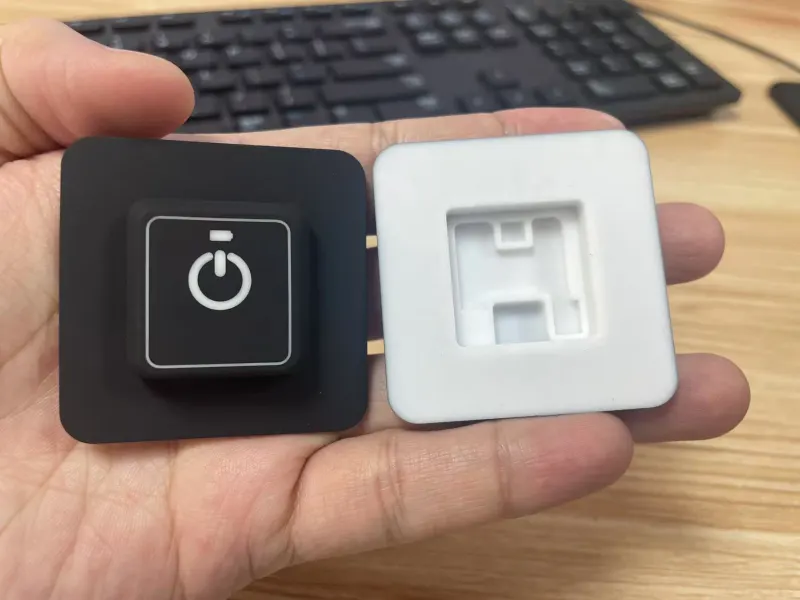
For keypads the interaction is direct: hardness raises the whole force curve, while web geometry sets the snap. Our tactile feedback guide explains why a change of hardness alone rarely fixes a key that feels dead.
A short silicone hardness checklist
- State Shore A with a tolerance band and a test condition, not a single number.
- Name the application load and the compression range, not only the hardness.
- Say whether tear resistance or compression set matters more, and add the grade.
- For parts below roughly 20 Shore A, use Shore 00 and say so.
- Agree which property the first-article report will measure besides hardness.
Is 60 Shore A the standard for silicone keypads?
It is the most common starting point because it balances return force against press effort. A keyboard for gloved industrial use often moves to 65 or 70 Shore A, while a laboratory instrument may sit at 50.
Does harder silicone last longer?
Not automatically. Harder compounds resist deformation better under static load, but they also transmit more stress to thin features and can wear legends faster. Life depends on the whole design, not on the hardness number.
Choose silicone hardness from the load the part must carry and the compression the joint can apply, state it as a band with a test condition, and name the grade property that matters alongside it. Then check whether the problem is really hardness, because half the time the answer is a groove, a web or a wall thickness.