Why Mold Steel Selection Matters More Than You Think
When you are developing a custom silicone protective case—whether for a smartphone, a pair of wireless earbuds, or a handheld medical device—one decision sits at the very foundation of your project: which mold steel grade to choose.
This is not a trivial procurement checkbox. The steel you select directly determines:
- Dimensional stability — how consistently your case fits the target device after 1,000, 10,000, or 100,000 cycles
- Tolerance holding — whether a ±0.05mm specification is maintained throughout the production run
- Mold lifespan — the difference between a tool that produces 50,000 parts and one that produces 500,000
- Upfront tooling cost vs. total cost of ownership — saving on steel often means paying more in maintenance, scrap, and downtime later
At FromRubber, we have engineered over 800 precision silicone molds across 15 years of operation. In this guide, we share our hands-on engineering framework for selecting the optimal mold steel for silicone case production—backed by real case data, material science, and measurable outcomes.
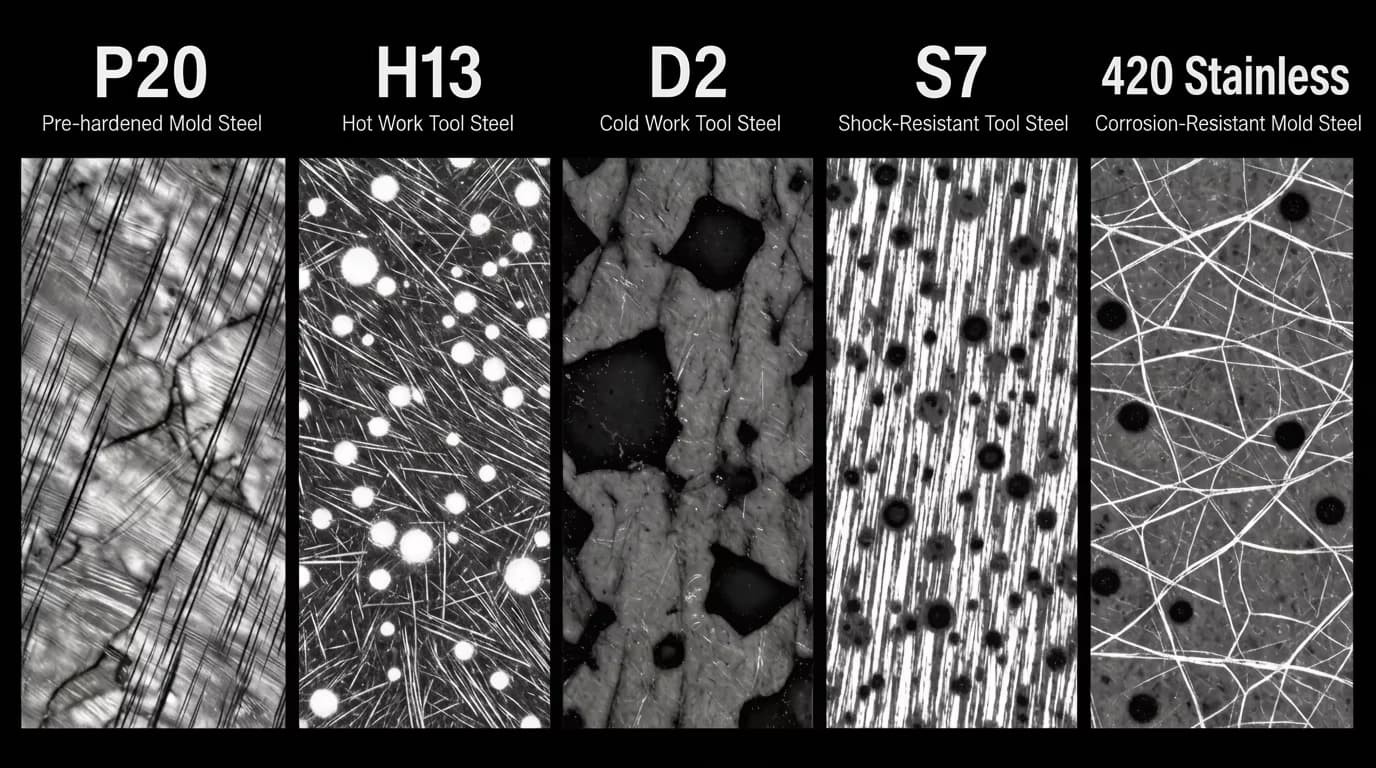
Fig 1: Microstructural comparison of common silicone mold steels. Image source: FromRubber Materials Lab.
The Real Pain: When a "Cheaper" Steel Costs You a Fortune
Here is a scenario we see repeatedly in our shop. A customer sends their part drawing with a critical fit tolerance of ±0.05mm on the corner snap features. The mold is built using a low-cost P20 steel (HRC 28–32) because the upfront quotation was 30% cheaper. For the first 3,000–5,000 cycles, everything looks fine. Then the trouble begins.
- At 5,000 cycles: The corner snap tolerance drifts from ±0.05mm to ±0.10mm. Cases start feeling loose during assembly.
- At 8,000 cycles: Tolerance reaches ±0.15mm. The quality department flags 12% of the batch as borderline reject.
- At 12,000 cycles: The customer files a formal complaint—the case-to-device gap is visible to the naked eye.
The root cause? P20 steel lacks the hardness and wear resistance needed to maintain precision cavity dimensions under repeated thermal and mechanical cycling. The initial 30% saving on tool steel was quickly wiped out by scrap losses, rework labor, and a damaged brand reputation.
⚠️ The hidden cost of underspecifying mold steel: Industry data suggests that every $1,000 saved on steel grade can result in $6,000–$12,000 in additional scrap, rework, and warranty costs over the mold's lifecycle.
Understanding Common Mold Steel Grades for Silicone Cases
Silicone itself is chemically mild compared to engineering plastics like PVC or POM. However, the thermal cycling (150–200°C), injection pressure (100–200 bar), and abrasive filler content in some silicone grades place real demands on mold steel. Below are the three steel families most relevant to silicone case molds.
S136H — Pre-Hardened 420 Stainless Steel (HRC 30–34)
S136H is the workhorse of silicone case mold production. As a pre-hardened martensitic stainless steel, it offers an ideal balance of corrosion resistance, polishability, and wear performance for medium-volume runs. Key characteristics:
- Corrosion resistance: Withstands mildly acidic byproducts from flame-retardant or heavily pigmented silicone compounds.
- Polishability: Achieves SPI A-2 finish (Ra ≤ 0.05 μm), ideal for textured or matte case surfaces.
- No post-heat treatment required: Pre-hardened at the mill, reducing lead time and eliminating distortion risk from heat treatment.
- Typical mold life: 50,000–100,000 cycles under normal silicone molding conditions.
NAK80 — High-Hardness Mirror-Grade Steel (HRC 37–43)
NAK80 is a precipitation-hardened nickel-copper alloy steel developed for high-gloss, mirror-finish applications. Its key advantages for premium silicone cases:
- Higher hardness: HRC 37–43 delivers superior wear resistance for long production runs (100,000–200,000+ cycles).
- Excellent mirror polish: Achieves SPI A-1 surface (Ra ≤ 0.025 μm), essential for transparent or translucent silicone cases.
- Uniform hardness through cross-section: No soft core, unlike case-hardened steels.
- Limitation: Not corrosion-resistant. Must be stored and operated in low-humidity environments to avoid surface rust.
P20 — General-Purpose Mold Steel (HRC 28–32)
P20 is a pre-hardened chromiun-molybdenum steel that remains popular for prototyping, short-run production, or non-critical parts. For silicone case applications:
- Lowest cost among the three options.
- Good machinability for quick mold fabrication.
- Not recommended for production runs exceeding 10,000–15,000 cycles on tight-tolerance silicone cases.
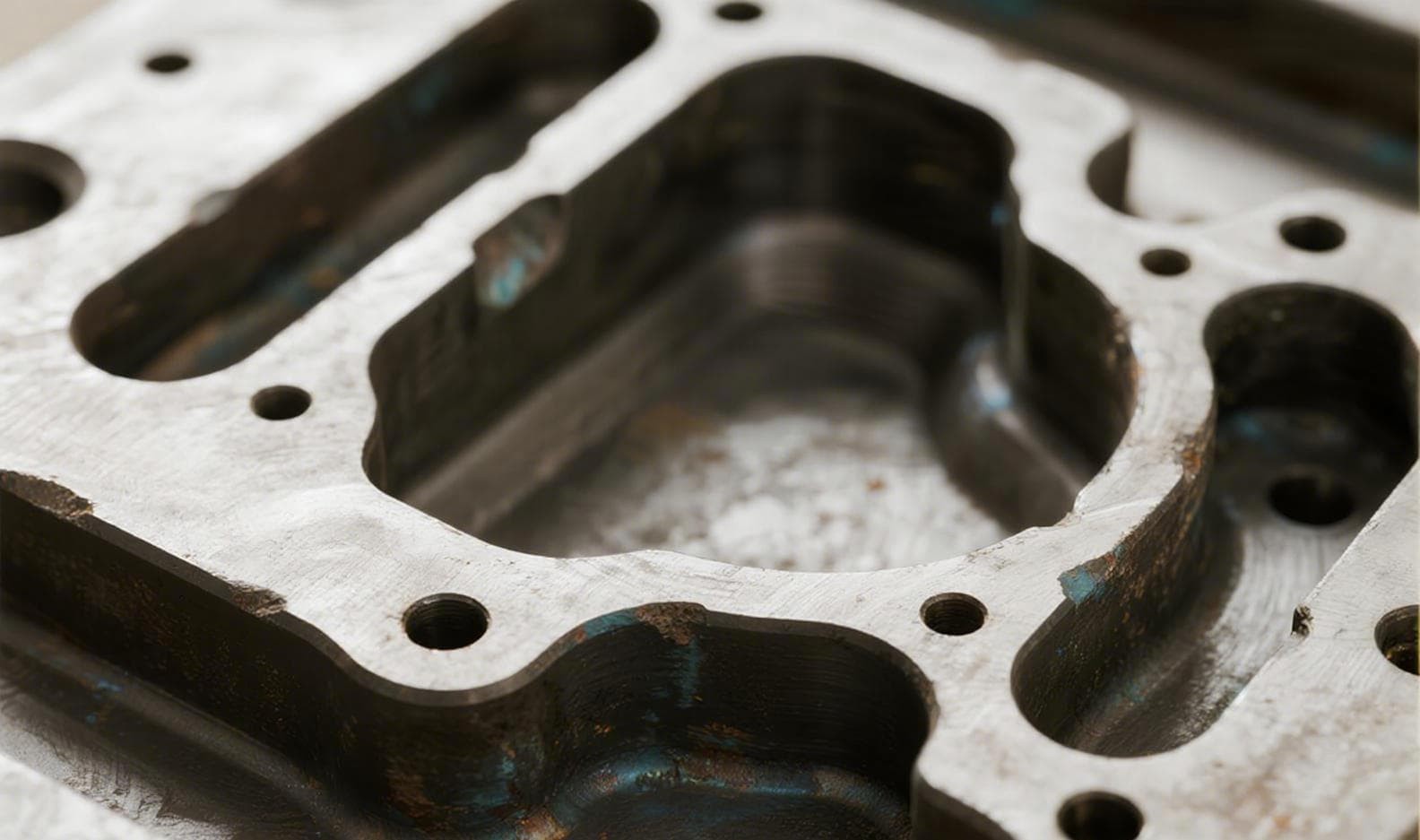
Fig 2: S136H cavity surface condition after 50,000 cycles. No measurable surface degradation. Photo: FromRubber QC Lab.
Hardness Ratings & What They Actually Mean for Your Mold
Hardness is measured on the Rockwell C (HRC) scale. The higher the number, the more resistant the steel is to plastic deformation, abrasive wear, and cavity surface degradation. But “higher is always better” is a dangerous oversimplification.
| Steel Grade |
Hardness (HRC) |
Typical Mold Life (Cycles) |
Corrosion Resistance |
Relative Cost |
Best Use Case |
| P20 |
28–32 |
10k–30k |
Low |
$ |
Prototypes, short-run, non-critical parts |
| 718H |
33–38 |
50k–100k |
Low |
$$ |
Medium-volume, general-purpose silicone |
| S136H |
30–34 |
50k–100k |
High |
$$ |
Sweet spot for silicone case molds |
| NAK80 |
37–43 |
100k–200k |
Low–Medium |
$$$ |
Long-run, mirror-finish, transparent silicone |
| S136 (Hardened) |
48–54 |
200k+ |
Very High |
$$$$ |
High-volume medical or food-grade silicone |
| M310 (Powder) |
54–58 |
500k+ |
Very High |
$$$$$ |
Ultra-high-volume, corrosive materials |
💡 Engineering insight from FromRubber: For typical 3C accessory silicone cases (production volume 30,000–100,000 units/year with ±0.05–0.10mm critical tolerances), S136H offers the best cost-to-performance ratio. It provides adequate hardness, stainless corrosion protection against silicone additives, and excellent polishability for textured surfaces.
How to Select the Right Steel by Production Volume & Tolerances
Mold steel selection is not about picking the most expensive option. It is about matching the steel's mechanical properties to your specific production parameters. Here is the decision framework we use at FromRubber for every new silicone case project:
| Production Volume |
Critical Tolerance |
Recommended Steel |
Expected Mold Life |
Cost per Part Trend |
| < 10,000 units |
±0.15mm |
P20 or 718H |
15k–30k |
Low (but high scrap risk beyond limit) |
| 10k–50,000 units |
±0.10mm |
S136H |
50k–80k |
Optimal for medium runs |
| 50k–150,000 units |
±0.05mm |
S136H or NAK80 |
80k–150k |
Best balance for premium cases |
| 150k–500,000 units |
±0.03–0.05mm |
NAK80 or Hardened S136 |
150k–300k |
Declining with volume |
| 500,000+ units |
±0.02mm |
Powder steel (M310) or DLC-coated H13 |
500k+ |
Lowest per-unit cost |
Additional Selection Factors
- Silicone type: LSR (liquid silicone rubber) requires tighter venting tolerances and benefits from stainless steels due to potential acidic catalyst byproducts. HCR (high-consistency rubber) is less demanding on corrosion resistance.
- Surface finish requirements: Mirror-finish cases (transparent/translucent silicone) demand NAK80 or hardened S136. Matte or textured cases perform well with S136H.
- Color and pigment load: High pigment loading (> 3%) may contain sulfur-bearing compounds. Stainless steel grades (S136H, S136) prevent surface pitting.
Real-World Case Study: From P20 to S136H
📋 Real Project — FromRubber Archive
Shenzhen 3C Accessory Brand: Silicone Phone Case Mold
Initial situation: A fast-growing Shenzhen-based 3C accessory brand contracted a low-cost mold maker who built their first silicone phone case tool using P20 steel (HRC 28–32). The critical fit dimension was the corner snap tolerance at ±0.08mm.
Problem development: By the time 8,000 units had been produced, the corner snap tolerance had drifted from ±0.08mm to ±0.15mm. Cases no longer held the device securely. Field return rate reached 5.2%. The brand faced a critical production stoppage.
FromRubber intervention: We replaced the P20 inserts with S136H (HRC 30–34), requalified the parting surface flatness to 0.008mm, and implemented in-process SPC (statistical process control) with per-batch dimensional sampling.
✅ Result: After 30,000 production cycles, the S136H tool maintained corner snap tolerances within ±0.05mm. Post-mold trimming was reduced by 60%. The brand's field return rate dropped from 5.2% to 0.4%. Total customer cost savings over 12 months: approximately $38,000 in avoided scrap, returns, and rework.
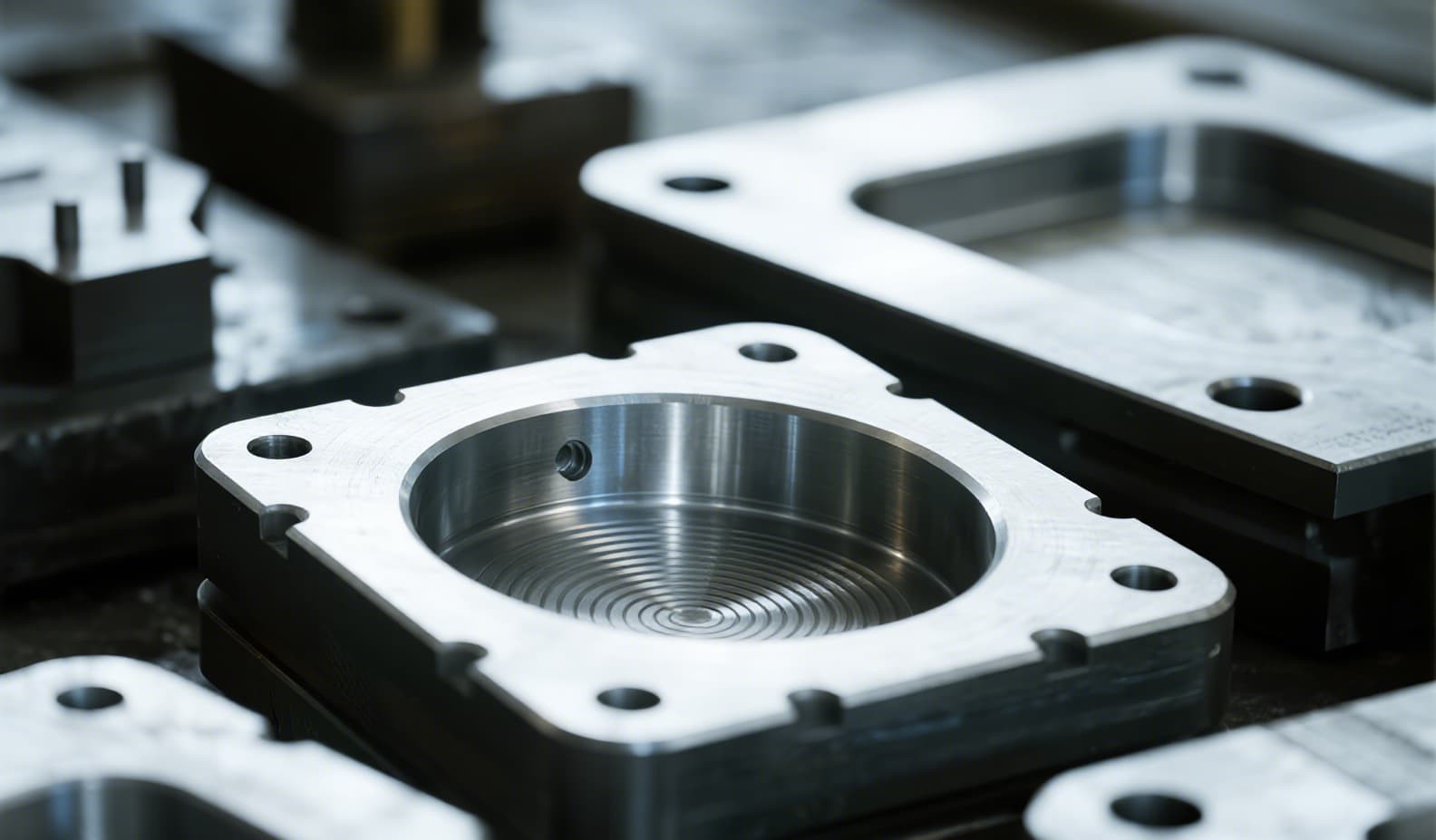
Fig 3: P20 over 30,000 cycles
Material Certification & Hardness Testing Protocol
Specifying the right steel on paper is only half the battle. You must also verify that your mold maker actually delivers what they promised. Here is the verification protocol we recommend for every silicone case mold project:
Required Documents from Your Mold Maker
- Material certificate (EN 10204 / ASTM A484): Must state the steel grade, heat number, chemical composition, and delivery condition (pre-hardened vs. annealed).
- Hardness test report: Documented Rockwell C (HRC) measurements taken at 3–5 positions on the cavity plates. Acceptable variance: ±2 HRC across positions.
- Heat treatment records (if applicable): Time-temperature profiles for quenching, tempering, and stress relieving.
On-Site Verification Steps
- Portable hardness tester (e.g. Leeb / Equotip): Spot-check the mold cavity surface before accepting delivery. Reject if hardness is more than 3 HRC below the specified minimum.
- Microstructure evaluation (optional, for high-volume tools): Request a witness coupon from the same steel batch for metallurgical lab analysis.
- Contract clauses: Clearly specify the steel brand (e.g., “Daido NAK80” or “Aisha S136H”), heat treatment standard, and minimum cavity hardness in your mold purchase agreement.
✅ FromRubber standard practice: Every mold we ship includes a signed Material Certification Report with physical hardness test results and a photo of the test indentation locations on the cavity plate. We also retain a 50mm × 50mm witness sample from the steel batch for 5 years.
Frequently Asked Questions About Mold Steel for Silicone Cases
Q1: Can I use the same mold steel for LSR and HCR silicone?
Yes. The steel selection criteria (hardness, corrosion resistance, polishability) apply similarly to both LSR and HCR. However, LSR injection molding tends to produce higher cavity pressure, so a slightly harder steel (NAK80 or hardened S136) is preferred for long-run LSR tools.
Q2: How do I know if my mold maker actually used the specified steel?
Require a material certificate and perform a spot hardness test with a portable Leeb tester before accepting the mold. If the measured hardness is more than 3 HRC below spec, request a metallurgical analysis of a witness coupon.
Q3: What is the cost difference between P20 and S136H for a typical phone case mold?
For a single-cavity silicone phone case mold (cavity plate approx. 250mm × 200mm × 50mm), the material cost difference is typically $200–$400. However, as our case study shows, this small upfront saving can result in thousands of dollars in scrap and rework costs when using P20 for precision applications.
Q4: Is NAK80 always better than S136H because it is harder?
No. Hardness is just one dimension. S136H offers superior corrosion resistance, which is important when molding silicone with flame retardants or heavy pigments. If your mold operates in a humid environment or uses corrosive silicone grades, S136H may actually outperform NAK80 despite having lower hardness.
Q5: Do you offer DFM analysis to validate my mold steel selection?
Yes. At FromRubber, we provide complimentary DFM (Design for Manufacturing) analysis for every new inquiry. Our engineering team evaluates your part geometry, material, production volume, and tolerance requirements to recommend the optimal steel grade before any steel is cut.
FromRubber Engineering Team
Precision Silicone Mold & Manufacturing
With over 15 years of dedicated silicone mold engineering experience and more than 800 custom mold projects delivered to clients across 20+ countries, the FromRubber team specializes in high-precision silicone case tooling for the 3C electronics industry. We are ISO 9001:2015 certified and operate a fully equipped mold shop with CNC, EDM, CMM, and a dedicated material testing lab.
Ready to Build Your Silicone Case Mold with the Right Steel?
Send us your 3D drawing or specification sheet, and our engineering team will provide a free DFM analysis with a steel grade recommendation tailored to your production volume and tolerance requirements. No obligation. Just expert guidance.
📧 Request Free DFM Analysis
Send your file to engineering@fromrubber.com