How to Choose a Silicone Keypad Manufacturer: 6 Essential Sourcing Guidelines for International Buyers
Six checks decide whether a supplier can hold keypad quality or only assemble parts: which process steps sit in house, whether a staged audit is accepted, and whether tooling terms are written down before the tool is cut.
Order matters: audit capability first, score it second, negotiate price last. A plant with in-house process control can be corrected inside one cycle; a plant that outsources coating can only forward your complaint.
Filter one: what the silicone keypad manufacturer must own
Keypad production in China is concentrated in Guangdong, Zhejiang and Jiangsu, with roughly 2,800 registered manufacturers as of 2025. About 15% hold the four capabilities the product needs in house — moulding, spray coating, laser engraving and finished-goods testing. The other 85% buy those steps in, and every handoff adds a queue, an inspection and a fresh reading of your drawing.
- Moulding — cavity layout, web thickness and the parting line that sets flash.
- Coating — the topcoat whose thickness fixes unlit colour and etch quality.
- Laser etching — the only step where a 0.1 mm stroke opens or closes up.
- Testing — force, travel and contact resistance measured on your parts.
Ask which steps sit inside the fence: a supplier that subcontracts coating cannot answer for a colour deviation, because the coater never saw the approved limit sample.
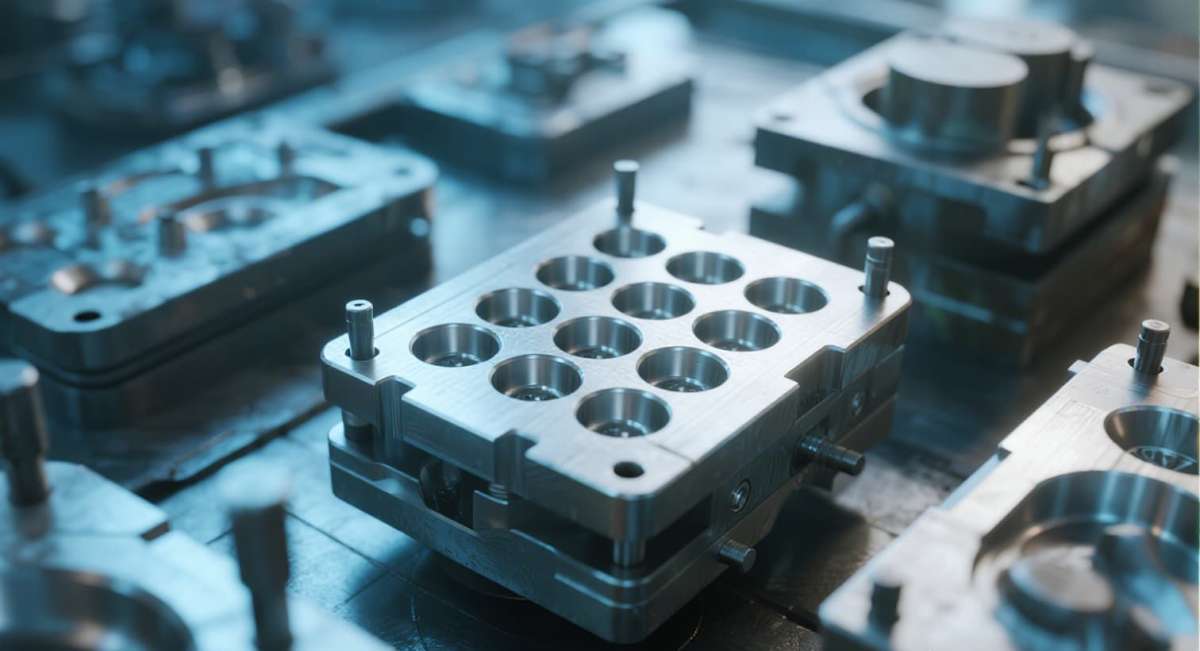
A mould makes the sourcing decision irreversible: cavity count, web thickness and gate position are fixed here, not in the purchase order.
The three-stage audit a serious factory will accept
Stage 1 — factory audit readiness
Document review before travel: an ISO 9001:2015 certificate checked against the issuing body's register rather than a PDF, twelve months of incoming inspection data, calibration certificates for every gauge used on your parts, and the complaint register with actions closed.
Stage 2 — during production, at 20–40% complete
The only stage where the product is still correctable. Check cavity condition and maintenance records, measure to ±0.1 mm against the 2D drawing, judge colour and engraving under D65 lighting, and pull five parts per cavity for force testing.
Stage 3 — pre-shipment inspection
Sampling to ANSI/ASQ Z1.4 at AQL 2.5 accepts a lot at no more than 2.5% defective. Agree the number in advance, or a rejection becomes a negotiation.
DUPRO pays for itself: at 20–40% completion a material error can still be remoulded on schedule.
Filter two: score the plant, not the presentation
When 400 procurement professionals weighted their criteria, the result followed cost of failure, not ease of measurement.
| Criterion | Weight | What to verify | Evidence that counts |
|---|---|---|---|
| Certification | 10% | ISO 9001:2015; ISO 13485 for medical | Certificate validated with the issuer |
| Tooling | 25% | S136H or 718H steel, ±0.02 mm, Ra 0.4 µm | Mould layout with gate and ejection detail |
| Delivery | 20% | Shipment history, not quoted lead time | Actual against promised dates |
| Traceability | 25% | Keypad linked to lot, cavity, operator, inspection | One batch traced end to end |
| Engineering | 20% | Answers within 24 hours from an engineer | DFM comment on your drawing before quoting |
Two figures make the first row concrete: 22% of Chinese factories audited by TÜV Rheinland in 2024 displayed expired or suspended certificates, and average on-time delivery across Chinese silicone manufacturers was 78% against 95% at top-tier plants.
Filter three: classification and the paperwork behind the price
Keypads are classified under HS 3926.9090, other articles of plastics. US duty typically falls in the 5–6.5% band depending on Section 301 exclusions, so a wrong code changes landed cost and clearance time; misclassified shipments have been reclassified mid-transit, adding 3–21 days.
Valuation should include FOB price, mould amortisation and engineering charges. The file that clears without argument holds a commercial invoice, packing list, bill of lading, certificate of origin where a trade agreement applies, and the compound safety data sheet.
Keypads ship as a declared article of plastics, so the customs file must match the bill of materials.
What a DUPRO inspection catches that a final check cannot
A European equipment manufacturer ordered 15,000 keypads at 60 Shore A. Third-party DUPRO inspection returned 72–74 Shore A, roughly 20% harder: the moulder had substituted a cheaper compound without notice. Because the finding landed during production, the order was remoulded on schedule.
The inspection cost $680 against an estimated $20,000 field recall in parts and freight, before liability for malfunction — 0.5% of order value buying a tenfold protection.
Hardness is the cheapest proxy for compound substitution and the easiest property to fake on paper. Specify the Shore A tolerance, test method and sampling rate in the purchase order, then require a gauge reading per cavity.
Remote verification when travel is not practical
A structured virtual audit is not a video call. It needs a live walk-through of moulding, coating and test areas, force testing on parts pulled at random during the call, calibration stickers read on camera, and records shared on screen for a batch you name. A plant that schedules this inside 48 hours, with an engineer present, can be shortlisted before anyone books a flight.
A remote audit is only as good as its randomness: parts must be pulled during the call, not presented on a tray.
Sourcing questions buyers ask before the first order
Is ISO 9001:2015 enough for a medical keypad?
No. It covers quality management generally. Medical interfaces usually require ISO 13485, a compound certificate supporting biocompatibility, and documented change control for substitution.
Should tooling be paid separately or amortised?
Separately, whenever volume is uncertain. An itemised fee keeps the part price honest, makes ownership negotiable and lets you move the tool. Amortising suits runs below roughly 5,000 pieces.
What must the purchase order fix before tooling starts?
Shore A with tolerance, web thickness, actuation force in grams-force, legend stroke width, unlit colour reference, AQL level and mould ownership.
Send the drawing before you send the RFQ
A DFM review shows which legends are too fine to etch, where the web is too thin, and whether your force target is reachable at that hardness.
Start with the custom silicone rubber keypad range, or read the custom silicone service process.