FromRubber-What are our advantages compared to other factories?
Choosing a silicone manufacturer is usually done on price and samples, then re-done eighteen months later when a change of compound goes unannounced. The evaluation that prevents the second round is mostly about capability and change control rather than price.
This article lists what a manufacturer should be able to show, using our own operation as the worked example, so the checklist is concrete rather than theoretical.
What a Silicone Manufacturer Should Be Able to Show
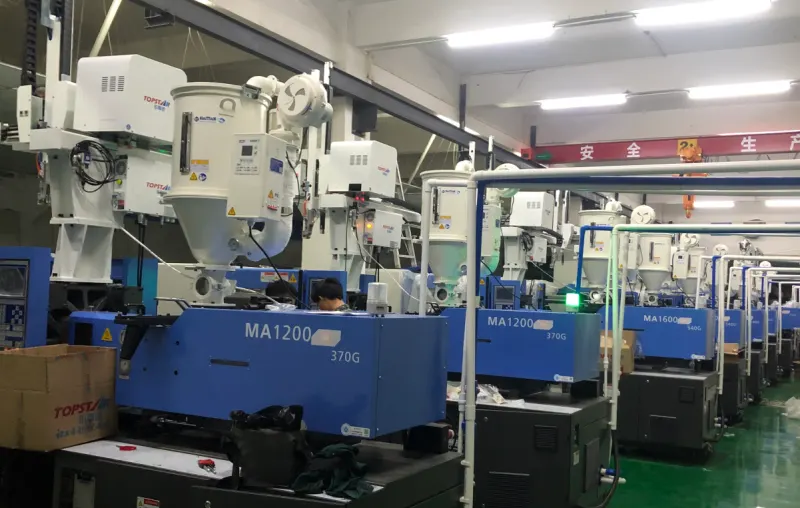
Five things: the machines that will run your part, the tool room that will make the tool, the materials held in stock, the secondary processes the part needs, and the quality documents the finished part will carry. If any of those is outsourced, say so, because it changes the schedule and the responsibility.
Ask for the process route in writing: which press type, how many cavities, who makes the tool, and which operations happen in-house. A manufacturer who can describe that route for your specific part is quoting a process. One who describes a general capability is quoting a wish.
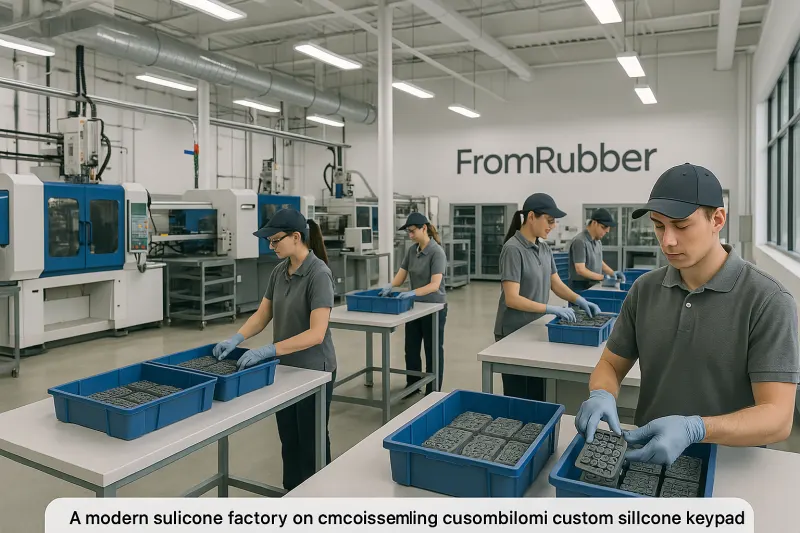
Capability: What This Silicone Manufacturer Runs In-House
| Capability | In-house coverage | Why it matters to a buyer |
|---|---|---|
| Tool making | Mould design and manufacturing | Tool changes and repairs do not wait on a third party |
| Moulding | Compression, injection and liquid silicone | The process can be chosen for the part, not for the machine available |
| Printing | Screen printing of legends and graphics | Legend and geometry stay registered |
| Surface | Spray coating and laser etching | Backlit and wear-resistant legends |
| Finishing | Deflashing, punching, machining | Tolerances finished after moulding where needed |
| Assembly | Adhesive, inserts and sub-components | Fewer suppliers and a shorter tolerance chain |
Why in-house tooling at a silicone manufacturer changes the schedule
Tooling is the step that decides the calendar. When the tool room sits in the same building as the press, a DFM change is a conversation rather than a purchase order, and a repair after a first-article issue takes days instead of weeks. It also makes the prototype stage cheaper, because a simple tool can be cut without committing production steel. That is the practical meaning of a manufacturer having its own tooling, and it is worth more than most of what appears on a capability brochure.
Materials, Processes and Certifications
A useful material range covers general purpose, food contact, medical, conductive, anti-static, high temperature, high elasticity and flame-retardant grades. A range on a website is not the same as stock: ask which grades are held and which are ordered per project, because the ordered ones add lead time.
Certifications should be current and specific: quality management, environmental management and, for automotive work, the automotive quality standard. Ask for the certificate scope, not just the certificate, because scope defines which processes and sites are covered.
Process coverage matters as much as material coverage. A part that needs printing, coating and laser etching from three different suppliers will accumulate tolerance and delay at every handover.
How to Compare Two Silicone Manufacturers
Compare on five lines: process route, tool ownership and maintenance, change notification, first-article scope and capacity for your volume. Price comes after those, because a lower price with an unclear route is a risk rather than a saving.
Ask what happens when a batch fails. A manufacturer with a defined non-conformance process will describe containment and root cause; one without will describe goodwill.
Finally, ask for two references in a similar application. Not the largest customer, a similar one, because the useful question is whether the same kind of part was delivered repeatedly at the same quality. The same five-part scorecard works when you are screening a rubber products supplier for a non-silicone part.
Commercial terms that protect a silicone programme
- Tool ownership, maintenance responsibility and refurbishment interval.
- Written change notification for compound, sub-supplier and process changes.
- First-article report scope, and who pays for re-validation.
- Price validity period and the volume bands behind each price.
- Packing, labelling and traceability standard, including batch identification.
Should a silicone manufacturer be audited before the first order?
For a production programme, yes, even if the audit is a video walk-through and a document review. The two things worth seeing are the tool room and the inspection area, because they determine schedule and consistency.
Does a large silicone manufacturer always beat a smaller one?
No. A smaller factory can be faster on tooling changes and more responsive on small batches. What matters is whether the process route for your part is under one roof and whether the quality system covers it.
Evaluate a silicone manufacturer on process route, in-house tooling, material and process coverage, current certification scope and change control. Then compare price. A factory that can describe how your specific part will be made, and what it will do when a batch fails, is the one worth a production order.