Custom Silicone Protective Cases for Electronics: Top 10 OEM Manufacturers in China
Sourcing an electronics protective case in China is easy. Reading the numbers factories publish is not. Floor area, press count, minimum order and colour tolerance each predict something different about surviving a 1.8 m drop and two years of pocket wear. The silicone accessory market behind those factories ran at about USD 5.6 billion in 2025 and is projected to reach USD 10.2 billion by 2034, a 6.9% CAGR driven by 5G devices, IoT sensors, wearables and portable medical electronics.
Rank suppliers on four verifiable things: overmolding capability, the quality system behind the certificate, capacity against your ramp, and colour control as Delta E.
Why silicone suits an electronics protective case
Silicone holds the position because it fails gradually. Impact is absorbed by deformation rather than passed into the housing, properties hold from -55°C to 250°C, and the compound resists hand oils, solvents and cleaners.
- Shock absorption — load is taken up by deformation, not the PCB.
- Thermal window — -55°C to 250°C, dashboard to autoclave.
- Chemical resistance — hand oils, sunscreen, IPA wipes.
- Overmolding — bonded to plastic or metal in one cycle.
- Colour in the mould — no paint layer to chip.
Hardness, wall thickness and mould design decide how one part behaves: two suppliers can quote the same drawing and deliver different drop results.
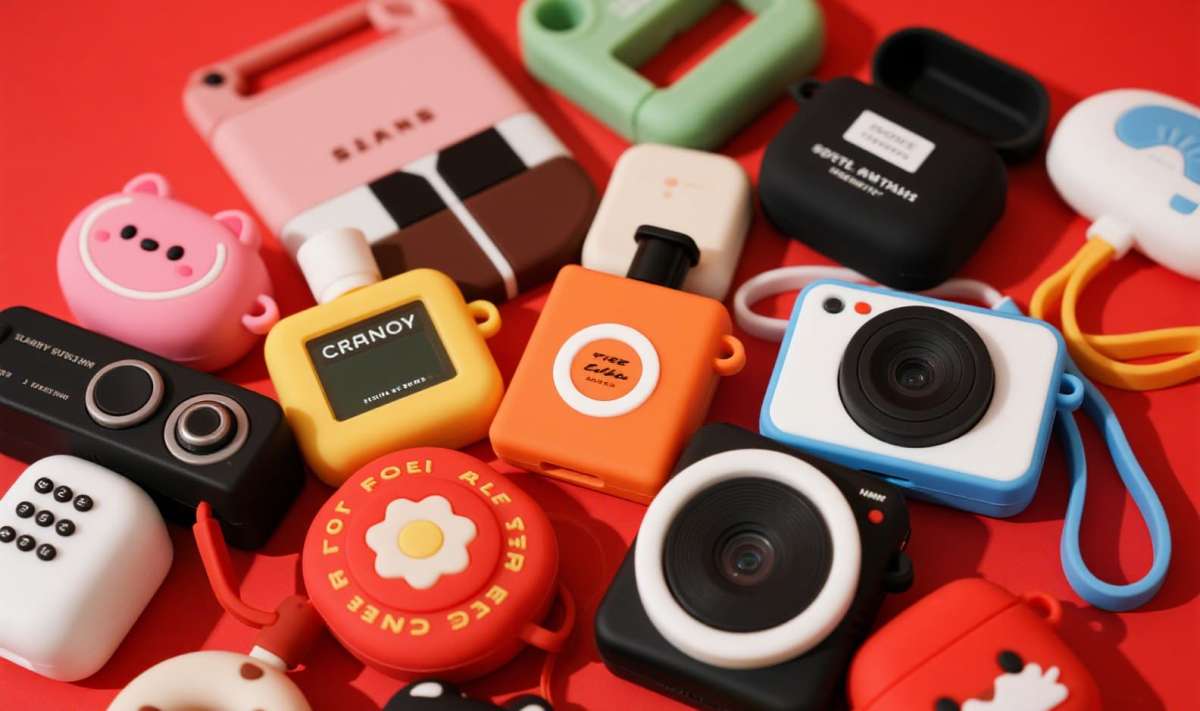
A moulded silicone shell protects by deformation. How far it deforms before the housing takes load is a design decision.
What the capability numbers actually predict
Read the 2026 top-ten data as constraints, not a league table. Press count and floor area cap monthly output. MOQ shows which stage of a product's life the factory is built for. DFM turnaround shows how fast a design error surfaces.
| Supplier | Facility and presses | MOQ per design | Sampling / DFM |
|---|---|---|---|
| FromRubber (Dongguan) | 15,000 m², 220+ machines 40T–500T | 100–500 pcs | DFM in 2 hours |
| Xinjiahui (Shenzhen) | 8,000 m², 55 presses, 25 LSR lines | 1,000 pcs | 5-day sampling |
| Anyun (Dongguan) | 5,000 m² ISO Class 8 cleanroom, 35 presses | 2,000 pcs | USP Class VI materials |
| Lianhe (Kunshan) | 6,500 m², 40 presses | 500 pcs | DFM within 24 hours |
| Seasky (Guangzhou) | 4,200 m², 30 machines | 1,000 pcs | 7–10 business days |
| Tianyi (Xiamen) | 3,000 m², 22 presses, thin-wall | 2,000 pcs | DFM in 2–3 days |
| Huafeng (Ningbo) | 3,800 m², 25 presses | 3,000 pcs | Delta E 1.8–2.2 |
| Jiaxin (Shantou) | 1,800 m², 8 presses | 5,000 pcs | 14–20 business days |
A 500-piece minimum and a 5,000-piece minimum are different businesses. The low-MOQ plant changes moulds often and holds colour on short batches; the high-volume plant amortises tooling over long runs.
Overmolding: cost and drop performance
An industrial tablet maker bought a silicone bumper and a polycarbonate back shell as two parts and assembled them by hand. Bonding liquid silicone directly to the polycarbonate removed that step: the enclosure passed 20 consecutive 1.8 m drops onto concrete and cut cost by 25%.
A bonded interface cannot work loose, so impact travels through the whole shell instead of concentrating at clips, and the stack-up tolerance behind a rattling fit disappears. Published figures put drop-test improvement near 40% against separate components.
Overmolding only pays when the substrate is designed for it: a clean textured bonding surface, enough wall behind the silicone, and a gate that keeps weld lines out of the impact zone.
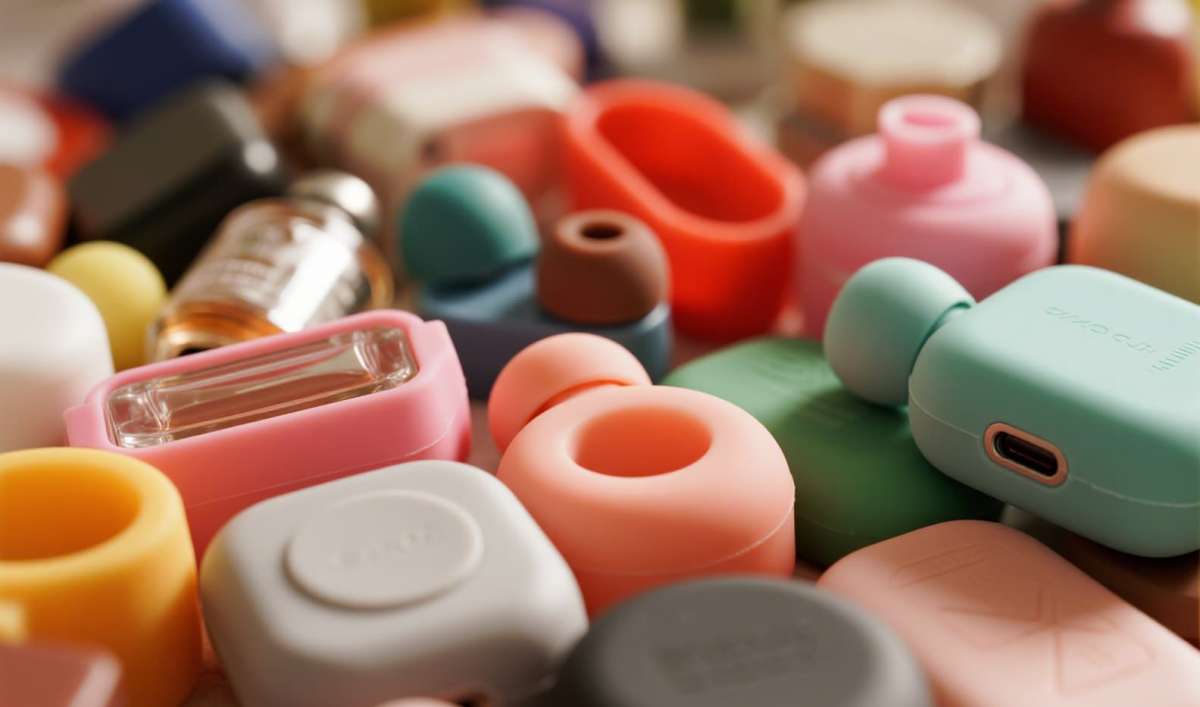
Multi-colour dispensing puts the brand colour in the mould: no paint layer to chip, no second process to schedule.
Hardness and wall thickness for the device in front of you
Hardness is the specification most often copied from a previous project. It should follow handling; this supplier group covers 30 to 80 Shore A.
- 30–50 Shore A — wearables, where comfort outweighs rigidity.
- 50–60 Shore A — handheld electronics, balanced for grip and shock.
- 60–80 Shore A — industrial cases that resist abrasion.
Hardness and wall thickness are fixed together: a soft compound in a thin wall behaves stiff, and neither can be changed cheaply once the tool exists.
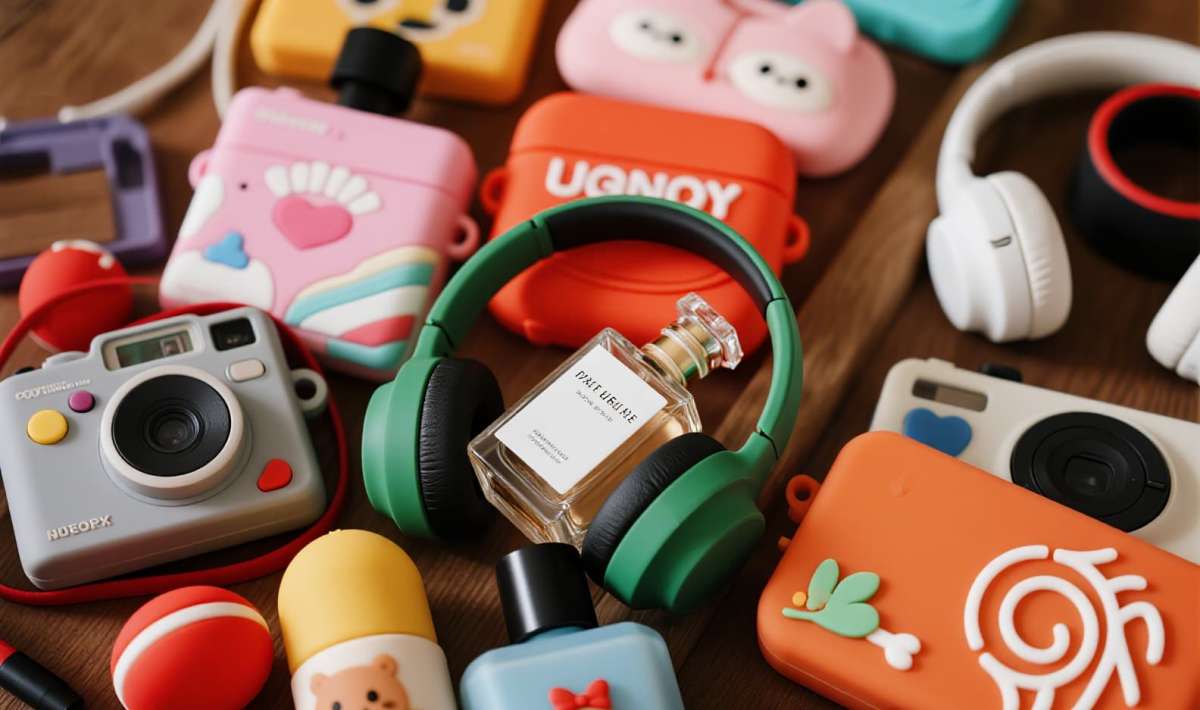
Port openings, button pads and texture cut into the same tool each thin the wall.
What to send for a custom silicone case quotation
A quotation is only as good as its input. Five items remove most of the ambiguity:
- 3D model and 2D drawing with wall thickness, draft and critical dimensions.
- Target hardness in Shore A and the feel to reproduce.
- Pantone references with the acceptable Delta E.
- Drop height, surface and cycle count from your protocol.
- Annual volume, launch quantity and expected ramp.
Certification belongs in the same conversation. IATF 16949 is the strictest option here, ISO 9001 the baseline, ISO 13485 the medical entry point where USP Class VI evidence is also required. Verify the certificate number in the issuing body's database, then ask what is measured per batch: durometer, tear strength, compression set, thermal cycling from -40°C to 125°C.
The consumer electronics overview shows how these programmes are structured; over-molding covers substrate conditions.
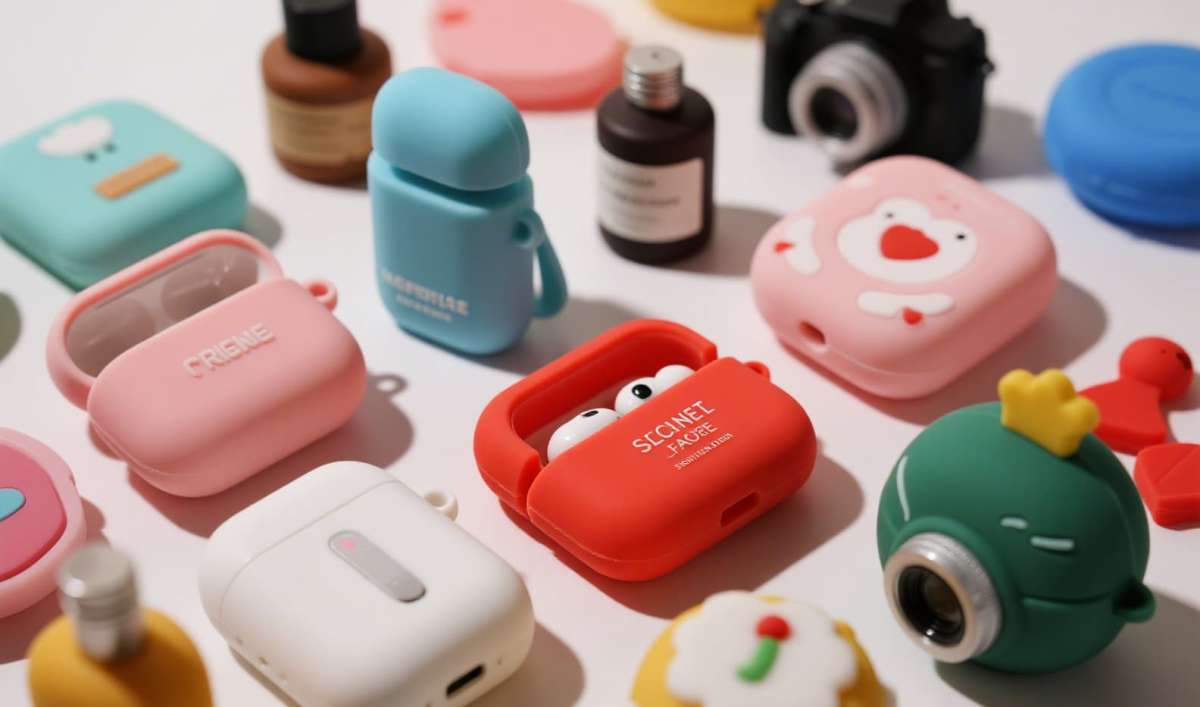
Samples that vary hardness and colour let a brand team decide on a physical part, not a specification sheet.
Questions buyers ask about silicone case suppliers
Is a top-ten ranking a reliable way to choose a supplier?
Only as a shortlist. Your project is decided by hardness, wall thickness, drop height and volume, so compare three candidates on their DFM response.
Does overmolding always reduce cost?
It cuts assembly labour and part count, and the recorded case shows a 25% reduction against a two-part bumper and shell. Tooling cost rises because both a plastic and a silicone tool are needed, so below a few thousand units the saving rarely covers it.
How tight should colour tolerance be?
Delta E under 0.5 is achievable with multi-colour dispensing and is what brand-colour work normally requires. Plants running Delta E 1.8 to 2.2 look different side by side.
Can silicone cases be branded after moulding?
Yes — laser engraving, pad printing and embossing are all used. In-mould dispensing stays the most durable because there is no added layer to peel.
Start an electronics protective case project with a DFM review
Send a 3D model, target hardness and your drop protocol. We return wall-thickness feedback before tooling, quote tool and unit price on the same drawing, and supply samples at two hardness grades.
Review the custom silicone case range, or follow the custom silicone service process from DFM to first-article approval.