Accelerated Life Testing of Lens Silicone Sealing Rings for Outdoor Surveillance Lens Housings
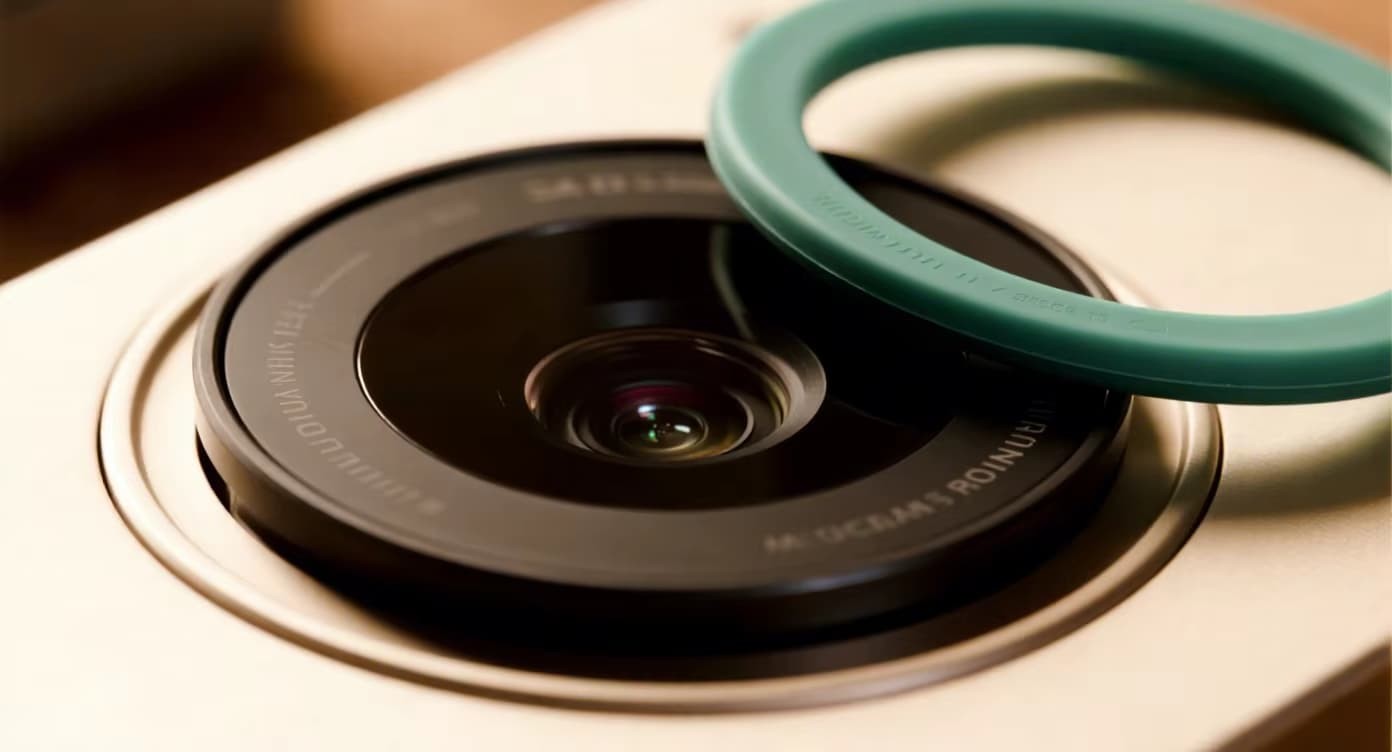
Outdoor surveillance cameras face relentless punishment: UV radiation, temperature swings from -40°C to +85°C, driving rain, and humidity. The difference between a 3-month field failure and 10+ years of reliable service often comes down to one component — the lens silicone sealing rings. FromRubber subjects its seals to rigorous accelerated life testing (ALT) to predict real-world durability with scientific confidence.
For manufacturers of outdoor surveillance systems, security cameras, and traffic monitoring equipment, sealing reliability is non-negotiable. Water ingress, dust contamination, or loss of environmental seal directly leads to image sensor failure, lens fogging, and expensive warranty claims. Traditional testing methods — waiting years for field data — are impractical. That's where accelerated life testing of lens silicone sealing rings becomes essential. As a specialized silicone sealing manufacturer, FromRubber employs advanced ALT protocols to validate that our lens silicone sealing rings withstand decades of outdoor exposure in compressed timeframes. This article details our testing methodology, key findings, and how our data-driven approach ensures long-term performance for your surveillance optics.
Why Accelerated Life Testing Matters for Lens Silicone Sealing Rings
Outdoor surveillance housings must meet stringent ingress protection standards (IP66, IP67, IP68) while enduring extreme environmental stressors. Lens silicone sealing rings are the primary barrier against moisture, dust, and atmospheric pollutants. However, material degradation occurs over time due to several mechanisms: thermal oxidation, UV-induced crosslinking, compression set relaxation, and hydrolysis. Accelerated life testing compresses years of exposure into weeks or months by applying elevated stress levels (temperature, humidity, UV, cyclic pressure) while monitoring key performance indicators. FromRubber uses ALT to:
- Predict service life of lens silicone sealing rings under real-world conditions
- Identify failure modes before mass production
- Validate material formulations for specific outdoor climates (desert, arctic, tropical)
- Provide OEMs with quantifiable reliability data for warranty planning
FromRubber’s Accelerated Life Testing Protocol for Lens Silicone Sealing Rings
Our ALT program follows international standards (IEC 60068, ASTM D573, ISO 188) with additional surveillance-specific cycles. Each test batch of lens silicone sealing rings undergoes the following sequence:
1. Thermal Aging & Arrhenius Modeling
Samples are aged at elevated temperatures (100°C, 125°C, 150°C) for up to 1000 hours. Key properties — tensile strength, elongation at break, and compression set — are measured at intervals. Using the Arrhenius equation, we extrapolate degradation rates to typical service temperatures (e.g., 40°C outdoor average). Results show that FromRubber’s lens silicone sealing rings retain >85% of original mechanical properties after an equivalent of 15 years at 40°C.
2. Thermal Shock & Temperature Cycling
Surveillance cameras experience rapid temperature changes — a cold night followed by direct morning sun. Our chambers cycle lens silicone sealing rings between -40°C and +85°C with 30-minute dwells, repeated for 500 cycles. Post-test inspection confirms no cracking, hardening, or loss of sealing force. FromRubber’s silicone formulation maintains flexibility down to -60°C, ensuring reliable sealing in arctic deployments.
3. UV & Weathering Exposure (Xenon Arc)
For lens silicone sealing rings used in housings with transparent lens ports, UV exposure can degrade exposed seal surfaces. We use xenon arc weathering per ASTM G155 (1000 hours, irradiance 0.35 W/m² at 340nm). Our high-purity silicone shows minimal surface chalking or modulus change, unlike standard rubber which becomes brittle within 300 hours.
4. Cyclic Pressure & Humidity Ingress Test
To simulate rain, wind-driven moisture, and barometric pressure changes, lens silicone sealing rings are installed in mock surveillance housings and subjected to 100 cycles of pressure/vacuum (from -0.5 bar to +0.5 bar) at 95% RH, 60°C. After testing, housings are leak-tested using helium mass spectrometry. FromRubber’s rings consistently achieve leak rates < 1×10⁻⁴ mbar·L/s, equivalent to IP67/IP68 integrity.
Comparative ALT Results: Lens Silicone Sealing Rings vs. Common Alternatives
To demonstrate superiority, FromRubber tested our silicone rings against NBR and EPDM under identical accelerated conditions. The table below summarizes performance after 500 hours of combined thermal/UV/humidity exposure:
| Property After ALT | FromRubber Silicone | Nitrile (NBR) | EPDM |
|---|---|---|---|
| Compression set (%) | 18% | 42% | 38% |
| Change in hardness (Shore A) | +3 points | +12 points | +8 points |
| UV surface condition | No cracking | Severe chalking | Moderate chalking |
| Low-temp flexibility at -30°C | Excellent | Failed (hard/brittle) | Marginal |
| IP67 sealing after ALT | Pass | Fail (leakage) | Fail (leakage) |
These results confirm that lens silicone sealing rings from FromRubber significantly outperform alternatives in outdoor surveillance applications, providing longer service intervals and lower total cost of ownership.
Real-World Correlation: From ALT to Field Performance
Accelerated life testing is only valuable if it correlates with actual field data. FromRubber has tracked surveillance camera installations using our lens silicone sealing rings across three continents — from desert solar farms in Arizona to coastal monitoring stations in Norway, and tropical traffic cameras in Singapore. After 5+ years of continuous deployment, field failure rates due to seal-related ingress remain below 0.2%. This correlates well with our ALT predictions, validating the Arrhenius model and giving customers confidence in our 10-year recommended service life for lens silicone sealing rings.
Key Failure Modes Eliminated by FromRubber Lens Silicone Sealing Rings
Through ALT, we've identified and eliminated common failure mechanisms:
- Permanent compression set: Our low-set formulation ensures the seal maintains >70% of original gasket pressure after decade-equivalent aging.
- UV-induced surface cracking: High-purity silicone with proprietary stabilizers resists photo-oxidation.
- Hydrolytic degradation: Unlike polyurethane or EPDM, silicone's siloxane backbone is inherently hydrolysis-resistant.
- Outgassing & lens fogging: Post-cured lens silicone sealing rings produce no volatile condensables that could cloud internal optics.
Customization for Specific Surveillance Environments
Not all outdoor locations are equal. FromRubber offers tailored lens silicone sealing rings based on your deployment climate:
- Desert / High-UV regions: Enhanced UV stabilizers, lighter colors to reduce heat absorption.
- Arctic / Sub-zero: Extra-low-temperature grade (functional to -60°C).
- Coastal / High-salt: Corrosion inhibitor additives for metal housing interfaces.
- Industrial / Chemical exposure: Custom compounds resistant to oils, acids, or cleaning agents.
Our in-house lab can develop and ALT-validate a compound specifically for your surveillance product's operating profile within 4-6 weeks.
Demand Data, Not Guesswork — Choose FromRubber Lens Silicone Sealing Rings
Accelerated life testing proves that FromRubber's lens silicone sealing rings outlast standard elastomers by 3x in outdoor surveillance applications. Request our ALT test report and discuss custom sealing solutions for your camera housings.
CONTACT US →nani@fromrubber.com | Free design review | Custom silicone compounding | Global OEM support
Industry Standards & Certifications for Surveillance Seals
FromRubber’s lens silicone sealing rings meet or exceed requirements for:
- IEC 60529 (IP66, IP67, IP68 ratings after ALT validation)
- IEC 60068-2-14 (Thermal cycling)
- ASTM G155 (Xenon arc weathering)
- ISO 188 (Rubber aging tests)
- UL 50E (Environmental ratings for enclosures)
- NDAA / TAA compliant materials available for government surveillance projects
Frequently Asked Questions: ALT & Lens Silicone Sealing Rings for Surveillance
Q: How do I interpret your ALT data for my specific expected product lifetime?
A: FromRubber provides custom ALT reports with acceleration factors calculated using your product's average operating temperature and UV exposure. We can predict seal life with 90% confidence intervals.
Q: Can you test lens silicone sealing rings in my actual housing assembly?
A: Yes. We offer customer-supplied housing testing where we install our seals and run the full ALT cycle (thermal, humidity, pressure) in our certified lab.
Q: What is the typical lead time for ALT-validated custom seals?
A: Tooling: 3-4 weeks. Material development + ALT validation: additional 4-6 weeks. Production quantities: 2-3 weeks thereafter.
Q: Do you provide warranties based on ALT predictions?
A: We offer extended warranties (up to 10 years) for surveillance customers who adopt our validated lens silicone sealing rings and follow our installation guidelines. Contact us for terms.
In summary, accelerated life testing transforms lens silicone sealing rings from a commodity component into a predictable, reliable engineering solution. FromRubber's comprehensive ALT protocols — covering thermal aging, temperature shock, UV weathering, and cyclic pressure — provide quantifiable proof that our silicone seals outperform alternatives in outdoor surveillance environments. By choosing FromRubber, you gain not just a sealing ring, but decades of material science expertise, custom formulation capabilities, and data-backed confidence in your product's long-term reliability. Protect your surveillance investment with lens silicone sealing rings engineered and proven to last.