Exclusive Interview: FromRubber Tackles the Pain Points of Heating Suit Silicone Buttons
Heated garments / field diagnosis - reviewed 12 November 2026
Almost every complaint about a heated suit silicone button resolves to one of six symptoms, and each symptom points at a different station rather than at the button as a whole. Reading the symptom correctly is the difference between a one-week fix and a three-round argument about whether the part was ever wrong.
The six are worth separating because they sound alike in a customer message - "the button stopped working" - and are completely different problems in the plant. Two of them come from the coating route, two from the mechanical design of the key, one from the seal, and one from the controller behind the button. Treating them as one problem is what produces generic answers.
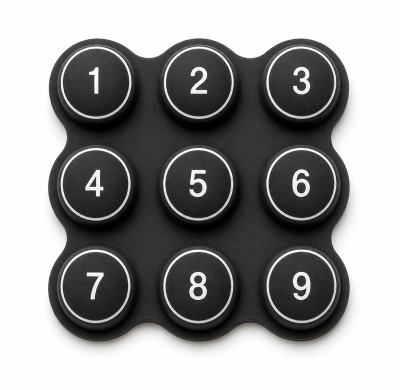
Definitions. A heated suit silicone button is a moulded silicone key, usually round, bonded or clipped through the garment shell, that closes a circuit on a small controller. White-through engraving removes the dark coating so the light substrate reads as the legend. The seal path is the route water has to travel to reach the electronics, and it includes the key-to-shell joint and the cable entry, not only the button face.
Why the symptom, not the part, is the unit of diagnosis
A supplier asked to fix "a faulty button" has no starting point. A supplier told "the legend turns grey after roughly twenty washes but the key still works" has a specific route to inspect: engraving depth, the sealing coat, and the detergent. The same physical part, described two ways, produces a fast repair in one case and a sample round in the other.
That is why the diagnostic table below is organised by symptom rather than by component. It is also why the useful thing a buyer can send is a photograph and a description of when the symptom appears - after washing, after cold storage, after the first week - rather than a return authorisation request.
Six symptoms a heated suit silicone button shows before it fails
Each row below maps a symptom to the station that most often causes it, and to the change that fixes it. The mapping is a starting point for inspection, not a verdict; a symptom can have more than one cause, and the sequence matters when two appear together.
| Symptom | Most likely station | What to change |
|---|---|---|
| Surface turns black; residue rubs off | Coating - cure or contamination | Check booth filtration and cure schedule before changing the coating |
| Legend reads grey instead of white | Laser - insufficient depth | Validate depth on a cross-section, not on a photograph |
| Legend fades after washing | Second coat or seal path | Seal the engraved channel; review detergent compatibility |
| Key feels stiff or slow to return | Web geometry or compression set | Adjust web thickness and span; check the material grade |
| Key works only when pressed hard | Contact system or travel stack | Check pill height against PCB pad, and the housing clearance |
| Stops working after washing | Seal path at shell or cable entry | Review the joint and the cable gland, not only the button face |
Why the feel problem is usually designed in, not made in
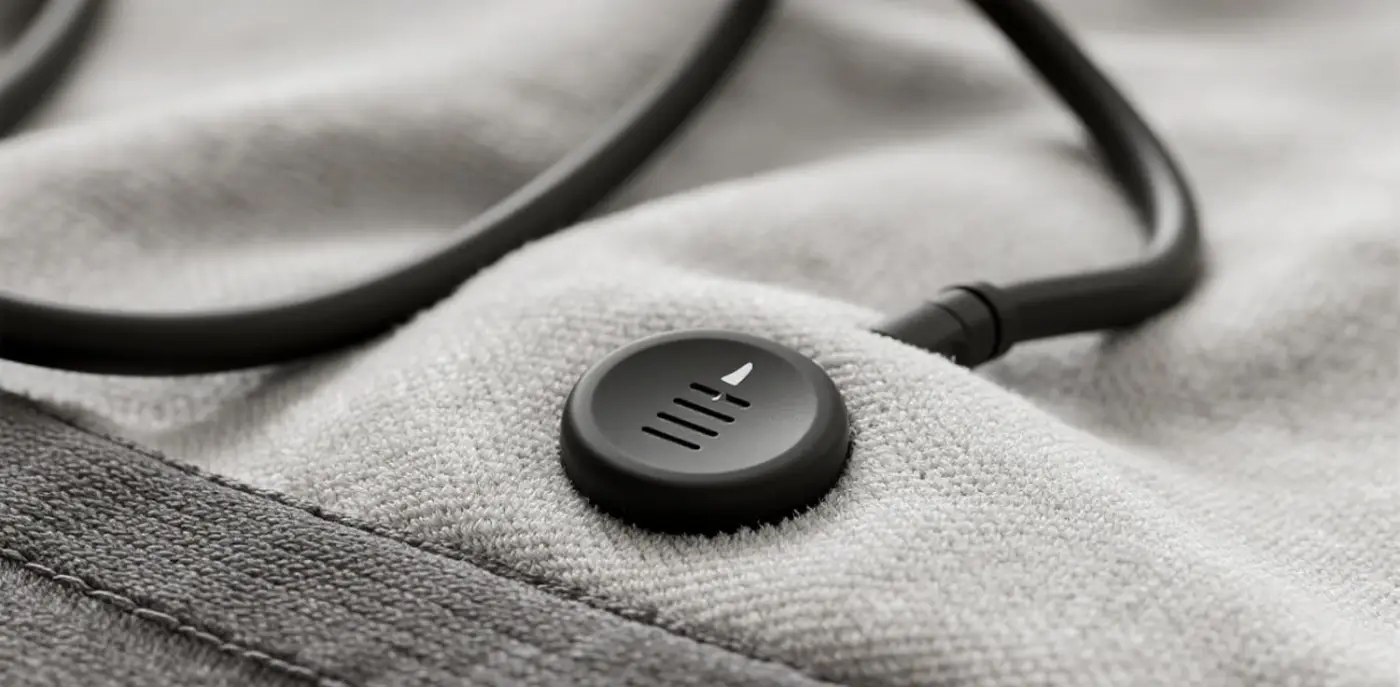
A key that is stiff or slow to return is rarely a moulding error. It is a web that is too thick for the force the user is expected to apply, or a travel that leaves too little rebound margin once the housing clearance is subtracted. Both decisions are made on the drawing, and both are cheap to change before the tool is cut and expensive afterwards.
The practical consequence for a buyer is that the force and travel figures have to be frozen against something real. If nobody has measured the force an average user applies through a glove on a chest-mounted key, the number in the drawing came from a preference, not from data - and the first article will simply confirm the preference.
Why wash durability is a sealing question, not a coating question
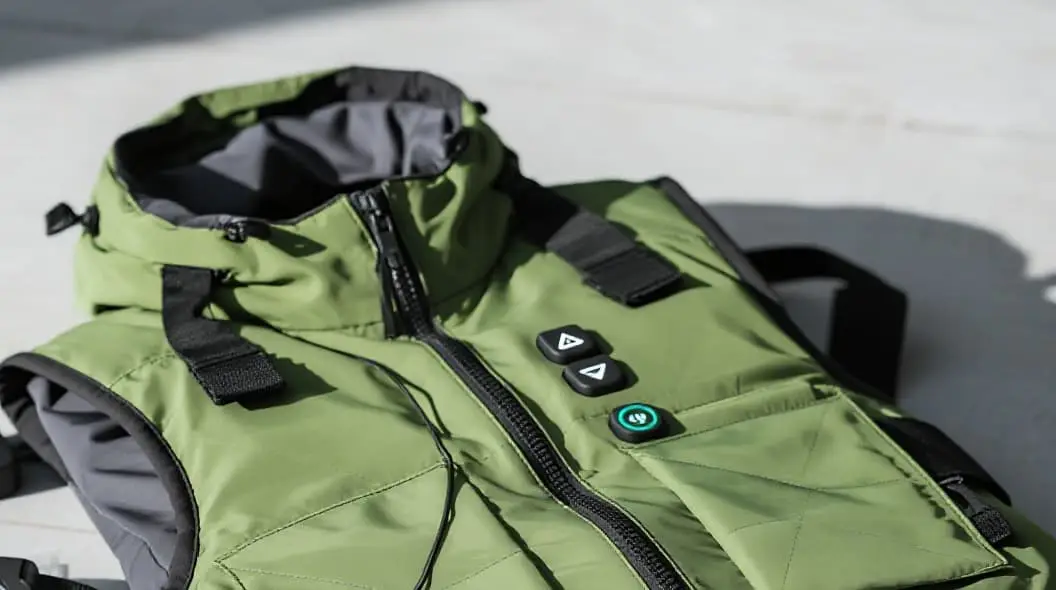
When a heated-garment control fails after washing, the instinct is to blame the coating, because the coating is what the user sees. In practice the coating decides how the legend looks, and the seal path decides whether the garment still works. Those are different failures with different fixes, and the diagnostic is simple: if the key still clicks and the electronics respond, the problem is cosmetic; if the key does nothing, water reached the board.
The seal path has three parts, and all three have to hold: the key-to-shell joint, the cable or connector entry, and any charging port cover. A design that seals the first and leaves the second to a bead of adhesive has a predictable failure point, and it will appear at the connector rather than at the button.
The test that settles the wash question early
The wash requirement should be written as a defined cycle: temperature, detergent type, mechanical action and drying method, repeated for a stated count, with a functional check after each block. Written that way, it is a test a factory can run on a first article and a buyer can repeat on a production lot.
Written as "must survive washing", it is a promise nobody can verify, and the first disagreement will be about what washing means. The same discipline that makes the coating claim measurable makes the seal claim measurable.
Questions buyers ask about heated suit silicone button failures
Can blackening be reversed?
No. Once the surface layer has degraded or been contaminated at cure, the part has to be replaced rather than cleaned. The fix belongs upstream in booth filtration and cure control, which is why the first question should be about the batch rather than about the individual key.
Is a stiffer key always a worse key?
Not necessarily. A chest-mounted key pressed through a glove benefits from a higher force than a fingertip key on a controller. What matters is that the force is chosen deliberately for the way the key is used, and written down, rather than inherited from a previous project.
Do I need a separate charging port cover?
If the controller has a charging port, the port is part of the seal path and needs its own cover or a sealed connector. Sealing the keys and leaving the port open is the most common way a heated garment fails its first wash.
The symptom-to-station mapping describes the usual causes observed on coated and laser-engraved heated-garment controls. Cycle counts, detergent classes and force targets are specific to the garment and must be fixed in the specification and verified on the first article; no universal values are asserted.
To review a heated-garment control, send the drawing, the wash cycle, the glove used and the annual volume with a peak month through the custom silicone quotation route. The moulding side is covered under silicone rubber keypad manufacturing, and the file set that shortens a first round is on the quotation file checklist.