
What certifications should custom silicone cases have (FDA, LFGB)?
"Food-grade silicone" is a marketing phrase, not a specification. What protects your brand is documented compliance with the regulations of every market you sell into — and the two big ones, FDA and LFGB, are not interchangeable. A part can pass FDA extraction limits and still fail the LFGB sensory test because it carries a faint rubbery odor. Understanding the difference prevents a costly recall or a rejected customs entry.
FDA 21 CFR 177.2600: the US baseline
FDA regulates silicone as a "rubber article intended for repeated use in contact with food" under 21 CFR 177.2600. Compliance is established by extraction testing: finished parts are exposed to food-simulating solvents — distilled water for aqueous foods, n-hexane for fatty foods, at reflux for 7 hours followed by a 2-hour re-extraction — and the total extractable residue must stay within limits (commonly cited as 20 mg per square inch for hexane extractives).
Two critical nuances. First, the FDA does not test, approve, or certify individual products — there is no FDA certificate or registration number. "FDA approved" on a listing is loose language; the honest claim is "compliant with 21 CFR 177.2600, verified by a finished-part extraction report from an accredited lab." Second, the test article is the finished, cured part — pigments, post-cure, and molding conditions all affect the result, so a raw-compound certificate alone does not prove your actual product complies.
LFGB: the stricter European standard
LFGB is the German Food and Feed Code, applied with EU framework Regulation (EC) No 1935/2004 and BfR Recommendation XV for silicone. On top of extractables testing, LFGB adds requirements that catch problems FDA misses:
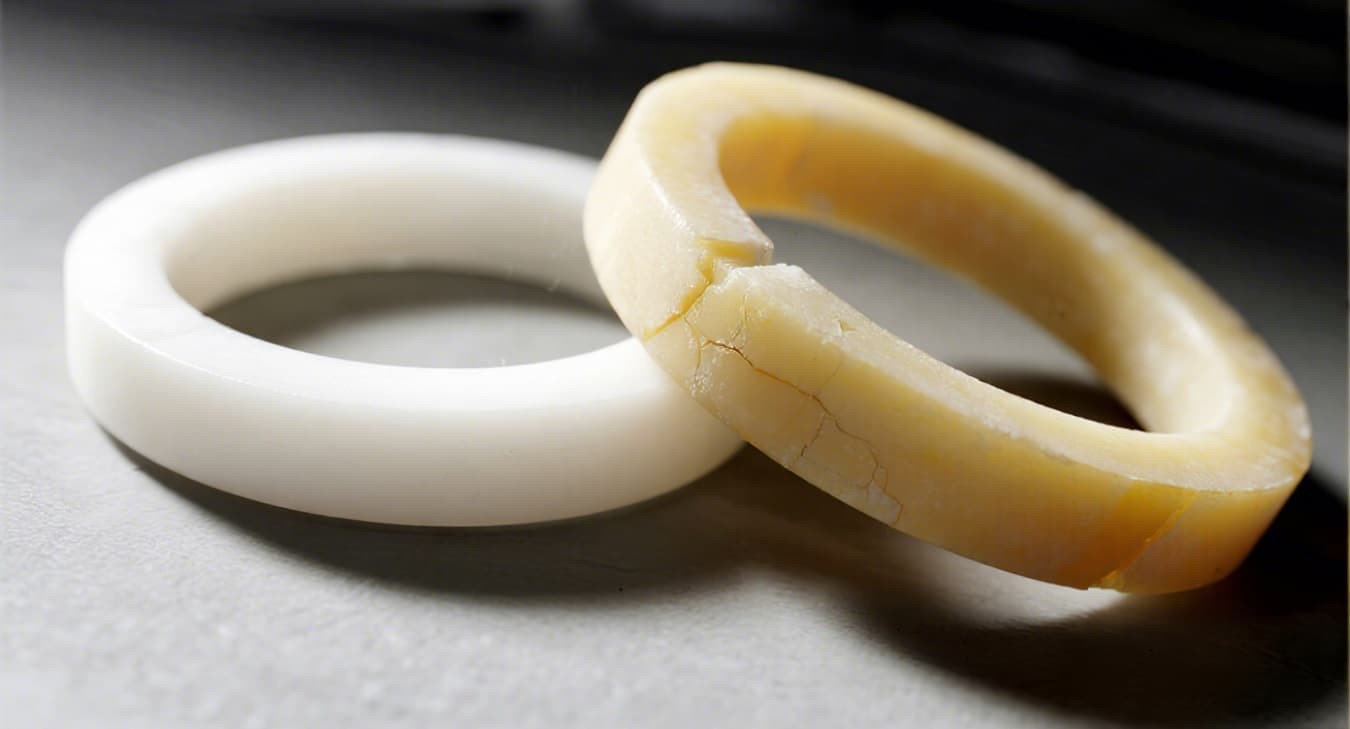
Case study: passing LFGB after two failed attempts elsewhere
A UK kitchenware brand had a silicone baking-mat program stall at customs: their supplier's parts passed FDA extraction testing but failed the LFGB sensory test twice — the mats carried a detectable odor from residual peroxide-cure byproducts, and the volatile matter result came in at 0.7% against the 0.5% limit.
FromRubber re-engineered the program around platinum-cured silicone, which produces no peroxide byproducts at all, and extended post-curing to 4 hours at 200 degrees C. The retested mats showed volatile matter at 0.18%, passed the sensory panel at the best grade, and met the REACH D4/D5/D6 limits with wide margin. The whole change added roughly 6% to unit cost — trivial against the alternative of a third failed shipment. The brand has since consolidated all EU-bound food-contact parts with FromRubber, standardizing on platinum-cure compound and finished-part LFGB reports for every SKU.
FDA vs LFGB: what each actually requires
Practical strategy: if you sell only in the US, an FDA finished-part report (plus California Prop 65 where applicable) covers you. If you sell in or export to Europe, you need LFGB testing plus a REACH declaration. Selling globally? Use LFGB as your baseline — it is the strictest — and add market-specific requirements on top. Always demand the full lab report with actual measured values, not a one-page "certificate" summary.
Related questions
Are you looking for a rubber and plastic product customization solutions manufacturer?
We can quickly provide customers with market analysis, technical support and customized services.Sign Up Out Newletter
