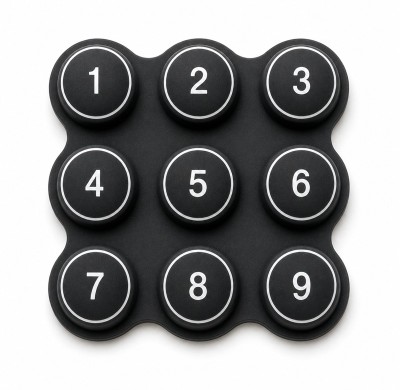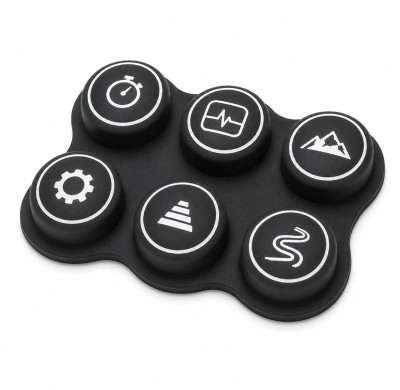
Custom Backlit Silicone Keypad: Design, Materials & Manufacturing Guide
A custom backlit silicone keypad is a silicone rubber keypad molded with translucent or semi-translucent keys, illuminated from behind by LEDs so the legends stay readable in low light, at night, or on dark front panels. This guide covers how backlit silicone keypads work, the design and material decisions that determine light quality and press feel, the manufacturing steps, the problems that show up in real projects, and the specification data a buyer needs before requesting a quote. FromRubber manufactures custom silicone rubber keypads end to end — compound, tooling, molding, coating, and laser etching in one factory.
What Is a Backlit Silicone Keypad?
A backlit silicone keypad combines a silicone rubber keypad with an LED backlight behind or around the key area. The keys are molded from translucent silicone so that light passes through the key body and exits through the legend — the printed or laser-etched characters on the key surface. When the LEDs are off, the keypad looks like a normal silicone keypad; when the LEDs are on, the legends light up for night or low-light operation.
Backlit silicone keypads are used wherever operators need to read controls in the dark or in dim environments: medical equipment, industrial control panels, rugged field devices, and electronic control systems. Compared with a backlit membrane switch, a silicone keypad adds a tactile rubber key with a defined actuation force and key travel, which suits applications that need both illumination and a physical press feel.
How Does a Backlit Silicone Keypad Work?
The light path is the core of the design. LEDs are placed on a PCB beneath the keypad, or on the edge of a light guide layer. Light travels up through the translucent silicone key body. The key geometry — wall thickness, skirt design, and where the key is separated from the surrounding pad — controls how much light reaches the key surface and how evenly it spreads.
To make the legend itself glow while the surrounding key surface stays clean and readable, the key surface is usually sprayed with an opaque topcoat, then the legend is laser-etched through that coating. The light exits only through the etched characters. This is why backlit silicone keypad work is not only about choosing an LED — it is about silicone translucency, key thickness, coating opacity, and laser depth working together.
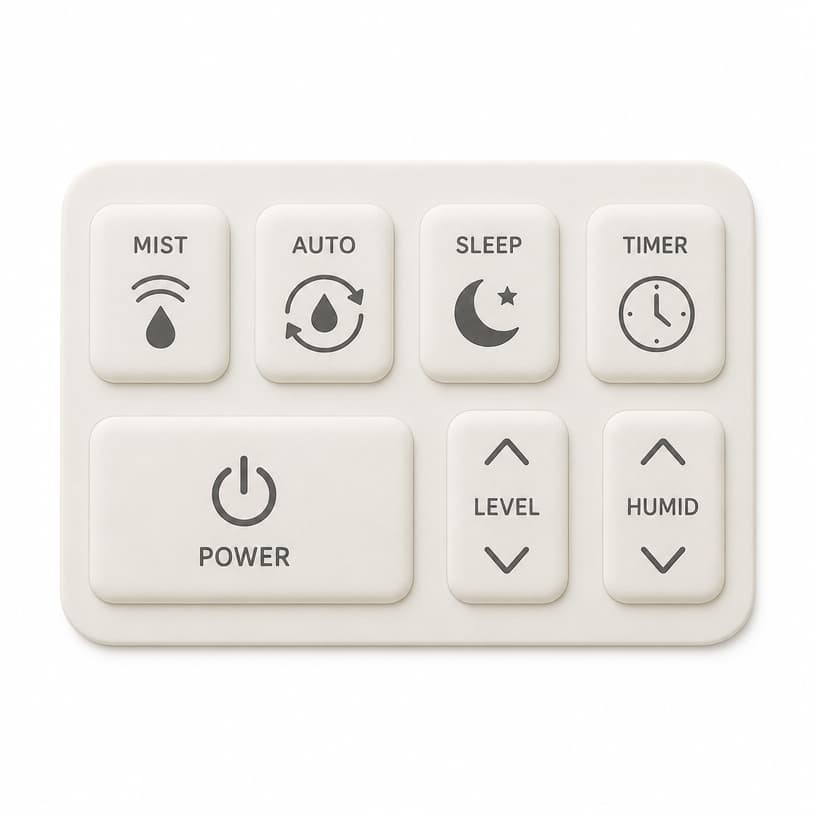
Keypad underside: molded locating ribs and conductive contact positions determine both alignment and how evenly the LEDs light the keys.
Developing a custom backlit silicone keypad? Send us your drawing, 3D file, sample, or basic requirements. Our engineering team will review the project and recommend a suitable manufacturing approach.
Send Your Project for ReviewKey Design Considerations for Backlit Silicone Keypads
Light Transmission
Translucent silicone transmits light, but the transmission rate depends on the compound. Adding pigment for color or opacity reduces light output. If a backlit key needs a specific body color, the compound must be formulated to keep enough light passing through — translucent white and translucent gray are common compromises that diffuse light and hide the LED position.
Backlight Uniformity
Uneven brightness across keys is the most common complaint. Brightness at the key center depends on the distance from the LED, the thickness of the silicone above the LED, and the key wall geometry. A light guide layer or a diffuser under the keypad spreads light so keys at the edge of the array are not noticeably dimmer than keys directly over the LEDs.
Light Leakage
Without a light-blocking layer, light from one key area bleeds sideways through the silicone web and makes neighboring keys glow when they should be dark. The fix is design-level: thicker walls between lit and unlit zones, a light-blocking coating on the underside or between layers, or molded light-blocking structures that keep each key optically isolated.
Key Travel and Actuation Force
Backlighting does not change the tactile rules. Key travel and actuation force are set by the silicone hardness, the web thickness, and the dome geometry under each key. A common range for custom silicone keypads is 0.8–1.5 mm key travel at 150–400 gf actuation force. The light path and the press feel share the same key body, so both must be designed together — a key made thick enough for good light diffusion will press stiffer unless the web and skirt are adjusted.
Silicone Thickness and Hardness
Thicker silicone absorbs more light; harder silicone (higher Shore A) gives a firmer press and a thinner-feeling wall at the same thickness. Typical custom silicone keypads are molded in Shore A 30–80. For backlit keys, the target is usually the lower half of that range when light output matters, with hardness tuned against the required actuation force rather than chosen in isolation.
Silicone Materials for Backlit Keypads
Translucent Silicone
Translucent silicone is the base material for backlit keys. It is available in different translucency levels and can be tinted. The key spec is how much light passes through at the actual molded wall thickness — a translucent compound that looks clear in a thick test slab can still block too much light in a thin key wall, so transmission should be checked on molded parts, not on material datasheets alone. See how we handle silicone material selection in-house.
Silicone Hardness
Hardness is specified in Shore A. It directly affects press feel and indirectly affects how thin key walls can be molded while keeping dimensional stability. Hardness selection must be tied to the required actuation force and travel, not picked as a standalone number.
Color and Light Transmission
There is a direct trade-off between color and brightness. Dark pigments absorb light and reduce legend brightness; light pigments and translucent compounds pass more light. When a dark key body is required with bright legends, the practical solution is a light-blocking dark topcoat with laser-etched legends — the body can stay translucent for the light path while the visible surface is dark.
Backlight and Surface Finishing Options
LED Backlighting and LED Lighting
LEDs are the standard light source. Both names describe the same setup on a custom silicone keypad: individual LEDs under each key, edge-lit light guides, or LED arrays behind the whole pad. The choice depends on key count, brightness target, power budget, and assembly cost. LEDs can also be specified by color — white, blue, red, or RGB — which affects both the visible result and the coating choices.
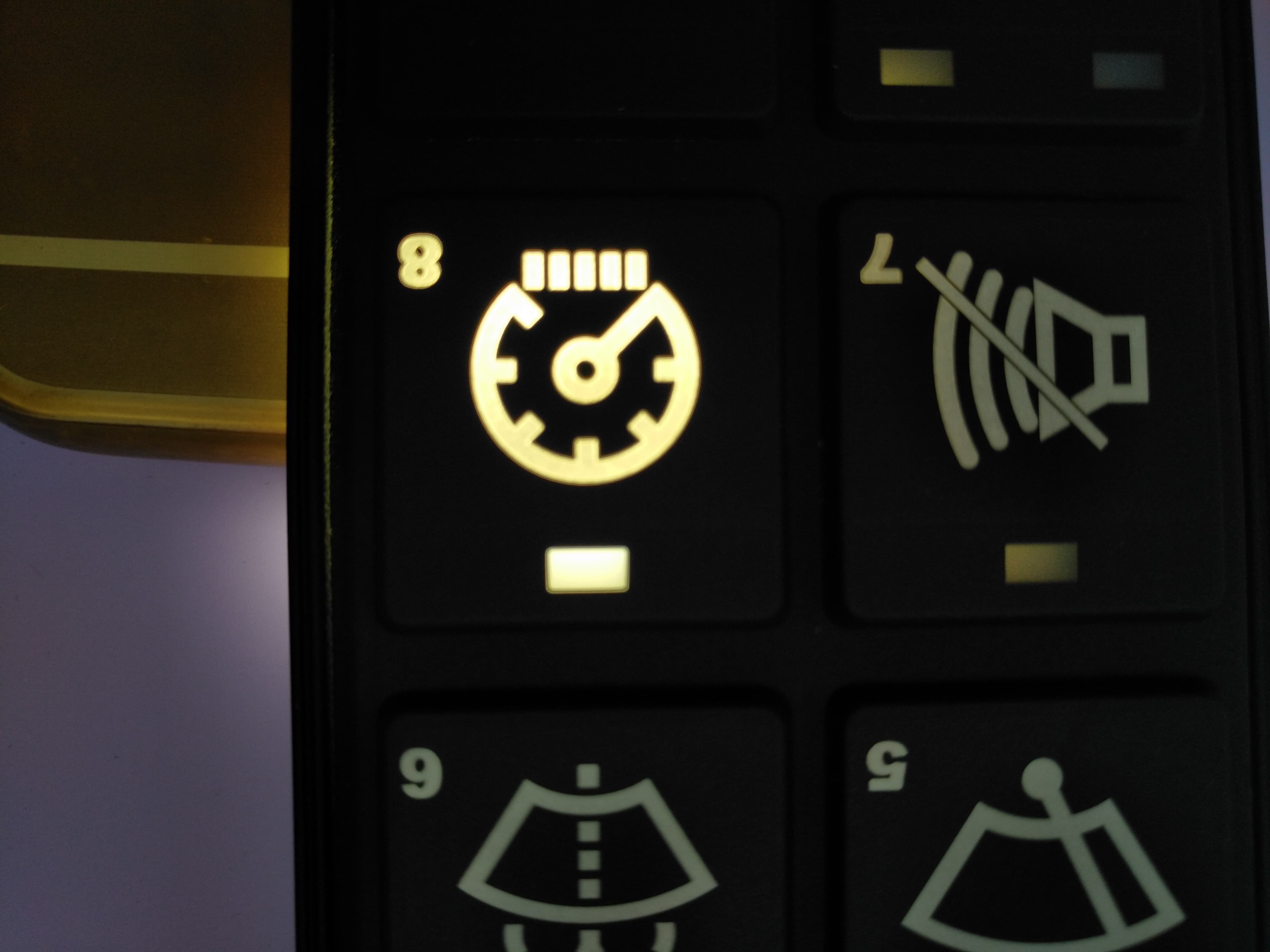
Laser-etched backlit silicone keypad on a dark surface — the light passes through the etched legend only.
Spray Coating
An opaque spray coating on the key surface is what makes laser-etched backlight legends possible. The coating blocks light everywhere except where the laser removes it. Coating thickness and opacity must be controlled: too thin and light bleeds through the surface, too thick and the laser struggles to cut a clean character. See our ink spraying capability.
Laser Etching
Laser etching burns the legend through the topcoat so light escapes only through the character. It produces legends that cannot wear off because there is no ink layer to rub away — the legend is a physical removal of the coating. Laser etching is the recommended marking method for backlit keys that see frequent cleaning or heavy use. See our laser etching capability.
Screen Printing
Screen printing is used for legends that do not need to light up, or for two-layer marking where a printed symbol is combined with a backlit area. Printed ink sits on the surface and can wear under aggressive cleaning, so backlit areas generally rely on laser etching rather than printing.
Light-Blocking Design
To keep lit and unlit zones separate, the design can include molded light-blocking ribs, opaque separators between keys, or a selectively applied light-blocking layer. This is the structural answer to light leakage and is decided at the mold-design stage.
How Are Custom Backlit Silicone Keypads Manufactured?
Mold Design
Everything that affects light — key wall thickness, web geometry, light-blocking structures, and surface texture — is fixed at the mold stage. Mold design for a backlit keypad pays attention to wall thickness consistency, because thickness variation is a direct cause of uneven illumination.
Silicone Compression Molding
Custom silicone keypads are typically produced by compression molding: a pre-formed silicone compound is placed in the heated mold and pressed into the cavity, then cured under heat and pressure. Compression molding suits silicone because it handles the low-durometer compounds and complex key shapes used for keypads. FromRubber runs this process in-house on hydraulic vacuum presses — see silicone molding capability.
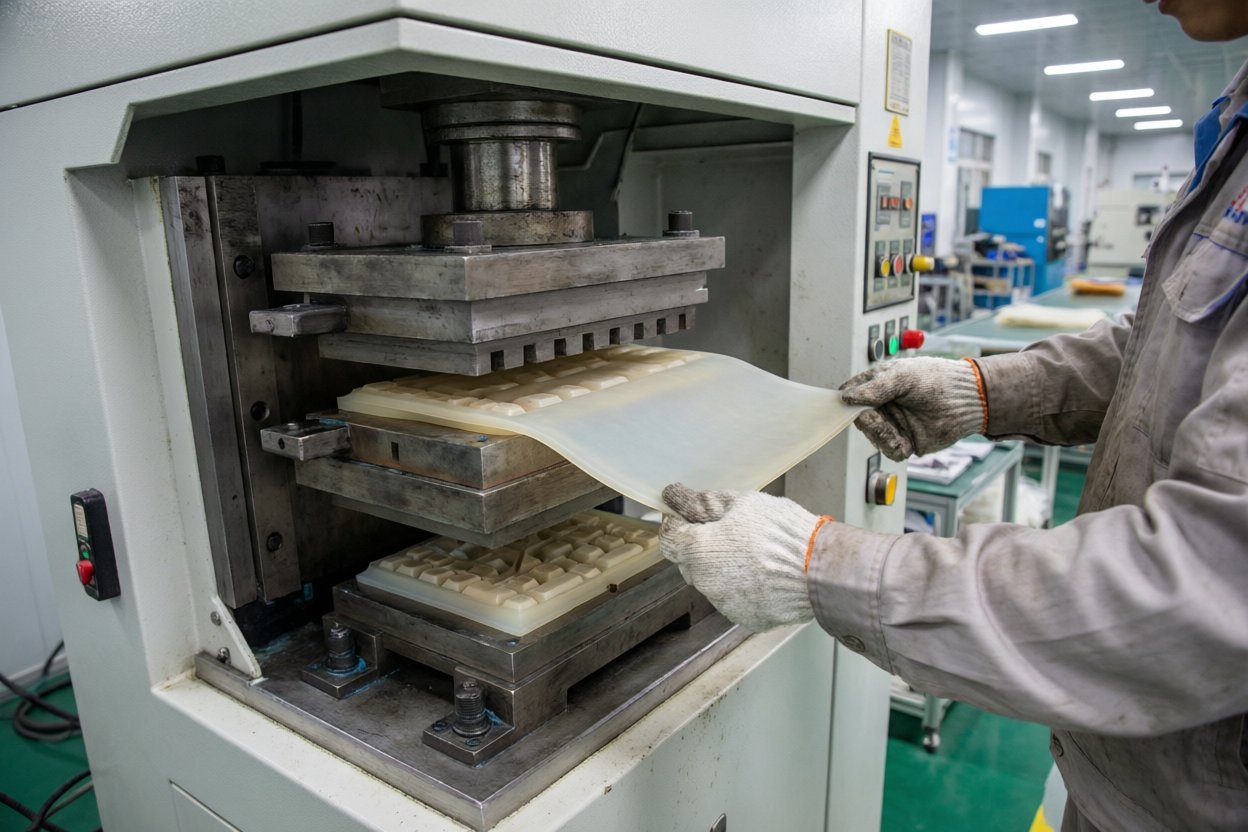
Silicone compression molding in-house at FromRubber — the process behind custom backlit silicone keypads.
Coating and Printing
After molding, the keypad surface is sprayed with the opaque topcoat that will later carry the backlight legend. At this stage the surface finish — matte or gloss, texture or smooth — is also set.
Laser Etching
The legends are laser-etched through the topcoat. Laser parameters (power, speed, depth) are tuned so the character is cleanly cut without burning through the key body or leaving partial coating that dims the legend.
Conductive Contact Installation
Carbon pills, metal domes, or gold-plated contacts are installed on the underside of the keys so that pressing a key closes the circuit on the PCB. The contact height and the pill position relative to the key center affect both actuation force and reliable switching.
Final Inspection
Finished keypads are inspected for light uniformity (with LEDs on), legend sharpness, actuation force, key travel, and dimensional accuracy before shipment.
Common Problems With Backlit Silicone Keypads
Uneven Illumination
Different areas of the pad glow at different brightness. Causes sit in the silicone thickness (thicker sections appear dimmer), the LED position relative to each key, the light path length across the pad, key geometry, and coating thickness differences. Fixing it means changing the mold design or adding a light guide/diffuser — it cannot be fixed reliably by turning up the LED.
Light Leakage
Adjacent keys glow when only one should be lit, because light travels sideways through the silicone web. The solution is structural: wall design between keys, a light-blocking layer, or molded barriers. Coating and laser etching alone cannot stop lateral bleed through the web.
Need help solving a backlighting problem? Whether it is uneven illumination, light leakage, or a legend that does not show clearly, send us your current design or requirements for an engineering review.
Get an Engineering ReviewPoor Marking Contrast
The legend looks fine in daylight but washes out when backlit — or the reverse. This is a coating-and-etching balance problem: if the topcoat is too thin or translucent, the whole key surface lights up and the character loses contrast; if the etch is shallow, characters look faint. Spray coating plus laser etching with controlled depth is the reliable route to consistent contrast.
Inconsistent Tactile Response
Keys in the same pad feel different to press. The usual causes are silicone hardness variation, key geometry differences, web thickness inconsistencies, and actuation force set too close to the manufacturing tolerance. Tactile consistency is controlled at the mold design stage and verified by force-travel testing on finished parts.
Dimensional Variation
Keypads that do not sit flat, keys that shift position, or pads that do not align with the PCB trace back to mold precision, silicone shrinkage, and compression molding process control. Dimensional checks against the drawing are the final gate before shipping.
Custom Backlit Silicone Keypad Specifications
| Parameter | Typical Options |
|---|---|
| Silicone Hardness | Shore A 30–80 |
| Key Travel | 0.8–1.5 mm |
| Actuation Force | 150–400 gf |
| Key Life | 1–5 million cycles |
| Marking | Screen printing / laser etching |
| Backlighting | LED backlighting or LED lighting with laser-etched legends |
| Conductive Contact | Carbon pill / metal dome / gold-plated contact |
| Assembly | Metal dome / FPC / PCB options |
| Prototype Lead Time | About 7 working days |
| Tooling (T1) | 15–20 working days |
| MOQ | From 100 pcs per design |
Values above are the published specification range for custom silicone keypads from FromRubber. Operating temperature, waterproof rating, and environmental resistance depend on the specific compound and coating — confirm the range for your application with our engineers before finalizing the specification.
Applications of Custom Backlit Silicone Keypads
Medical Equipment
Patient monitors, infusion pumps, and handheld diagnostic devices are used around the clock, often in dim rooms. Backlit rubber keypads are common in medical applications because:
- controls stay readable at night and in dim patient rooms
- laser-etched legends survive alcohol and disinfectant wipes
- sealed silicone keeps fluids out of the key area
See medical silicone keypad applications.
Industrial Control Panels
Operator control panels on machines, instruments, and control cabinets sit in factory lighting that is not always aimed at the panel. Backlighting on operator control panels helps by:
- making the right function key findable fast in low light
- keeping legends readable through safety glass or behind covers
- surviving gloved operation with a tactile rubber press
Explore the custom silicone keypad range for control panels.
Rugged Equipment Interfaces
Field devices, portable instruments, and outdoor controls need legends readable in direct sun and in darkness. Rugged backlit keypads are specified because:
- matte topcoats cut glare in bright sunlight
- molded silicone seals out dust and moisture better than open mechanical switches
- backlit legends remove the need for separate panel lamps
Electronic Control Systems
Audio equipment, test instruments, and consumer electronic controls use backlit keypads for standby operation and menu navigation in low light. Electronic-control designs typically choose:
- lower actuation force and shorter travel for frequent menu use
- LED color matched to the product's UI language
- compact key layouts molded as a single pad
Quality Control and Testing
Backlit silicone keypads from FromRubber are checked on three levels. First, dimensional inspection of molded parts against the drawing. Second, tactile testing — actuation force and key travel verified on finished parts, because feel is the spec customers notice first. Third, optical testing with the LEDs lit: light uniformity across the pad and legend sharpness are checked on every production batch, not just on the first article.
Material wear resistance is verified by abrasion testing. FromRubber's published silicone keypad test report (2026-7-02) covers abrasion at 1 kg load for 300 cycles with a PASS result, and the same material-level discipline applies to the compounds used for backlit keypads. See our test reports and certificates.
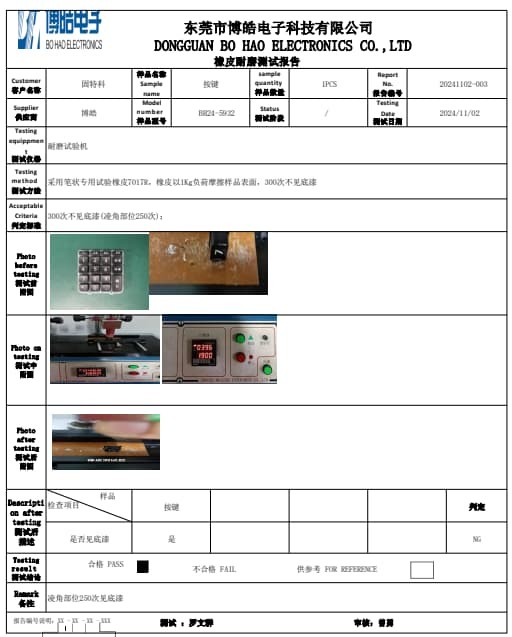
Silicone keypad abrasion test report — 1 kg load, 300 cycles, PASS (2026-7-02).
Custom Backlit Silicone Keypad Manufacturing Process
- Requirement review — drawing, 3D file, or sample; target force, travel, and backlight behavior defined.
- DFM and mold design — wall thickness, web geometry, and light-blocking structures locked in.
- Tooling (T1) — prototype and production molds; typical T1 delivery 15–20 working days.
- Prototype molding — sample keys molded in about 7 working days; illumination and feel verified on real parts.
- Surface finishing — spray coating, screen printing, and laser etching applied.
- Assembly options — conductive contacts, metal domes, FPC or PCB integration as required.
- QC and shipping — dimensional, tactile, and optical checks before packing.
Prototype and Production Lead Time
Published lead times for custom silicone keypads: prototype samples in about 7 working days, and T1 tooling in 15–20 working days. Mass production lead time depends on order quantity, compound, finishing complexity, and current capacity — the fastest way to get an accurate date is to send the drawing and quantity for a quote. Lead time also depends on how many design rounds are needed; changes after the mold is cut add tooling rework time.
Case Study: Custom Silicone Keypad for a POS Terminal (Malaysia)
In 2014, a POS terminal customer in Malaysia came to FromRubber with a problem most molders refuse: they had a silicone keypad sample and the housing, but no 3D drawing file. Most factories at the time would only cut a mold from a complete 3D drawing, so the project was stuck before it started.
Customer requirement. Rebuild a production-grade keypad from a physical sample, dimensioned to fit their housing without jamming, and improve the previous part's feel and legend quality.
Engineering challenge. Reverse the keypad geometry from the sample alone, keep the button parameters compatible with the housing so keys did not bind or stick, and upgrade the material and marking without a documented part spec.
What FromRubber did. Molded from the sample directly, adjusted the button parameters against the housing to avoid key jamming, switched to imported silicone raw material to lift tactile feel and legend translucency, and combined multi-color molding with recessed laser-etched characters so the legends would not wear off in daily use.
Result. The customer reported roughly 70% lower rework cost compared with the previous keypad, and the recessed laser-etched legends kept their appearance over the product's service life. The same no-drawing workflow has since become a standard FromRubber service — small-batch, odd-form, and drawing-free custom jobs are handled regularly.
Case facts are drawn from FromRubber's company records. If you have a similar situation — a sample but no drawing, or a backlighting problem on an existing keypad — send it to us and we will review it the same way.
Why Choose FromRubber?
FromRubber is a full-process silicone manufacturer: we formulate the compounds, build the tooling, mold the keypads, apply the coatings, and laser-etch the legends in-house. Backlit keypad quality depends on how these steps fit together — compound translucency, coating opacity, and laser depth are interdependent, and doing them under one roof removes handoff errors. We also verify feel and light performance on finished parts, not only on material samples. See how we run a project end to end on our custom silicone product service process page.
FAQ
Can you customize the shape and layout of a silicone keypad?
Yes. Key shape, layout, key count, and overall pad outline are molded to your drawing. The mold is built from your 2D drawing or 3D file, so the layout is custom rather than picked from a catalog.
Can you add LED backlighting to a silicone keypad?
Yes. LED backlighting with translucent key bodies and laser-etched legends is a standard option. LED color, position, and brightness can be specified to suit the application.
How do you prevent light leakage between keys?
Light leakage is controlled at the design stage: web thickness between keys, molded light-blocking structures, and light-blocking layers keep lit and unlit areas separate. Coating alone does not stop lateral bleed through the silicone.
What silicone hardness is available?
Custom silicone keypads are molded in Shore A 30–80. The actual hardness for a project is set by the required actuation force and key travel.
Can you match a specific color?
Yes. Silicone can be tinted to a target color, with the caveat that dark pigments reduce light transmission on backlit keys. When a dark surface is needed, a dark topcoat with laser-etched legends keeps the light path separate from the visible color.
Can you add laser-etched symbols?
Yes. Laser etching through the topcoat is the standard method for backlit legends, and it also works for non-backlit symbols where wear resistance matters.
Can you manufacture waterproof backlit keypads?
Silicone keypads can be designed to seal against the housing. Whether a specific pad is waterproof depends on the enclosure design and the required rating — send the housing details so the sealing approach can be reviewed.
What files do you need for a quotation?
A 2D drawing with dimensions and tolerances, or a 3D file, plus target actuation force, key travel, backlight requirements, and estimated quantity. A physical sample works too if you have one.
How long does prototyping take?
Prototype samples typically take about 7 working days. T1 tooling takes 15–20 working days, after which production samples can be molded from the production mold.
What is the MOQ?
The standard MOQ is 100 pcs per design. Larger quantities reduce the per-piece cost; contact us with your target volume for pricing.
Can you provide samples before mass production?
Yes. Prototype and T1 samples are produced and verified before mass production starts. We recommend confirming illumination uniformity, legend quality, and tactile feel on the T1 sample before approving the full run.
Request a Quote for Your Custom Backlit Silicone Keypad
Please provide your 2D drawing, 3D file, sample, dimensions, material requirements, or target application. Include the number of keys, backlight color and brightness expectations, target actuation force, and estimated quantity so our engineers can return a complete specification and lead time.
Request a Quote