
Why Does a Sewn Silicone Patch Deform on Caps?
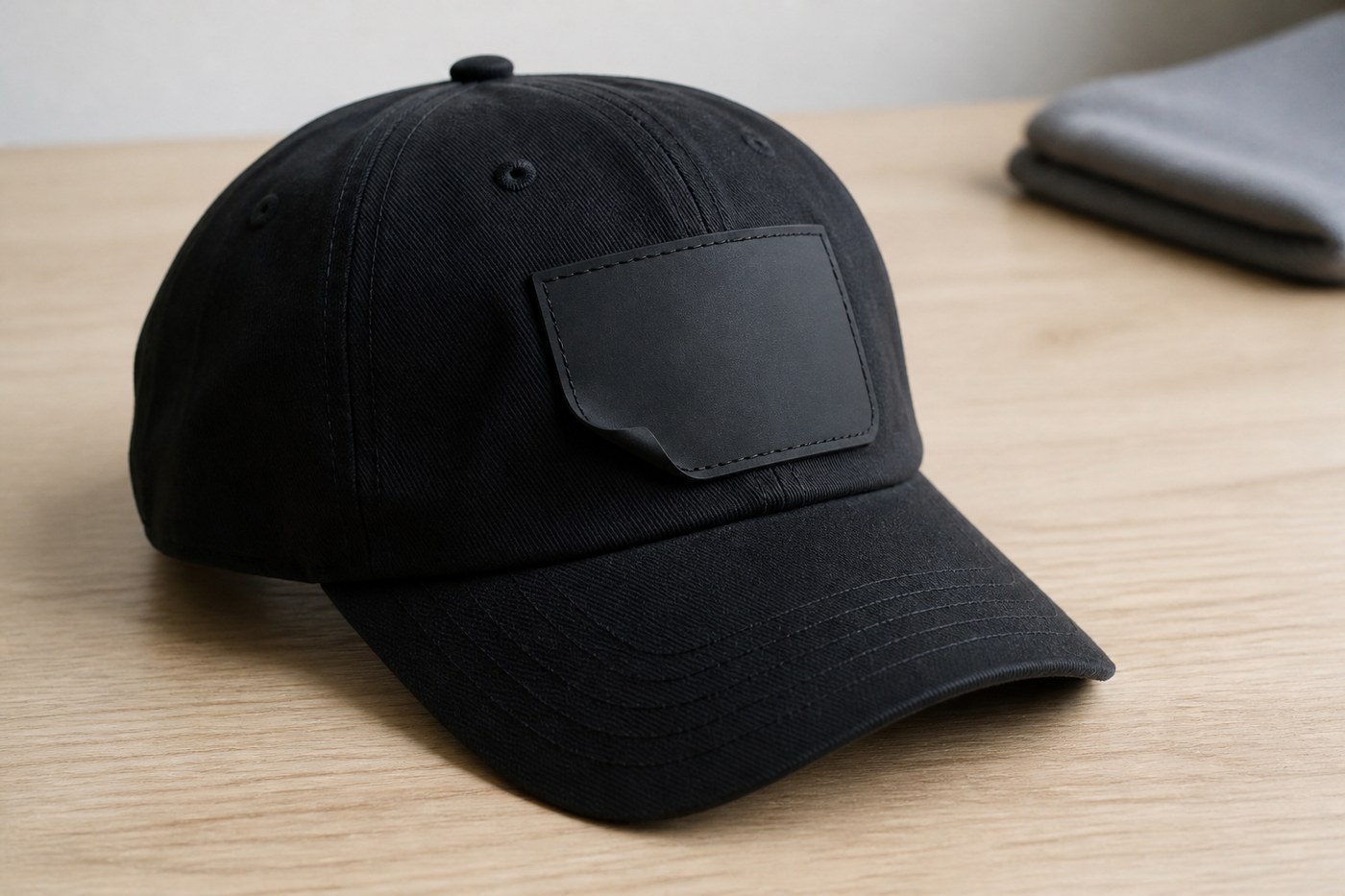
The patch is not at fault. It is flat, and the cap crown is not. A front panel curves both around the head and over the crown, so a flat patch has to be forced onto a surface that cannot be flattened without distortion. Something has to give, and that something is usually the patch edge or the fabric beside the stitch line.
Sewing adds the second half of the problem. Published seam research is consistent on this point: stitch density is not a neutral setting. In one controlled study on cotton fabric, seam strength rose from a mean of 27.9 kgf at 8 stitches per inch to 38.9 kgf at 12 stitches per inch on the same fabric and thread, and the standard for stitches and seams notes that stitch density has to be matched to the material to avoid excess tension and puckering.
Where the patch sits changes everything
- Front crown panel: most curved and most visible; deformation is noticed immediately.
- Side panels: usually less curved, giving more tolerance.
- Across a curved seam: the patch bridges two panels with a change of direction.
- Structured caps: the stiffening layer reduces how much the fabric can follow the patch.
- Unstructured caps: the crown flexes and collapses, so the patch may crease where the cap folds.
Stitch density and tension: the controllable half
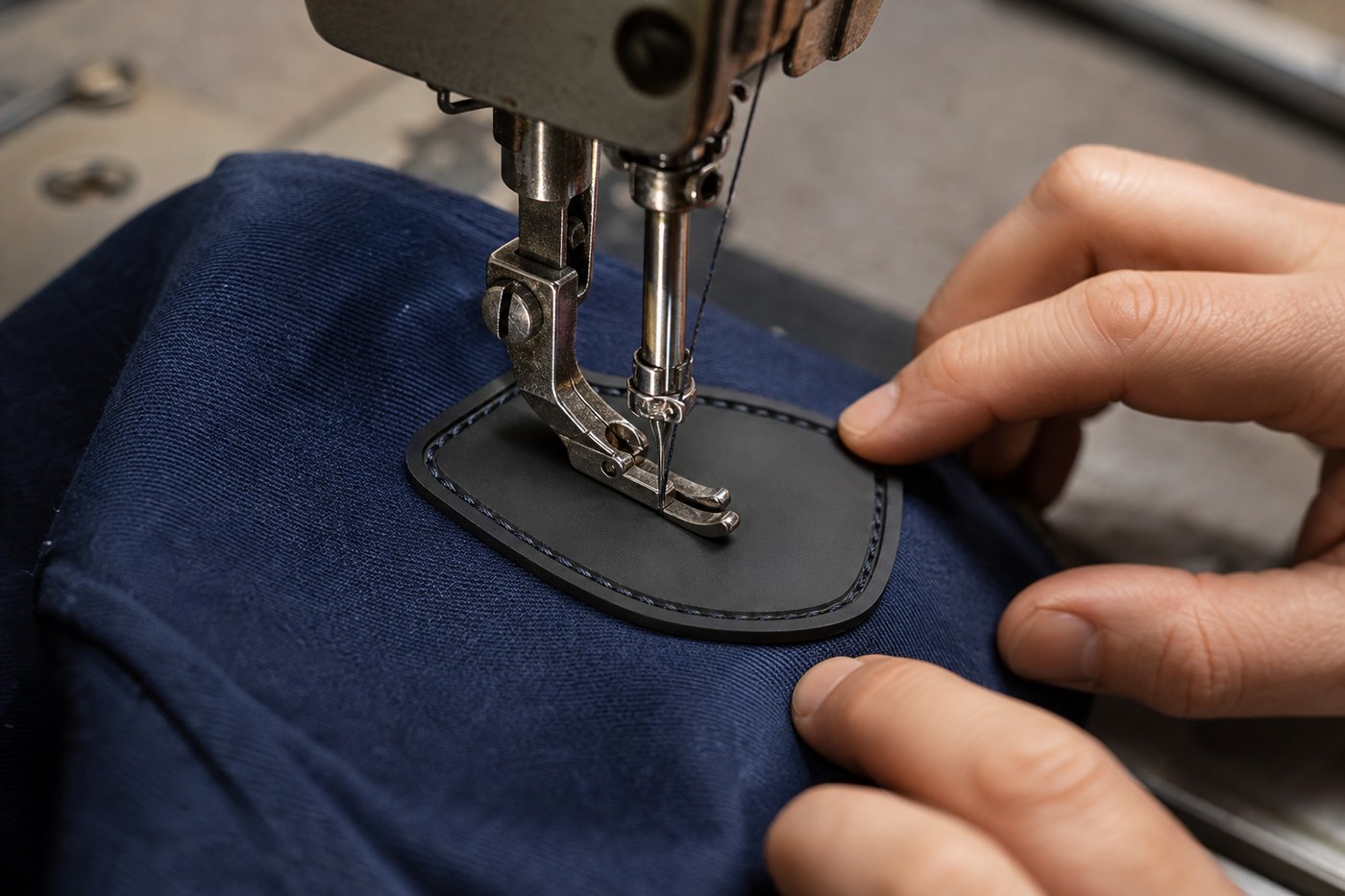
Woven twill resists extension; silicone is more willing to stretch and then recover. Sewn together under tension, the patch can be pulled slightly longer than the fabric along the stitch line, and when the work leaves the machine the two recover differently. Corner stitches concentrate the effect, which is why one corner often lifts more than the others.
Stitch density guidance published in the same seam research, attributed to fabric-weight recommendations, runs roughly 15–18 stitches per inch for lightweight wovens, 12–14 for medium weight and 6–10 for heavy weight. The concern with going denser is not only strength: excessive stitches can cut yarns on light fabrics and contribute to puckering.
Reading the deformation
| Symptom | Usual cause |
|---|---|
| Wavy edges along the patch | Flat patch on a curved panel, or stitch tension pulling the edge |
| One corner lifting | Uneven stitch sequence or concentrated stress at a sharp corner |
| Curved lettering | Patch conforming to the crown after sewing, shifting artwork alignment |
| Patch bridging a seam | Position crossing two panels with different curvature |
| Fabric puckering near the stitch line | Stitch density or thread tension too high for the fabric weight |
| Crease across the patch | Profile too thick to follow the panel, or a large rigid area |
- Size the patch to the panel rather than to the artwork, leaving border for stitching.
- Keep the profile moderate so the patch can follow the crown.
- Round corners where the brand allows it.
- Break one large rigid area into elements that conform locally.
- Confirm the stitching method early, as it affects border width and profile.
- Sew a sample onto a real cap and inspect it on the crown, not on a table.

Limits worth stating plainly
A large flat patch with sharp corners will always require compromise somewhere on a crowned panel; there is no stitch setting that removes the geometry. The strength and stitch-density figures quoted here come from published seam research on specific fabrics and threads, so they indicate how stitch density behaves rather than prescribing one density for every cap. The reliable confirmation is a sewn sample on the actual cap, judged at the angle a wearer or a shopper would see it.
Sewing silicone patches onto caps? FromRubber reviews patch size, corner radius and profile against the actual cap panel before tooling: karl@fromrubber.com or nani@fromrubber.com, WeChat and WhatsApp +86 18676210913. Related: rubber patch development process.
Sources
- https://www.ajaronline.com/index.php/AJAR/article/download/181/147/498
- https://www.astm.org/Standards/D6193.htm
- https://en.wikipedia.org/wiki/Baseball_cap
- https://en.wikipedia.org/wiki/Seam_(sewing)


Are you looking for a rubber and plastic product customization solutions manufacturer?
We can quickly provide customers with market analysis, technical support and customized services.Sign Up Out Newletter
