
How Do You Choose Silicone Patch Hardness for Flexible Sportswear?
There is no single hardness value that works for flexible sportswear, and choosing one before the fabric is chosen is the most common mistake. The number that matters is the one that lets the patch flex and recover with the specific knit it sits on.
The scale of that task is worth putting in numbers. In a published study of elastic knitted fabrics under cyclic loading, plain single jersey reached elongation at break of roughly 150–250% in the course direction and 50–150% in the wale direction, while the elastane yarn itself extends about 200–900% at break — against only 3–8% for a single cotton yarn. A moulded silicone patch does not extend like that. It flexes, and the fabric beside it absorbs the difference.
What hardness controls, and what it does not
It controls bending behaviour
Hardness sets how much force the patch absorbs when it bends, how quickly it recovers, and how the edge behaves when the fabric underneath moves. Standard moulded silicone is commonly available across roughly 30 to 70 Shore A, which is a wide enough range to change how a patch feels and how it releases from the mould.
It does not predict garment feel
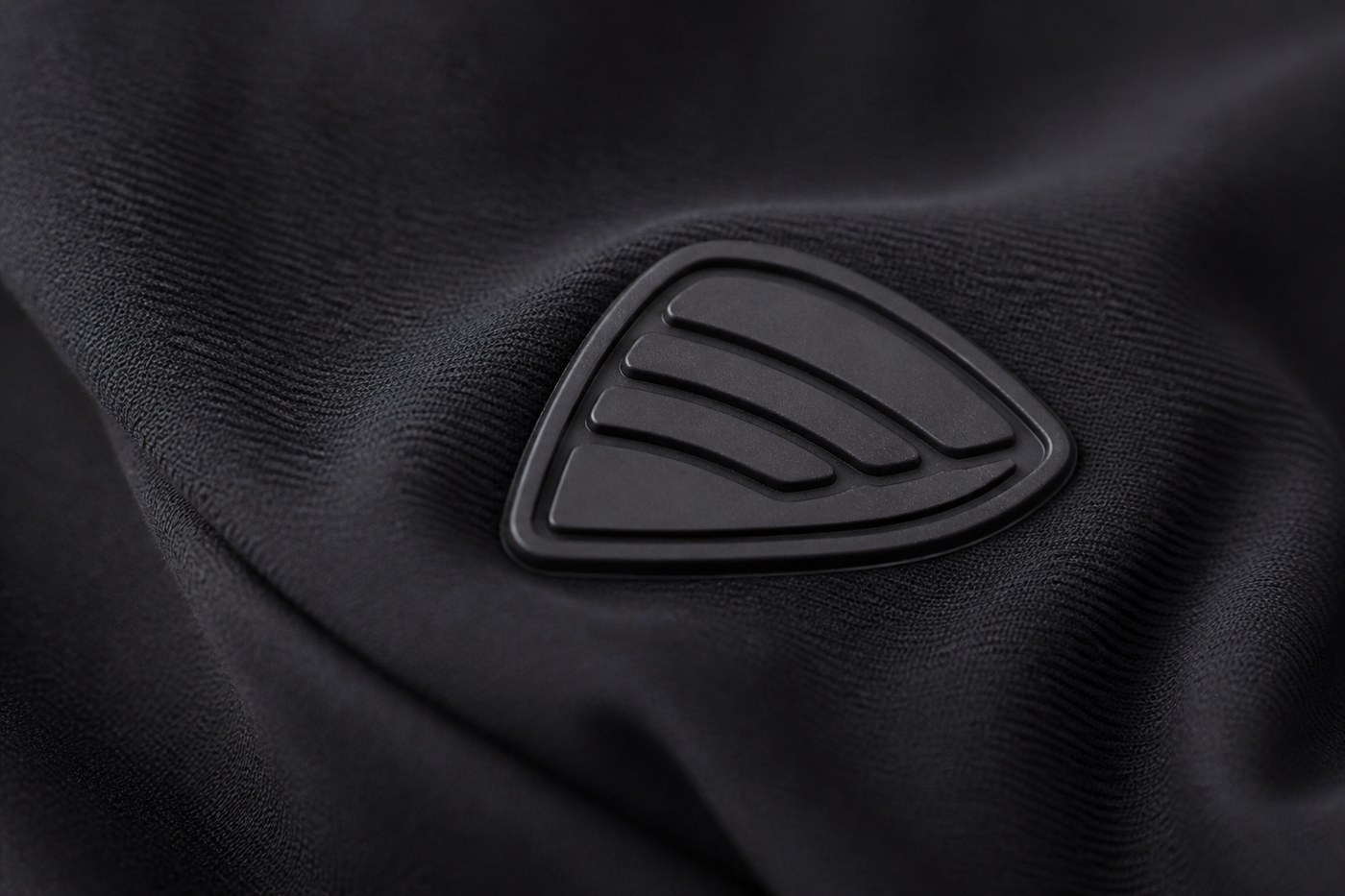
Hardness says nothing about how the finished garment behaves, because the wearer feels the patch and the fabric together. Profile height, patch area, relief structure, fabric elasticity and the attachment method all change the result at the same hardness value.
Thickness usually outweighs hardness
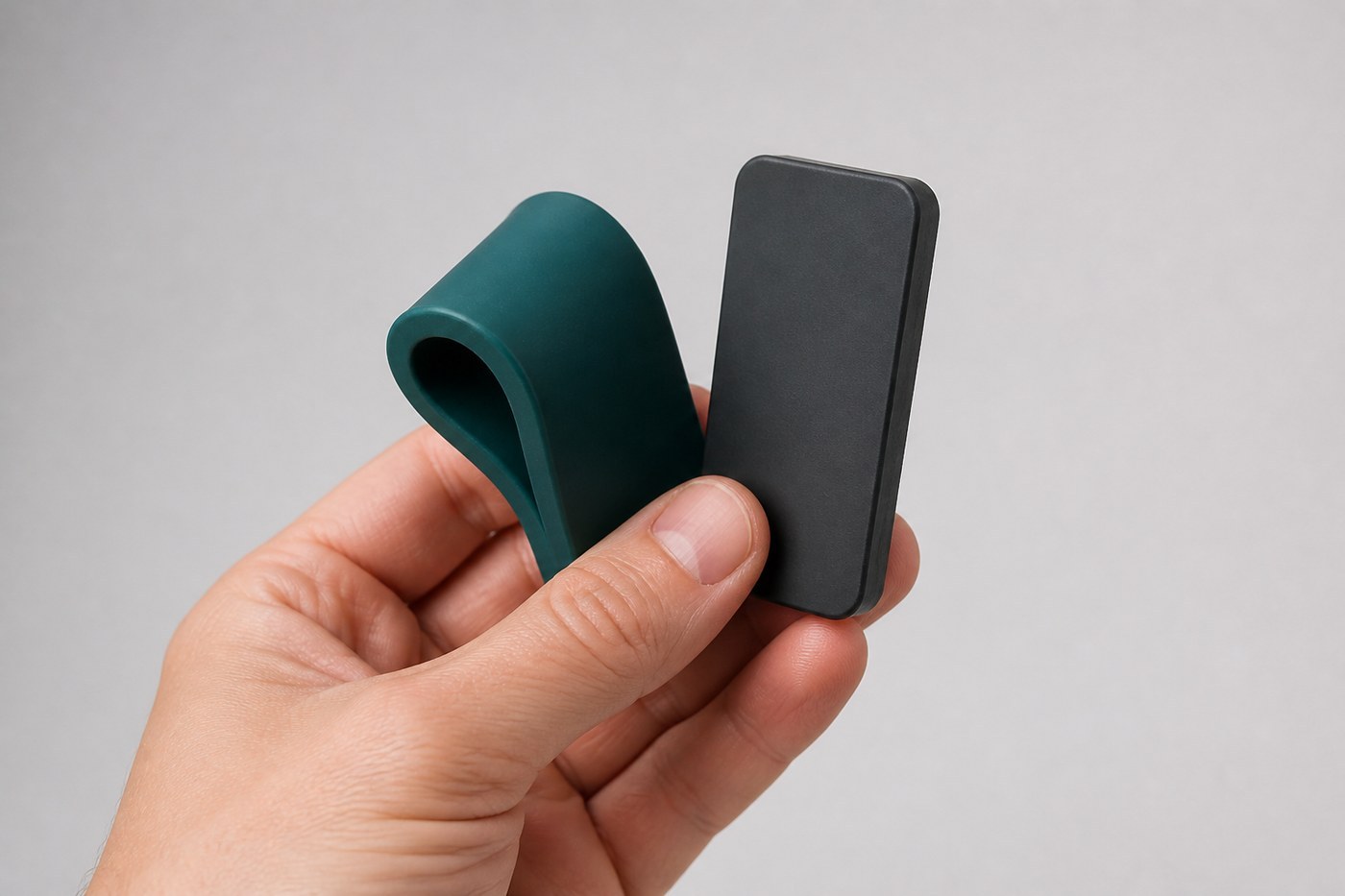
Resistance to bending rises quickly with section height, so a modest reduction in profile often changes the feel of a garment more than a noticeable change in compound. Peer-published label specifications commonly offer thickness in steps such as 0.2 mm, 0.5 mm and 1 mm, with raised profiles running roughly 1–3 mm; moving one step down that list is frequently the effective decision.
The practical consequence: treat hardness and thickness as one decision. Changing compound while leaving the profile untouched often produces less effect than expected.

| Sportswear type | Fabric behaviour | What the patch has to accommodate |
|---|---|---|
| Running and training shirts | Lightweight, moderate stretch | Low bending resistance so the shirt still drapes |
| Compression wear | High stretch with strong recovery | Continuous edge load; flexibility matters more than surface firmness |
| Leggings | Multi-directional stretch | Movement in every direction, including across the patch |
| Cycling jerseys | Stretch plus repeated movement | Balance between flexibility and shape retention over time |
| Heavy outdoor sportswear | Lower stretch, firmer hand | Wider range of options; stiffness is less noticeable |
How to settle the choice before production
- Apply the patch to the real fabric at the real position.
- Stretch the panel in the direction the garment stretches, repeatedly.
- Fold the panel along and across the patch.
- Hold it against a body or a form and move it.
- Wash several cycles.
- Inspect the patch edge and the surrounding knit afterwards.
If the fabric creases permanently beside the patch, or the boundary stays visible from the outside, the construction needs another pass — not necessarily a softer compound.
Limits and exceptions
A softer compound is not automatically the safer choice. Softer material follows movement more easily but holds shape and edge definition less well, and it does nothing for a patch that is too thick or too large. The elongation figures quoted here describe measured fabric behaviour in published research, not a specification for any particular garment — the stretch a patch actually meets depends on the knit, the panel direction and how the garment is worn.
Working on a stretch garment and unsure where to start? Send FromRubber the fabric and the intended patch position rather than a hardness number: nani@fromrubber.com or karl@fromrubber.com, WeChat and WhatsApp +86 18676210913. Related: silicone material selection and custom rubber patches.
Sources
- https://www.mdpi.com/1996-1944/15/19/6512
- https://www.protolabs.com/services/injection-molding/liquid-silicone-rubber-molding/design-guidelines/
- https://newyorkcustomlabels.com/raised-silicone-heat-transfer-labels
- https://en.wikipedia.org/wiki/Shore_durometer
- https://en.wikipedia.org/wiki/Spandex
- https://www.astm.org/d2594-20.html

Are you looking for a rubber and plastic product customization solutions manufacturer?
We can quickly provide customers with market analysis, technical support and customized services.Sign Up Out Newletter
