
What are the typical applications of custom silicone rubber pads?
Silicone pads are among the most quietly essential components in modern engineering. An EV battery module may contain dozens of them; so does a hospital imaging cart and a bakery conveyor line. Because silicone keeps its elasticity from -60°C to +230°C, resists ozone and UV, and can be formulated with fillers for thermal or conductive performance, a single well-designed pad often replaces several assembled parts. Below is where these pads actually earn their keep - and what to specify for each job.
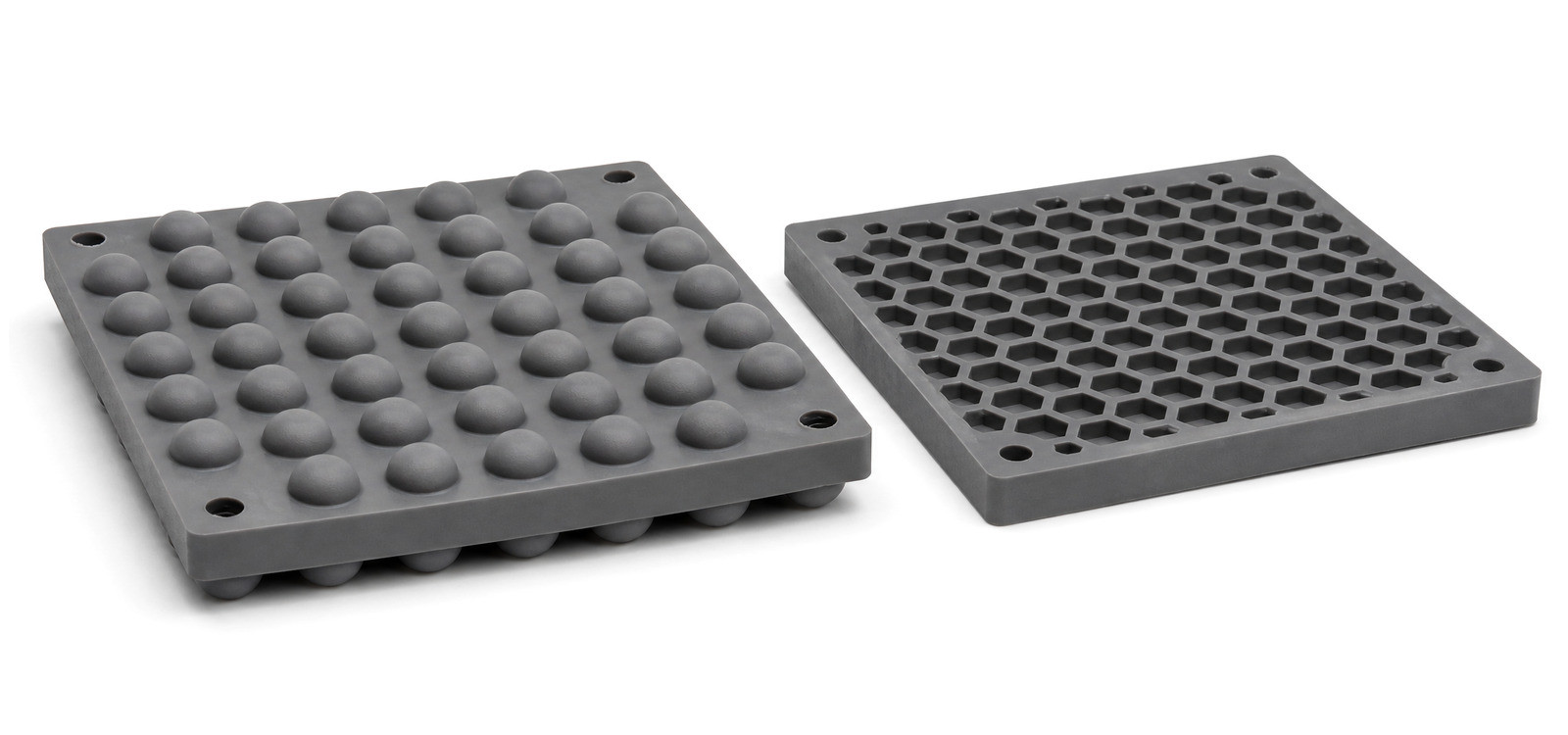
The six application families, and what each one demands
Used under motors, compressors, pumps, and speakers. High-damping compounds (loss factor > 0.3) convert vibration energy into heat. Heavy machinery typically needs pads 5 mm or thicker, matched to the load so the pad compresses 10-20% in service without bottoming out.
Alumina-filled silicone pads (thermal conductivity 1-6 W/m·K) fill the micro-gaps between chips, power modules, and heat sinks in EV battery packs, 5G base stations, and servers. They conduct heat while staying electrically insulating - dielectric strength up to 20 kV/mm.
Insulation layers between battery cells, transformer spacers, and PCB isolation pads. Silicone maintains its dielectric properties even after prolonged heat, UV, and humidity exposure, which is why it dominates EV and grid equipment insulation.
Door seals, enclosure gaskets, and flange pads that must retain resilience from -60°C to over 200°C - far beyond what EPDM or NBR tolerates. Outdoor electronics enclosures rely on silicone pads to hold IP ratings for a decade.
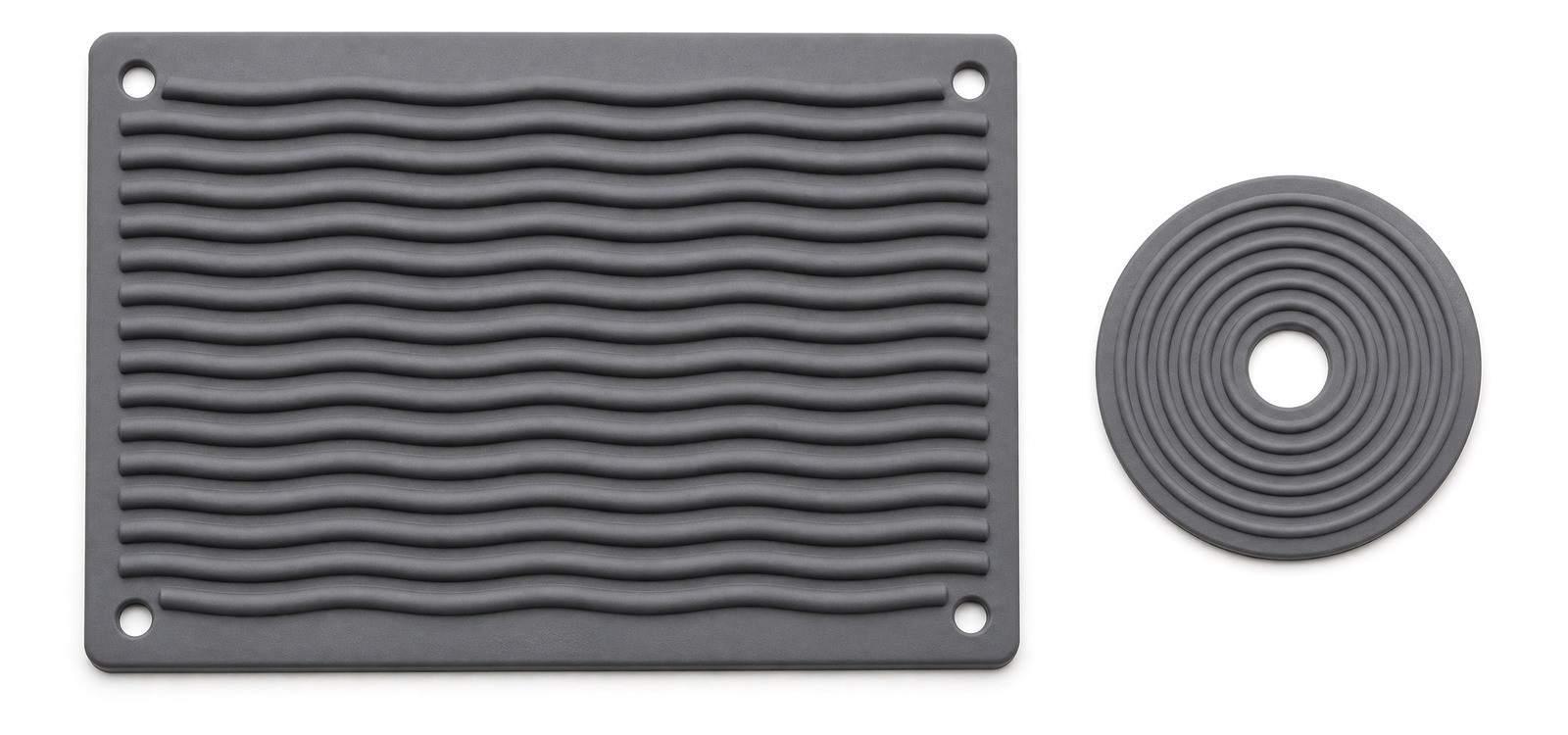
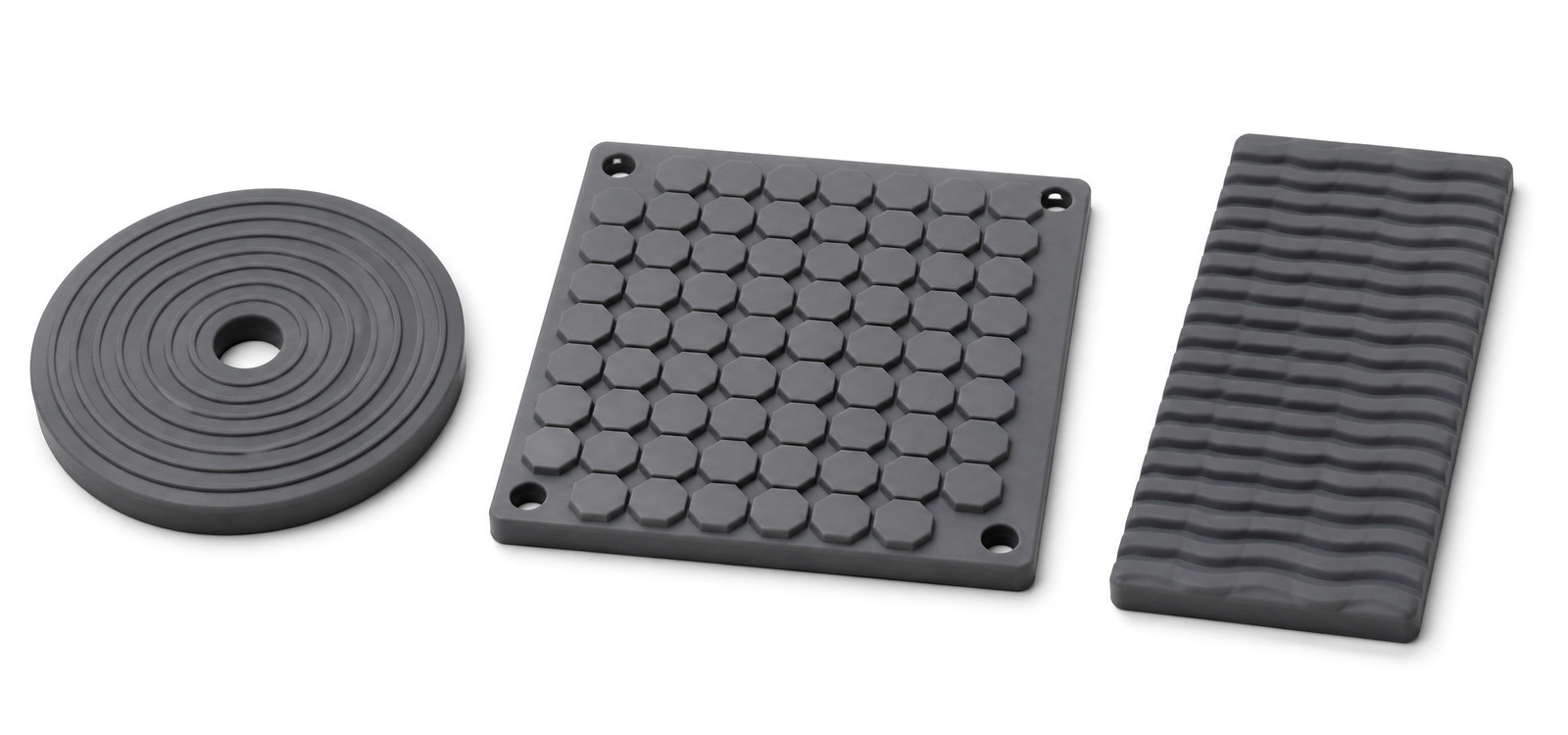
Textured or micro-patterned pads on dashboards, appliance feet, tool trays, and equipment mounts. Diamond-convex and pyramid patterns mechanically interlock with the counter-surface; electronic device bases typically require a static friction coefficient above 0.6.
Shipping cushions for delicate components, medical-prosthetic padding, and masking plugs for anodizing or powder coating. In controlled conditions, silicone pads retain over 90% of their performance for 5-10+ years.
Case study: one pad family, five assembly steps eliminated
In 2025, a European industrial-inverter maker asked FromRubber to review a battery-stack assembly that used five separate components per module: two EPDM side cushions, a mica insulator sheet, a thermal grease layer, and four molded nylon spacers. Each layer required its own handling step, and the grease created messy, inconsistent rework.
We consolidated the five parts into a single flame-retardant (UL94 V-0) silicone pad with an alumina-loaded thermal core, embossed anti-slip feet, and molded spacer bosses - one compression mold, one part. Thermal conductivity measured 2.8 W/m·K versus roughly 0.9 for the grease-and-mica stack, assembly time dropped 62%, and the customer cancelled three supplier SKUs. Over a 40,000-module program, the consolidated pad saved an estimated $118,000 in assembly labor and logistics alone.
The data: pad specifications by application
Whether your project needs a thousand die-cut thermal pads or a fully molded, multi-function cushion, start from the environment - temperature extremes, chemicals, load, and required lifespan - then let the compound and geometry follow. That is exactly the sequence our engineering team applies to every custom pad inquiry.
Related questions
Are you looking for a rubber and plastic product customization solutions manufacturer?
We can quickly provide customers with market analysis, technical support and customized services.Sign Up Out Newletter
